
How do you make saltine toffee (Christmas crack)?
Line a rimmed baking sheet with saltine crackers, pour over a butter and brown sugar toffee that has boiled for exactly 3 minutes, bake 5 minutes at 400°F (200°C), then cover with melted chocolate, chill, and break into pieces. The two numbers that decide everything are the 3-minute boil and the 5-minute bake: together they drive out the moisture that makes this candy chewy and soggy instead of crisp.
Missing butter, brown sugar, or chocolate chips? Check the swap before you start with our ingredient substitution calculator, and it will give you the exact amount to use instead.
The candy with two names
Ask for Christmas crack in December and everyone knows the tray you mean: a sheet pan of cracker toffee under a layer of chocolate, broken into rough, shiny pieces and passed around until it is gone. The rest of the year the same candy goes by its plainer name, saltine toffee, because that is exactly what it is. Saltine crackers, toffee, chocolate. Three layers, five ingredients, about fifteen minutes of real work.
It is also a recipe with a reputation problem. When it is right, it snaps. When it is wrong, it bends, sticks to your teeth, and the crackers go soft by the next day. The good news is that every failed batch fails for one of a few fixable reasons, and this recipe is built around fixing them before they happen.
Saltines or Ritz crackers: which base is better?
This is one of the most asked questions about this candy, and the honest answer is that saltines win for the classic version. A saltine is thin, dry, and sturdy, so it disappears into the toffee and gives you a clean snap and a salty edge that balances all that sugar. Ritz crackers are richer and more buttery, but they are also thicker and more fragile, so the finished candy is softer and more crumbly, and the butter flavor can fight the toffee instead of backing it up.
Graham crackers sit in the middle: sweeter, a little thicker, good if you want a milder, more cookie-like base. The base comparison below sums it up, and the variations section later shows how to swap the base without changing the toffee.
| Base | Texture | Flavor | Best for |
|---|---|---|---|
| Saltines | Thin, crisp, clean snap | Salty, neutral | The classic recipe |
| Ritz | Thick, crumbly, softer bite | Buttery, rich | A softer, richer batch |
| Graham crackers | Medium, cookie-like | Sweet, mild | A gentler, kid-friendly batch |
| Pretzels | Crunchy, chunky | Very salty | Maximum sweet-and-salty contrast |
Why this toffee snaps instead of bending
Toffee is cooked sugar, and cooked sugar has one enemy: water. Brown sugar and butter both bring moisture with them, and if that moisture is still in the candy when it cools, the texture lands on chewy instead of crisp. That is the whole science of this recipe, and it explains both key steps.
The 3-minute rolling boil concentrates the sugar and starts driving the water out. Stop at 2 minutes and the toffee never quite sets hard. The 5-minute bake at 400°F (200°C) is the second half of the cook, not an optional extra: in the oven the toffee bubbles down into every cracker, finishes losing its moisture, and bonds to the base. Skip the bake or cut it short and you get the number one complaint about this candy, a chewy, soggy middle.
J. ZaiB Micro-Tip: Set a timer the second the toffee reaches a full rolling boil, and do not stir it from that moment on. Stirring a boiling toffee knocks crystals into the mixture and is the most common cause of a grainy batch. Just let it bubble for the full 3 minutes.
Ingredients
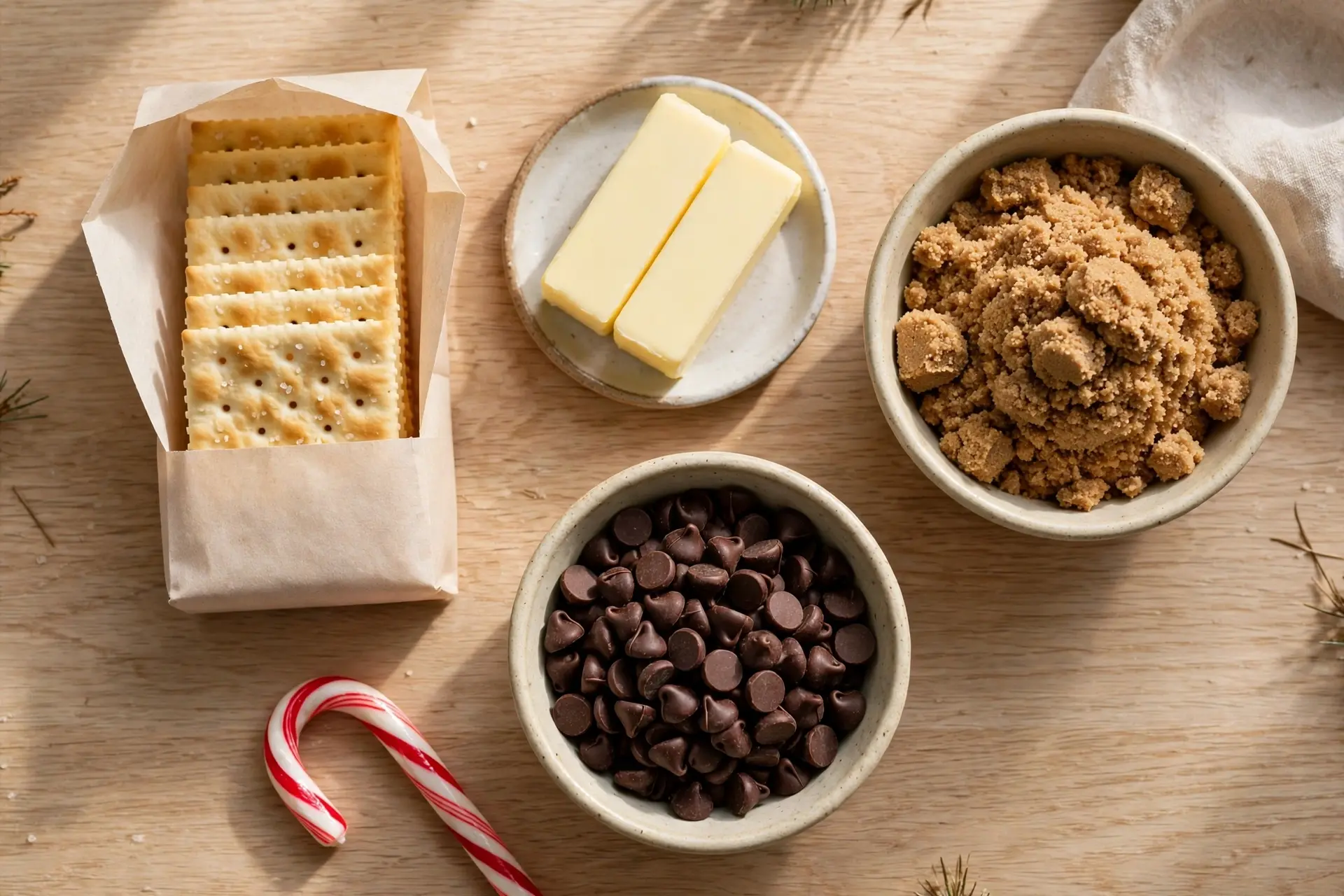
For the cracker base
- About 40 saltine crackers (1 sleeve, about 140 g), salted tops
For the toffee
- 1 cup (227 g) unsalted butter
- 1 cup packed (220 g) brown sugar, light or dark
For the chocolate layer and toppings
- 2 cups (340 g) semi-sweet chocolate chips
- 1/2 cup (60 g) chopped pecans or walnuts (optional)
- Crushed candy cane, flaky sea salt, or holiday sprinkles (optional)
Ingredient notes. Salted or unsalted butter both work; if you use salted butter, skip any extra salt on top. Dark brown sugar gives a deeper, more caramel-like toffee, light brown sugar gives a milder one. A candy thermometer is not required for this recipe, because the timing does the work, but if you own one, the toffee should reach about 290°F (143°C) at the end of the boil.
How to make saltine toffee, step by step
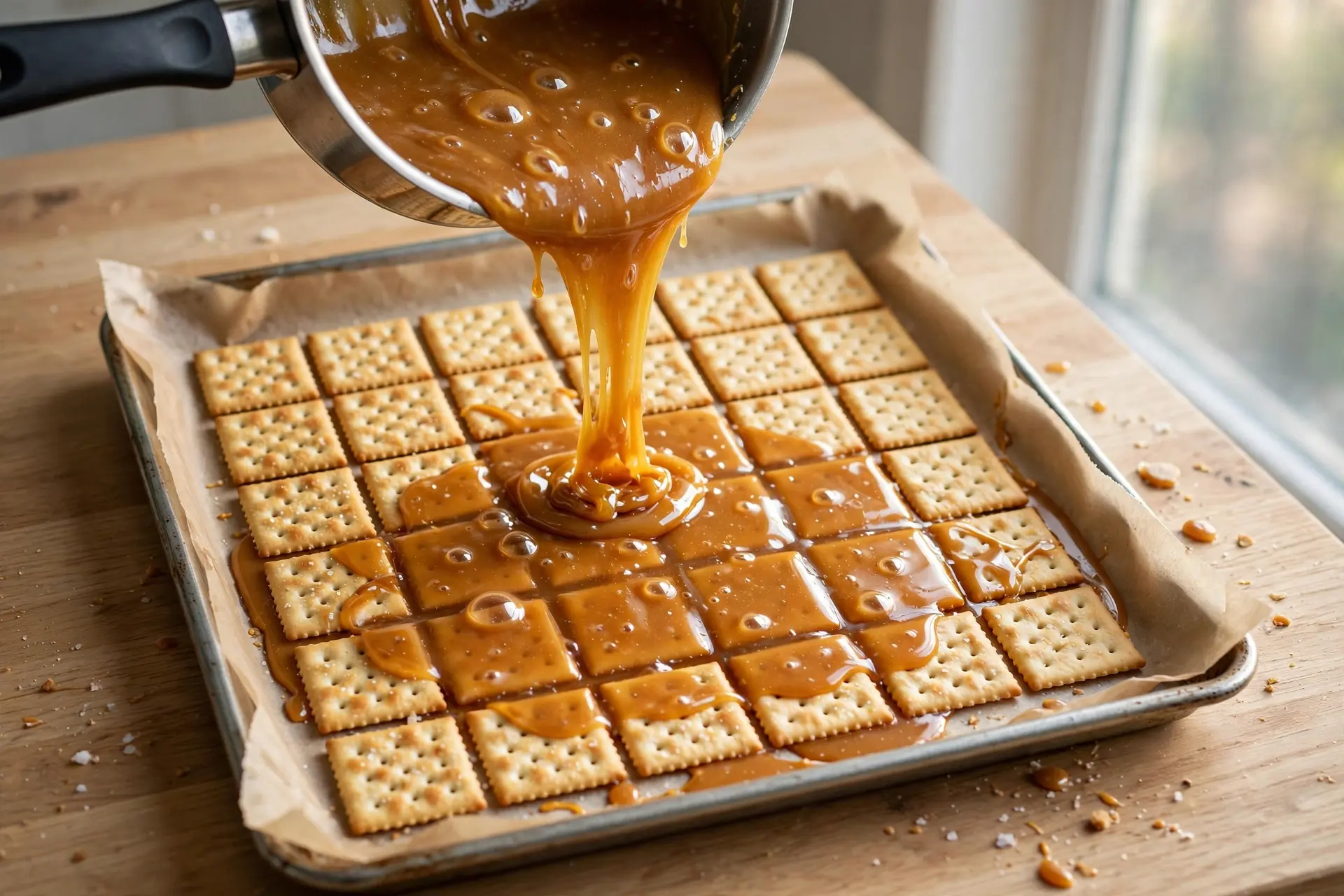
- Prep the pan. Heat the oven to 400°F (200°C). Line a rimmed 18 x 13 inch sheet pan with foil, then with parchment on top. The foil lets you lift the whole slab out; the parchment is what the candy releases from.
- Lay the crackers. Arrange the saltines in one tight layer, salted side up, edges touching. Break crackers to fill gaps at the edges; holes become weak spots later.
- Melt butter and sugar. Put the butter and brown sugar in a medium saucepan over medium heat. Stir as it melts and comes together, so the sugar dissolves evenly before the boil starts.
- Boil 3 minutes. Bring the mixture to a full rolling boil, start your timer, and stop stirring. Boil exactly 3 minutes. The toffee will look thick, glossy, and a shade darker.
- Pour and spread. Pour the hot toffee over the crackers and spread it edge to edge with a spatula, working quickly before it starts to set.
- Bake 5 minutes. Put the pan in the oven for 5 minutes. The toffee will bubble across the whole surface; this step is what makes the finished candy snap.
- Add the chocolate. Take the pan out and scatter the chocolate chips evenly over the hot toffee. Leave them for 2 minutes so the heat melts them.
- Spread the chocolate. Spread the melted chocolate into a smooth, even layer with an offset spatula or the back of a spoon.
- Add toppings. While the chocolate is still wet, scatter on the nuts, crushed candy cane, sprinkles, or a pinch of flaky sea salt, and press very lightly so they stick.
- Chill until set. Refrigerate the pan for about 30 minutes, until the chocolate is firm and the slab feels hard all the way through.
- Break and serve. Lift the slab out by the foil, peel off the parchment, and break it into pieces with your hands. Serve at room temperature, where the snap is at its best.
Troubleshooting: every common problem, one fix each
| Problem | Cause | Fix |
|---|---|---|
| Toffee is chewy, candy bends | Boil too short, or bake skipped | Boil the full 3 minutes and always bake the full 5 minutes |
| Crackers turned soggy | Moisture left in the toffee; stored uncovered | Same fix as above, and store airtight once fully cool |
| Toffee is grainy | Stirred during the boil, or sugar crystallized | Stir only while melting; once it boils, hands off |
| Butter separated into an oily layer | Heat too high, or not stirred while coming to the boil | Melt on medium heat, stir until it boils, or whisk in 1 tablespoon of hot water |
| Chocolate will not set | Room too warm, or layer spread too thick | Chill the pan 30 minutes; spread the chocolate in a thinner, even layer |
| Chocolate turned white or streaky (bloom) | Moisture or temperature swings in storage | Store cool and dry in an airtight tin; it is safe to eat, just cosmetic |
| Toffee stuck to the pan | Pan lined with foil only, or not lined | Always use parchment over the foil; foil alone sticks |
Variations worth trying
- Peanut butter Christmas crack. Warm 1/2 cup (130 g) of creamy peanut butter and drizzle it over the toffee before the chocolate, or swirl it into the melted chocolate layer.
- Without chocolate. Skip the chips entirely and finish the hot toffee with chopped nuts and flaky salt, or drizzle with melted white chocolate instead.
- Ritz or graham base. Swap the saltines for a tight layer of Ritz crackers or graham cracker sheets and keep the toffee exactly the same.
- Potato chip version. A fast-growing variation: replace the crackers with a layer of ridged potato chips for the strongest sweet-and-salty contrast of all.
- Peppermint. Crushed candy cane over the chocolate, the same finish as our homemade peppermint bark, makes this taste like December in one bite.
How to store it (and the freezing answer)
Here is the one clear answer, because other recipes disagree with each other: set the candy in the fridge, then store it in an airtight tin or container at room temperature for up to 1 week, with parchment between layers. Keep it away from heat and humidity, which soften the crackers.
Do not freeze it for storage. Freezing makes the sugar turn grainy as it thaws and pulls moisture into the crackers, so the snap you worked for is gone. The fridge is fine for a few days if your kitchen is warm, but let the pieces sit at room temperature for 10 minutes before serving so the toffee is not rock hard.
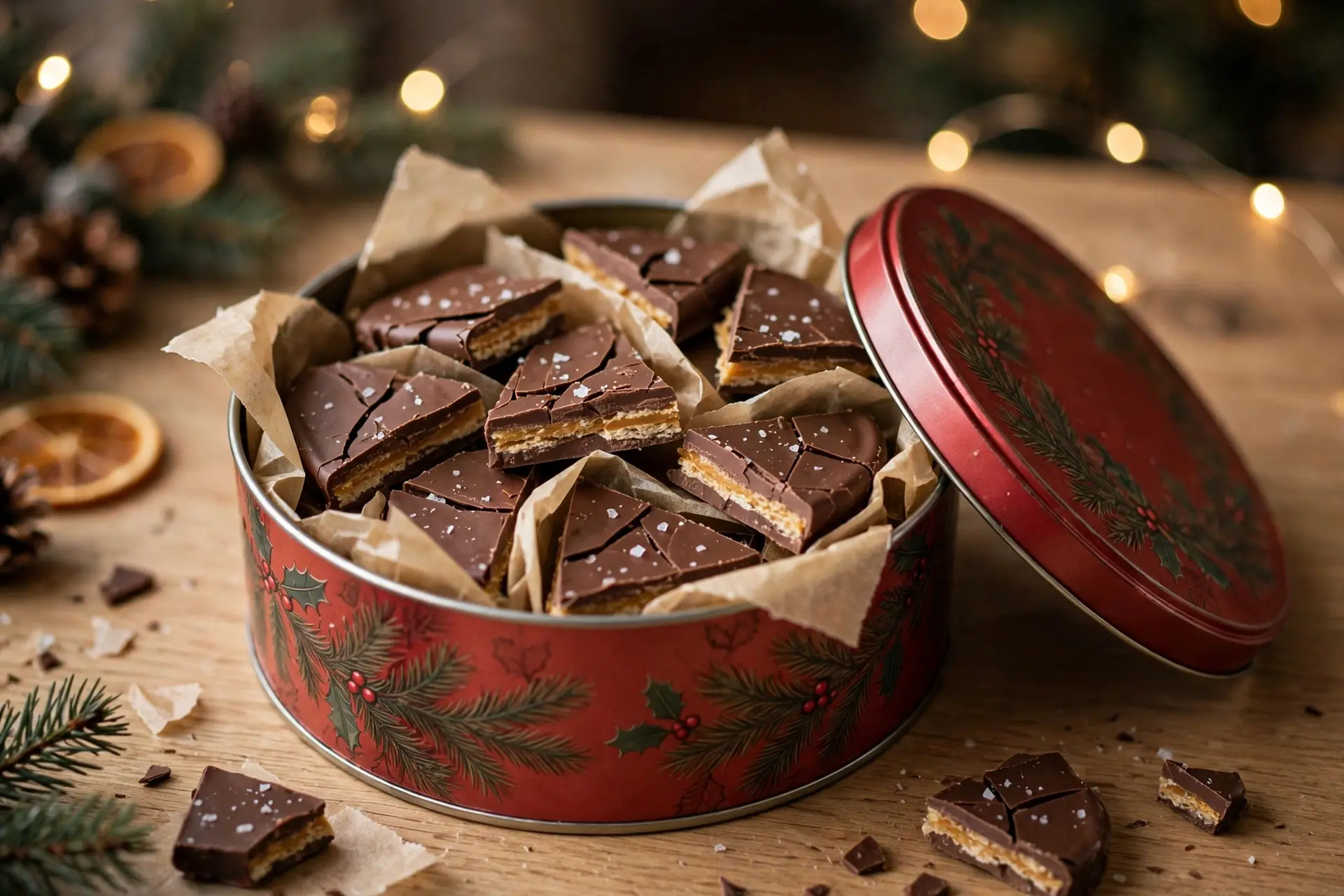
Make ahead and gifting. This is one of the best make-ahead candies on the site: make it 3 to 4 days before you need it and it will still snap. For gifts, pack pieces in small tins or cellophane bags with parchment between the layers, and add it to the same box as our easy Christmas cookies and a batch of soft gingerbread cookies. The full menu it belongs on is in our Christmas dinner guide.

Best Saltine Toffee Recipe (Christmas Crack)
Ingredients
Equipment
Method
- Heat the oven to 400°F (200°C). Line a rimmed 18 x 13 inch sheet pan with foil, then with parchment on top. The foil lets you lift the whole slab out; the parchment is what the candy releases from.
- Arrange about 40 saltines in one tight layer, salted side up, edges touching. Break crackers to fill gaps at the edges; holes become weak spots later.
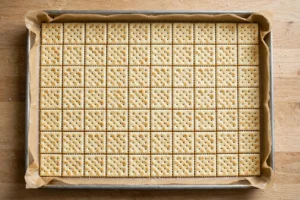
- Put the butter and brown sugar in a medium saucepan over medium heat. Stir as it melts and comes together, so the sugar dissolves evenly before the boil starts.

- Bring the mixture to a full rolling boil, start a timer, and boil exactly 3 minutes WITHOUT stirring. Stirring during the boil is what makes toffee grainy. The toffee will look thick, glossy, and a shade darker.

- Pour the hot toffee over the crackers and spread it edge to edge with a spatula, working quickly before it starts to set.
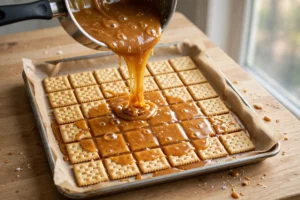
- Bake for 5 minutes at 400°F (200°C), until the toffee bubbles across the whole surface. This step drives out moisture so the finished candy snaps.
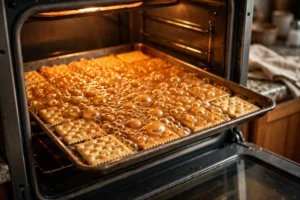
- Take the pan out and scatter the chocolate chips evenly over the hot toffee. Leave them for 2 minutes so the heat melts them.
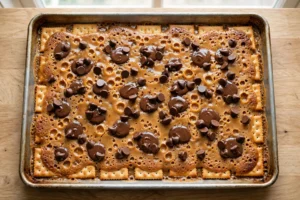
- Spread the melted chocolate into a smooth, even layer with an offset spatula or the back of a spoon.
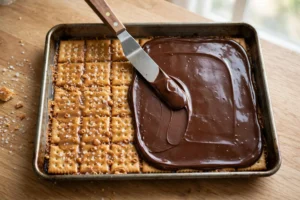
- While the chocolate is still wet, scatter on the nuts, crushed candy cane, sprinkles, or a pinch of flaky sea salt, and press very lightly so they stick.
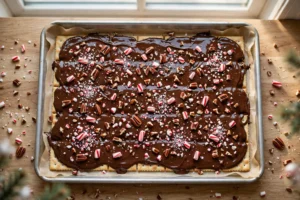
- Refrigerate the pan for about 30 minutes, until the chocolate is firm and the slab feels hard all the way through.

- Serve: lift the slab out by the foil, peel off the parchment, and break it into pieces with your hands. Serve at room temperature, where the snap is at its best.

Notes
- The 3-minute boil and 5-minute bake are the whole secret: shortening either one is why this candy turns out chewy or soggy.
- Stir the toffee only while it melts. Once it boils, stirring makes it grainy.
- No thermometer needed, but if you use one, the toffee is ready at about 290°F (143°C).
- Substitutes: Ritz or graham crackers for the base; white chocolate for the layer; peanut butter drizzled over the toffee (see the variations in the article).
- Storage: airtight at room temperature up to 1 week, parchment between layers. Do not freeze for storage; the sugar turns grainy and the crackers soften.
- Make ahead: make it 3 to 4 days ahead; it keeps its snap.
- UK/Australia: saltines are sold as soda crackers or Saltine crackers; brown sugar is the same; a half sheet pan is a large rimmed baking tray.
Nutrition
| Nutrient | Per piece (estimate) |
|---|---|
| Calories | 120 kcal |
| Carbohydrates | 14 g |
| Sugar | 11 g |
| Fat | 7 g |
| Saturated fat | 4 g |
| Protein | 1 g |
| Sodium | 90 mg |
Nutrition is calculated from the ingredient amounts and is an estimate only; toppings change the numbers.
Frequently asked questions
How do I make saltine cracker toffee?
Lay saltines in a lined sheet pan, pour over butter and brown sugar toffee boiled for exactly 3 minutes, bake 5 minutes at 400°F (200°C), cover with melted chocolate, chill, and break into pieces. The full step-by-step recipe with grams is in the recipe card above.
Can I make saltine cracker toffee without chocolate?
Yes. Leave the chips off and finish the hot toffee with chopped nuts and a pinch of flaky sea salt, or use a thin drizzle of melted white chocolate instead of a full layer. The toffee and cracker layers stay exactly the same.
Should saltine toffee be refrigerated?
Only to set it. Chill the pan for about 30 minutes so the chocolate firms up, then store the pieces in an airtight container at room temperature for up to 1 week. Long storage in the fridge can soften the crackers.
Why is my saltine toffee chewy?
Almost always the boil or the bake was cut short. The toffee needs the full 3-minute rolling boil and the full 5-minute bake to drive out moisture; if either step is shortened, the candy stays chewy and the crackers go soggy.
Why is my saltine toffee grainy?
Graininess is crystallized sugar, usually caused by stirring the toffee while it boils. Stir only while the butter and sugar melt and come to the boil, then leave it completely alone for the 3 minutes.
What are some variations of saltine toffee?
The most popular are a peanut butter drizzle or swirl, a white chocolate layer, a Ritz or graham cracker base instead of saltines, a ridged potato chip base, and crushed candy cane or chopped nuts on top. All of them keep the same 3-minute toffee.
Does homemade toffee freeze well?
This one does not. Freezing makes the sugar turn grainy as it thaws and draws moisture into the crackers, which ruins the snap. Set it in the fridge, store it airtight at room temperature, and eat it within a week.
What happens if you stir toffee too much?
Stirring during the boil knocks sugar crystals into the mixture, and those crystals seed more crystals, so the finished toffee turns grainy instead of smooth and glossy. Stir while it melts, then stop the moment it boils.
Is Christmas crack better with saltines or Ritz?
For the classic candy, saltines. They are thinner, drier, and sturdier, so the finished pieces snap cleanly and the salt balances the sweet toffee. Ritz makes a richer but softer, more crumbly batch.