
Why do people pour heavy cream on cinnamon rolls before baking?
Because it fixes the two things that go wrong with homemade rolls: dry edges and a raw, doughy middle. These cinnamon rolls with heavy cream soak up the warm cream as they bake, so the bottoms turn into a soft, gooey sauce, the centres bake up tender instead of bready, and every roll stays moist for days. For a 9×13 pan of 12 rolls, the exact amount is 1/2 cup (120 ml) of warm cream, poured over the rolls after their second rise, right before the pan goes into the oven.
No heavy cream in the fridge, or the yeast packet is missing? Check what you can swap before you start with our ingredient substitution calculator, and it will give you the exact amount to use instead.
The smell that gets everybody out of bed
There is one smell that can fill a house and pull people out of bed without an alarm clock, and it is cinnamon rolls in the oven. Brown sugar and cinnamon melting into butter, soft dough turning golden, and that warm, sweet steam when the pan comes out. On Christmas morning it beats any present under the tree.
It is also the bake that makes home bakers nervous. Yeast, rising, rolling, cutting: it sounds like a project. It is not, really. The dough is a simple one, the shaping is forgiving, and the heavy cream does half the work for you at the end. Most of the time in this recipe is the dough resting while you get on with your morning. Shape the rolls the night before if you like (the overnight method is below), and Christmas morning becomes nothing more than pouring cream over a pan and turning on the oven.
What the heavy cream actually does
The cream is not a garnish and it is not there for richness alone. It does three real jobs in the pan.
First, it soaks downward. As the rolls bake, the warm cream slips into the gaps between the rolls and into the bottom layer of dough, where it mixes with the melting brown sugar filling that always leaks a little. The two become a gooey sauce that coats the bottom of every roll, which is why bakery rolls have that soft, sticky base and dry homemade ones do not.
Second, it steams the centres. The extra liquid in a hot pan turns to gentle steam around the rolls, and that steam keeps the middle of the spiral soft while the inside finishes cooking. This is the fix for the classic problem of rolls that are browned on top and still doughy in the centre.
Third, it protects the edges. The rolls at the corners of the pan, the ones that usually dry out first, sit in the cream and stay tender.
One honest note: this trick has been around a long time, and plenty of bakers swear by it. What this recipe adds is the part nobody writes down: the exact amount for each pan size, the temperature the cream should be, and the centre temperature that tells you the rolls are truly done.
J. ZaiB Micro-Tip: Cut the rolled log with unflavoured dental floss instead of a knife. Slide the floss under the log, cross the ends over the top, and pull. The knife presses the spiral flat and squeezes the filling out; the floss slices cleanly and the swirl stays tall and round.
The cream, measured for every pan
Too little cream and the trick does nothing. Too much and the rolls sit in a puddle and bake up soggy on the bottom. The reliable measure is about 2 teaspoons of cream per roll, which works out to:
| Pan and batch | Rolls | Warm heavy cream |
|---|---|---|
| 9×13 inch pan (this recipe) | 12 | 1/2 cup (120 ml) |
| 9 inch round or 8×8 inch pan (small batch) | 6 | 1/4 cup (60 ml) |
| 9 inch round pan, canned rolls | 8 | 1/3 cup (80 ml) |
| Round or square pan, canned jumbo rolls | 5 | 1/4 cup (60 ml) |
Warm the cream first. Cold cream straight from the fridge shocks the risen dough and slows the bake in the middle of the pan. Warm it to about 100 to 110°F (38 to 43°C), so it feels warm on the inside of your wrist, and pour it slowly over the rolls, aiming for the gaps between them as much as the tops. Never use hot cream: it can damage the yeast in the dough surface and melt the filling out before the rolls even reach the oven.
No heavy cream? The swap still works with what you have, in this order: half-and-half, the same amount, a little less rich; evaporated milk, the same amount, with a slightly caramel taste; whole milk, the same amount, the thinnest result of the three, so the bottoms are soft rather than gooey. All three are poured on warm, the same way.
Ingredients
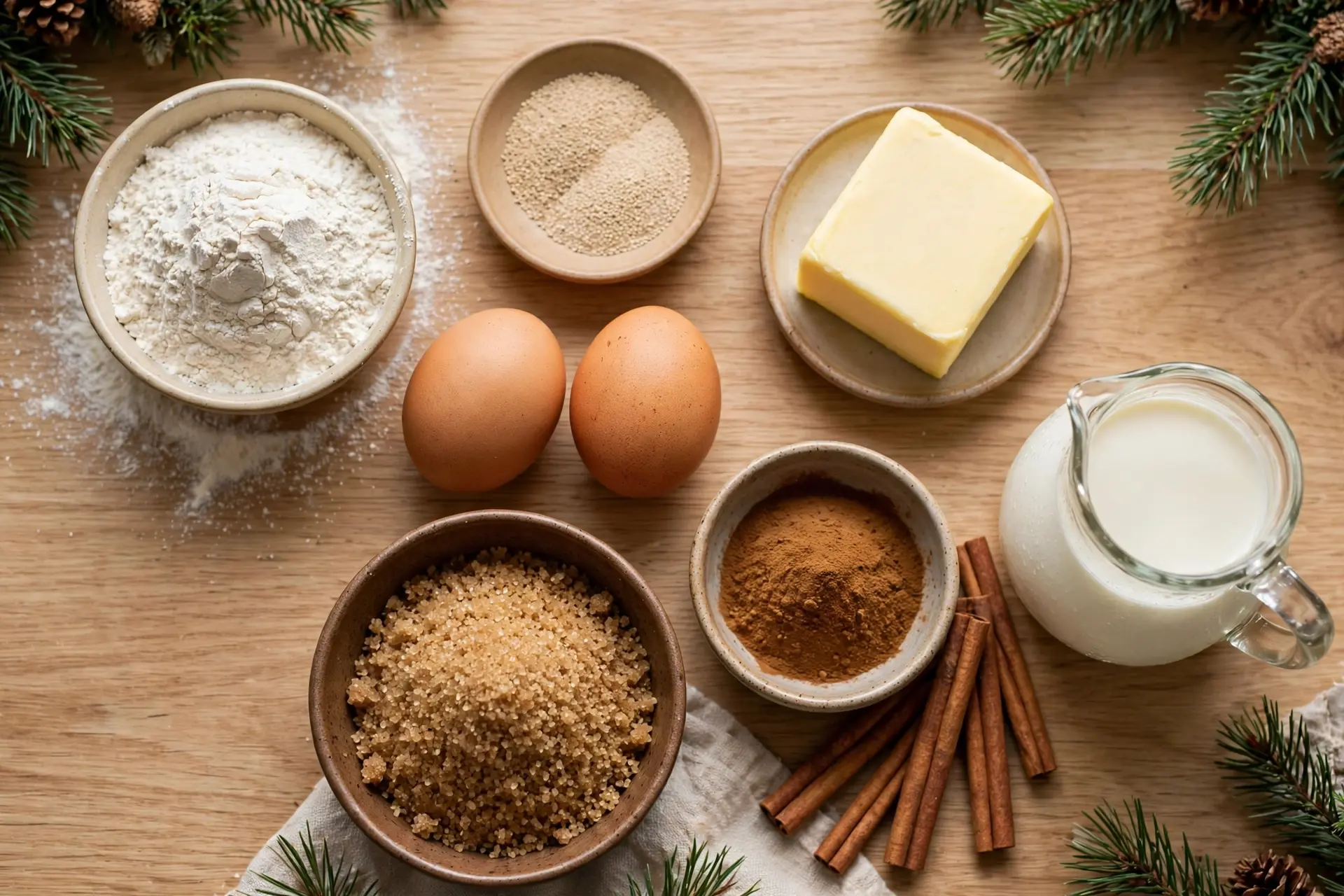
For the dough:
- 1 cup (240 ml) whole milk, warm
- 2 1/4 teaspoons (7 g) active dry yeast (1 standard packet)
- 1/2 cup (100 g) granulated sugar
- 1/2 cup (113 g) unsalted butter, melted
- 2 large eggs, at room temperature
- 1 teaspoon fine salt
- 4 1/2 cups (540 g) all-purpose flour, plus a little more for dusting
For the filling:
- 1/2 cup (113 g) unsalted butter, very soft but not melted
- 1 cup packed (220 g) brown sugar
- 2 1/2 tablespoons (20 g) ground cinnamon
For the cream pour:
- 1/2 cup (120 ml) heavy cream, warmed
For the cream cheese icing:
- 4 oz (113 g) cream cheese, softened
- 1/4 cup (57 g) unsalted butter, softened
- 1 1/2 cups (180 g) powdered sugar
- 2 tablespoons milk, plus a little more if needed
- 1 teaspoon vanilla extract
- 1 small pinch of salt
Ingredient notes. The milk for the dough should be warm, about 105 to 115°F (40 to 46°C), like warm bath water. Hotter than that can kill the yeast, and the dough will never rise; if the milk overheats, let it cool before the yeast goes in. The filling butter must be soft enough to spread like a thick paste, but not melted: melted butter runs straight out of the spiral in the oven and takes the sugar with it. Weigh the flour if you can. A heavy hand with the cup is the most common reason homemade rolls come out dense and bready instead of soft.
A quick word on raw flour. Flour is a raw ingredient, so do not taste the unbaked dough, and wash hands and surfaces after handling it, the same care you would take with any raw baking ingredient.
How to make cinnamon rolls with heavy cream, step by step

- Wake up the yeast. Stir the yeast and a pinch of the sugar into the warm milk and leave it for 5 to 10 minutes, until the surface is foamy. If nothing foams, the yeast is dead or the milk was too hot, and it is better to start this small step again than to waste the whole batch.
- Mix the dough. In a large bowl or the bowl of a stand mixer, whisk the melted butter, the rest of the sugar, the eggs, and the salt. Pour in the foamy yeast mixture, then add the flour and mix until a shaggy dough forms.
- Knead. Knead for 8 to 10 minutes, by dough hook or by hand on a lightly floured counter, until the dough is smooth, elastic, and only slightly tacky. It should stretch thin without tearing straight away. A dough that is still sticky and rough needs another minute or two, not more flour.
- First rise. Put the dough in a greased bowl, cover, and leave it in a warm spot for about 1 hour, until doubled in size. A cold kitchen can stretch this to 1 hour 30 minutes, and that is fine.
- Roll it out. On a floured counter, roll the dough into a rectangle of about 16 x 12 inches (40 x 30 cm), roughly 1/4 inch thick, with a long side facing you.
- Fill it. Spread the soft filling butter over the whole rectangle, leaving a 1/2 inch strip bare along the far long edge. Stir the brown sugar and cinnamon together, sprinkle it evenly over the butter, and press it down lightly with your hands so it stays put while you roll.
- Roll and cut. Roll the dough up tightly from the long side nearest you, and pinch the bare strip to seal the seam. Mark the log into 12 equal pieces, then cut with unflavoured dental floss (see the Micro-Tip above) or a sharp serrated knife used with a gentle sawing motion.
- Second rise. Arrange the rolls cut side up in the greased 9×13 pan, cover, and leave for 30 to 45 minutes, until the rolls are puffy and touching each other. This touching part matters: rolls that bake with gaps between them dry out at the sides, while rolls that rise into each other stay soft.
- Pour the cream. Warm the heavy cream and pour it slowly over the risen rolls, aiming into the gaps. Let the pan sit for 5 minutes so the cream settles in.
- Bake. Bake at 350°F (175°C) for 25 to 30 minutes, until the tops are a deep golden colour. Then check the centre roll with an instant read thermometer: it should read 190°F (88°C). That number, not the colour, is the real sign the middles are cooked through. If the tops are browning fast but the centre is not there yet, cover the pan loosely with foil and give it another 3 to 5 minutes.
- Make the icing. While the rolls bake, beat the cream cheese and soft butter until smooth, then beat in the powdered sugar, milk, vanilla, and salt until the icing is thick but spreadable. Add milk a teaspoon at a time if it needs loosening.
- Serve. Let the baked rolls rest for 5 minutes, then spread the icing generously over the warm rolls so it melts into the spirals. Serve warm, straight from the pan.
Bake times by pan, and the 190°F centre rule
Colour lies with cinnamon rolls. The brown sugar on top darkens early, and a pan can look finished while the centre roll is still doughy inside. Bake by temperature and time together:
| Pan | Batch | Bake at 350°F (175°C) | Centre should read |
|---|---|---|---|
| 9×13 inch metal pan | 12 rolls | 25 to 30 minutes | 190°F (88°C) |
| 9×13 inch glass pan | 12 rolls | 28 to 33 minutes | 190°F (88°C) |
| 9 inch round pan | 6 rolls (small batch) | 20 to 25 minutes | 190°F (88°C) |
| 9×9 inch pan | 8 to 9 rolls | 23 to 28 minutes | 190°F (88°C) |
Glass heats more slowly than metal, which is why the glass pan needs the extra minutes. Whatever the pan, pull the rolls when the centre roll reads 190°F (88°C): below that the middle is underdone, and much above 200°F (93°C) the rolls start to dry out.
Troubleshooting: every common problem, one fix each
| Problem | Cause | Fix |
|---|---|---|
| Centres are raw and doughy while the tops look done | The pan came out on colour alone, or the cream went in cold | Bake to the centre temperature, 190°F (88°C), and always pour the cream on warm; tent with foil if the tops race ahead |
| Rolls baked with gaps between them and dry sides | Under-proofed on the second rise, or the pan is too big for the batch | Let the rolls rise until puffy and touching before baking; use the pan size in the recipe, or the small batch amounts for a smaller pan |
| Filling leaked out and pooled in the pan | Filling butter was melted, or the log was rolled loosely | Use soft, paste-like butter, roll the log snugly, and place the rolls seam side down |
| Rolls are dense and bready | Too much flour, or the dough was under-kneaded | Weigh the flour at 540 g, and knead the full 8 to 10 minutes until the dough is smooth and elastic |
| Dough never rose | Milk was too hot for the yeast, or the yeast was old | Keep the milk at 105 to 115°F (40 to 46°C), and check the yeast foams in the first step before mixing the dough |
| Bottoms are soggy | Too much cream for the pan, or the rolls sat in the cream too long before baking | Match the cream to the pan using the table above, and bake within about 10 minutes of pouring |
| Icing melts and slides straight off | Icing went onto rolls that were too hot, or it was mixed too thin | Rest the rolls 5 minutes first; beat in an extra spoonful of powdered sugar if the icing runs |
| Icing is lumpy | Cream cheese or butter was still cold | Soften both fully before beating, and beat the two together first, before the sugar goes in |
Variations worth trying
- Small batch cinnamon rolls (6 rolls). Halve everything: milk 1/2 cup (120 ml), yeast 1 1/8 teaspoons, granulated sugar 1/4 cup (50 g), melted butter 1/4 cup (57 g), 1 large egg, 1/2 teaspoon salt, flour 2 1/4 cups (270 g). Filling: soft butter 1/4 cup (57 g), brown sugar 1/2 cup packed (110 g), cinnamon 1 1/4 tablespoons. Icing: cream cheese 2 oz (57 g), butter 2 tablespoons (28 g), powdered sugar 3/4 cup (90 g), milk 1 tablespoon, vanilla 1/2 teaspoon. Bake the 6 rolls in a 9 inch round or 8×8 inch pan with 1/4 cup (60 ml) warm cream poured over, at 350°F (175°C) for 20 to 25 minutes, to the same 190°F (88°C) centre.
- Canned dough shortcut (the Pillsbury version). Arrange 1 can of refrigerated cinnamon rolls (8 rolls) in a greased 9 inch round pan, pour 1/3 cup (80 ml) warm heavy cream over and between them, cover the pan tightly with foil, and bake at 350°F (175°C) for 25 to 30 minutes, until the rolls are puffed, golden, and cooked in the centre. Uncover for the last 5 minutes if you want more colour. Finish with the icing that comes in the can, or the cream cheese icing above. For the 5-count jumbo cans, use 1/4 cup (60 ml) cream and the same method.
- Quick cinnamon rolls without yeast. For a same-morning batch with no rising: stir 2 1/4 cups (270 g) flour, 1 tablespoon baking powder, 1/2 teaspoon salt, and 2 tablespoons sugar together, rub in 1/4 cup (57 g) cold butter, then mix in about 3/4 cup (180 ml) milk to a soft dough. Roll, fill, and cut exactly as in the main recipe, place in the pan, pour over the cream for your pan size, and bake at 350°F (175°C) for 20 to 25 minutes. The texture is softer and more biscuit like than the yeasted roll, and the cream trick works just the same.
- Overnight cinnamon rolls (make ahead). Make the recipe through step 8, cover the pan tightly, and refrigerate for up to 16 hours instead of doing the second rise on the counter. In the morning, let the pan sit at room temperature for 30 to 45 minutes while the oven heats, then pour the warm cream over and bake as written, adding 2 to 3 minutes if the centre needs it. This is the version to use on Christmas morning.
How to store them (and reheat them properly)
These rolls keep better than most, thanks to the cream. Because of the cream in the pan and the cream cheese in the icing, do not leave the baked rolls sitting out: once they have cooled and been iced, cover the pan and refrigerate within 2 hours, and they keep well for up to 5 days.
Reheating is what makes them taste fresh again. A single roll needs 20 to 30 seconds in the microwave to go soft and warm all the way through. For a whole pan, cover it with foil and warm it at 300°F (150°C) for 8 to 10 minutes.
Freezing. Shaped, unbaked rolls freeze well: cut them, freeze them solid on a tray, then bag them for up to 3 months. Thaw overnight in the fridge in their baking pan, then give them the counter rise, the cream, and the bake as written. Baked rolls also freeze, un-iced, for up to 3 months; thaw in the fridge overnight, reheat as above, and ice after warming.
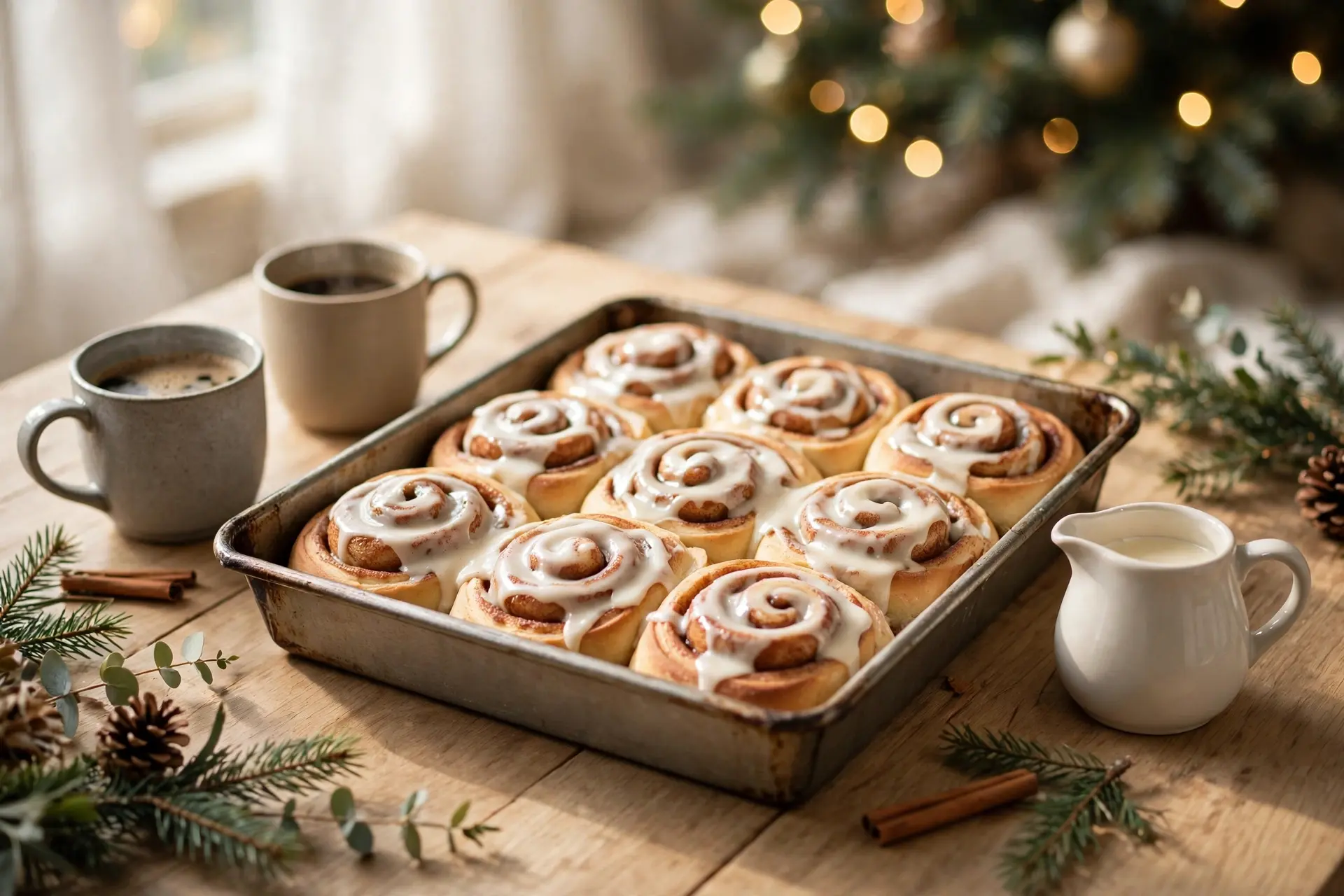
For the Christmas table. Bake these on Christmas morning and let the savoury planning live in the Christmas dinner guide. A pan of these, a tin of soft gingerbread cookies, and a plate of snickerdoodles covers the sweet side of the day, and a box of Christmas Crack next to a tray of easy Christmas cookies is the gift that disappears fastest.

Best Cinnamon Rolls with Heavy Cream Recipe
Ingredients
Equipment
Method
- Stir the yeast and a pinch of the sugar into the warm milk and leave 5 to 10 minutes, until foamy (WHY: the foam proves the yeast is alive before you commit the flour).
- Whisk the melted butter, the rest of the sugar, the eggs, and the salt in a large bowl, pour in the yeast mixture, add the flour, and mix to a shaggy dough.
- Knead 8 to 10 minutes, by dough hook or by hand, until smooth, elastic, and only slightly tacky (WHY: kneading builds the stretch that lets the rolls rise tall instead of spreading flat).
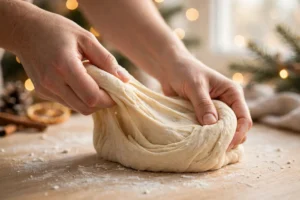
- Place in a greased bowl, cover, and rise in a warm spot for about 1 hour, until doubled.

- Roll the dough on a floured counter to a 16 x 12 inch (40 x 30 cm) rectangle, about 1/4 inch thick, long side facing you.
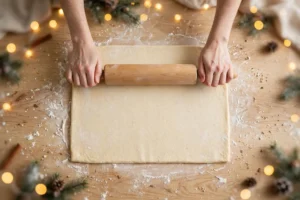
- Spread the soft filling butter over the dough, leaving a 1/2 inch strip bare on the far long edge; sprinkle the brown sugar and cinnamon over it evenly and press down lightly (WHY: pressing keeps the filling in the spiral while you roll).

- Roll up tightly from the near long side, pinch the seam closed, mark 12 equal pieces, and cut with unflavoured dental floss or a serrated knife (WHY: floss slices without squashing, so the swirls stay round).
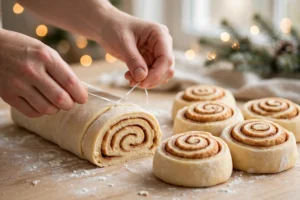
- Arrange the rolls cut side up in the greased 9×13 pan, cover, and rise 30 to 45 minutes, until puffy and touching (WHY: rolls that touch bake up soft sided; rolls with gaps dry out).
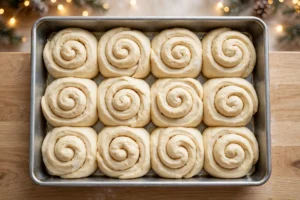
- Pour the warm heavy cream slowly over the rolls, aiming into the gaps, and rest the pan 5 minutes (WHY: warm cream soaks in instead of shocking the dough, and becomes the gooey sauce under the rolls).

- Bake at 350°F (175°C) for 25 to 30 minutes, until deep golden and the centre roll reads 190°F (88°C) on an instant read thermometer; tent loosely with foil for the last minutes if the tops brown too fast.

- While the rolls bake, beat the cream cheese and soft butter smooth, then beat in the powdered sugar, milk, vanilla, and salt to a thick, spreadable icing.
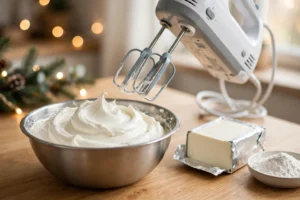
- Rest the baked rolls 5 minutes (WHY: straight from the oven the icing melts and slides off; 5 minutes keeps it in the spirals).
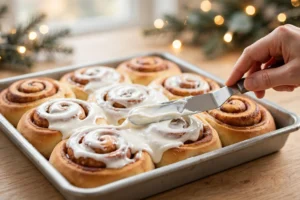
- Serve: spread the icing generously over the warm rolls and serve warm, straight from the pan.

Notes
- The cream rule: about 2 teaspoons of warm heavy cream per roll. 9×13 pan of 12 rolls = 1/2 cup (120 ml); 9 inch round of 6 rolls = 1/4 cup (60 ml); canned 8 rolls = 1/3 cup (80 ml); canned 5 jumbo rolls = 1/4 cup (60 ml).
- Doneness is a temperature, not a colour: the centre roll must read 190°F (88°C). Much above 200°F (93°C) the rolls dry out.
- Small batch: halve every ingredient for 6 rolls (full amounts are in the article’s Variations section), bake in a 9 inch round pan at 350°F (175°C) for 20 to 25 minutes.
- Canned dough shortcut: 1 can (8 rolls) in a greased 9 inch pan, 1/3 cup (80 ml) warm cream over the top, foil on, 350°F (175°C) for 25 to 30 minutes.
- No yeast version: a baking powder dough (amounts in the article) gives soft, biscuit style rolls in 20 to 25 minutes with no rising at all.
- Make ahead: shape the rolls, cover, and refrigerate up to 16 hours; next morning rest 30 to 45 minutes at room temperature, pour the warm cream over, and bake, adding 2 to 3 minutes if needed.
- Storage: because of the cream and the cream cheese icing, cover and refrigerate within 2 hours of cooling; keeps up to 5 days. Reheat a single roll 20 to 30 seconds in the microwave, or a foil covered pan at 300°F (150°C) for 8 to 10 minutes.
- Freezing: shaped unbaked rolls freeze up to 3 months (thaw overnight in the fridge in the pan, then rise, cream, and bake). Baked un-iced rolls freeze up to 3 months; ice after reheating.
- UK/Australia: all-purpose flour is plain flour, powdered sugar is icing sugar, and heavy cream is double cream; the amounts and the method are the same.
Nutrition
| Nutrient | Per roll (estimate) |
|---|---|
| Calories | 590 kcal |
| Carbohydrates | 79 g |
| Sugar | 43 g |
| Fat | 28 g |
| Saturated fat | 17 g |
| Protein | 7 g |
| Sodium | 240 mg |
Nutrition is calculated from the ingredient amounts and is an estimate only; the cream that stays in the pan and any icing left in the bowl change the numbers slightly.
Frequently asked questions
What does adding heavy cream to cinnamon rolls do?
Three things. It soaks into the bottom of the rolls and mixes with the leaked brown sugar filling to make a gooey sauce, it steams the centres so they bake up soft instead of doughy, and it keeps the corner rolls tender instead of dry. Use about 2 teaspoons per roll: 1/2 cup (120 ml) for a 9×13 pan of 12.
Why do people pour heavy cream on cinnamon rolls before baking?
Because baking is when the cream can do its work. Poured over the risen rolls just before the pan goes in, the cream has the whole bake to soak downward into the dough and the gaps. Poured on after baking it would just sit on top like a sauce. Warm cream, about 100 to 110°F (38 to 43°C), works best, because cold cream slows the bake in the middle of the pan.
How much heavy cream to add to canned cinnamon rolls?
For a standard can of 8 rolls in a 9 inch round pan, use 1/3 cup (80 ml) of warm heavy cream, poured over and between the rolls. For the 5-count jumbo cans, 1/4 cup (60 ml) is enough. Cover the pan with foil and bake at 350°F (175°C) for 25 to 30 minutes, until the centres are cooked through.
Can I make Pillsbury cinnamon rolls with heavy cream?
Yes, and it is the easiest version of this trick. Arrange the rolls in a greased pan, pour the warm cream over them using the canned amounts in the question above, cover with foil, and bake at 350°F (175°C) for 25 to 30 minutes. The rolls come out taller, softer, and gooey at the bottom, much closer to a bakery roll than the package directions give you.
Can I use heavy cream instead of whole milk for cinnamon rolls?
For the pour over the top, heavy cream is the ingredient the recipe is built on. Inside the dough, you can replace part of the milk with cream, but a full swap makes a very rich dough that rises slowly. The balanced version is 1/2 cup (120 ml) heavy cream plus 1/2 cup (120 ml) water in place of the 1 cup of milk. If you have no cream at all, half-and-half, evaporated milk, or whole milk can be poured over the rolls the same way, in that order of richness.
What is the viral cinnamon roll hack?
It is this recipe: pouring warm heavy cream over cinnamon rolls right before baking, so they come out soft, gooey, and bakery style. The hack works on homemade rolls and on canned rolls, and the two details that make it reliable are warming the cream first and matching the amount to the pan, about 2 teaspoons per roll.
Is it better to bake cinnamon rolls in a glass or metal pan?
Both work, and the rolls in this recipe were written for a metal 9×13 pan. Metal heats quickly and gives the shorter bake, 25 to 30 minutes. Glass heats more slowly, so the same batch needs 28 to 33 minutes, and glass holds its heat after the pan comes out, which means the rolls keep cooking a little as they sit. Whichever pan you use, the centre roll reading 190°F (88°C) is the finish line.
Is it better to bake cinnamon rolls at 350 or 375?
350°F (175°C), for this style of roll. At 375°F the tops and the sugary edges brown before the centres of a full pan have finished, which is how you get rolls that look done and are raw in the middle. The gentler 350°F bake gives the centre time to reach 190°F (88°C) just as the tops turn a deep golden colour.
What are common mistakes when making homemade cinnamon rolls?
The five that cause almost every failed batch: milk hot enough to kill the yeast, flour measured heavy instead of weighed, filling butter melted instead of soft so it leaks out, rolls pulled from the oven on colour instead of centre temperature, and cream poured on cold from the fridge. Every one of them is covered in the troubleshooting table above, with its fix.