
What are ube cookies, and what makes them so purple?
Ube cookies are soft, chewy cookies flavoured with ube, the purple yam from the Philippines. The deep violet colour is natural: it comes from the yam itself, and a little ube extract in the dough keeps that purple bright through the bake. Ube halaya, the sweet purple yam jam, brings the real flavour and a moist, tender crumb.
Out of butter or eggs mid-recipe? Our ingredient substitution calculator gives exact swaps for 20 common ingredients.
The Cookie That Stops the Scroll
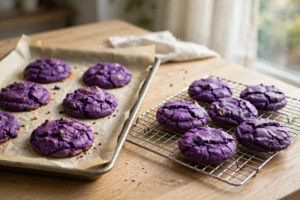
Some cookies you eat first with your eyes, and this is the one. A plate of deep purple cookies does not look like anything else in the bakery case, and the first question everyone asks is the right one: is that colour real?
Yes. There is no grape soda trick and no bottle of dye doing the heavy lifting. The purple is a yam.
If you have only met ube as ice cream or as a bright drink in a cafe, the cookie version is the friendliest place to start. It is a regular soft cookie in every way that matters, butter, sugar, flour, one bowl of purple dough, with one new flavour to learn: gentle, sweet, a little nutty, a little like vanilla.
There is one small catch, and it is the reason this recipe is written the way it is. That purple is delicate. Treat it wrong and your violet dough comes out of the oven grey, blue, or even green. The fix is simple, it is built into the ingredient list below, and the science section explains exactly why it works.

Why This Recipe Works
Two ube ingredients, two different jobs. Ube halaya brings the real yam flavour and moisture. Ube extract brings colour strength and aroma. Using only one of them gives you half a cookie: jam alone can bake up pale, and extract alone tastes thin.
The leavening is kept gentle on purpose. Baking soda is alkaline, and alkaline dough pushes purple pigment toward blue and green. This recipe leans on baking powder for lift and uses only a small amount of soda, so the colour survives the oven.
The dough rests before baking. Halaya makes a soft, sticky dough. A 30 minute chill firms the butter, so the cookies bake thick and chewy instead of spreading into purple pancakes.
They come out while the centres still look soft. Like every good chewy cookie, these finish setting on the hot tray. Pulling them early is what keeps the middle tender instead of cakey.
What Is Ube? A Beginner’s Guide
If ube is new to you, here is everything you need before you shop, in plain words.
A Purple Yam, Not a Sweet Potato
Ube (say it “oo-beh”) is a yam, a starchy root vegetable with rough, bark-like skin and flesh that ranges from lavender to deep violet. It comes from the Philippines, where it has been a dessert ingredient for generations. It is often confused with purple sweet potato, but they are different plants: the sweet potato is usually drier and sweeter, while ube is moister, creamier and more fragrant.
What Ube Tastes Like
Ube tastes gently sweet and creamy, with a nutty flavour that people often compare to a mix of vanilla and pistachio, or vanilla and white chocolate. It is mild, never sharp or earthy tasting. That softness is exactly why it works in cookies: the flavour is different from every other cookie on the tray, but nobody finds it strange.
Ube Is Not Taro
Taro is the other root that gets mixed up in this conversation. Taro flesh is pale, almost white with purple flecks, and its flavour is milder and more starchy. Most of the bright purple “taro” drinks in cafes get their colour from added colouring, not from the taro itself. If a recipe needs real purple and real flavour, it needs ube.
The Two Forms This Recipe Uses
Ube halaya is ube jam: cooked, mashed purple yam stirred with milk (often coconut milk or condensed milk), butter and sugar until it becomes a thick, spoonable jam. It is a dessert on its own in the Philippines, and in this dough it is the flavour and moisture base.
Ube extract is a small bottle of concentrated flavouring and colour, used by the teaspoon like vanilla extract. It deepens the purple and lifts the aroma. It is a helper, not a substitute for the real yam, and this recipe uses both on purpose.
Where to Buy Ube Halaya and Ube Extract
You do not need a specialty trip across the city, but you do need the right shop.
- Asian and Filipino grocery stores are the first stop. Halaya sits in jars near the dessert and jam section, and ube extract is a small bottle in the baking and flavouring aisle, usually near the vanilla and pandan.
- The freezer aisle of the same stores often carries frozen grated ube. That is real ube too, and it works for homemade halaya, but for these cookies the ready made jam is the simpler path.
- Online is the reliable backup. Both the jam and the extract keep well unopened, so ordering them with a regular grocery order is easy.
- Read the jar once. Good halaya lists ube (purple yam) as the first ingredient. Some jars lean mostly on sugar and colouring; they still work, but the flavour will be quieter, and the extract in the recipe matters more.
One honest note: fresh whole ube is hard to find outside Southeast Asia and is not needed here. The jar and the bottle are the standard home baker’s route, in the Philippines and everywhere else.
The Science of the Purple, and the Chew
Here is the one piece of kitchen science that decides whether your cookies come out violet or green.
Why Ube Changes Colour
Ube’s purple comes from pigments called anthocyanins, the same family of pigments that colours blueberries and red cabbage. Anthocyanins are natural pH indicators, which means they change colour depending on how acidic or alkaline their surroundings are. In a slightly acidic mix they stay red to purple. In an alkaline mix they slide toward blue, grey and green.
Baking soda is alkaline. That is the whole problem. A dough with too much soda can go into the oven violet and come out looking bruised. Egg whites are mildly alkaline too, which is why ube bakes are famously moody about colour.
This recipe handles it three ways. The soda is kept low at 1/4 teaspoon, just enough to help the edges set. Baking powder, which is close to neutral once mixed, does most of the lifting. And the ube extract reinforces the purple, so the colour that goes into the oven is stronger than the colour the heat can fade.
Why These Cookies Stay Chewy
Three things protect the chew. The halaya is a wet jam, so it brings moisture that plain flour dough does not have, and moist dough bakes into a tender crumb. The small share of brown sugar holds onto that moisture after baking, the same molasses trick used in classic chewy cookies. And the chill plus the early pull from the oven stop the cookies from drying out at the edges before the centres set.
J. ZaiB Micro-Tip: Press the Chips on Top
Fold most of the white chocolate chips into the dough, but keep a small handful back. Press two or three chips onto the top of each warm cookie the moment the tray leaves the oven. They soften in place without melting away, and every cookie looks finished instead of plain. It is a ten second step that makes the purple pop harder, because white against violet is the strongest contrast on the tray.
What You Need
For the Cookies
- ½ cup (113g) unsalted butter, softened to room temperature
- ½ cup (100g) granulated white sugar
- ¼ cup (50g) packed light brown sugar
- 1 large egg, at room temperature
- ½ cup (about 130g) ube halaya (purple yam jam), store bought is fine
- 1½ tsp ube extract
- 1 tsp vanilla extract
- 2 cups (250g) all-purpose flour, spooned and leveled
- 1 tsp baking powder
- ¼ tsp baking soda
- ½ tsp fine salt
- ¾ cup (130g) white chocolate chips, optional but recommended
Equipment: Large mixing bowl, medium bowl, hand mixer or sturdy spoon, spatula, cookie scoop or tablespoon, 2 baking sheets, parchment paper, wire rack
Makes: About 20 cookies
A Note on the Halaya
Halaya is already sweetened, which is why this dough uses less sugar than a regular cookie dough. Jars vary: some are sweeter than others. If your jar tastes very sweet on the spoon, that is normal, and the recipe amounts already allow for it. Stir the jar well before measuring, because the jam settles.

How to Make Ube Cookies, Step by Step
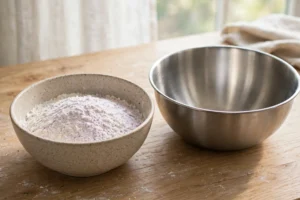
Mix the Dry Ingredients
Whisk Them Together First: In a medium bowl, whisk the flour, baking powder, baking soda and salt until evenly combined, then set the bowl aside. Mixing the leaveners into the flour first spreads them evenly, so no single cookie gets a pocket of soda. That matters twice here, because a soda pocket is also a green spot waiting to happen.
Cream the Butter and Sugars
Beat It Pale: Beat the softened butter with both sugars until the mixture looks pale and fluffy, 2 to 3 minutes with a hand mixer, or 3 to 5 minutes by hand with a sturdy spoon. Scrape down the sides of the bowl once halfway through. This step whips in the air that gives the cookies their lift and soft crumb.
Add the Egg and the Ube
Beat It Fully Purple: Add the egg and beat until combined. Add the ube halaya, ube extract and vanilla, and beat again until the mixture is one even purple colour with no pale streaks. This is the moment the dough tells you the truth: if the colour is streaky now, it will be streaky in the cookie, so give it the extra twenty seconds.
Finish the Dough
Fold, Do Not Beat: Tip the dry ingredients over the wet mixture and fold with a spatula until no dry flour streaks remain. Fold in the white chocolate chips, saving a small handful for topping if you are using the micro-tip above. The dough will be soft, sticky and a strong purple. Soft is correct; the chill is next.
Chill the Dough
Give It Thirty Minutes: Cover the bowl and chill the dough for 30 minutes. Cold butter melts slowly in the oven, so the cookies hold their shape and bake up thick. Warm ube dough, by contrast, spreads fast, because halaya adds both moisture and sugar, and sugar melts early. Skipping this chill is the most common reason ube cookies come out flat.
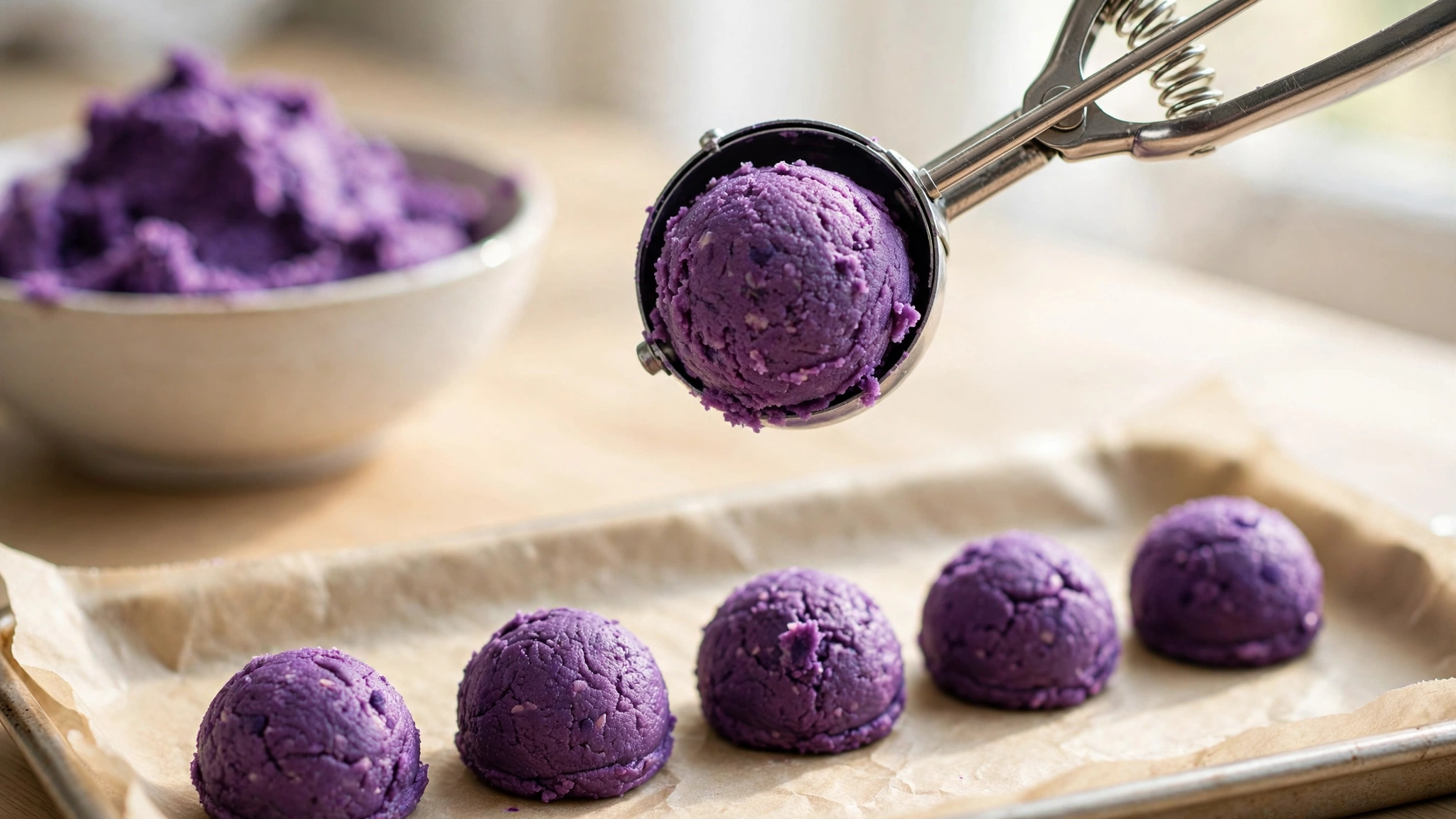
Scoop and Bake
Space Them Out: Heat the oven to 350°F (175°C) and line 2 baking sheets with parchment paper. Scoop balls of dough of about 2 tablespoons each and place them 2 inches apart, about 10 to a sheet. The batch bakes in 2 batches, or on 2 sheets at once if your oven fits them.
Watch the Edges, Not the Clock: Bake for 10 to 12 minutes, until the edges look set and matte and the tops have lost their wet shine, while the centres still look slightly soft and glossy. That soft looking centre is baked; it firms up as it cools. Browning is not your doneness sign on a purple cookie, because you cannot see golden edges on violet dough. Set edges and a matte top are the signs to trust.
Cool on the Tray: Leave the cookies on the hot baking sheet for 10 minutes before moving them to a wire rack. They are delicate while hot, and the tray time is what sets the chewy centre. If you are pressing extra chips on top, do it in the first minute, while the surface is still soft.

J. ZaiB’s Expert Touch
Scoop First, Then Chill the Tray
If your kitchen is warm, scoop the dough balls onto the lined tray first and chill the whole tray for 30 minutes instead of chilling the bowl. Cold, firm balls go straight into the oven and spread the least of all, which gives you the thickest, chewiest cookies. It also means the second batch is ready to bake the moment the first tray comes out.
A Pinch of Flaky Salt
Ube is gentle and sweet, and a tiny pinch of flaky sea salt on the warm cookies makes the vanilla and nut notes stand up. It is optional, and it is the difference between a cookie that tastes sweet and a cookie that tastes like ube.
Common Mistakes and How to Fix Them
The colour faded to a dull lavender. The dough was fine and the oven did it. Heat fades anthocyanins over time, so an overbaked ube cookie is a pale one. Fix: pull the cookies at the early end of the time range, when the edges are just set, and make sure the extract made it into the dough. Extract is the colour insurance in this recipe.
The cookies turned green or blue. That is the alkaline problem from the science section: too much baking soda, or a heavy hand with an alkaline ingredient, pushed the pigment across. Fix: measure the soda level, never heaped, keep it at 1/4 teaspoon, and let the baking powder do the lifting. The taste is unaffected, so a green batch is still edible; it is only the colour that moved.
The cookies spread into thin pancakes. The dough went in warm, or the chill was skipped. Halaya dough is wetter than regular cookie dough and needs its rest. Fix: chill the full 30 minutes, and if the dough still feels soft and sticky when scooped, chill the scooped tray for 15 minutes more before baking.
The cookies came out dry and cakey. Too much flour, or a few minutes too long in the oven. Fix: spoon and level the flour instead of scooping the cup through the bag, which packs in extra flour, and pull the cookies while the centres still look slightly soft.
The ube flavour is barely there. The jar did the best it could, but halaya brands vary a lot in strength. Fix: do not cut the extract, and next time look for a jar that lists ube first on the label. The flavour also reads stronger at room temperature than straight from the fridge, so let cold cookies sit out for 15 minutes before serving.
Variations to Try
Ube crinkle cookies: Chill the dough as written, roll each ball generously in powdered sugar before baking, and bake the same way. The tops crack as they spread, giving white crinkles across the purple. This is the classic Filipino bakery look.
Coconut ube cookies: Fold ½ cup of unsweetened shredded coconut in with the white chocolate chips. Ube and coconut are traditional partners, and the coconut adds a gentle chew of its own.
No chips, pure ube: Leave the white chocolate chips out entirely for a plainer cookie where the yam flavour stands alone. The texture stays soft; the look is a clean, even purple.
Purple sweet potato version: If ube halaya cannot be found, mashed purple sweet potato plus the ube extract makes a workable stand-in. The cookies will be a little drier and the colour leans pinker, so add the extract as written and expect a softer flavour. It is a cousin of this cookie, not the same cookie, and the FAQ below covers the swap in more detail.
Love ube in cake form too? This ube cake recipe from our friend’s site CakeDraft is moist, vividly purple and frosted with macapuno.
How to Store Them
Keep the cookies in an airtight container at room temperature for up to 3 days. They stay soft because of the moisture in the halaya, but like most chewy cookies they are at their best in the first two days. Do not leave them uncovered on the counter; the 2 hour rule for leaving baked goods out applies to serving, and after that they belong in the container.
Freeze baked cookies for up to 1 month in a sealed bag, and thaw them on the counter for 20 minutes. Or freeze the scooped dough balls on a tray, bag them once solid, and bake from frozen at the same temperature, adding 1 to 2 minutes. The colour survives freezing well, because the pigment is locked into the dough before the heat ever touches it.
Ube Cookies
Ingredients
Equipment
Method
- Whisk the flour, baking powder, baking soda, and salt together in a medium bowl.

- Set the bowl aside.
- Beat the softened butter, granulated sugar, and brown sugar together until pale and fluffy, 2 to 3 minutes with a hand mixer or 3 to 5 minutes by hand.
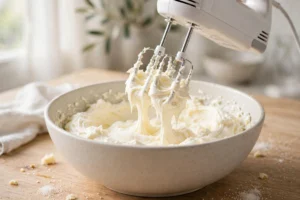
- Scrape down the sides of the bowl once halfway through.
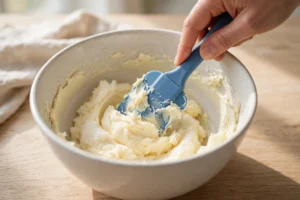
- Add the egg and beat until combined.

- Add the ube halaya, ube extract, and vanilla extract.

- Beat until the mixture is one even purple colour with no pale streaks.
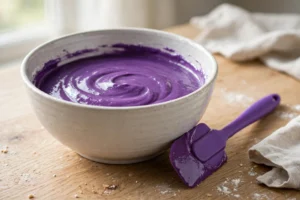
- Add the dry ingredients to the wet ingredients.

- Fold with a spatula until no dry flour streaks remain.

- Fold in the white chocolate chips, if using, saving a small handful for topping.

- Cover the bowl and chill the dough for 30 minutes.
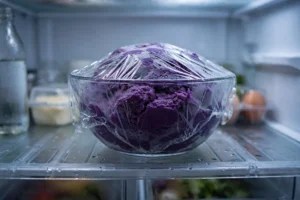
- Heat the oven to 350°F (175°C) and line 2 baking sheets with parchment paper.
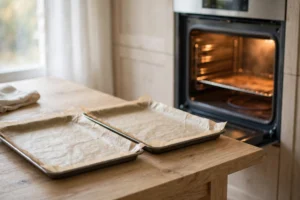
- Scoop balls of dough of about 2 tablespoons each and place them 2 inches apart, about 10 to a sheet. The batch bakes in 2 batches, or on 2 sheets at once.

- Bake for 10 to 12 minutes, until the edges look set and matte and the centres still look slightly soft and glossy.
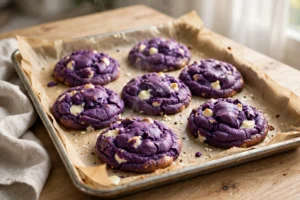
- Cool the cookies on the baking sheet for 10 minutes, then move them to a wire rack.
Notes
Nutrition
Per cookie, based on 20 cookies, including the white chocolate chips. Values are estimates and vary with the brand of ube halaya used.
| Nutrient | Amount |
|---|---|
| Calories | ~165 kcal |
| Total Fat | 7g |
| Saturated Fat | 5g |
| Cholesterol | 20mg |
| Sodium | 105mg |
| Total Carbs | 23g |
| Sugars | 13g |
| Fiber | 1g |
| Protein | 2g |
Note: Values are estimates and vary based on exact ingredients and serving size used.
Frequently Asked Questions
What does ube taste like?
Ube tastes gently sweet and creamy, with a nutty flavour that is often compared to vanilla mixed with pistachio, or vanilla mixed with white chocolate. It is mild rather than strong, which is why it works so well in cookies, cakes and ice cream: the flavour is clearly different, but soft enough that everyone at the table enjoys it.
Is ube the same as taro?
No. Ube and taro are different plants. Ube is a true yam with deep purple flesh and a sweet, vanilla-like flavour, and it is used almost entirely in desserts. Taro is a different root with pale flesh dotted with purple flecks, a milder and more starchy taste, and a place in both savoury and sweet dishes. The bright purple of many taro drinks comes from added colouring, not from the taro itself.
What is ube halaya and how do I use it?
Ube halaya is a Filipino jam made by cooking mashed ube with milk (often coconut milk or condensed milk), butter and sugar until it turns thick and spoonable. Eat it chilled as a dessert on its own, spread it on toast, use it as a filling for pastries, swirl it into ice cream, or stir it into bakes like these cookies, where it brings real ube flavour, moisture and a base of natural purple.
Can I use ube extract instead of ube halaya?
You can, but the cookie changes. Extract alone gives you the colour and the aroma, so the cookies will look right, but the flavour will be thinner and the crumb a little drier, because the jam’s moisture and real yam are missing. If the jar is truly out of reach, use the extract, keep the rest of the recipe the same, and expect a good purple sugar cookie rather than a full ube cookie.
Is ube extract the same as ube halaya?
No, they are two different products that do two different jobs. Ube halaya is a cooked jam made from real purple yam, milk, butter and sugar; it has body, sweetness and moisture. Ube extract is a concentrated liquid flavouring, used by the teaspoon like vanilla extract, and its main jobs are aroma and strong colour. Most ube baking, including this recipe, uses both together.
Why do the ube cookies turn green or blue after baking?
It is a colour chemistry reaction, not spoiled ingredients. Ube’s purple pigment, anthocyanin, changes colour with pH: alkaline conditions push it toward blue and green. Baking soda is alkaline, and egg whites lean alkaline too, so a dough with too much soda can turn in the oven. The flavour is unchanged. To keep the purple, measure the soda carefully and keep it low, let baking powder do the lifting, and include the ube extract, which reinforces the colour.
Can I make them without ube halaya?
Yes, with a swap. Mashed purple sweet potato, steamed until soft, can stand in for the halaya in the same amount, with the ube extract kept in the dough to carry the flavour and colour. The cookies will be slightly drier and lean a little pinker, and the flavour will be sweeter and less fragrant, but they still bake into soft purple cookies. Rehydrated ube powder, mixed into a thick paste with a little warm milk, is the other workable option.
Can I make ube cookies ahead of time?
Yes, and the dough actually improves with the wait. Scoop the dough balls, cover them, and keep them in the fridge for 1 to 2 days before baking; the flavour settles and the cold dough spreads less, so the cookies bake thicker. For longer storage, freeze the scooped balls for up to 1 month and bake them from frozen, adding 1 to 2 minutes to the baking time.
More Cookies to Bake Next
If the purple batch disappears fast, the cookie tin has other directions to go. Our Easy Christmas Cookies are the no-chill cut-outs that hold perfect shapes, and the Chocolate Chip Cookies are the chewy bakery style classic with browned butter. For decorating day, the Sugar Cookie Frosting dries hard and glossy for stacking. For everything in one place, browse the Easy Recipes Collection.
The Purple Cookie Worth the Jar
Ube asks for two small purchases and one small piece of science, and in return it gives you the only cookie on the tray that nobody has to be introduced to twice. Keep the soda low, chill the dough, and pull them while the centres still shine.
Beat the colour in until there are no streaks. Trust the matte edges, not the clock.
Tag us on Instagram @viralfoodhacks706 when your batch comes out of the oven still properly purple. Save this to Pinterest for the next time a plain cookie tray needs one loud colour on it.