

Can You Make Gingerbread Cookies Without Eggs?
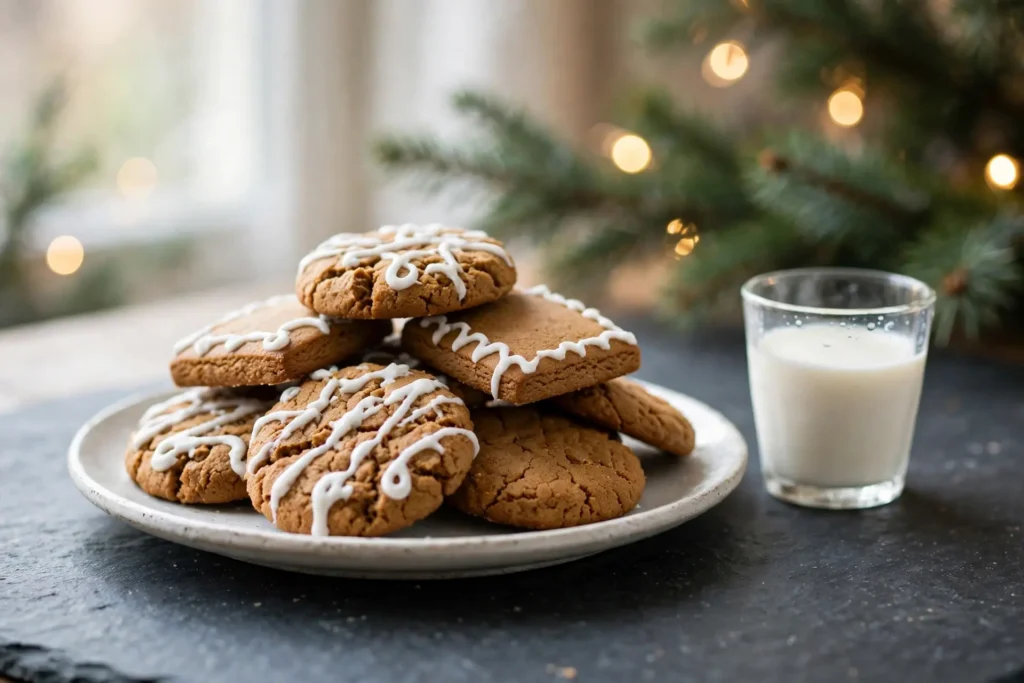
Short answer: Yes. These gingerbread cookies without eggs use one flax egg, made from 1 tablespoon of ground flaxseed and 3 tablespoons of water rested for 5 minutes, and it does the egg’s binding job in this dough. The molasses and brown sugar keep the cookies soft, the double chill keeps the shapes sharp, and nobody at the table will guess the egg is missing.
The eggs ran out, or someone at your table cannot eat them, and now the gingerbread men are in danger. Do not panic, and do not skip the baking day. A gingerbread man does not actually need an egg. He needs something to hold his arms on, and a spoonful of ground flaxseed mixed with water does that job quietly.
This is the same dough as my soft gingerbread cookies, with one swap: the egg comes out and a flax egg goes in. Everything else stays, the generous molasses, the full tablespoon each of ginger and cinnamon, the thick 1/4 inch roll, and the double chill that keeps every antler and button exactly where you cut it.
Stay with me until the recipe card, because there is one small resting step that decides whether an eggless dough holds together or crumbles, plus the storage trick that keeps these soft for a week.
J. ZaiB Micro-Tip: Weigh your flour if you can. One packed cup can hold 30 extra grams, and that extra flour is the number one reason gingerbread turns out dry, with or without eggs.
Ingredients You Need (With Grams)
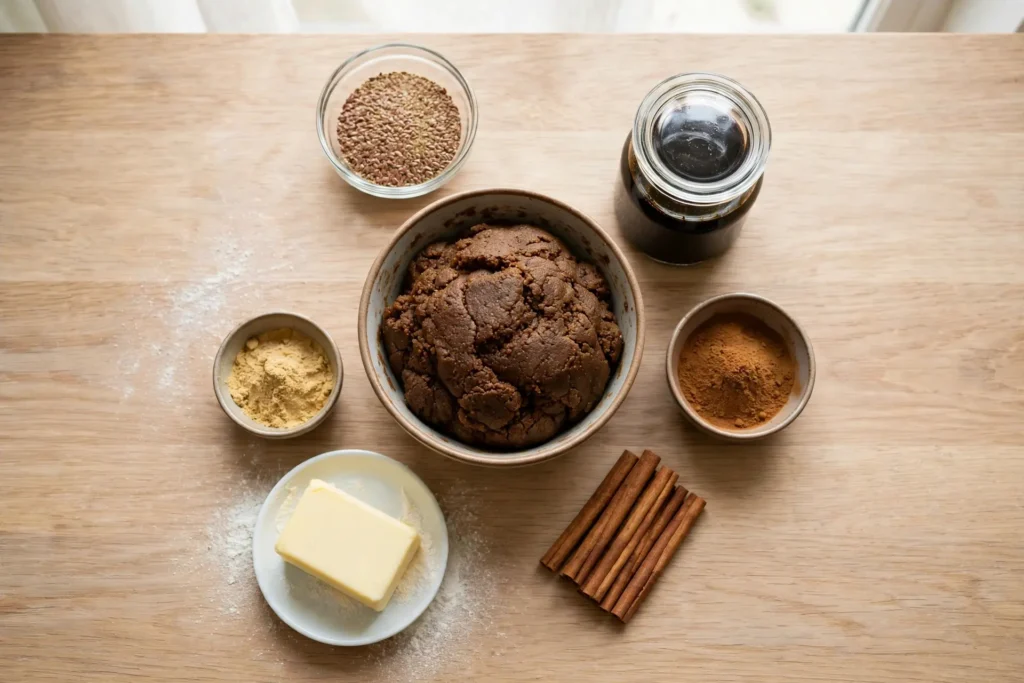
- 1 tablespoon ground flaxseed
- 3 tablespoons water
- 3 1/2 cups (440 g) all-purpose flour, plus more for rolling
- 1 teaspoon baking soda
- 1/2 teaspoon fine salt
- 1 tablespoon ground ginger
- 1 tablespoon ground cinnamon
- 1/2 teaspoon ground allspice
- 1/4 teaspoon ground cloves
- 10 tablespoons (142 g) unsalted butter, softened to room temperature
- 3/4 cup (150 g) dark brown sugar, packed
- 2/3 cup (160 ml / 226 g) unsulphured molasses, NOT blackstrap
- 1 1/2 teaspoons pure vanilla extract
Why this works without an egg (the science, kept simple)
- The flax egg is the binder. Ground flaxseed soaked in water forms a natural gel in about 5 minutes. That gel holds the dough together the way an egg white does, so the cut shapes stay in one piece from tray to oven.
- Molasses is the moisture keeper. It pulls water in and holds it, which is why these cookies stay soft on day three. Blackstrap is too bitter and dry here, so skip it.
- Dark brown sugar adds a second layer of molasses flavor and more moisture than white sugar.
- Baking soda gives a gentle lift so the centers stay puffy and soft instead of dense. In a dough this rich and thick, the egg was never the main lifter, which is why losing it changes so little.
- A full tablespoon each of ginger and cinnamon sounds like a lot. It is not. Gingerbread should taste like gingerbread, and the spices mellow as the cookies bake and rest.
How to Make Gingerbread Cookies Without Eggs (Step by Step)
The body method below is text only. Every step has its own photo in the recipe card, where the step photos belong.
- Make the flax egg first. Whisk the ground flaxseed and water in a small bowl and let it rest for 5 minutes. It turns thick and glossy, like a loose gel. Do not skip the rest: ungelled flax water does not bind, and the dough will crumble.
- Whisk the dry ingredients. In a medium bowl, whisk the flour, baking soda, salt, ginger, cinnamon, allspice, and cloves.
- Beat the butter and sugar. In a large bowl, beat the softened butter and dark brown sugar for about 2 minutes, until light and fluffy.
- Add the wet ingredients. Beat in the molasses until smooth, then the gelled flax egg and the vanilla. The mixture may look a little loose. That is normal for an eggless batter.
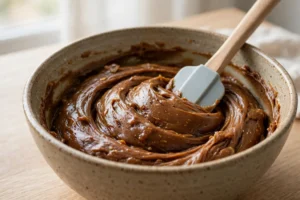
- Combine. Add the dry ingredients on low speed and mix only until no flour streaks remain. The dough will be soft and sticky. That sticky dough is exactly right.
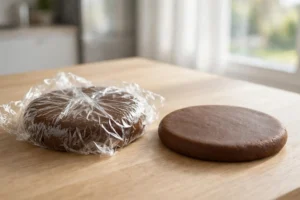
- Chill the dough (first chill). Divide the dough in half, flatten each half into a disc, wrap well, and refrigerate at least 3 hours, or overnight (up to 3 days). Do not skip this. Cold dough is what keeps the shapes sharp, and the flax gel firms up as it chills, which makes the dough easier to roll.
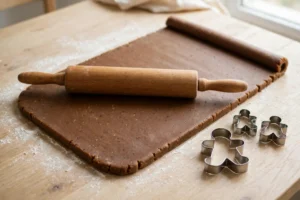
- Roll it thick. On a floured surface, roll one disc to a full 1/4 inch thick. Thin dough makes crisp cookies. Thick dough makes soft cookies.
- Cut your shapes. Cut with floured cutters and place the cookies 1 inch apart on parchment-lined baking sheets.
- Chill the shapes (second chill, the no-spread secret). Put the whole tray in the fridge or freezer for 10 to 15 minutes while the oven heats to 350°F (177°C). Cold shapes going into a hot oven spread far less.
- Bake 9 to 11 minutes. The edges should look set and the centers should still look soft and slightly puffy. They will not look fully done. Take them out anyway. Eggless cookies firm up as they cool, and this early pull is the step that decides soft versus hard.
- Cool, then decorate. Cool on the tray for 5 minutes, move to a rack, and decorate only when fully cool, or the icing melts and slides.
J. ZaiB Micro-Tip: Roll between two sheets of parchment and you will need almost no extra flour. Less extra flour means softer cookies.
The Easy Icing (Included, No Extra Click Needed)
Most sites send you to a second recipe for icing. Here it is, in the same place:
- 2 cups (240 g) powdered sugar, sifted
- 2 to 3 tablespoons milk
- 1/2 teaspoon vanilla extract
- Pinch of salt
Whisk until thick and smooth. It should fall off the spoon in a slow ribbon. Spoon into a piping bag or a zip bag with the corner snipped. For outlining, keep it thick. For flooding, add milk a few drops at a time. Let decorated cookies set uncovered for about 2 hours before stacking.
Want the classic hard finish instead? Whisk 2 cups (240 g) powdered sugar with 2 tablespoons meringue powder and 4 to 5 tablespoons warm water until it holds stiff peaks. That is royal icing, and it dries firm enough for stacking and gifting.
No Molasses? Use This Instead
No molasses in the pantry is the most common gingerbread emergency, so here is the full fix, not a footnote:
- Best swap: honey, maple syrup, or dark corn syrup, measured 1:1 (2/3 cup / 160 ml).
- What changes: the cookies come out lighter in color and a little milder. Add 1 extra tablespoon of dark brown sugar and 1/2 teaspoon extra ginger to bring the deep flavor back.
- What not to use: blackstrap molasses as the main sweetener (too bitter), or granulated sugar alone (the cookies lose their softness and their color).
Troubleshooting: Fix Every Eggless Gingerbread Problem
- Dough crumbles and will not hold together: the flax egg did not gel. Whisk the flaxseed and water again and give it the full 5 minutes, until it looks thick and glossy, before it goes anywhere near the butter.
- Cookies spread and lost their shape: the dough or the cut shapes were too warm. Chill longer, chill the cut tray, and check that your baking soda is fresh.
- Cookies are hard and snappy: they baked too long or were rolled too thin. Pull them when the centers still look soft, and roll a full 1/4 inch.
- Cookies cracked on top: the dough was too dry (too much flour) or too cold when it went into the oven. Let the disc sit at room temperature for 10 minutes before rolling, and spoon and level your flour.
- Dough cracks while rolling: it is too cold or too dry. Knead it gently with warm hands for 20 seconds and roll again.
- Flavor is bland: the spices are old, or the molasses was swapped without adding the extra sugar and ginger from the section above.
- Bottoms are too dark: your oven runs hot or the tray is thin and dark. Use a light-colored tray and move the rack to the middle.
Substitutions That Work
- Butter: salted butter works; just cut the added salt to a pinch. A plant-based butter stick also works, and with the flax egg the whole batch is then dairy-free as well as egg-free.
- Flour: a 1:1 gluten-free baking blend can replace the all-purpose flour. The dough is a little more delicate, so chill it the full time.
- Spices: 2 tablespoons of pumpkin pie spice can stand in for the ginger, cinnamon, allspice, and cloves, but add 1 extra teaspoon of ginger so it still tastes like gingerbread.
- The egg replacement stays the flax egg. It is the one swap this recipe is built on. Other bakers use applesauce or mashed banana in eggless cookies, but both change the flavor and the texture of a cut-out dough, so they are not the swap here.
Need a swap for something else in your kitchen? Try the free Ingredient Substitution Calculator.
Want the Classic Version With an Egg?
If eggs are not a problem in your house, my original Soft Gingerbread Cookies use this exact same dough with a real egg, and the method is step for step the same.
How to Store, Freeze, and Make Ahead
- Room temperature: undecorated or decorated cookies keep in an airtight container for up to 1 week. A slice of soft bread in the container keeps them softer for longer. That is the storage trick from the intro.
- Freeze baked cookies: freeze undecorated cookies in a sealed container for up to 3 months. Thaw at room temperature, then decorate.
- Freeze the dough: wrapped discs freeze for up to 3 months. Thaw overnight in the fridge before rolling.
- Make ahead: the dough discs keep in the fridge for up to 3 days, so you can mix on Friday and bake with the kids on Sunday.

Gingerbread Cookies Without Eggs
Ingredients
Equipment
Method
- Whisk the ground flaxseed and water in a small bowl and rest for 5 minutes, until thick and glossy.
- In a medium bowl, whisk the flour, baking soda, salt, ginger, cinnamon, allspice, and cloves.

- In a large bowl, beat the softened butter and dark brown sugar for about 2 minutes, until light and fluffy.
- Beat in the molasses until smooth, then beat in the gelled flax egg and the vanilla.
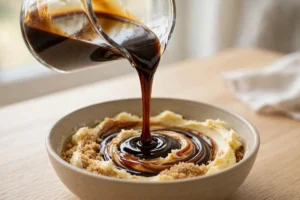
- Add the dry ingredients on low speed and mix only until no flour streaks remain. The dough will be soft and sticky.
- Divide the dough in half, flatten each half into a disc, wrap well, and refrigerate at least 3 hours, or overnight (up to 3 days).
- On a floured surface, roll one disc to a full 1/4 inch thick and cut shapes with floured cutters.
- Place the cookies 1 inch apart on parchment-lined baking sheets and chill the tray for 10 to 15 minutes while the oven heats to 350°F (177°C).
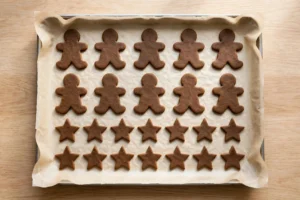
- Bake 9 to 11 minutes, until the edges look set and the centers still look soft and slightly puffy. Cool on the tray for 5 minutes, then move to a rack and cool completely.

- Whisk the powdered sugar, milk, vanilla, and salt until thick and smooth, then pipe onto the fully cooled cookies and let set uncovered for about 2 hours before stacking.

Notes
- A slice of soft bread in the container keeps the cookies softer for longer.
- No molasses? Swap in honey, maple syrup, or dark corn syrup 1:1, and add 1 extra tablespoon of dark brown sugar and 1/2 teaspoon extra ginger.
- The flax egg must gel the full 5 minutes before it goes into the batter, or the dough will crumble.
- Dough discs keep 3 days in the fridge or 3 months in the freezer.
Nutrition
These values are a calculated estimate, per cookie (24 cookies), without icing.
| Nutrient | Amount |
|---|---|
| Calories | 162 kcal |
| Total fat | 5 g |
| Saturated fat | 3 g |
| Cholesterol | 12 mg |
| Sodium | 102 mg |
| Total carbs | 28 g |
| Fiber | 1 g |
| Sugars | 13 g |
| Protein | 2 g |
Values are estimates, calculated from the ingredient list.
Frequently Asked Questions
Should gingerbread cookies be crunchy or soft?
Both styles are traditional. Crisp gingerbread is rolled thin and baked longer, and it is the kind used for houses. This recipe is the soft kind: a thick 1/4 inch roll, molasses for moisture, a flax egg for binding, and an early pull from the oven.
How do I keep my gingerbread cookies from spreading?
Chill the dough for at least 3 hours, then chill the cut shapes on the tray for 10 to 15 minutes before baking. Let the flax egg gel fully so the dough is properly bound, measure the flour by weight if you can, and bake on parchment at 350°F (177°C).
How long should you chill gingerbread dough?
At least 3 hours. Overnight is even better, and the wrapped discs keep up to 3 days in the fridge or 3 months in the freezer. Eggless dough benefits from the full chill because the flax gel firms up as it gets cold.
What can I use instead of molasses in gingerbread cookies?
Honey, maple syrup, or dark corn syrup, measured 1:1. Add 1 extra tablespoon of dark brown sugar and 1/2 teaspoon extra ginger to bring back the deep flavor.
How do I tell if my gingerbread cookies are done?
The edges look set while the centers still look soft and slightly puffy, after 9 to 11 minutes at 350°F (177°C). Eggless cookies firm up as they cool, so do not wait for them to look hard in the oven.
What are common mistakes in making ginger cookies?
Skipping the chill, using the flax egg before it has gelled, rolling the dough too thin, baking too long, adding too much flour, and using blackstrap molasses, which turns the cookies bitter.
Do you flatten ginger cookies before baking?
Not these. Flattening is for scooped drop cookies. Cut-out gingerbread keeps its rolled thickness, which is what keeps it soft.
Is it better to cut gingerbread before or after baking?
Before. The cold dough cuts clean shapes, while cutting after baking crumbles the edges and ruins the outline.
The tray is full, the icing has set, and nobody at the table guessed the egg was missing. That is the whole point of this batch: soft, spiced gingerbread that holds its shape and tastes like Christmas, egg or no egg. Happy baking, and save a gingerbread man for yourself.
Baking for a crowd? These cookies sit proudly on the table next to the rest of the menu in our Christmas Dinner Guide. And if you love a cookie box, our Easy Christmas Cookies belong in the same tin.