
Can you make peanut butter cookies without brown sugar?
Yes, you can make peanut butter cookies without brown sugar, and they still come out soft and chewy. Use white granulated sugar in place of the brown sugar, add 1 tablespoon of honey to help replace the moisture the molasses in brown sugar usually brings, and pull the cookies from the oven while the centers still look slightly soft. That is the heart of the fix.
Dealing with another missing ingredient? Our ingredient substitution calculator gives exact swaps for 20 common ingredients.
The Night the Brown Sugar Ran Out
It is nine at night. The butter is already soft on the counter, the peanut butter jar is open, and somebody in the house has been promised cookies.
Then you open the sugar container and find three sad tablespoons of brown sugar stuck to the bottom like cement.
This is the exact moment most bakers either give up or start searching the internet with flour on their hands. If that search brought you here, stay. You do not need a store run, and you do not need to settle for dry, crumbly cookies either.
White sugar gets a bad reputation in peanut butter cookies, and some of it is earned. Used carelessly, it gives you a paler cookie with crisp edges and a sandy bite. But brown sugar is not magic. It is just white sugar carrying a little molasses, and molasses does three specific jobs in a cookie.
Once you know those jobs, you can cover the important one, moisture, with ingredients already sitting in your kitchen.
There is also one small spoon involved. I am not naming it yet, because it works best when you understand what it is replacing. It is coming in the science section below, and it does a lot of the work of keeping these cookies chewy on day two.
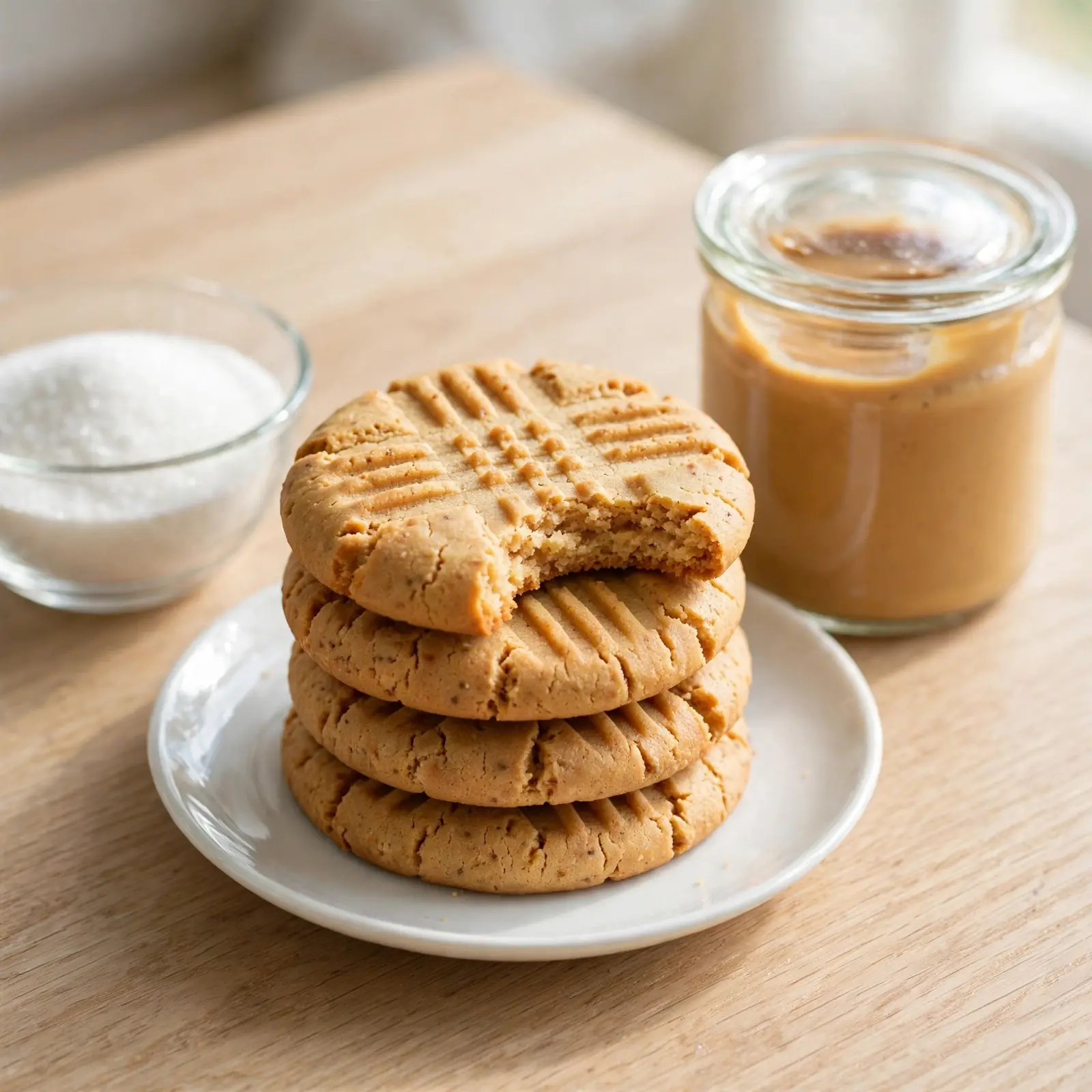
Why This Recipe Works With White Sugar Only
The chew is rebuilt, not hoped for. Brown sugar’s molasses holds moisture inside the cookie. This recipe replaces that moisture job directly instead of just swapping the sugars and praying.
The edges still get their crisp. White sugar is not a downgrade in every way. It gives cleaner, lightly crisp edges and lets the peanut butter flavor come through louder, because there is no molasses taste competing with it.
They stay soft the next day. Most peanut butter cookies are fine warm and disappointing by morning. The two tricks in this recipe, the pantry spoon and the early pull from the oven, are both aimed at day two, not just the first bite.
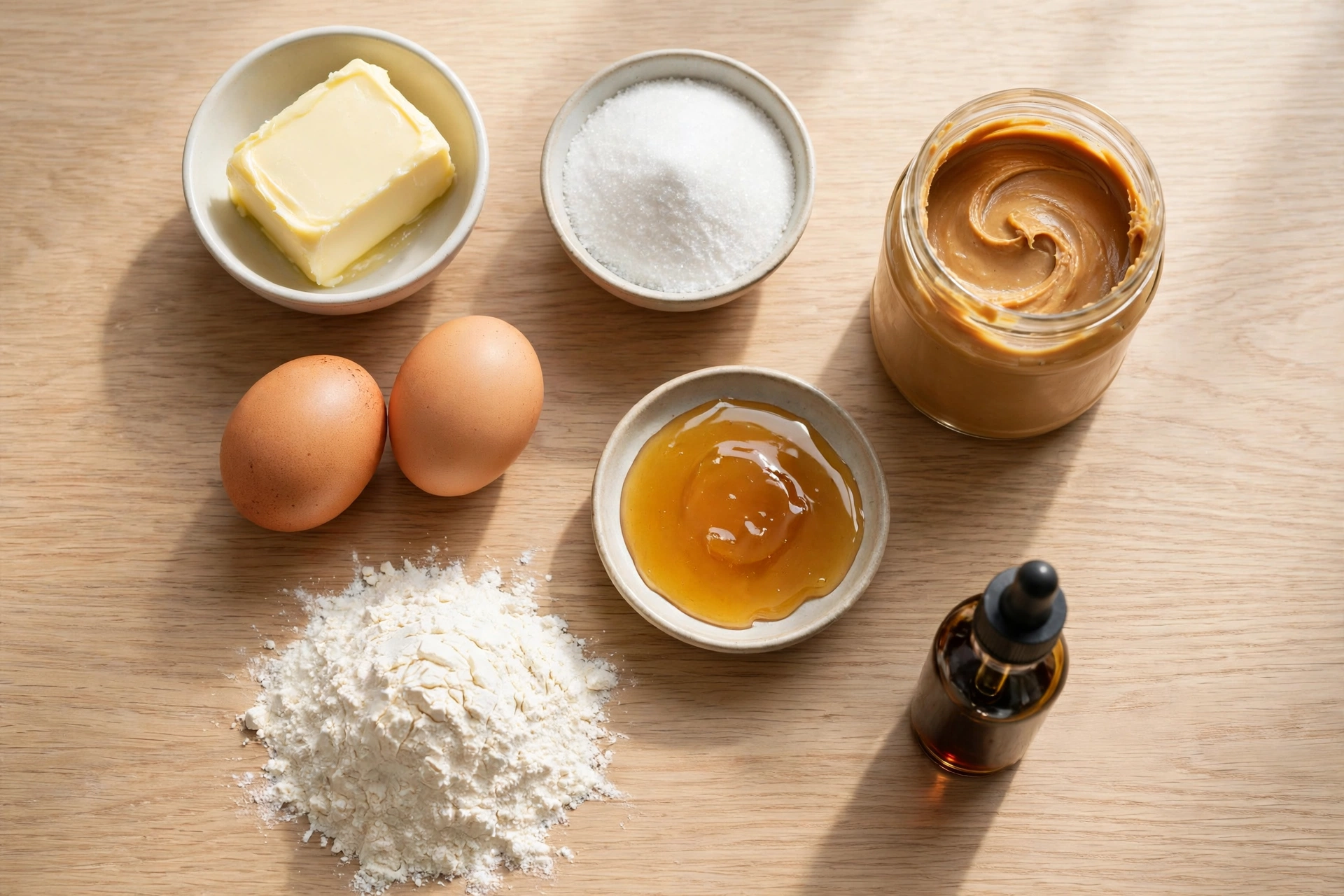
Everything is a pantry staple. Butter, white sugar, peanut butter, one egg plus a yolk, flour, and a spoon of honey. If your kitchen bakes at all, you own this recipe already.
What Brown Sugar Actually Does in a Cookie
Here is what is actually happening in the dough, explained simply.
What Does the Molasses in Brown Sugar Do?
Brown sugar is white sugar with molasses mixed back in, and molasses does three jobs. First, it holds water, which keeps the baked cookie moist and chewy instead of dry. Second, it is slightly acidic, so it reacts with baking soda and helps the cookie lift and spread in a controlled way. Third, it adds a deep caramel flavor and a darker color.
Those are the three jobs that matter. Of the three, moisture is the one a white sugar cookie really has to replace. The flavor and color differences are small, and the lift can come from somewhere else, as you will see below.
What Changes When You Use Only White Sugar?
White sugar gives you a lighter colored cookie with crisper edges and a cleaner peanut butter taste. On its own, it holds less moisture, so an all white sugar cookie can bake up drier and more crumbly if nothing else changes.
The color and flavor differences are honestly small, and many people prefer them. The moisture difference is the real one, and it is the one this recipe fixes.
The One Spoon That Helps the Most
Here is the payoff. One tablespoon of honey covers the moisture job.
Honey is very good at holding water inside a baked cookie, and that is the main thing brown sugar’s molasses would have done here. Honey does not taste like molasses, and it is not meant to. It adds a gentle flavor of its own that sits quietly behind the peanut butter, while the cookie itself tastes lighter and more peanut buttery, which most people count as a plus.
You also do not need to worry about the lift. This recipe includes a little baking powder alongside the baking soda, and baking powder brings its own acid, so the cookies rise properly whether or not the honey’s mild acidity plays a part.
If you do not have honey, one tablespoon of maple syrup or corn syrup also adds moisture. Corn syrup is neutral in flavor and less acidic than honey, and the cookies still work, because moisture is the job that matters here. And if you have none of the three, the cookies still bake. Just lean harder on the second trick below and pull them from the oven a full minute earlier.
J. ZaiB Micro-Tip: The Yolk Is Quietly Doing Heavy Lifting
This recipe uses one whole egg plus one extra yolk, and that yolk is not decoration. Egg yolk is mostly fat and emulsifiers, so it makes the crumb richer and softer and helps the cookie stay tender instead of sandy. If your white sugar cookies have ever come out crumbly, a missing yolk is a common reason why.
What You Need
For the Cookies
- ½ cup (113g) unsalted butter, softened to room temperature
- ¾ cup (150g) granulated white sugar
- 1 tbsp honey (or maple syrup or corn syrup)
- 1 cup (258g) creamy peanut butter, the regular kind like Jif or Skippy
- 1 large egg, at room temperature
- 1 large egg yolk, at room temperature
- 1 tsp vanilla extract
- 1¼ cups (156g) all-purpose flour, spooned and leveled
- ½ tsp baking soda
- ¼ tsp baking powder
- ½ tsp fine salt
Equipment: Large mixing bowl, hand mixer or sturdy spoon, baking sheet, parchment paper, fork, cookie scoop or tablespoon, wire rack
Makes: About 24 cookies
A Note on Peanut Butter
Use regular creamy peanut butter for this recipe. Natural peanut butter, the kind with oil floating on top, can make a softer dough that spreads more, and the baked cookies can be more crumbly, though this varies by brand and by how well the oil is stirred back in. If natural is all you have, stir it very well, chill the dough a full hour instead of 30 minutes, and expect a slightly more delicate cookie.
How to Make Peanut Butter Cookies Without Brown Sugar, Step by Step
Cream the Butter and Sugar
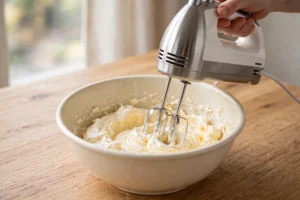
Beat It Pale: With a hand mixer, beat the softened butter and white sugar for 2 to 3 minutes, until the mixture looks pale and fluffy. By hand with a sturdy spoon, give it 3 to 5 minutes, until the butter and sugar are evenly combined and the mixture looks lighter in color. Those sugar crystals cut tiny air pockets into the butter, and that air is part of your lift.
Add the Peanut Butter, Honey, and Eggs
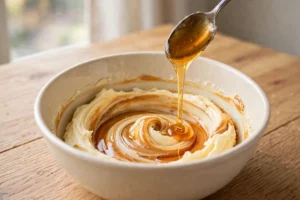
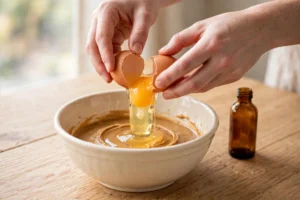
Beat In the Wet Ingredients: Add the honey and peanut butter and beat until smooth. Add the whole egg, the extra yolk, and the vanilla, and beat again just until everything is one even color. Stop there. Beating eggs for too long whips in air that later collapses and toughens the crumb.
Fold In the Dry Ingredients
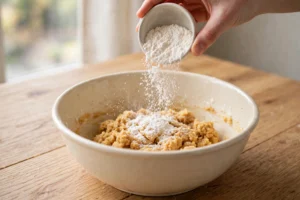
Stir, Do Not Beat: Sprinkle the flour, baking soda, baking powder, and salt over the bowl. Fold everything together with a spoon or spatula until no dry flour streaks remain. The dough will be soft and a little sticky. That softness is correct, and the chill fixes it.
Chill the Dough
Give It Thirty Minutes: Cover the bowl and chill the dough for 30 minutes. This rest does two things: the flour drinks in moisture, which deepens the chew, and the butter firms up, which stops the cookies from spreading into pancakes. Skipping the chill is one of the most common reasons this style of cookie disappoints.
Shape and Make the Fork Marks
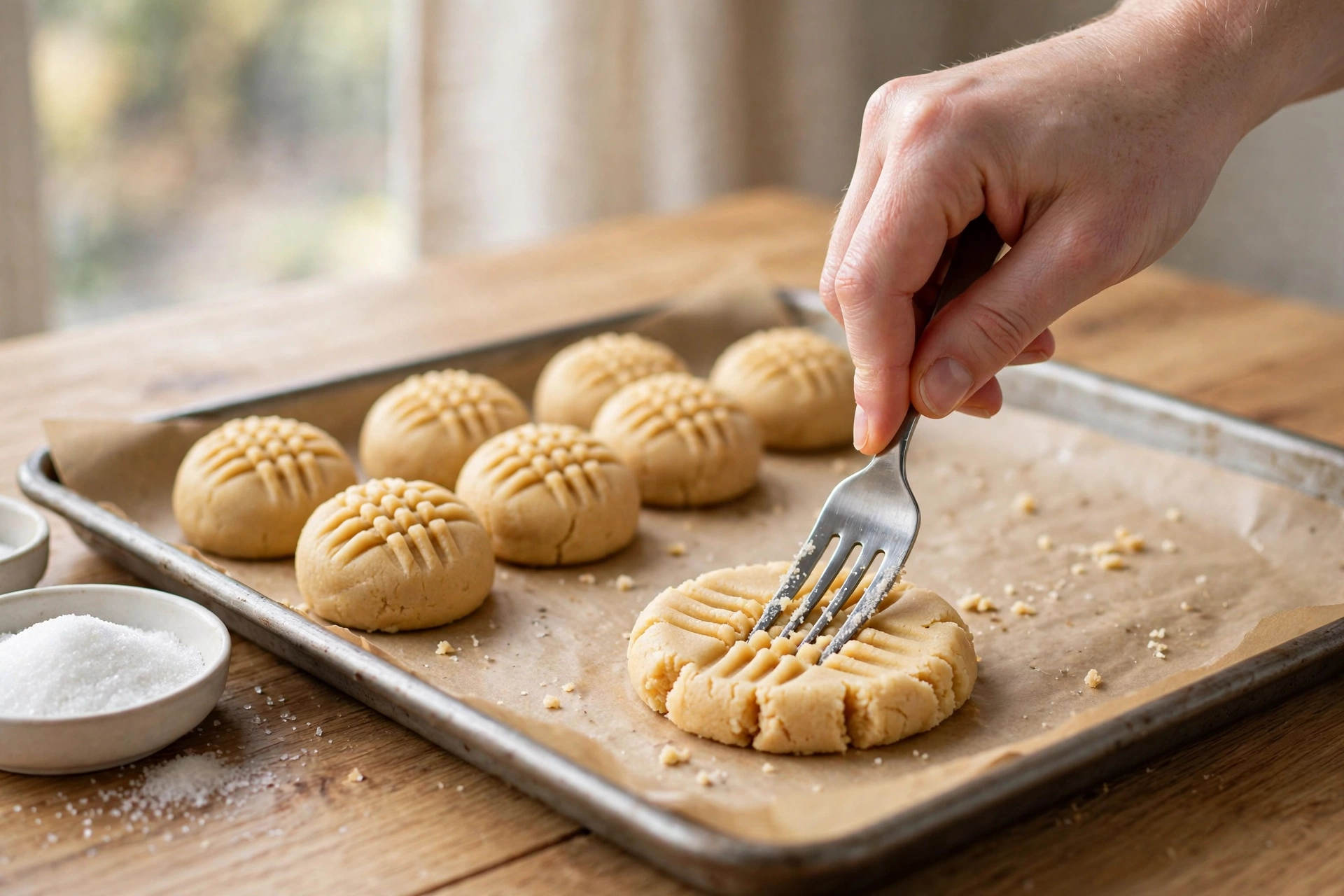
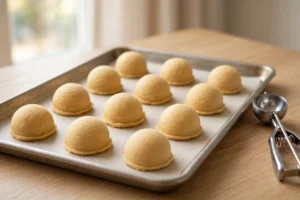
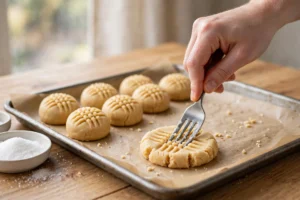
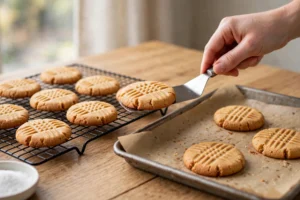
Scoop and Crosshatch: Heat the oven to 350°F (175°C) and line a baking sheet with parchment. Scoop balls of dough about 1½ tablespoons each and space them 2 inches apart, about 12 to a sheet. The full batch of 24 bakes in 2 batches, or on 2 sheets at once if your oven fits them. Dip a fork in a little white sugar and press a crisscross pattern into each ball, flattening it to about ½ inch thick. The sugar stops the fork sticking, and the marks are not just tradition. Peanut butter dough is dense and barely spreads, so the fork does the flattening the oven will not.
Bake and Pull Them Early
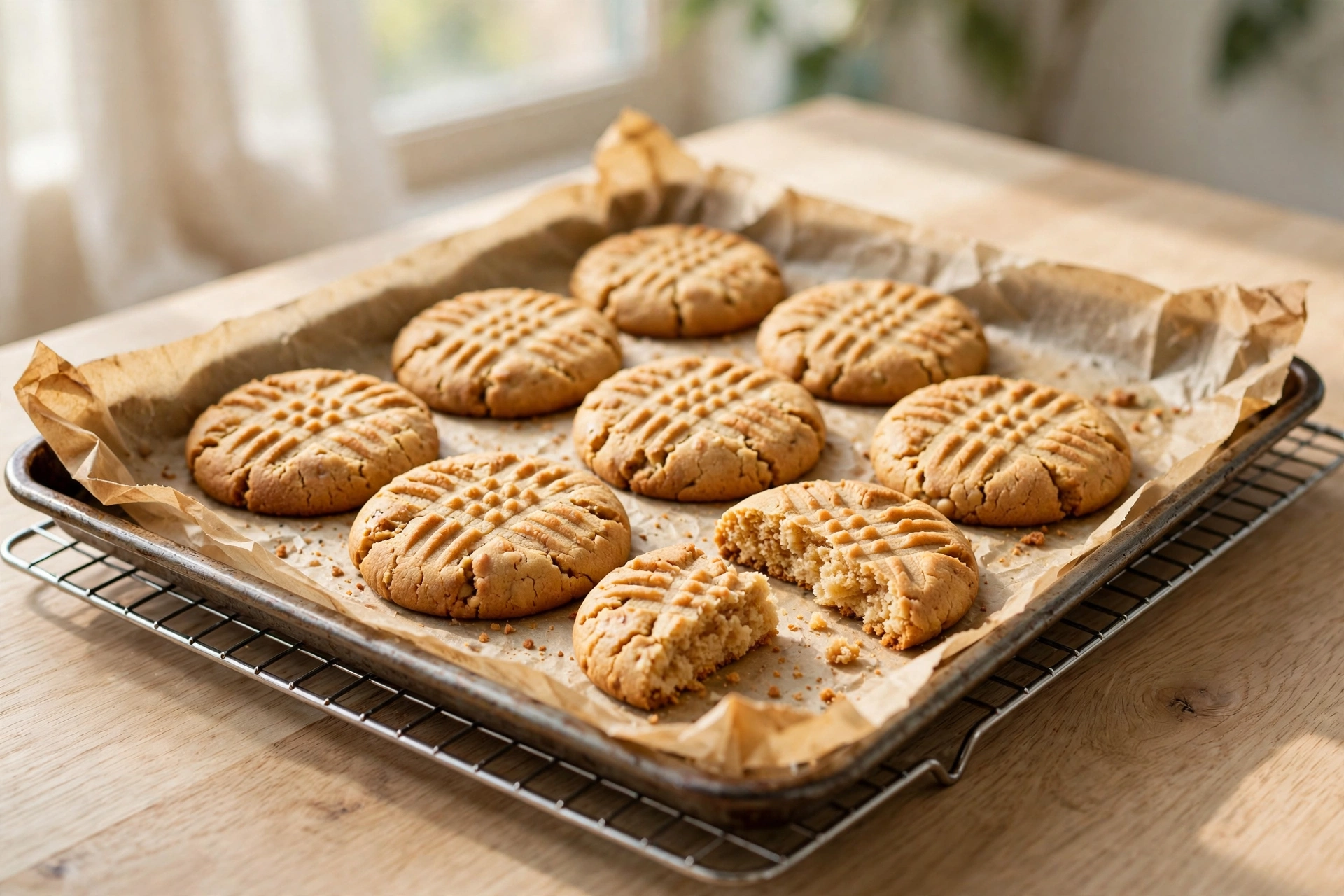
Watch the Centers, Not the Clock: Bake for 9 to 11 minutes, until the edges look set and very lightly golden and the centers look puffed and soft, but not wet or shiny like raw dough. That puffed, soft looking center is baked, it just has not firmed up yet. Take them out at this point. This is the second chew trick, and it feels wrong the first time you do it. The cookies finish gently on the hot tray as they cool, and that is what keeps the middle soft instead of snapping.
Cool on the Tray: Leave the cookies on the baking sheet for 10 minutes before moving them to a wire rack. They are fragile while hot and firm up as they cool. A cookie that looks underdone at minute ten will be perfectly chewy at minute thirty.
J. ZaiB’s Expert Touch
Rest the Dough Overnight When You Can
Thirty minutes of chilling is the minimum, but dough rested overnight in the fridge bakes an even chewier cookie with a deeper peanut butter flavor. The flour fully hydrates and the flavors settle into each other. Scoop the balls before chilling if you go overnight, because fully chilled dough is hard to scoop.
Finish With a Pinch of Flaky Salt
A tiny pinch of flaky sea salt on top of each warm cookie makes the peanut butter taste more like itself. Sweet and salty is the oldest trick in the cookie book because it works. It is optional, but it comes highly recommended.
Variations to Try
The 3-ingredient flourless version: Skip the butter, flour, leavening, and yolk. Use 1 cup peanut butter, ¾ cup white sugar, and 1 whole egg. Mix, scoop, crosshatch, and bake at 350°F (175°C) for 8 to 10 minutes. These are softer and more fragile, with a pure peanut butter taste.
Chocolate chip peanut butter cookies: Fold ½ cup of chocolate chips into the finished dough. Peanut butter and chocolate need no introduction.
Peanut butter blossoms: Skip the fork marks. Roll the balls in white sugar, bake, and press a chocolate kiss into the center of each cookie the moment it comes out of the oven.
How to Store Them
Keep the cookies in an airtight container at room temperature for up to 5 days. That container alone does most of the work. As an optional extra, a slice of plain bread in the container helps keep them soft, because the cookies slowly steal moisture from the bread. Replace the bread when it goes hard.
Freeze baked cookies for up to 3 months in a sealed bag, and thaw them on the counter for 20 minutes. Or freeze the scooped, crosshatched dough balls on a tray, bag them, and bake from frozen at the same temperature, adding 1 to 2 minutes. Frozen dough balls are the real weeknight prize: two warm cookies, on demand, no mixing bowl.
Peanut Butter Cookies Without Brown Sugar
Ingredients
Method
- Beat the softened butter and white sugar together until pale and fluffy, 2 to 3 minutes with a hand mixer or 3 to 5 minutes by hand with a sturdy spoon.
- Beat in the honey and peanut butter until smooth.
- Add the whole egg, the egg yolk, and the vanilla, and beat just until evenly combined.
- Sprinkle the flour, baking soda, baking powder, and salt over the dough.
- Fold with a spoon or spatula until no dry flour streaks remain.

- Cover the bowl and chill the dough for 30 minutes.

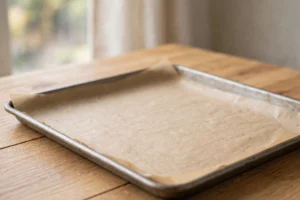
- Heat the oven to 350°F (175°C) and line a baking sheet with parchment paper.
- Scoop balls of dough about 1½ tablespoons each and place them 2 inches apart, about 12 to a sheet. The batch bakes in 2 batches, or on 2 sheets at once.
- Dip a fork in white sugar and press a crisscross pattern into each ball, flattening to about ½ inch thick.
- Bake for 9 to 11 minutes, until the edges are set and lightly golden and the centers look puffed and soft, but not wet or shiny.
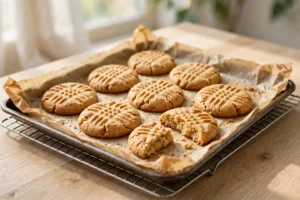
- Cool the cookies on the baking sheet for 10 minutes, then move them to a wire rack.
Notes
Nutrition
Per cookie, based on 24 cookies. Values are estimates and vary with the peanut butter brand used.
| Nutrient | Amount |
|---|---|
| Calories | ~160 kcal |
| Total Fat | 10g |
| Saturated Fat | 3.5g |
| Cholesterol | 25mg |
| Sodium | 120mg |
| Total Carbs | 15g |
| Sugars | 9g |
| Fiber | 1g |
| Protein | 4g |
Frequently Asked Questions
What does brown sugar do in peanut butter cookies?
Brown sugar brings molasses, and molasses holds moisture, reacts gently with baking soda, and adds caramel flavor and color. That is why cookies made with brown sugar tend to be softer and chewier. Of the three jobs, moisture is the one that matters most in a white sugar cookie, and this recipe covers it with honey and an extra egg yolk.
Why are my peanut butter cookies dry and crumbly?
Dry, crumbly peanut butter cookies usually come from too much flour, no chilling, or a few minutes too long in the oven. Spoon and level the flour instead of scooping it, chill the dough for 30 minutes, and pull the cookies while the centers still look slightly soft.
How do I keep peanut butter cookies soft and chewy?
Keep them soft with moisture and restraint: a spoon of honey in the dough, an extra egg yolk, a 30 minute chill, and baking only until the edges set. Store them airtight with a slice of bread in the container, and they will still be chewy on day three.
Why do you put fork marks on peanut butter cookies?
Fork marks flatten a dough that barely spreads. Peanut butter dough is dense, so without the crosshatch the cookies would bake as thick, underdone domes. The fork presses them to an even thickness so the edges and centers finish together.
How long do peanut butter cookies stay fresh?
They keep well for up to 5 days in an airtight container at room temperature. Baked cookies freeze for up to 3 months, and unbaked dough balls freeze just as long, ready to bake from frozen with 1 to 2 extra minutes.
What can I use instead of brown sugar in peanut butter cookies?
White granulated sugar is the easiest swap, used one to one, and it is what this recipe is built on. If you happen to have molasses, you can also make your own brown sugar by stirring 1 tablespoon of molasses into 1 cup of white sugar. Coconut sugar works too and tastes closer to brown sugar, though the cookies can be a little drier. A spoon of honey alongside the white sugar helps keep the chew, which is the trick used here.
What happens if I make cookies without brown sugar?
The cookies still bake properly and taste like peanut butter cookies. Without brown sugar they come out lighter in color, with crisper edges and a cleaner, stronger peanut butter flavor. The one real difference is moisture: the molasses in brown sugar holds water, so a plain white sugar cookie can turn out drier and more crumbly unless you add a little moisture back, the way this recipe does with honey and an extra egg yolk.
What can I use instead of brown sugar in cookies?
In most cookie recipes, white granulated sugar swaps for brown sugar one to one by volume. Expect a lighter color and crisper edges. Homemade brown sugar, 1 cup of white sugar plus 1 tablespoon of molasses, is the closest match in flavor and moisture. Coconut sugar is another close option. Liquid sweeteners like honey and maple syrup also work, but they add water, so use a little less of them and expect a softer, flatter cookie.
More Cookies to Bake Next
If this batch disappears fast, keep the cookie tin full. Our Easy Christmas Cookies cover the holiday trays, and a jar of Sugar Cookie Frosting turns any plain batch into a decorating day. For everything in one place, browse the Easy Recipes Collection.
The Cookies That Do Not Need a Store Run
A missing ingredient feels like a cancelled plan, but peanut butter cookies without brown sugar are not a compromise version of anything. They are lighter at the edges, louder with peanut butter, and, with one spoon of honey and the nerve to pull them early, just as chewy in the middle.
Beat the butter pale. Chill the dough. Watch the centers, not the clock.
Tag us on Instagram @viralfoodhacks706 when your batch comes out with those deep fork marks. Save this to Pinterest for the next nine o’clock cookie emergency, because there will be one.