
Is egg necessary in French toast?
No, egg is not necessary in French toast. In this french toast without eggs, 2 tablespoons of cornstarch whisked into sweetened, cinnamon spiced milk thicken into a coating that clings to thick slices of brioche, sets in a hot buttered pan, and gives you crisp golden edges with a soft, custardy middle.
Swapping an ingredient in this recipe? Our ingredient substitution calculator works out the amounts for you.
The Empty Egg Carton Problem
Sunday morning. The bread is sliced, the pan is out, the coffee is on, and the egg carton in the fridge is completely, mockingly empty.
That empty carton feels like the end of breakfast, because every french toast recipe you have ever read starts with eggs. No eggs, no custard. No custard, no french toast. Back to plain toast and disappointment.
Except it is not true. An egg does two jobs in french toast: it thickens the milk so it coats the bread, and it sets in the pan so the coating stays put. One plain pantry staple does both of those jobs, and it is probably sitting in your baking shelf right now, next to the baking soda. It gets its own section below, because once you understand it, an empty egg carton never cancels breakfast again.
Why This Recipe Works
Cornstarch does the egg’s two jobs. Whisked into milk, cornstarch thickens the mixture so it clings to the bread instead of running off. In the hot pan it sets into a thin, tender coating, which is exactly what egg protein does. Same coating, same set, no egg.
Thick, slightly stale brioche. Slices about 1 inch thick hold the coating without falling apart, and day old bread drinks in just enough of it. Fresh, soft bread soaks up too much and goes soggy, which is why slightly stale is not a compromise here. It is the better bread for the job.
A short dip, never a soak. Fifteen seconds per side is all a slice needs. The coating belongs on the surface of the bread, not soaked through it. Soaked bread cooks up wet in the middle no matter how golden the outside looks.
Butter and steady medium heat. Butter gives the edges their deep golden color and rich flavor, and medium heat lets the coating set and crisp before the sugar in the mixture can scorch. High heat burns the outside while the middle stays raw and wet.
The Pantry Staple That Replaces the Egg
Here is the part that surprises people: the egg in french toast is mostly there as a thickener and a setter, and starch can do both.
Cornstarch Sets Like an Egg Does
Cornstarch is made of tiny granules that stay invisible in cold milk. The moment the coated bread hits the hot pan, those granules swell with heat, burst, and thicken the milk around them into a soft gel. Food science calls it gelatinization, and it starts at roughly 140 to 160°F (60 to 70°C), well below the temperature of a hot skillet.
That gel is doing the same work egg protein does when it cooks and firms up. It holds the sweet, cinnamon spiced milk onto the bread, gives the slice a custardy middle instead of a wet one, and helps the surface turn crisp and golden. No eggy taste, no eggy smell, just a clean, set coating.
J. ZaiB Micro-Tip: Whisk Again Between Every Slice
Cornstarch settles to the bottom of the dish fast, faster than you would guess. The first slice gets a perfect coating, and by the fourth slice you are mostly dipping into flavored milk while the cornstarch sits in a layer underneath.
Give the mixture a quick five second whisk before every single dip. It takes no time, and it is the difference between eight evenly coated slices and a batch that gets paler as it goes.
What You Need
For the French Toast
- 8 thick slices brioche, about 1 inch thick (slightly stale works best)
- 1 cup (240ml) whole milk
- 2 tbsp cornstarch
- 1 tbsp granulated sugar
- 1 tsp vanilla extract
- 1/2 tsp ground cinnamon
- 1/8 tsp salt
- About 2 tbsp butter, total, for the pan
Equipment: Shallow dish or pie plate (wide enough for a slice of bread), whisk, large skillet, spatula, wire rack or warm plate
Makes: 8 slices, 4 servings (2 slices per serving)
A Note on the Bread
Brioche is rich and sturdy, which makes it the easiest bread to learn this recipe on. Challah and Texas toast work the same way. Plain sandwich bread works too, but it is thinner and softer, so treat it gently and keep the dip short. Whatever bread you use, thick slices and a day of staleness are your friends.
A Note on the Cornstarch
The cornstarch has to disappear completely into the milk before the first dip. Whisk until you see no white streaks and no dry pockets at the edge of the dish, about a full minute. Undissolved cornstarch cooks into chalky patches on the finished toast, and nobody wants that on a Sunday.
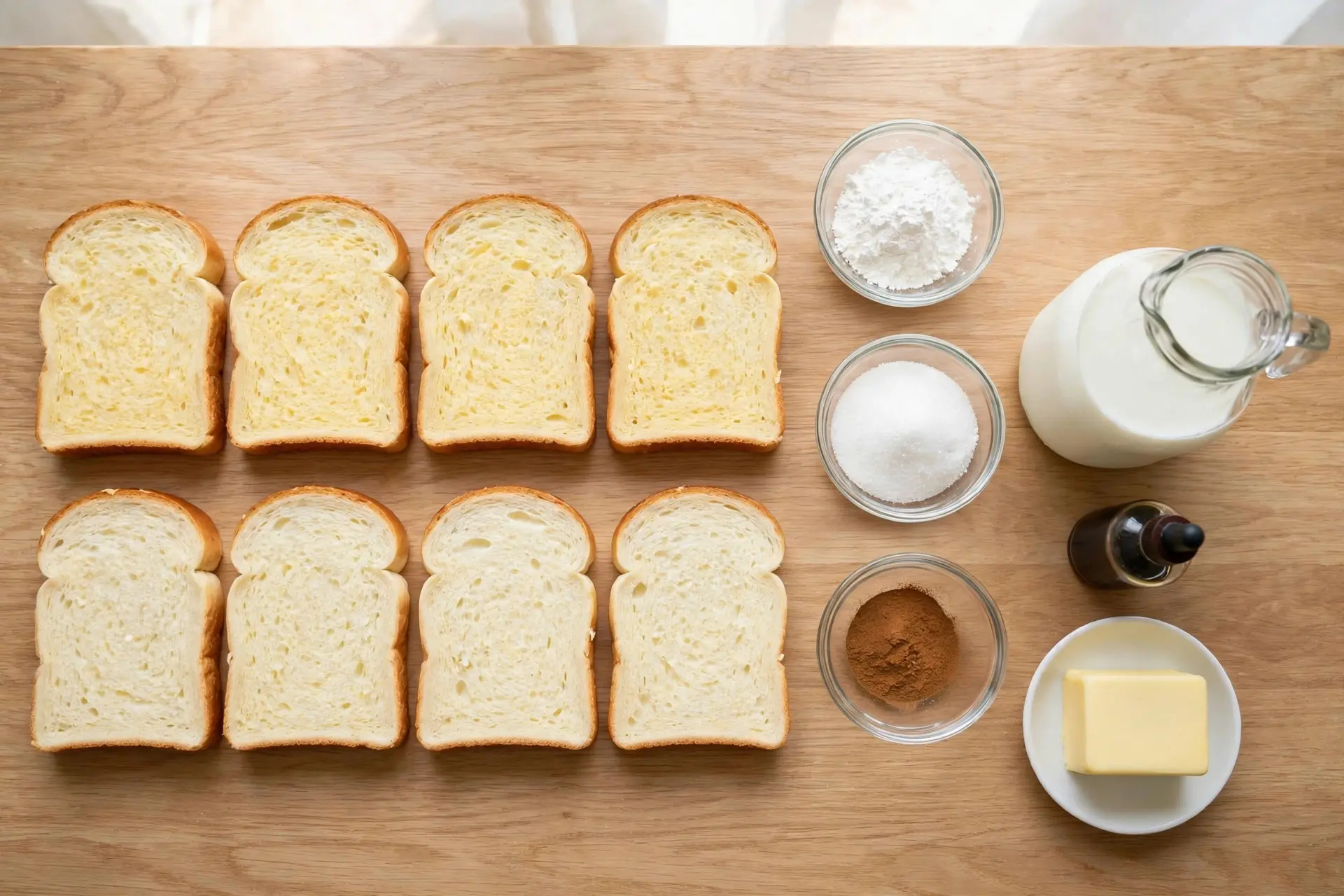
How to Make French Toast Without Eggs, Step by Step
Whisk the Eggless Custard
Whisk Until It Disappears: Pour the milk into a shallow dish and add the cornstarch, sugar, vanilla, cinnamon, and salt. Whisk for about a minute, until the cornstarch has fully dissolved and the mixture looks smooth and evenly cloudy, with no white streaks left. This mixture is your custard now, and everything depends on that cornstarch being completely mixed in.
Dip, Do Not Soak
Fifteen Seconds a Side: Lay one slice of brioche in the mixture and count to about 15 seconds. Flip it, give the second side its 15 seconds, then lift the slice and let the excess drip back into the dish for a moment. The slice should feel coated and heavy, not saturated. Remember the micro-tip: a quick whisk before the next slice keeps the cornstarch evenly spread.
Heat the Pan
Foaming Butter, Medium Heat: Set a large skillet over medium heat and melt about 1 tablespoon of the butter. When it is foaming and just starting to smell nutty, the pan is ready. If the butter browns fast or smokes, the heat is too high; pull the pan off the burner for a few seconds and lower it.
Cook Until Deep Golden
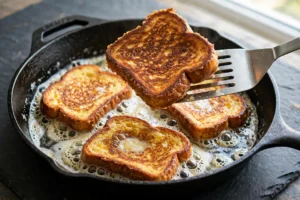
First Side, 2 to 3 Minutes: Lay the dipped slices in the pan without crowding them, working in batches if your skillet is small. Cook for 2 to 3 minutes, until the underside is deep golden and crisp at the edges. Peek with the spatula rather than moving them early; the coating needs that contact time to set.
Flip Once: Flip each slice once and cook the second side for 2 to 3 minutes, until it matches the first: deep golden, crisp edged, and set in the center. Press very lightly with the spatula; the middle should feel firm and springy, not wet and squishy. A slice that still feels soggy needs another 30 seconds, not more heat.
Rest and Serve
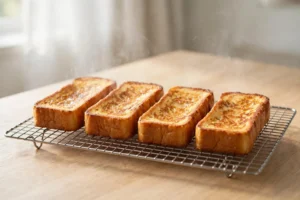
Rack, Not a Stack: Move the finished slices to a wire rack or a warm plate in a single layer. Stacking them traps steam and softens the crisp edges you just built. Repeat the dip and cook steps with the remaining slices, adding more butter to the pan as needed, and whisking the mixture before each new dip.
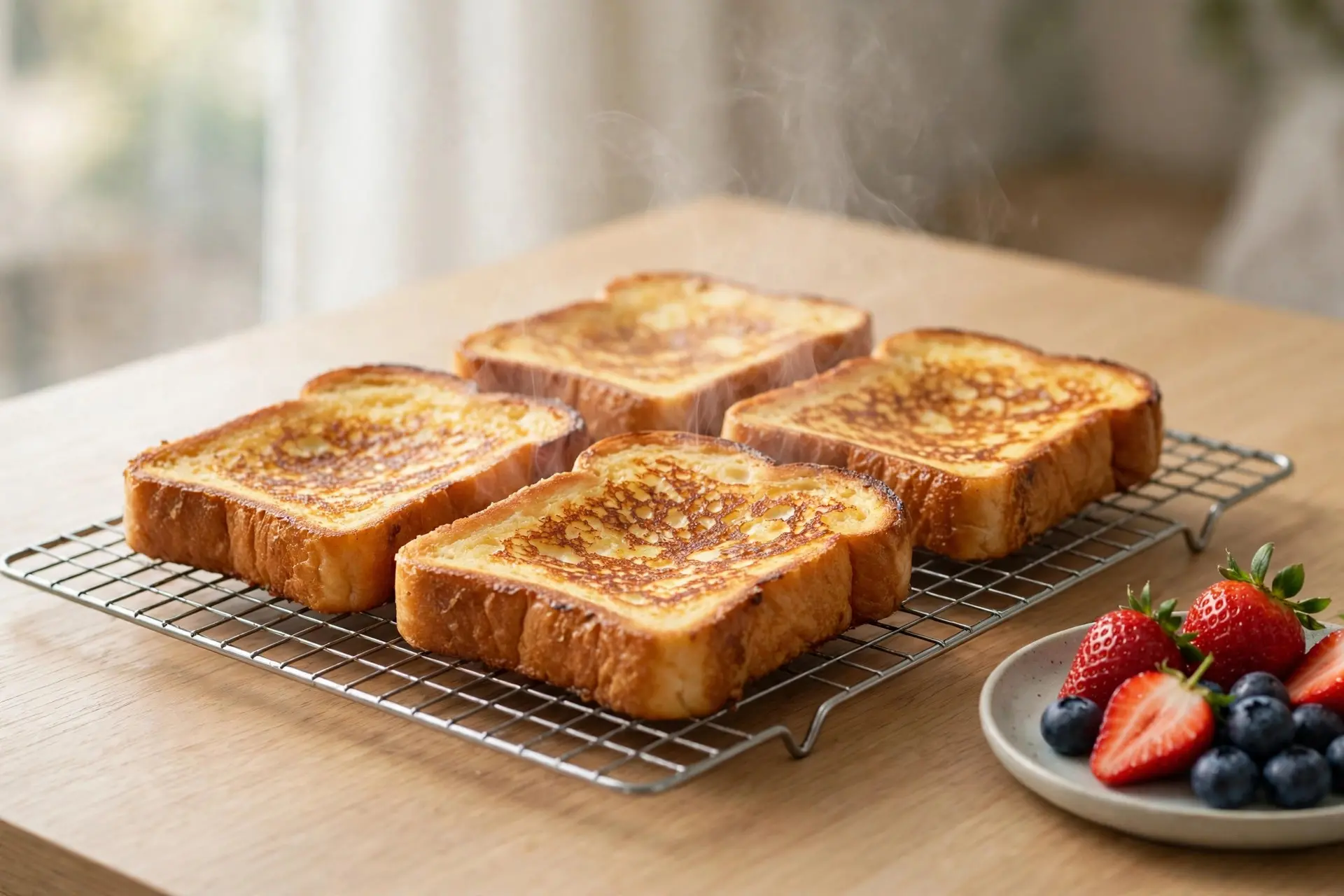
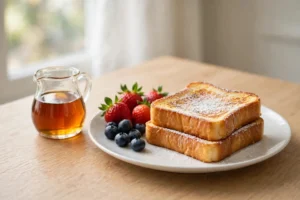
Serve Them Warm: Serve the french toast warm, 2 slices per person, with maple syrup, fresh berries, or a light dusting of powdered sugar. This is the payoff moment: crisp, caramel smelling edges, a soft custardy middle, and not one egg anywhere near it.
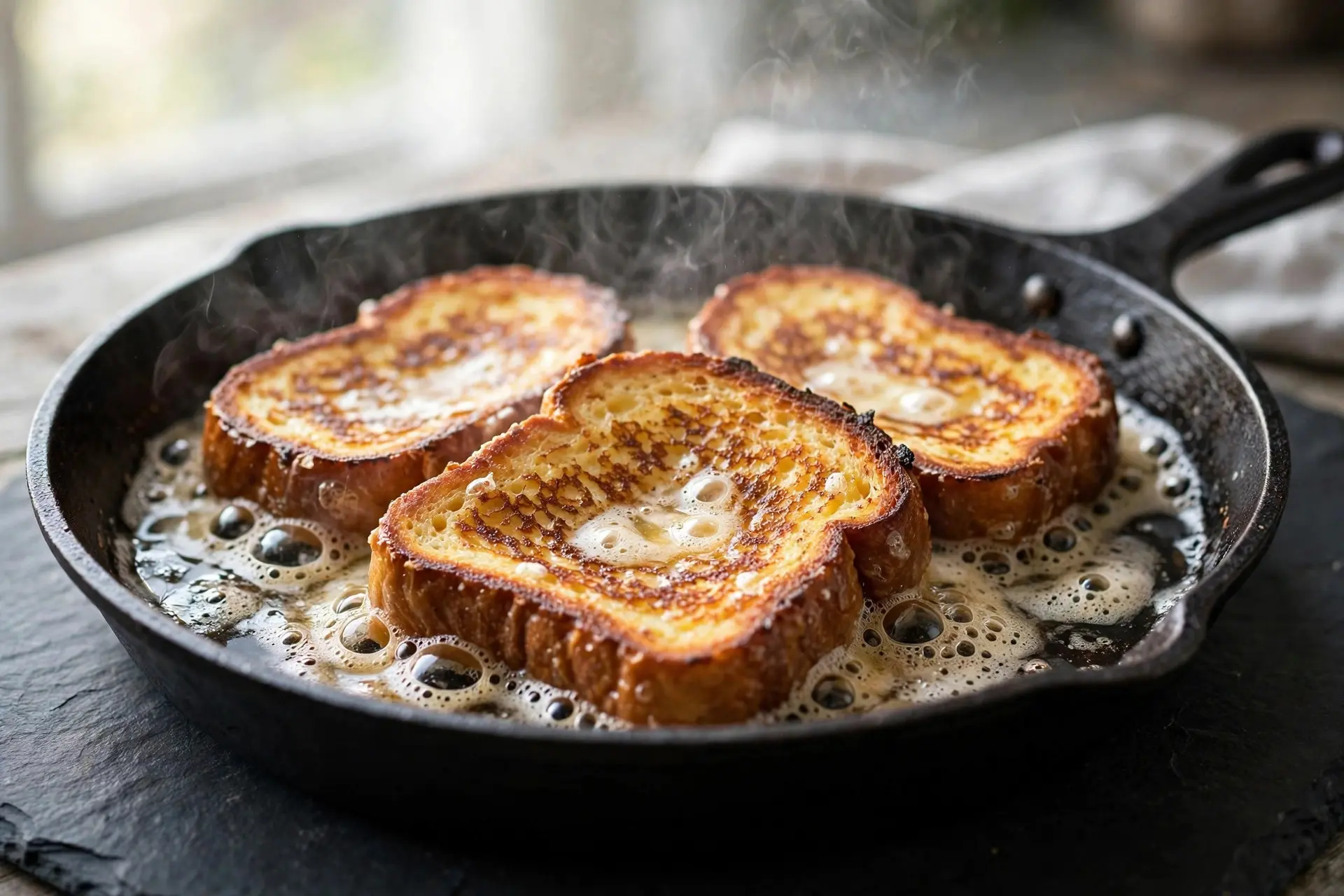
J. ZaiB’s Expert Touch
Keep Finished Slices Warm the Right Way
If you are feeding more than two people, hold the finished slices in a low oven, about 200°F (95°C), on a wire rack set over a baking sheet. The rack matters: air moves under the slices, so the bottoms stay crisp instead of steaming against a hot plate.
The Center Test Nobody Tells You
Golden color can lie, especially on the first batch while the pan is still settling. Trust your fingers and the spatula instead. A done slice feels set and springy in the middle when you press it lightly. If it feels wet and heavy, give it another 30 seconds per side. Eggless coating sets a touch more gently than egg custard, so that little extra half minute is sometimes the whole difference.
Variations to Try
Cinnamon sugar finish: Mix 1/4 cup of sugar with 1 teaspoon of cinnamon and toss the hot slices in it straight from the pan. The coating turns into a crisp, sweet shell that needs no syrup at all.
Different bread, same method: Challah gives you a slightly firmer, less rich slice. Texas toast gives you diner style thickness. A sturdy sourdough slice brings a gentle tang that plays well against the sweet coating.
Dairy free version: Swap the whole milk for a creamy oat milk and the butter for coconut oil, and the method stays exactly the same. The cornstarch does not care which milk it thickens.
How to Store It
Let leftover slices cool completely, then keep them in an airtight container in the fridge for up to 3 days.
Reheat them in a dry skillet over medium heat for about a minute per side, or pop them straight into the toaster, until the edges are crisp again. The microwave works in a pinch, but it softens the coating, so the pan and the toaster are the better tools here.
For longer storage, freeze the cooled slices in a single layer on a tray, then bag them for up to 1 month. Reheat from frozen in the toaster until hot and crisp.
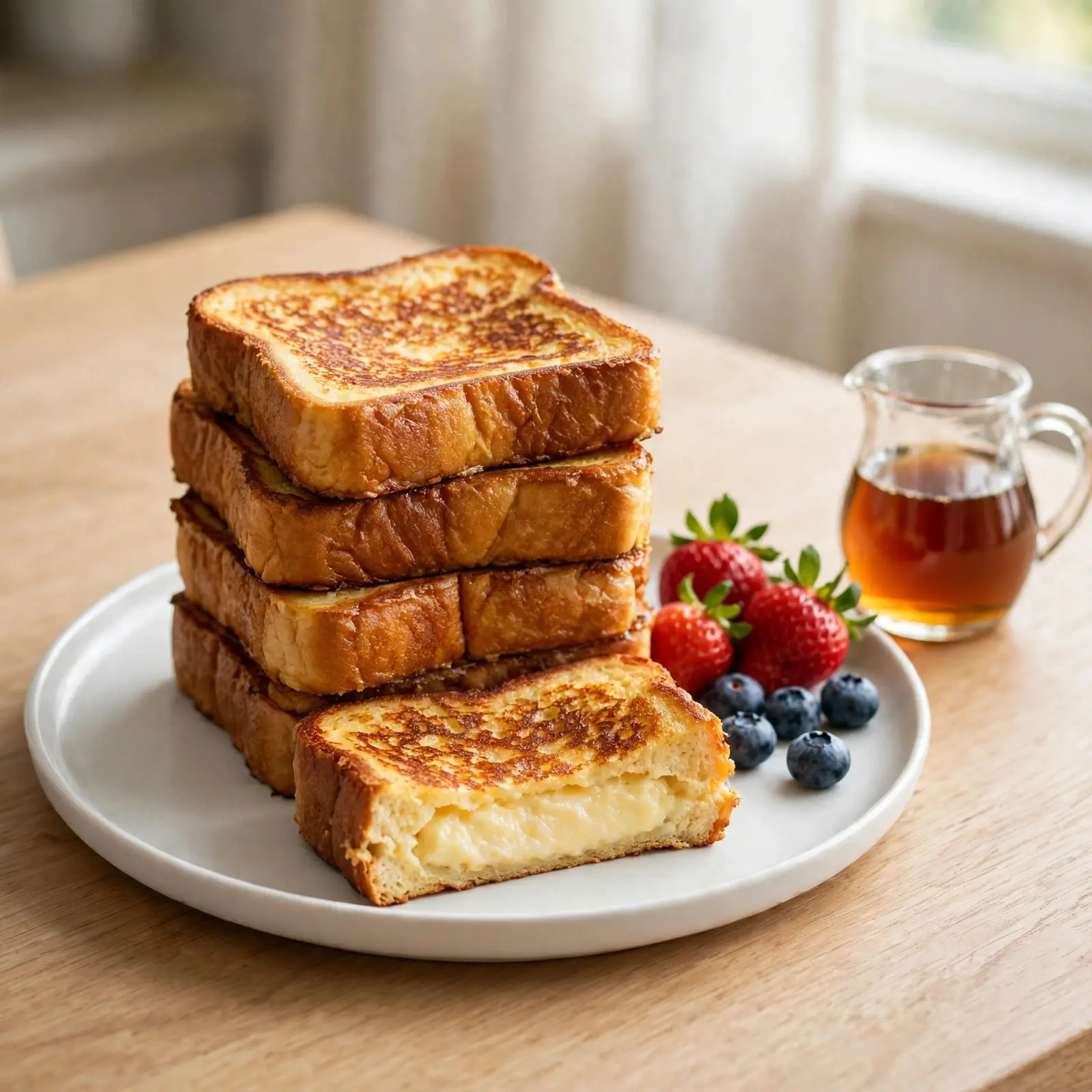
French Toast Without Eggs
Ingredients
Equipment
Method
- Pour the milk into a shallow dish. Add the cornstarch, sugar, vanilla, cinnamon, and salt.
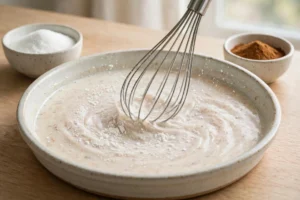
- Whisk for about 1 minute, until the cornstarch has fully dissolved and no white streaks remain.
- Dip one slice of brioche in the mixture for about 15 seconds per side.
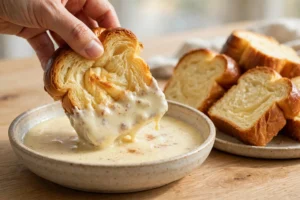
- Lift the slice and let the excess drip back into the dish. Whisk the mixture briefly before each new slice.
- Melt about 1 tablespoon of the butter in a large skillet over medium heat until foaming.
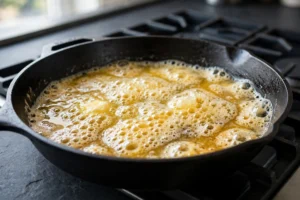
- Lay the dipped slices in the pan without crowding. Cook for 2 to 3 minutes, until the underside is deep golden.
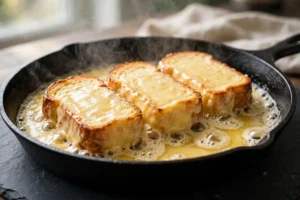
- Flip once and cook the second side for 2 to 3 minutes, until deep golden and set in the center.
- Move the finished slices to a wire rack or warm plate in a single layer. Repeat with the remaining slices, adding butter as needed.
- Serve warm with maple syrup, fresh berries, or a dusting of powdered sugar.
Notes
- Cornstarch replaces the eggs here: it thickens the milk so it coats the bread, then sets in the hot pan the way egg protein does. Whisk it fully into the milk before the first dip, and whisk again briefly before every slice, because it settles to the bottom of the dish.
- Dip, never soak: about 15 seconds per side. Soaked bread stays wet in the middle no matter how golden the outside gets.
- Slightly stale, thick cut brioche holds the coating best. Fresh bread works, but keep the dip short.
- Storage: airtight container in the fridge for up to 3 days. Reheat in a dry skillet or the toaster until crisp again.
Nutrition
Per serving (2 slices), based on 4 servings. Values are estimates and vary with the bread used.
| Nutrient | Amount |
|---|---|
| Calories | ~380 kcal |
| Total Fat | 18g |
| Saturated Fat | 10g |
| Cholesterol | 70mg |
| Sodium | 350mg |
| Total Carbs | 46g |
| Sugars | 13g |
| Fiber | 1g |
| Protein | 8g |
Note: Values are estimates, calculated from the ingredients listed, and will vary with the exact bread and toppings used.
More Breakfast Favorites
Eggless french toast loves company on the table. Our Fluffy Pancake Recipe brings the tall, soft stack, the Banana Chocolate Chip Muffins handle the grab and go mornings, and a mug of Homemade Eggnog turns the whole spread into a holiday breakfast.
Frequently Asked Questions
What is a substitute for eggs in French toast?
Cornstarch is the substitute used in this recipe: 2 tablespoons whisked into 1 cup of milk thicken it into a coating that clings to the bread and sets in the pan, doing the two jobs an egg normally does. Whisk it in completely, with no white streaks left, before the first dip.
How to make French toast at home without egg?
Whisk 1 cup of whole milk with 2 tablespoons of cornstarch, 1 tablespoon of sugar, 1 teaspoon of vanilla, 1/2 teaspoon of cinnamon, and a pinch of salt. Dip thick brioche slices for about 15 seconds per side, then cook them in butter over medium heat for 2 to 3 minutes per side until deep golden.
Can you make French toast with milk only?
Milk alone is too thin: it runs straight off the bread and soaks in unevenly, so the slices cook up soggy with no real coating. The milk needs a thickener to cling and set, which is why this recipe adds 2 tablespoons of cornstarch to the cup of milk.
Can I make French toast without eggs or cornstarch?
Yes, but the coating needs some kind of thickener to set, and in this recipe that thickener is the cornstarch. The closest pantry swap is 1 tablespoon of flour whisked into the milk the same way; the set is a little softer and less crisp, but the method and timings stay the same.
What is the most common mistake in making French toast?
Soaking the bread. Leaving slices sitting in the mixture fills them with liquid, and the middle stays wet no matter how golden the outside gets. Dip for about 15 seconds per side, let the excess drip off, and let the hot pan do the rest.
What is the secret to great French toast?
Thick, slightly stale bread, a short dip instead of a soak, and steady medium heat. Add a coating that actually sets, here that is cornstarch whisked into the milk, and butter in the pan for deep golden, crisp edges.
Is French toast better with butter or oil?
Butter, for both flavor and color. Butter browns the edges and gives the toast its rich, caramel like taste, which is why this recipe cooks the slices in butter. Oil works if that is what you have, but the flavor is flatter and the edges brown less evenly.
How much milk replaces one egg?
There is no one to one swap, because the milk is not what replaces the egg here; the cornstarch is. This recipe uses 1 cup (240ml) of milk with 2 tablespoons of cornstarch to coat 8 thick slices, standing in for the eggs a batch this size would normally take.