
Can you make oatmeal cookies without butter?
Yes, you can make oatmeal cookies without butter, and they can be properly chewy, not a sad substitute. Use a neutral oil in place of the butter, about 3/4 cup of oil for every 1 cup of butter a recipe calls for, lean on brown sugar for chew and flavor, and rest the dough for 30 minutes so the oats drink in the moisture before baking. Pull the cookies while the centers still look soft, and they stay tender for days.
The Morning the Butter Ran Out
The oats are measured. The brown sugar is out. Somebody has already asked when the cookies will be ready.
Then you open the fridge and the butter dish is empty. Not low. Empty.
This is where most bakers either abandon the plan or swap in oil carelessly, then wonder why the cookies came out flat, greasy puddles. Oil is not a failed version of butter. It is a different fat that plays by different rules, and once you know the rules, it does one job better than butter ever could: it keeps a cookie soft.
Missing another ingredient too? Our ingredient substitution calculator gives exact swaps for 20 common ingredients.
oven door a minute earlier than feels safe. All three are coming below, and the rest is the one most people skip.
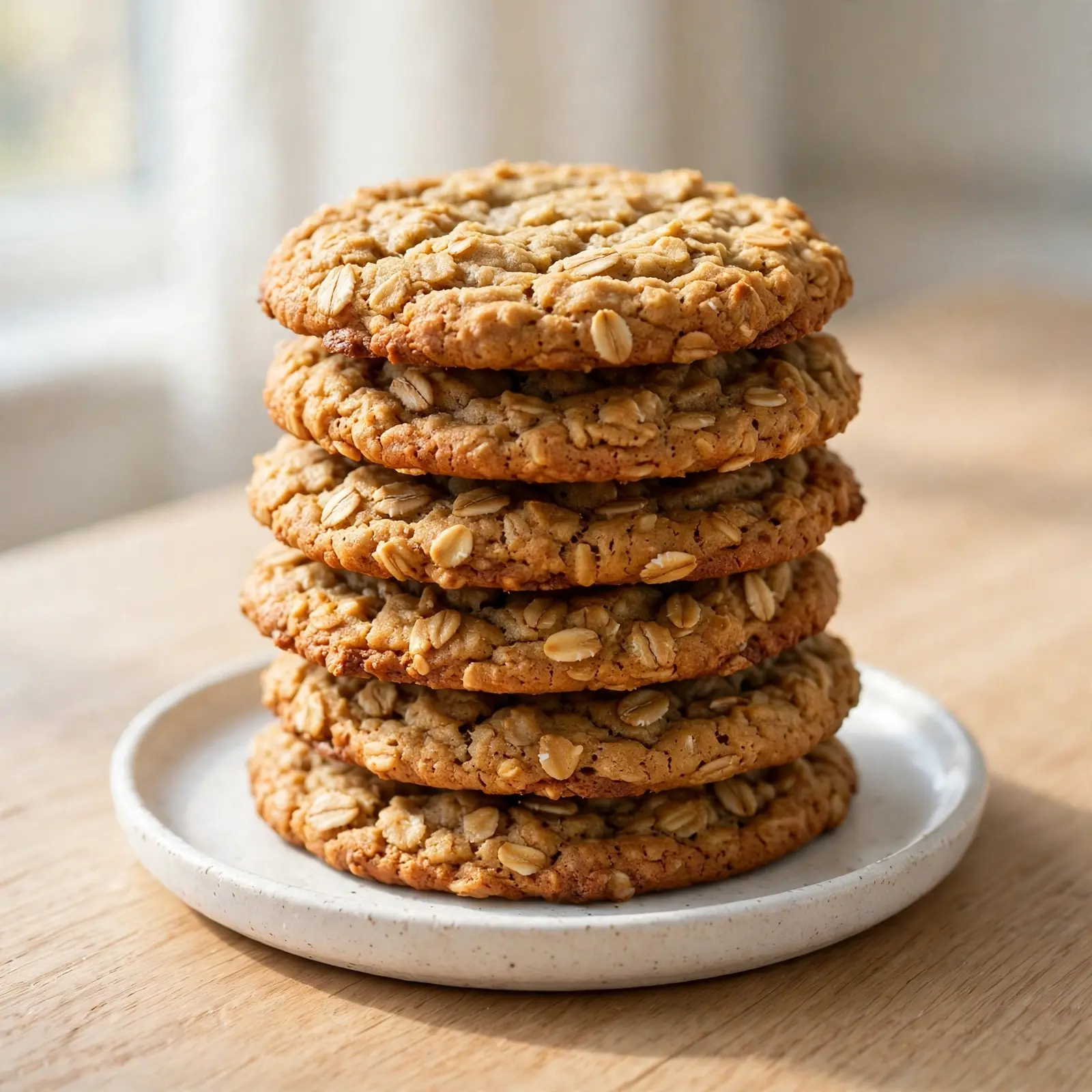
Why This Recipe Works With Oil Instead of Butter
The chew is built in, not borrowed. Butter firms up again as a cookie cools, which is why butter cookies go hard by the next day. Oil stays liquid at room temperature, so an oil cookie stays soft and bendy in the middle for days.
No mixer, no waiting for butter to soften. There is nothing to cream and nothing to bring to room temperature. The dough is whisked together in one bowl in about ten minutes.
The oats do the heavy lifting. Oatmeal cookies are the best cookie to make without butter, because the oats bring so much chew and flavor of their own that nobody sits there missing the butter. Warm cinnamon and brown sugar fill in the rest.
It is naturally dairy free. Made as written, with oil and no butter or milk, this batch suits anyone at the table who skips dairy. Just check that your add-ins, like chocolate chips, are dairy free too if that matters.
Oil Versus Butter in a Cookie: What Actually Changes
Here is the simple science, because the swap fails when people treat oil and butter as the same ingredient in different outfits.
What Is Butter Made Of, and What Is Oil?
Butter is only about 80 percent fat. The rest is mostly water, around 16 to 18 percent, plus a little milk solid, which is the part that browns and tastes toasty. Oil is 100 percent fat, and it is liquid at room temperature. That one difference explains almost everything that changes when you swap them.
Why Oil Cookies Spread Differently
Solid butter melts slowly in the oven, so a butter cookie holds its shape for the first few minutes. Oil is already liquid, so it coats the flour right away and the dough wants to spread sooner and wider. The fix is not more flour. The fix is the rest: 30 minutes gives the oats and flour time to absorb the liquid, and a thicker, hydrated dough spreads far less.
Why Oil Cookies Stay Chewier for Longer
Fat coats flour proteins and limits how much gluten, the stretchy network that makes bread chewy in a tough way, can form. Liquid oil coats flour very evenly, so the crumb bakes up tender. And because oil never re-solidifies the way butter does as it cools, the cookie keeps that soft, bendy center on day two and day three instead of firming up.
What Flavor Do You Lose, and How Do You Get It Back?
What you lose is the milk solids. There is nothing in oil to brown into that toasty, nutty butter taste. So this recipe builds the flavor back from other corners: brown sugar brings molasses depth, cinnamon brings warmth, vanilla rounds it out, and a proper pinch of salt keeps it all from tasting flat. The oats themselves are nutty once baked. Most people taste a spiced, caramel edged oatmeal cookie, not a missing ingredient.
The Ratio to Remember
Use about 3/4 cup of oil for every 1 cup of butter you are replacing. Oil is pure fat and butter is not, so a full cup for cup swap overshoots the fat and gives you greasy cookies. Three quarters is the standard swap, and it is what this recipe is built on.
J. ZaiB Micro-Tip: Resting Is Not Chilling, and It Matters More Here
With butter cookies, chilling is about keeping the fat cold. With oil cookies, the 30 minute rest is about water, not temperature. Dry rolled oats are thirsty. If you bake the dough straight away, the oats steal moisture from the baked cookie instead, and the centers turn dry and the oats stay hard. Rest first, and the oats go into the oven already hydrated, which is where the chew comes from.
What You Need
For the Cookies
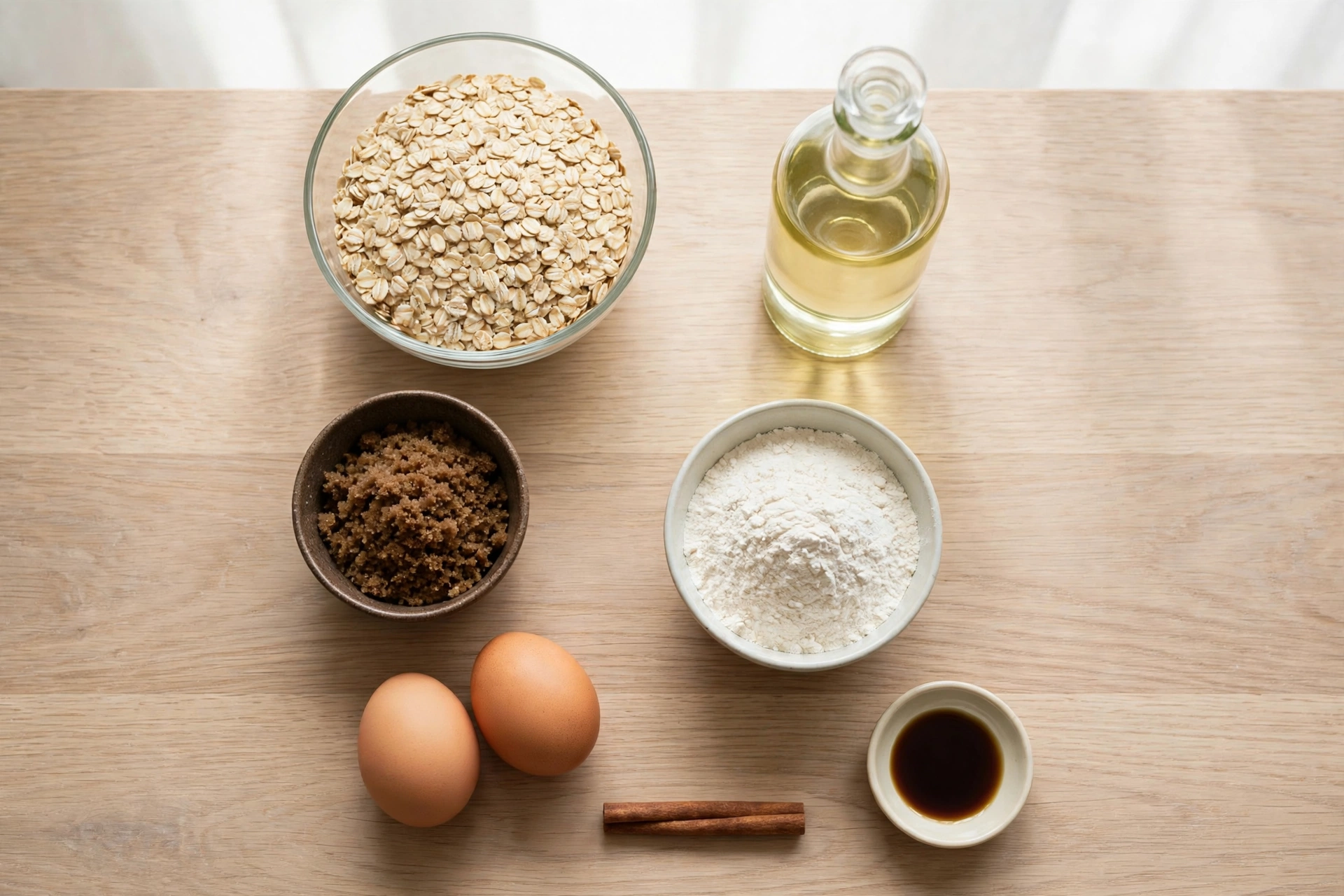
- 3/4 cup (180ml) neutral oil, such as canola, vegetable, grapeseed or avocado oil
- 1 cup (200g) packed brown sugar
- 1/4 cup (50g) granulated white sugar
- 2 large eggs, at room temperature
- 2 tsp vanilla extract
- 1 1/2 cups (190g) all-purpose flour, spooned and leveled
- 1 tsp baking soda
- 1 tsp ground cinnamon
- 3/4 tsp fine salt
- 3 cups (270g) old-fashioned rolled oats
Equipment: Large mixing bowl, whisk, spatula, cookie scoop or tablespoon, 2 baking sheets, parchment paper, wire rack
Makes: About 24 cookies
A Note on the Oats
Use old-fashioned rolled oats, the flat, flaky kind. Quick oats are cut finer and drink up more moisture, so the cookies bake flatter and softer, with less chew. Steel-cut oats are too hard and stay gritty, so save them for porridge. If quick oats are truly all you have, the cookies still work, just expect a flatter, more delicate batch.
A Note on the Oil
Neutral is the whole point. Canola, vegetable, grapeseed and avocado oil all disappear into the background and let the oats and cinnamon lead. Save the strong extra virgin olive oil for salad; its flavor pushes through in a cookie. Melted coconut oil also works and sets a little firmer, but it can add a faint coconut note unless you use the refined kind.
How to Make Oatmeal Cookies Without Butter, Step by Step
Whisk the Oil, Sugars, and Eggs
Whisk Until Glossy: Pour the oil into a large bowl and add the brown sugar and white sugar. Whisk for about 1 minute, until the mixture looks thick and glossy. There is no creaming step here, because there is no solid fat to beat air into. You are simply dissolving the sugar into the oil. Add the eggs one at a time, whisking after each, then whisk in the vanilla. The mixture should look smooth and slightly thickened, like a shiny caramel sauce.
Stir In the Dry Ingredients
Mix Only Until the Flour Disappears: Sprinkle the flour, baking soda, cinnamon, and salt over the bowl. Stir with a spatula until no dry flour streaks remain, then stop. Every extra stir develops gluten, and gluten is how a tender cookie turns tough. The dough will look loose and wet at this point. That is correct for now.
Fold In the Oats
Add Them in Two Batches: Fold in half the oats, then the rest, stirring until every oat is coated. The dough will stiffen as the oats go in. This is the last of the mixing; once the oats are in, the bowl work is done.
Rest the Dough for 30 Minutes
This Is the Step That Makes the Chew: Cover the bowl and leave the dough on the counter for 30 minutes. In that time the oats and flour absorb the oil and egg, the dough firms up into something scoopable, and the cinnamon settles through everything. While you wait, heat the oven to 350°F (175°C) and line 2 baking sheets with parchment paper. Skipping this rest is the single most common reason oil based oatmeal cookies spread thin and bake up greasy.
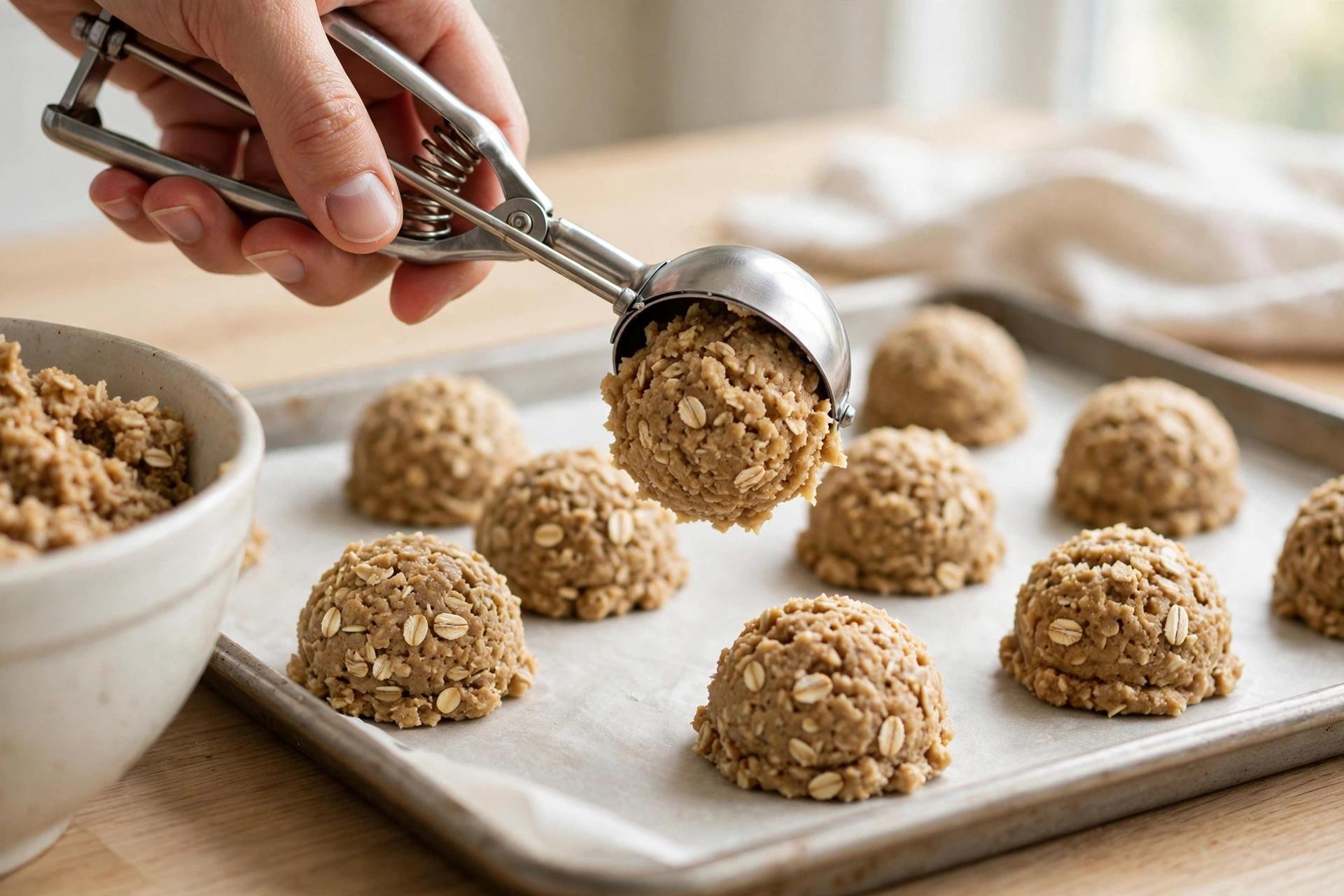
Scoop and Space the Cookies
Two Tablespoons Each: Scoop balls of dough of about 2 tablespoons each and set them 2 inches apart on the lined sheets, about 12 to a sheet. The full batch bakes in 2 batches, or on 2 sheets at once if your oven fits them. If you like a flatter cookie, press each ball down very slightly with damp fingertips. If you like them thick and craggy, leave the balls as they are.
Bake and Pull Them Early
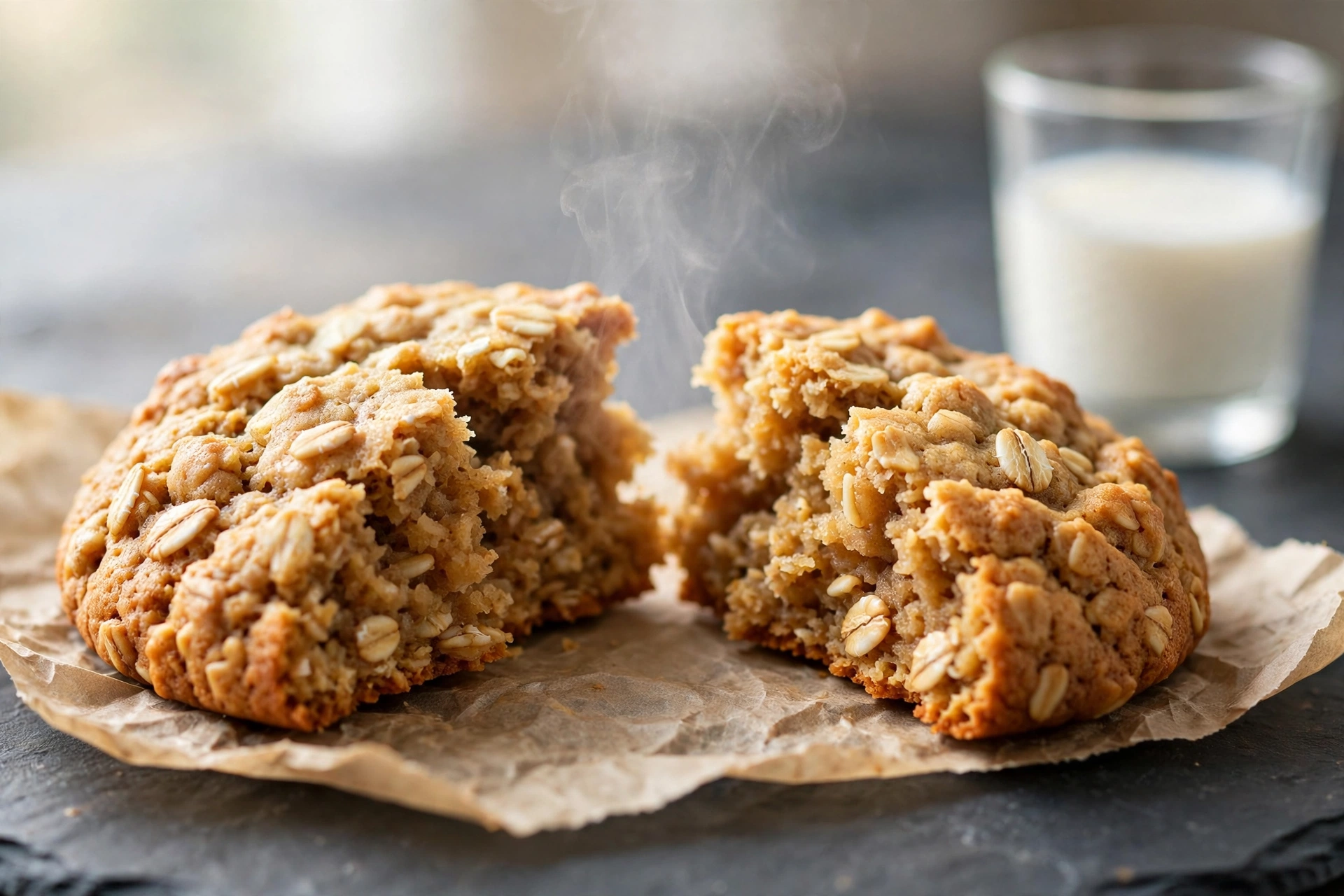
Watch the Edges, Not the Clock: Bake for 10 to 12 minutes, until the edges look set and lightly golden and the centers still look soft and slightly pale, a little underdone in the middle. That soft looking center is baked through; it just has not firmed up yet, and it finishes gently on the hot tray. This early pull is the difference between chewy and dry, so take them out even if your instincts argue.
Cool on the Tray: Leave the cookies on the baking sheet for 10 minutes. They are fragile while hot and firm up as they cool. Then move them to a wire rack. A cookie that feels too soft at minute one will be perfectly chewy at minute thirty.
Common Mistakes and How to Fix Them
Dry and crumbly: Almost always overbaking, or too much flour. Spoon and level the flour instead of scooping it from the bag, and pull the cookies while the centers still look soft.
Greasy: The dough was baked before it rested, so the oil had nowhere to go, or the oil was measured generously. Rest the full 30 minutes and measure the oil level in a clear measuring cup at eye level.
Flat and thin: Too much oil for the flour, or a warm tray between batches. Stick to the 3/4 cup measure, and let hot sheets cool before loading the next round.
Hard oats in the bite: The dough went into the oven unrested. The rest is what softens the oats before baking.
J. ZaiB’s Expert Touch
Let the Dough Rest Overnight for a Deeper Flavor
Thirty minutes is the working minimum, but this dough keeps beautifully in the fridge overnight, covered. The cinnamon and brown sugar settle into the oats, and the cookies bake with a deeper, almost toffee like flavor. Cold dough scoops a little stiffer, which is fine; just give the tray an extra minute in the oven if the centers look very pale.
A Pinch of Flaky Salt on Top
A tiny pinch of flaky sea salt over each warm cookie sharpens the caramel notes of the brown sugar and makes the whole batch taste more deliberate. Optional, quick, and worth it.
Variations to Try
Oatmeal raisin: Fold in 3/4 cup of raisins with the oats. For the best texture, soak the raisins in hot water for 10 minutes and drain them first, so they go in plump instead of pulling moisture out of the cookie around them.
Chocolate chip oatmeal: Fold in 3/4 cup of chocolate chips with the oats. If you are a chocolate first baker, our chewy bakery style Chocolate Chip Cookies use the same pull them early rule.
Apple cinnamon: Fold in 1/2 cup of finely diced dried apple and raise the cinnamon to 1 1/2 teaspoons. Fresh apple adds too much water and makes the cookies cake like, so dried is the one to use here.
How to Store Them
Keep the cookies in an airtight container at room temperature for up to 5 days; oil based cookies stay soft longer than butter ones, so they are often better on day two. A slice of plain bread in the container helps hold the softness, as the cookies slowly take moisture from the bread.
Freeze baked cookies for up to 3 months in a sealed bag, and thaw them on the counter for 20 minutes. Or freeze the scooped dough balls on a tray, bag them once solid, and bake from frozen at the same temperature, adding 1 to 2 minutes.
One safety note worth the space: never taste the raw dough. Flour is a raw ingredient and raw eggs carry their own risk; the FDA’s guide to handling flour safely explains why baking is the step that makes dough safe.
Oatmeal Cookies Without Butter
Ingredients
Equipment
Method
- Pour the oil into a large mixing bowl.

- Add the brown sugar and white sugar and whisk for about 1 minute, until thick and glossy.
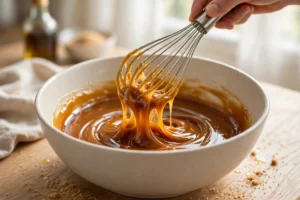
- Add the eggs one at a time, whisking after each addition.

- Whisk in the vanilla extract until the mixture is smooth.
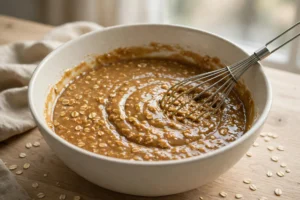
- Sprinkle the flour, baking soda, cinnamon, and salt over the wet mixture.

- Stir with a spatula until no dry flour streaks remain, then stop mixing.
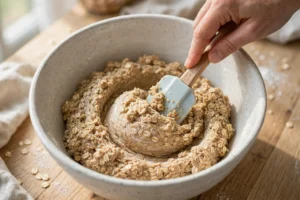
- Fold in half the rolled oats until coated.
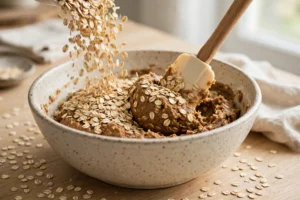
- Fold in the remaining oats until every oat is coated and the dough is stiff.
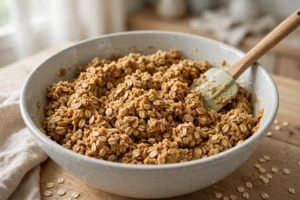
- Cover the bowl and rest the dough at room temperature for 30 minutes, so the oats absorb the moisture.

- While the dough rests, heat the oven to 350°F (175°C).

- Line 2 baking sheets with parchment paper.
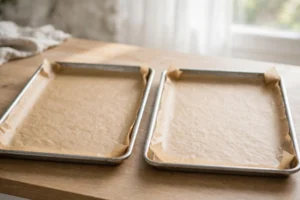
- Scoop balls of dough of about 2 tablespoons each.

- Place them 2 inches apart on the lined sheets, about 12 to a sheet. The batch bakes in 2 batches, or on 2 sheets at once.

- For flatter cookies, press each ball down very slightly with damp fingertips. For thick cookies, leave them as they are.

- Bake for 10 to 12 minutes, until the edges are set and lightly golden and the centers still look soft and slightly pale.

- Cool the cookies on the baking sheet for 10 minutes.
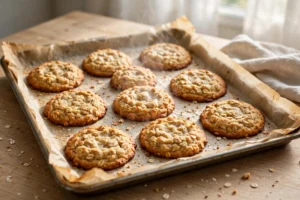
- Move the cookies to a wire rack to finish cooling.
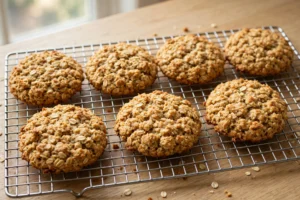
Notes
Nutrition
Per cookie, based on 24 cookies. Values are estimates and vary with the oil and oats used.
| Nutrient | Amount |
|---|---|
| Calories | ~180 kcal |
| Total Fat | 8g |
| Saturated Fat | 1g |
| Cholesterol | 15mg |
| Sodium | 120mg |
| Total Carbs | 24g |
| Sugars | 11g |
| Fiber | 1g |
| Protein | 3g |
Frequently Asked Questions
Can I use oil instead of butter?
Yes, and oatmeal cookies are one of the best places to do it. Use about 3/4 cup of oil for every 1 cup of butter, because oil is pure fat and butter is only about 80 percent fat. The oats, brown sugar and cinnamon carry so much flavor that the missing butter taste barely registers, and the oil actually keeps the cookies softer for longer, since it never firms back up as the cookie cools.
What oil should I use for the best flavor?
Use a neutral oil: canola, vegetable, grapeseed or avocado oil. These stay in the background and let the oats, cinnamon and brown sugar lead. Melted refined coconut oil works too and gives a slightly firmer set. Avoid strong extra virgin olive oil in this recipe, because its peppery flavor pushes through the sweetness and fights the cinnamon.
Can I use quick oats instead of old-fashioned?
You can, and the cookies will still bake, but expect a different texture. Quick oats are cut finer, so they absorb more moisture and give you a flatter, softer, more uniform cookie with less chew. Old-fashioned rolled oats keep their flake shape in the dough, and that shape is the chewy bite people want from an oatmeal cookie. Steel-cut oats are the one kind to avoid; they stay hard and gritty even after baking.
What is the secret to chewy cookies?
Three things, and none of them is an exotic ingredient. First, moisture that stays: brown sugar holds water in the baked cookie, and oil never re-solidifies, so the center stays bendy. Second, a rested dough, so the oats are hydrated before they bake instead of stealing moisture afterwards. Third, an early pull from the oven, while the centers still look soft. A cookie baked until it looks fully done in the oven will be dry by the time it cools.
Why are my oatmeal cookies dry and crumbly?
Overbaking is the most common cause, followed by too much flour. Oatmeal cookies should come out when the edges are golden and the centers still look slightly soft; they finish on the hot tray. For the flour, spoon it into the cup and level it instead of scooping from the bag, which can pack in far more than the recipe means. Skipping the dough rest also dries them out, because thirsty oats pull moisture from the crumb as the cookies sit.
Why are my oatmeal cookies flat and crispy?
Flat cookies usually mean the fat spread before the structure set. With oil based dough, the usual causes are baking the dough before it rested, using more oil than the 3/4 cup measure, or scooping onto a hot tray from the previous batch. Rest the dough the full 30 minutes, measure the oil carefully, and let sheets cool between batches. A very hot oven can do it too, so if every batch spreads, drop the temperature by 25°F and check again.
How do I keep my oatmeal cookies soft?
Store them in an airtight container as soon as they are fully cool, and add a slice of plain bread to the container; the cookies slowly take moisture from the bread and stay soft. These oil based cookies hold their softness well for up to 5 days at room temperature. If a batch has already firmed up, 5 to 8 seconds in the microwave brings back most of the fresh baked softness.
How long can I store oatmeal cookies at room temperature?
In an airtight container, these cookies keep well at room temperature for up to 5 days, and the oil keeps them softer than a butter batch over that time. For longer storage, freeze them. Baked cookies freeze for up to 3 months in a sealed bag and thaw on the counter in about 20 minutes, and scooped dough balls freeze just as well, ready to bake from frozen with 1 to 2 extra minutes.
More Cookies to Bake Next
If this batch goes fast, the cookie tin has options. Our Easy Christmas Cookies are the no-chill cut-outs that hold their shapes, the bakery style Chocolate Chip Cookies are the chewy classic, and a batch of Sugar Cookie Frosting turns any plain cookie into a decorating project. For everything in one place, browse the Easy Recipes Collection.
The Cookies That Do Not Need Butter at All
An empty butter dish feels like the end of a baking plan, but oatmeal cookies without butter are not a backup version of anything. They are softer on day two than most butter cookies manage on day one, they ask for no mixer and no softening time, and the whole trick is three small moves: the right ratio, a rested dough, and an early pull.
Whisk it glossy. Rest the dough. Watch the edges, not the clock.
Tag us on Instagram @viralfoodhacks706 when your batch comes out craggy and golden. Save this to Pinterest for the next morning the butter runs out, because there will be one.