
Can you really make flatbread with just cottage cheese and eggs?
Yes. Blend 1 cup of cottage cheese with 2 eggs and a little seasoning until completely smooth, spread the batter thin on a parchment lined pan, and bake at 350°F (175°C) for 35 to 40 minutes. The cottage cheese flatbread that comes out is golden at the edges, flexible enough to roll around a filling, and carries about 20 grams of protein in each serving, with no flour and no kneading.
The Tub of Cottage Cheese Nobody Wanted
Every fridge has one. A tub of cottage cheese, bought with good intentions, sitting behind the milk with two spoonfuls missing.
It is not quite a snack, not quite an ingredient, and it keeps getting pushed to the back. Then this recipe started appearing everywhere: blend that tub with eggs, bake it flat, and somehow it turns into bread.
The skepticism is fair. Cottage cheese is lumpy, wet, and mild, and eggs are breakfast. Nothing about the pair sounds like something you could wrap around chicken and pick up with your hands. But the lumps are exactly the problem this recipe solves first, and once they are gone, the rest follows. There is one blending step that decides whether your flatbread holds together or tears down the middle, and it is coming up in the science section below.
Why This Recipe Works
Two ingredients do all the work. Cottage cheese brings the protein and the body, eggs bring the structure that sets in the oven. Everything else in the ingredient list is seasoning.
It is flexible, not crackery. Baked for the right time and cooled properly, this flatbread bends around a filling instead of snapping. The cooling step is part of the recipe, not a suggestion.
No flour, no kneading, no rising. There is no dough to manage. The blender does the only hard job, and the oven does the rest.
The protein is real. One flatbread, before any filling, holds about 40 grams of protein in the whole pan and about 20 grams per serving. That is the chicken breast of breads, and it is why this recipe keeps getting saved.
The Science: Why Blended Cottage Cheese Bakes Into Bread
Here is what is actually happening, explained simply, because understanding it is what stops the tearing and sogginess people complain about.
Why Blending Is the Whole Trick
Cottage cheese is made of curds, small soft lumps of milk protein sitting in liquid. Spread those curds on a pan as they are and they bake into a lumpy sheet with weak spots, and weak spots are where a wrap tears.
Blending breaks the curds down into a smooth, pourable batter, more like a thick pancake batter than cheese. A smooth batter spreads into an even layer, and an even layer bakes at the same speed everywhere, so there are no raw patches and no brittle thin spots. If you remember one sentence from this article, make it this one: blend until you cannot see a single curd, then blend ten seconds more.
What the Eggs Do in the Oven
Eggs are the structure. Egg proteins are loose and liquid when raw, and as they heat up they unfold and link together into a firm network, the same change that turns a raw egg into a cooked one in a frying pan. Here, that network forms around the cottage cheese proteins and traps them in a thin, solid sheet. This is why the flatbread holds together at all, and also why it needs to bake until the center is fully set. A center that still looks wet is a network that has not finished forming.
Why the Seasoning Matters More Than You Think
On its own, this flatbread tastes mild and a little eggy, and that is the honest truth of it. The garlic powder and Italian seasoning are not decoration. Savory, herby flavors push the taste from “baked egg” toward “flatbread”, and a little extra seasoning sprinkled on top before baking means the first bite tastes seasoned too. Parmesan, if you add it, deepens that savory bread flavor further.
Why Cooling Makes It Stronger
Straight out of the oven, the flatbread is at its weakest. The protein network is still steaming and soft, and peeling or rolling it hot is how most flatbreads tear. Ten to fifteen minutes of cooling lets the steam escape and the network firm up, the same way a cake firms as it cools. Warm is fine for eating. Hot is too early for wrapping.
J. ZaiB Micro-Tip: Tilt the Pan, Do Not Chase the Batter
Pour the batter into the middle of the pan, then tilt the pan in each direction and let gravity pull it into the corners. Chasing batter around with a spoon drags it thin in some places and leaves it thick in others, and uneven thickness is the number one cause of burnt edges around a soggy middle. Tilt first, then use the back of a spoon only to nudge the corners.
What You Need
For the Flatbread
- 1 cup (226g) cottage cheese, full-fat or 2% (see the note below)
- 2 large eggs
- 1 tsp Italian seasoning, plus a little extra for sprinkling on top
- ½ tsp garlic powder
- ¼ tsp fine salt (optional, cottage cheese is already salty)
- Olive oil spray or 1 tsp olive oil, for the parchment
- 2 tbsp (10g) finely grated Parmesan (optional, for a deeper savory flavor)
Equipment: Blender or food processor, quarter sheet pan (about 9 x 13 inches / 23 x 33 cm) or similar rimmed baking pan, parchment paper, spatula or the back of a spoon, sharp knife or pizza cutter
Makes: 1 large flatbread, cut into 2 wrap sized pieces
A Note on Cottage Cheese
Use full-fat or 2% cottage cheese for this recipe. Fat-free and very watery brands carry more liquid, and extra liquid is the enemy here: it makes the batter thinner, the bake longer, and the center more likely to stay soggy. Small curd or large curd both work, because the blender erases the difference. If your cottage cheese looks very wet on top, spoon off the loose liquid before measuring.


How to Make Cottage Cheese Flatbread, Step by Step
Prep the Pan
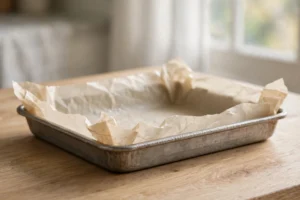
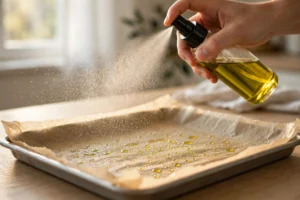
Heat and Line: Heat the oven to 350°F (175°C). Line a quarter sheet pan (about 9 x 13 inches) with parchment paper, letting it come up the sides a little. Spray the parchment lightly with olive oil spray or brush it with the teaspoon of olive oil. Do not skip the parchment or the oil. This flatbread sticks to a bare pan like it lives there, and the parchment is also your handle for lifting it out later.
Blend the Batter
Blend Until Truly Smooth: Put the cottage cheese, eggs, Italian seasoning, garlic powder, and salt (if using) in the blender. Blend on high for 45 to 60 seconds, stop, scrape down the sides, and blend again for a few seconds. The batter should look like a smooth, pourable cream with no visible curds at all. If you can still see lumps, keep blending. This step decides the whole recipe.

Spread and Season
Tilt, Then Nudge: Pour all the batter into the center of the lined pan. Tilt the pan in every direction so the batter flows into an even rectangle, then use the back of a spoon or a spatula to nudge it into the corners. Aim for an even layer about ¼ inch (6mm) thick. Even thickness matters more than a perfect rectangle shape.
Sprinkle the Top: Scatter a little extra Italian seasoning over the surface, and the Parmesan if you are using it. The top seasoning is what you taste first, so do not skip it.
Bake
Bake Until the Center Is Set: Bake for 35 to 40 minutes. The flatbread is done when the edges are deep golden brown, the surface looks dry and matte instead of wet and shiny, and the center feels firm and springs back lightly when you press it with a fingertip. It will puff in places while it bakes and settle back down as it cools. That is normal. If the center still looks glossy or jiggles like jelly, give it 5 more minutes. An underbaked center is the main cause of a soggy flatbread.
Cool, Peel, and Cut
Cool Before You Touch It: Leave the flatbread on the pan for 10 to 15 minutes. It firms up as it cools and becomes much easier to handle.
Peel and Slice: Lift the parchment to move the flatbread to a board, then peel the parchment away from the back. Cut the flatbread in half crosswise to make 2 wrap sized pieces, or into 4 smaller pieces for sandwiches and dipping.
Common Mistakes and How to Fix Them
It tore when I rolled it. Three usual causes: the batter was not blended fully smooth, so curds left weak spots; it was rolled while still hot and steaming; or it was overbaked until brittle. Blend longer, cool the full 10 to 15 minutes, and pull it when the edges are golden rather than dark brown.
The middle stayed soggy. The layer was too thick in the center, or the flatbread came out before the center set. Spread to an even ¼ inch, and judge doneness by the dry, matte, springy center, not by the clock alone. Very watery cottage cheese can also be the cause; spoon off loose liquid before blending.
It cracked instead of bending. It baked too long or at too high a temperature, which dries the sheet out. This flatbread should come out flexible, not crisp like a cracker. Check 5 minutes early the first time, because ovens vary.
It stuck to the pan. The parchment or the oil was skipped. Both are required. If it sticks at the edges anyway, slide a thin spatula underneath after cooling rather than pulling.
It tastes like eggs. The seasoning was too light. Keep the garlic powder and Italian seasoning, add the Parmesan, and try the everything bagel variation below. Served warm with a flavorful filling, the egg note fades into the background.
J. ZaiB’s Expert Touch
Warm It Before You Wrap It
A cold flatbread from the fridge is stiffer than a fresh one. Before filling a stored flatbread, warm it for 10 to 15 seconds in the microwave or a few minutes in a 350°F (175°C) oven. Warmth brings back the flexibility, and a warm flatbread rolls without cracking where a cold one might split.
Build the Wrap Like a Sandwich, Not a Salad
Put a barrier layer against the flatbread first, a slice of cheese or a leaf of lettuce, then the wetter ingredients like tomato and sauce in the middle. Wet fillings sitting directly on the flatbread soften it from the inside, and the barrier keeps the base firm until the last bite.
Variations to Try
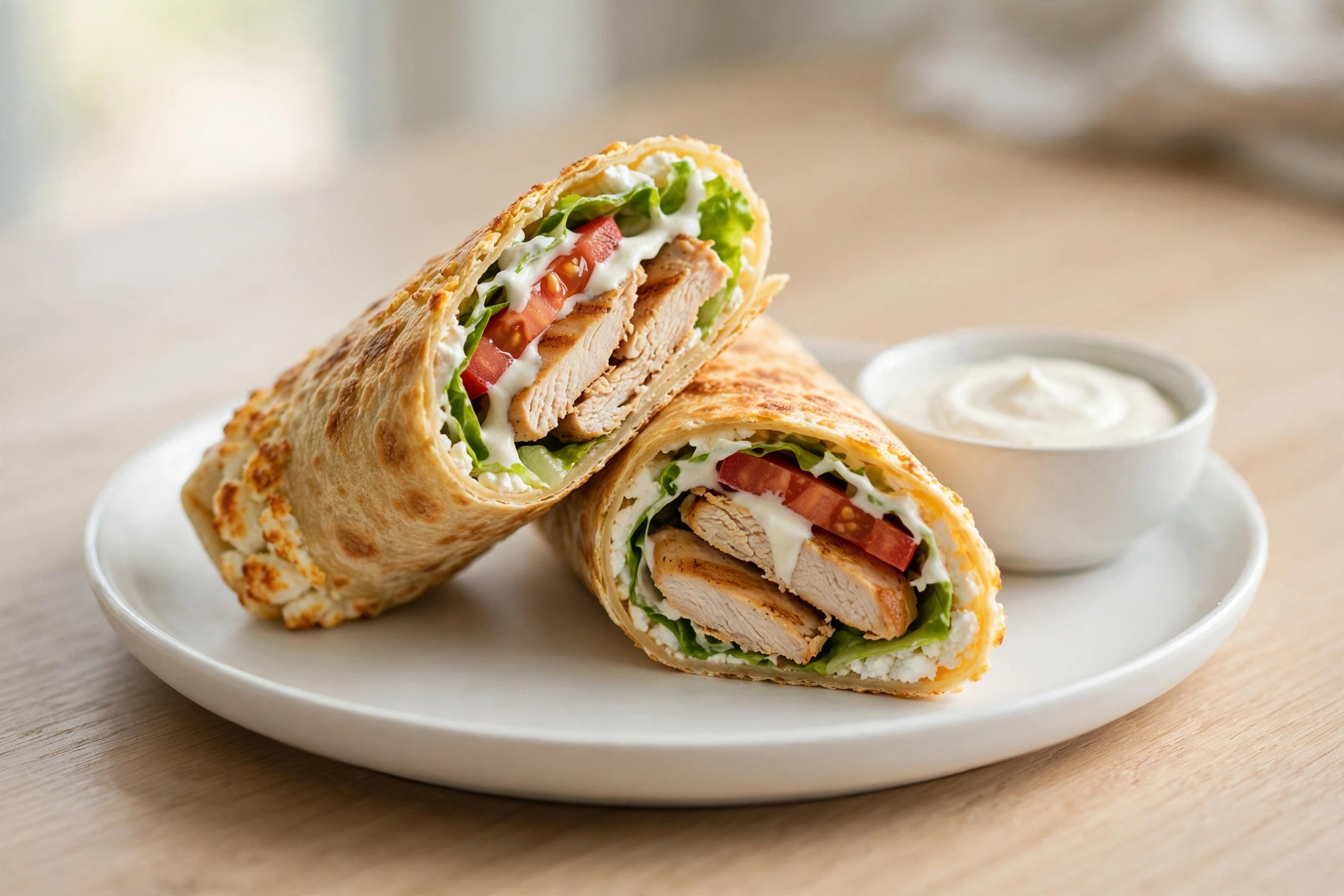
The classic chicken wrap: Fill with sliced chicken breast, lettuce, tomato, and a spoon of garlic yogurt sauce or mayo. This is the use the recipe went viral for, and it is still the best one.
Pizza base: Bake the flatbread fully, let it cool, then top it with a thin layer of pizza sauce, mozzarella, and your toppings. Return it to a 425°F (220°C) oven for 5 to 8 minutes, until the cheese melts and bubbles. Keep the sauce thin and the toppings fairly dry, and let it cool for 2 minutes before slicing so the base stays firm.
Everything bagel flatbread: Swap the Italian seasoning for 1 tablespoon of everything bagel seasoning, half blended in and half sprinkled on top. Made for cream cheese and smoked salmon, or a breakfast wrap with scrambled eggs.
Spinach and feta: Blend a small handful of fresh spinach and 2 tablespoons of crumbled feta into the batter. The spinach tints it green and the feta adds salty pops of flavor. The batter will be a little wetter, so add 3 to 5 minutes to the bake and judge by the dry, springy center.
The flour version (soft skillet flatbreads): If you want a bread that feels closer to a tortilla, blend 1 cup (226g) of cottage cheese until smooth, stir in 1 cup (125g) of self-rising flour and a pinch of salt, and knead briefly into a soft dough. Rest it for 10 minutes, divide into 4 balls, roll each into a thin round, and cook in a dry hot skillet for 2 to 3 minutes per side, until puffed with golden spots. These are softer and more bread like, with flour’s carbs, so they suit a different job than the baked version above.
How to Store It
Let the flatbread cool completely, then store it in an airtight container or a sealed bag in the refrigerator, with a sheet of parchment between pieces so they do not stick together. It keeps well for up to 3 days. Because it is made of eggs and cheese, refrigerate it within 2 hours of baking, and within 1 hour if your kitchen is very warm.
Freeze it for up to 1 month: cool it fully, stack the pieces with parchment between them, and seal them in a freezer bag with the air pressed out. Thaw overnight in the fridge, or for about 30 minutes on the counter.
To reheat, warm it in a 350°F (175°C) oven for about 5 minutes or in a dry skillet for a minute per side. The microwave works in a pinch (20 to 30 seconds) and is actually the better choice right before wrapping, because it makes the flatbread soft and flexible again, though it will not crisp the edges.
Cottage Cheese Flatbread
Ingredients
Equipment
Method
- Heat the oven to 350°F (175°C).

- Line a quarter sheet pan (about 9 x 13 inches) with parchment paper.
- Spray the parchment lightly with olive oil spray or brush it with the olive oil.
- Add the cottage cheese, eggs, Italian seasoning, garlic powder, and salt (if using) to a blender.

- Blend on high for 45 to 60 seconds, until completely smooth with no visible curds.
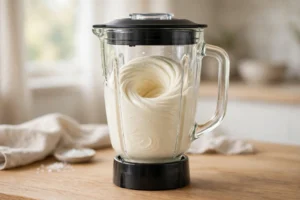
- Scrape down the sides and blend for a few more seconds.

- Pour the batter into the center of the lined pan.

- Tilt the pan so the batter flows into an even rectangle about 1/4 inch (6mm) thick.
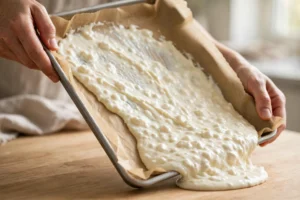
- Nudge the batter into the corners with the back of a spoon or a spatula.
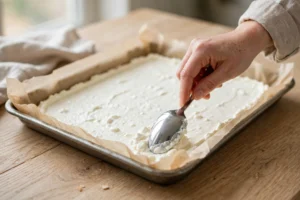
- Sprinkle extra Italian seasoning over the top, plus the Parmesan if using.

- Bake for 35 to 40 minutes, until the edges are deep golden brown.
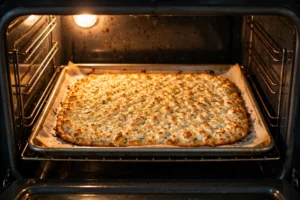
- Check the center: it should look dry and matte and spring back lightly when pressed. If it looks wet or jiggles, bake 5 more minutes.
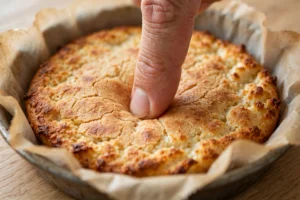
- Cool the flatbread on the pan for 10 to 15 minutes. It firms up as it cools.
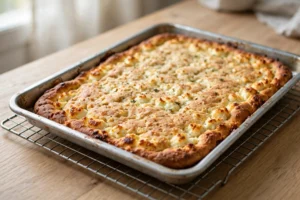
- Lift it out using the parchment and peel the parchment away from the back.

- Cut in half crosswise into 2 wrap sized pieces, and fill as you like.

Notes
Nutrition
Per serving, based on 2 servings (half of one large flatbread), made with full-fat cottage cheese and without the optional Parmesan and added salt. Values are estimates and vary with the cottage cheese brand used.
| Calories | ~215 kcal |
| Total Fat | 12g |
| Saturated Fat | 5g |
| Cholesterol | 210mg |
| Sodium | 410mg |
| Total Carbs | 4g |
| Sugars | 3g |
| Fiber | 0g |
| Protein | 20g |
Frequently Asked Questions
What is cottage cheese flatbread made of?
Cottage cheese flatbread is made of two base ingredients: cottage cheese and eggs, blended completely smooth with seasonings like garlic powder and Italian herbs. The blended batter is spread thin on a parchment lined pan and baked until it sets into a firm, flexible sheet. There is no flour in the base recipe, which is why it is naturally low in carbs.
Can you freeze cottage cheese flatbread?
Yes. Let the flatbread cool completely, stack the pieces with parchment paper between them so they do not stick, and seal them in a freezer bag with the air pressed out. It keeps for up to 1 month. Thaw it overnight in the refrigerator, then warm it briefly in the oven or microwave before filling, which brings back its flexibility.
Is this flatbread gluten-free?
Yes, the base recipe is naturally gluten-free, because it contains no flour or grains at all, just cottage cheese, eggs, and seasonings. If you need it to be strictly gluten-free, check the labels on your seasoning blends, since a few brands use anti-caking additives. The flour version in the variations above is not gluten-free.
Is cottage cheese flatbread keto-friendly?
Yes. With about 4 grams of carbs and 20 grams of protein per serving, this flatbread fits keto and low-carb eating well. The carbs come only from the cottage cheese itself. Fill it with keto friendly fillings like chicken, cheese, avocado, and leafy greens and the whole wrap stays low carb.
Can I use low-fat or fat-free cottage cheese?
You can, but full-fat or 2% cottage cheese gives the best result. Low-fat and fat-free versions tend to be wetter, and the extra liquid makes a thinner batter that takes longer to bake and can stay soggy in the center. If low-fat is what you have, spoon off any loose liquid on top before measuring, spread the batter a little thinner, and judge doneness by the dry, springy center rather than the clock.
How much protein is in one flatbread?
One whole flatbread made with 1 cup of full-fat cottage cheese and 2 eggs contains about 40 grams of protein, so one serving, half the flatbread, has about 20 grams. The exact number shifts a little with the brand of cottage cheese, since protein per cup varies between brands. That is before any filling, so a chicken filled wrap goes much higher.
How long can you store cottage cheese flatbread?
Store it in the refrigerator in an airtight container, with parchment between the pieces, for up to 3 days. Because it is made from eggs and cheese, get it into the fridge within 2 hours of baking. For longer storage, freeze it for up to 1 month. Warm it briefly before serving or wrapping so it turns flexible again.
Can you use cottage cheese flatbread for pizza?
Yes, and it makes a sturdy high protein pizza base. Bake the flatbread fully first and let it cool, then add a thin layer of sauce, cheese, and toppings, keeping wet toppings light so the base does not soften. Bake again at 425°F (220°C) for 5 to 8 minutes, until the cheese melts and bubbles, and let it rest for 2 minutes before slicing.
What to Fill, Wrap, and Dip Next
The flatbread is the vehicle; these are the cargo. Sliced Chicken Breast that actually stays juicy is the classic filling, and the layering in our Chicken Crunch Wrap works beautifully in this flatbread when you want the Taco Bell idea with a protein upgrade. A handful of Homemade Chicken Nuggets rolled up with lettuce and honey mustard is a kids’ favorite, and torn into strips, the flatbread is the low carb dipper for our Spinach Artichoke Dip. For more ideas like these, browse the Easy Recipes Collection.
The Flatbread That Earns Its Place
Cottage cheese flatbread is not a compromise food pretending to be bread. It is its own thing: golden, savory, flexible, and carrying more protein than most sandwiches built on regular bread. The whole recipe stands on two habits: blend until you truly cannot see a curd, and let it cool before you ask it to bend.
Blend it smooth. Spread it even. Watch the center, not the clock.
Tag us on Instagram @viralfoodhacks706 with your first wrap, and save this to Pinterest for the next time a tub of cottage cheese needs a purpose.