
Can I make snickerdoodles without cream of tartar?
Yes, and the swap is exact: leave out the cream of tartar AND the baking soda, and use 1 tablespoon of baking powder in their place. Baking powder is those same two ingredients already mixed together, so the cookies still rise, still crackle on top, and still come out soft and chewy, with just a little less tang than the classic version.
Short on baking powder either, or out of cinnamon? Check the swap before you start with our ingredient substitution calculator, and it will give you the exact amount to use instead.
The cookie that empties the tin first
Every Christmas cookie tin has the same pattern. The fancy decorated ones sit there looking pretty for days, and the plain, crackly, cinnamon covered ones quietly vanish. Those are the snickerdoodles, and they vanish because they hit the exact spot people actually want: soft in the middle, a little chewy at the edges, warm with cinnamon, and sweet without being heavy.
The only thing that stops people making them is one small jar. Cream of tartar sits in the spice cupboard for years, gets used twice, and is always, always finished or missing on the day you want to bake. This recipe removes that problem completely. It is written from the start to work without cream of tartar, not as a backup plan, and the classic with-tartar version is included below too, so you can bake whichever way your cupboard allows.
What cream of tartar actually does in a snickerdoodle
Cream of tartar is an acid, and in a classic snickerdoodle it has one main partner: baking soda. Baking soda on its own needs an acid to wake it up, and when the two meet in the dough they make the gas that lifts the cookie. That lift is what puffs the ball up in the oven so the cinnamon sugar crust stretches and cracks into the pattern snickerdoodles are known for.
The acid does two smaller jobs as well. It adds the faint tang that separates a snickerdoodle from an ordinary sugar cookie, and it helps keep the texture chewy instead of cakey by interfering a little with how the sugar sets as the cookie cools.
Here is the part most recipes never explain: baking powder is simply baking soda and cream of tartar already combined in the tin, in working proportions, with a little starch to keep it dry. So swapping is not a trick or a shortcut that costs you the cookie. It is the same chemistry, bought pre-mixed.
The exact swap, both directions
This is the whole secret, measured properly, because “just use baking powder” on its own is where most no-tartar recipes go wrong. The baking soda has to come out too, or the cookies rise oddly and taste faintly soapy.
| Version | Leavening to use | Everything else |
|---|---|---|
| This recipe (no cream of tartar) | 1 tablespoon baking powder | No baking soda, no cream of tartar |
| Classic version | 2 teaspoons cream of tartar + 1 teaspoon baking soda | No baking powder |
What changes without the tartar: the cookies are a touch less tangy and the chew is a little softer, and the cracks can be slightly less deep. What does not change: the cinnamon sugar crust, the soft centre, and the bake time. Most people at the table will not notice a difference unless the two versions are side by side.
J. ZaiB Micro-Tip: Roll each dough ball in the cinnamon sugar twice, once before you place it and once more right before the tray goes in. The double coat is what gives the deep, even crust that cracks into wide, pretty lines instead of thin scratches.
Ingredients
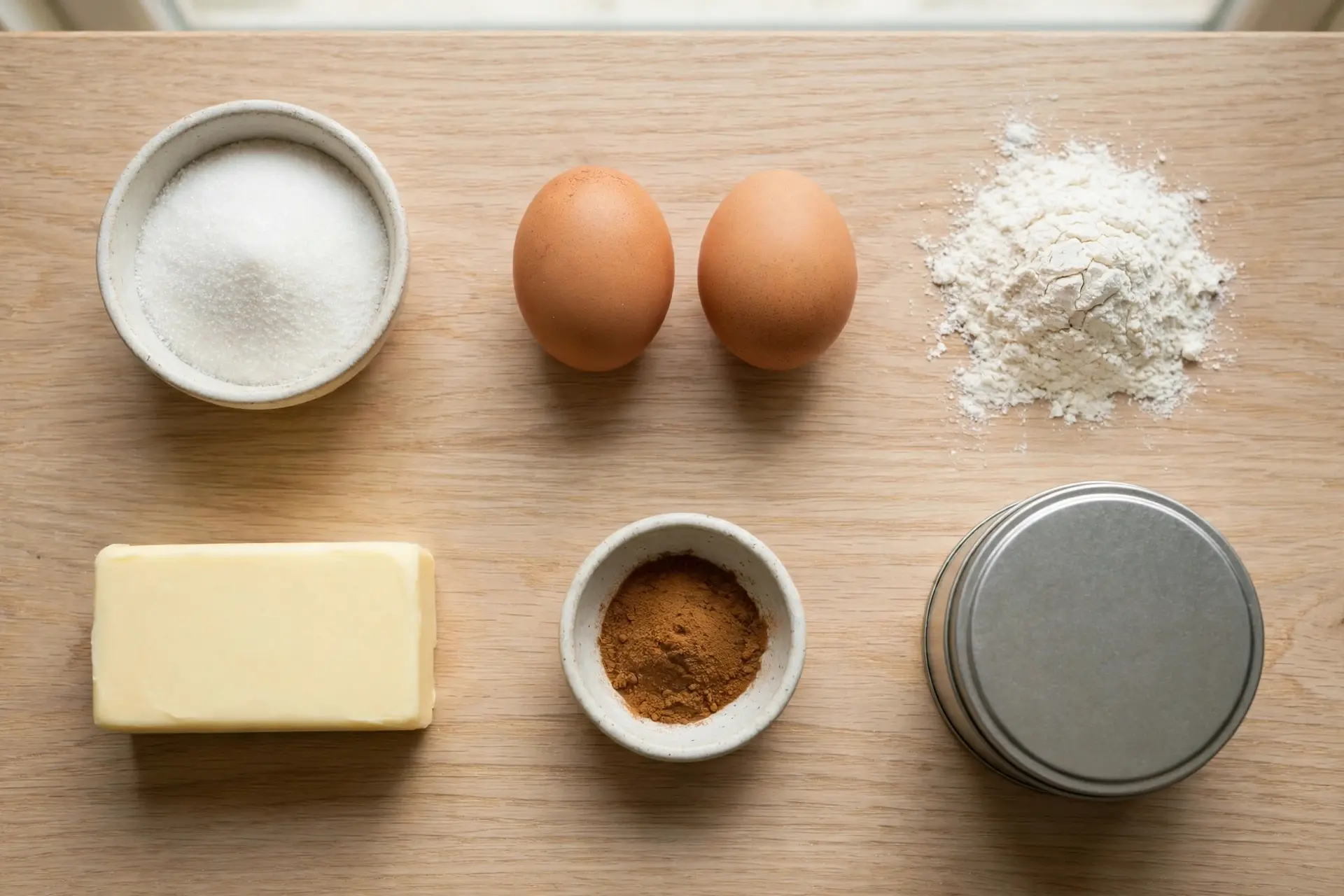
For the dough:
- 1 cup (227 g) unsalted butter, softened to room temperature
- 1 1/2 cups (300 g) granulated sugar
- 2 large eggs, at room temperature
- 1 teaspoon vanilla extract
- 2 3/4 cups (330 g) all-purpose flour
- 1 tablespoon baking powder (this is the swap, it replaces the cream of tartar and the baking soda together)
- 1/2 teaspoon fine salt
For the cinnamon sugar coating:
- 3 tablespoons (38 g) granulated sugar
- 1 tablespoon ground cinnamon
Ingredient notes. The butter must be soft, not melted: soft butter creams into the sugar and traps air, which is half the lift in this cookie, while melted butter gives flat, greasy cookies. If your baking powder has been open for more than about 6 months, check it is still alive by stirring a pinch into hot water; it should fizz strongly. Old baking powder is the quiet reason behind many flat batches. Cinnamon is the flavour here, so use a jar that still smells strong when you open it.
How to make snickerdoodles without cream of tartar, step by step
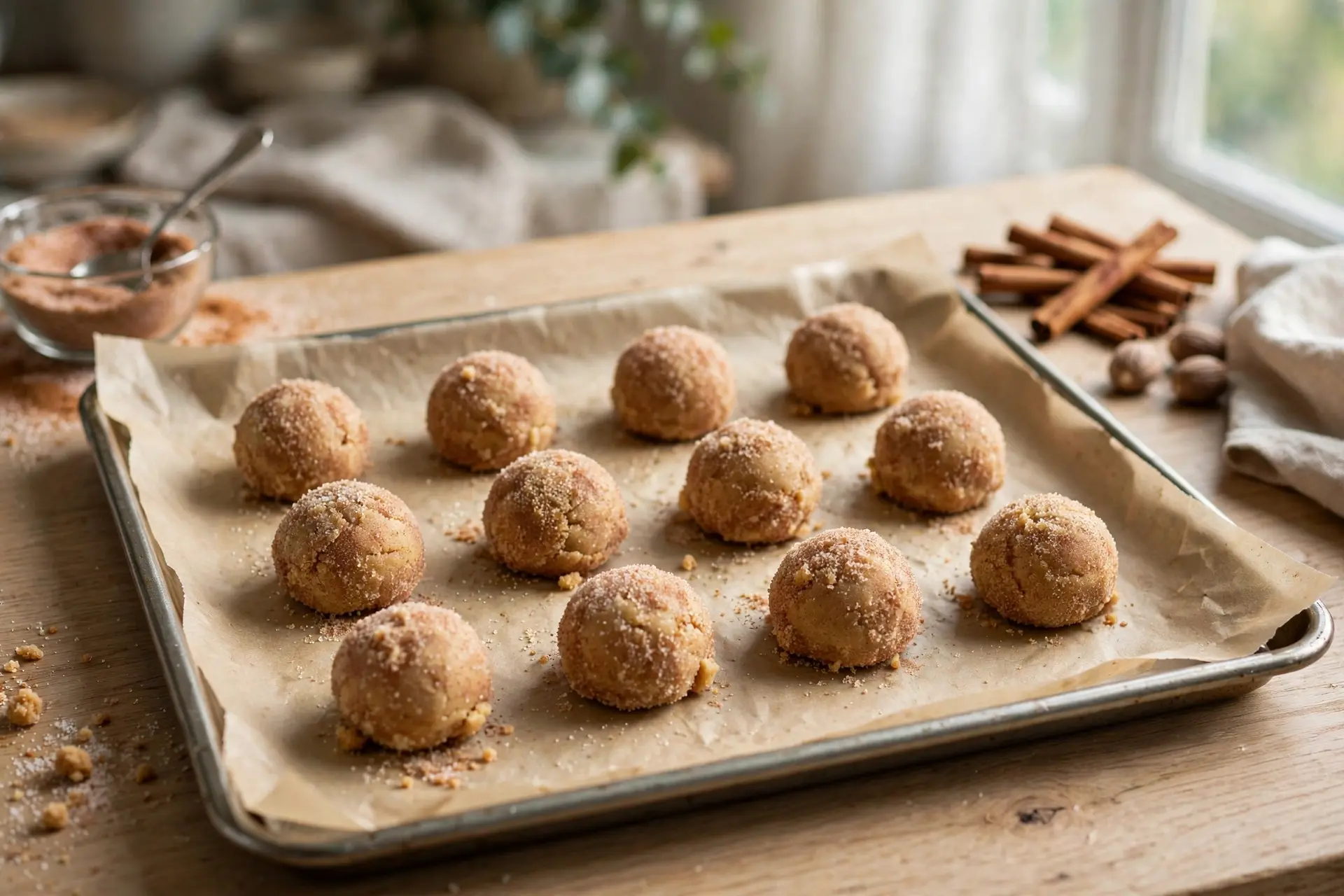
- Cream the butter and sugar. Beat the softened butter and the 1 1/2 cups of sugar together in a large bowl until the mixture is pale, fluffy, and noticeably lighter in colour, about 2 minutes with an electric mixer.
- Add the eggs and vanilla. Beat in the eggs one at a time, then the vanilla, mixing until the batter looks smooth and glossy.
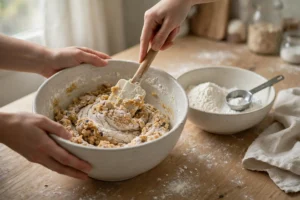
- Add the dry ingredients. In a second bowl, whisk the flour, baking powder, and salt. Add this to the butter mixture and stir just until no dry streaks of flour remain, taake (so that) the cookies stay tender instead of tough.
- Mix the coating. Stir the 3 tablespoons of sugar and the tablespoon of cinnamon together in a small shallow bowl until the colour is even.
- Roll the balls. Scoop the dough into balls of about 2 tablespoons each, roll them smooth between your palms, then roll each one generously in the cinnamon sugar until fully coated.
- Arrange on the trays. Place the balls on two parchment lined baking sheets, leaving about 2 inches between them for spreading.
- Bake. Bake at 350°F (175°C) for 10 to 12 minutes, until the edges are set, the tops are crackled, and the centres still look slightly soft and puffy. They finish setting as they cool, and this is the step that decides soft versus hard.
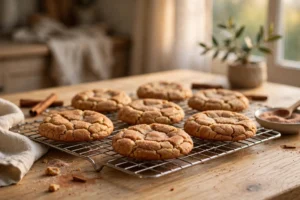
- Serve. Cool the cookies on the tray for 5 minutes, then move them to a wire rack. Serve warm, or at room temperature once the centres have settled into their chew.
No chilling needed. This dough can go straight into the oven, which is part of the point of the recipe. If you prefer a slightly thicker cookie, chill the rolled balls for 30 minutes before baking; the bake time stays the same.
Troubleshooting: every common problem, one fix each
| Problem | Cause | Fix |
|---|---|---|
| Flat cookies | Butter was melted or too soft, or the baking powder is old | Use soft, cool butter that holds a fingerprint without sinking, and test the baking powder in hot water for a strong fizz |
| No cracks on top | Balls rolled too small, oven too cool, or a single thin coat of cinnamon sugar | Roll 2 tablespoon balls, coat twice, and check the oven reaches a true 350°F (175°C) |
| Cookies are hard | Baked too long, even by 2 minutes | Pull them when the centres still look soft and puffy; they set on the hot tray as they cool |
| Cookies are cakey, not chewy | Too much flour, or the dough was overmixed | Spoon and level the flour (or weigh 330 g), and stop mixing the moment the dry streaks disappear |
| Coating slides off or bakes patchy | Balls were greasy on the surface, or the coating was too thin | Roll the balls smooth and dry looking first, then press them gently into the coating as you roll |
| Cookies taste bland | Weak cinnamon, or the salt was skipped | Cinnamon is the whole flavour here, so use a fresh jar, and keep the 1/2 teaspoon of salt, it sharpens the sweetness |
Variations worth trying
- The classic, with cream of tartar. Use the reverse swap from the table above: take out the tablespoon of baking powder and use 2 teaspoons of cream of tartar plus 1 teaspoon of baking soda instead. Everything else, including the bake time, stays exactly the same, and the cookies come out with the traditional tang and a slightly deeper chew.
- Small batch. Halve every ingredient for 12 cookies, and use 1 egg plus 1 egg yolk in place of the 2 eggs, so the dough does not turn slack. The coating halves to 1 1/2 tablespoons of sugar and 1 1/2 teaspoons of cinnamon.
- Brown butter snickerdoodles. Brown the butter in a pan until it smells nutty, let it cool until just warm and soft-set, then cream it with the sugar as usual. The flavour turns deeper and almost toffee like, with no other change.
- Brown sugar version. Swap half the granulated sugar in the dough (3/4 cup / 150 g) for packed brown sugar. The cookies bake up a little chewier and darker, with a gentle molasses note under the cinnamon. Our peanut butter cookies without brown sugar were built on the same swap logic, if you are working around what is in the cupboard.
How to store them (and freeze the dough)
Snickerdoodles keep their soft centres well. Store the baked cookies in an airtight container at room temperature for up to 5 days; a small piece of plain bread in the container helps hold the moisture, the same trick that keeps our small batch chocolate chip cookies soft. In the fridge they last a week, though the texture firms up, so 10 seconds in the microwave brings the chew back.
Freezing the dough is the better make-ahead. Roll the balls, coat them, and freeze them solid on a tray before tipping them into a freezer bag, where they keep for up to 3 months. Bake from frozen at the same temperature, adding 1 to 2 minutes. Baked cookies also freeze for up to 3 months and thaw on the counter in about 30 minutes.
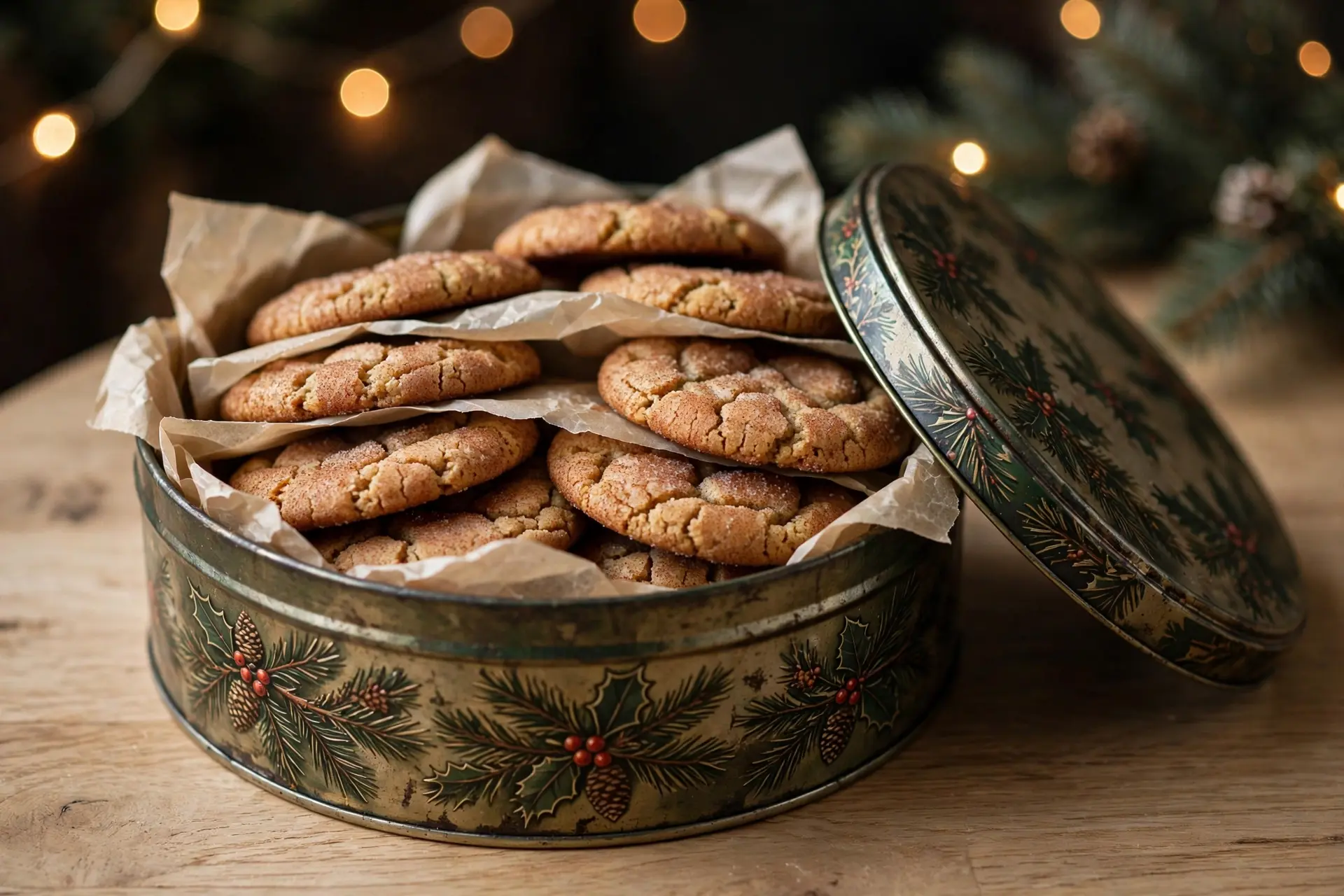
For the Christmas tin. These are the cookies to bake in the last week before Christmas, because they stay soft for days and travel well. A tin layered with these, a few soft gingerbread cookies, and a handful of easy Christmas cookies covers spice, cinnamon, and classic in one box.

Best Snickerdoodle Recipe Without Cream of Tartar
Ingredients
Equipment
Method
- Beat the softened butter and sugar in a large bowl until pale and fluffy, about 2 minutes (WHY: creaming traps air, which is half the lift in this cookie).
- Beat in the eggs one at a time, then the vanilla, until smooth and glossy.
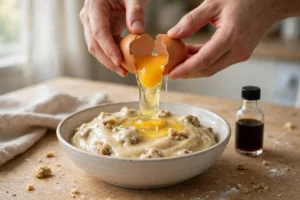
- Whisk the flour, baking powder, and salt in a second bowl, add to the butter mixture, and stir just until no dry streaks remain (WHY: overmixing develops the flour and makes the cookies tough).
- Stir the coating sugar and cinnamon together in a small shallow bowl until the colour is even.
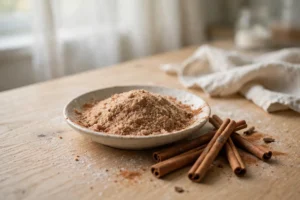
- Scoop the dough into 2 tablespoon balls, roll smooth between your palms, then roll each ball generously in the cinnamon sugar until fully coated (a second roll gives the deepest crust).

- Place the balls on two parchment lined baking sheets, about 2 inches apart.

- Bake at 350°F (175°C) for 10 to 12 minutes, until the edges are set and the tops are crackled while the centres still look slightly soft (WHY: they finish setting on the hot tray, and this is what keeps them soft).
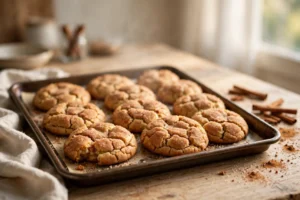
- Serve: cool on the tray for 5 minutes, move to a wire rack, and serve warm or at room temperature.
Notes
- The exact swap: 1 tablespoon baking powder replaces 2 teaspoons cream of tartar + 1 teaspoon baking soda. Never use the baking powder and the soda together, the cookies over-rise and taste soapy.
- No chilling needed; chill the rolled balls 30 minutes for a slightly thicker cookie, same bake time.
- Softness lives in the bake: pull the tray when the centres still look soft and puffy.
- Brown sugar version: swap half the dough sugar (3/4 cup / 150 g) for packed brown sugar for a chewier, darker cookie.
- Small batch: halve everything for 12 cookies; use 1 egg plus 1 yolk instead of 2 eggs.
- Storage: airtight at room temperature up to 5 days; a small piece of plain bread in the container keeps them soft.
- Freezing: coated dough balls freeze up to 3 months; bake from frozen at the same temperature, adding 1 to 2 minutes. Baked cookies freeze up to 3 months.
- UK/Australia: all-purpose flour is plain flour; baking powder is the same product in both, and the swap works the same way.
Nutrition
| Nutrient | Per cookie (estimate) |
|---|---|
| Calories | 180 kcal |
| Carbohydrates | 24 g |
| Sugar | 14 g |
| Fat | 8 g |
| Saturated fat | 5 g |
| Protein | 2 g |
| Sodium | 105 mg |
Nutrition is calculated from the ingredient amounts and is an estimate only; variations and coatings change the numbers.
Frequently asked questions
What can I substitute cream of tartar with in snickerdoodles?
Baking powder is the substitute, used as a pair swap: take out both the cream of tartar and the baking soda, and use 1 tablespoon of baking powder for the standard 2 teaspoons of cream of tartar plus 1 teaspoon of baking soda. Baking powder already contains those two ingredients in working proportions, so the lift and the crackly top stay the same.
What happens to snickerdoodles without cream of tartar?
Very little, when the swap is done properly. The cookies still rise, crackle, and stay soft and chewy. The differences are small: a little less tang, a slightly softer chew, and cracks that can be a touch less deep. If the baking soda is left in by mistake alongside the baking powder, the cookies over-rise, spread oddly, and can taste faintly soapy, which is why the soda comes out.
What is the secret to soft snickerdoodles?
Two things: soft butter creamed properly with the sugar, and a short bake. The cookies should come out of the oven when the edges are set but the centres still look soft and puffy, because they finish setting on the hot tray. Two extra minutes in the oven is the difference between soft and hard, and no ingredient swap can undo overbaking.
Why are my snickerdoodles flat?
Flat snickerdoodles almost always come from the butter or the leavening. Butter that was melted, or so soft it was nearly liquid, cannot hold the air beaten into it, so the cookies spread before they set. The second cause is tired baking powder: if it does not fizz strongly in hot water, it will not lift. Chilling the rolled balls for 30 minutes also helps a batch that wants to spread.
Can I make snickerdoodles with brown sugar?
Yes. Replace half the granulated sugar in the dough with packed brown sugar (3/4 cup / 150 g) for cookies that are a little chewier and darker, with a mild molasses flavour under the cinnamon. Replacing all of it works too, but the cookies spread more and the crackle pattern softens, so half is the reliable version.
What is the secret ingredient in snickerdoodles?
In the classic cookie, the answer is the cream of tartar: it is what gives the tang and chew that separate a snickerdoodle from a plain sugar cookie rolled in cinnamon. In this version the secret is the pairing behind it, baking powder standing in for the tartar and soda together, measured exactly, so the character of the cookie survives without the special jar.
What makes snickerdoodles hard?
Overbaking, first of all: the centres should still look slightly underdone when the tray comes out. Too much flour is the second cause, which is why the flour in this recipe is given in grams as well as cups, and the third is overmixing after the flour goes in, which develops the flour’s strength and turns a tender cookie tough.