
Ingredients
Equipment
Method
Make the Dough
- Beat the softened butter and sugar in a large bowl until pale and fluffy, about 2 minutes (WHY: creaming traps air, which is half the lift in this cookie).
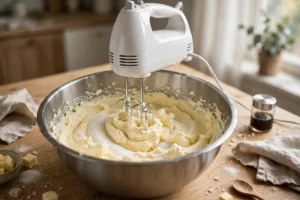
- Beat in the eggs one at a time, then the vanilla, until smooth and glossy.
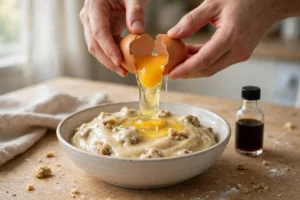
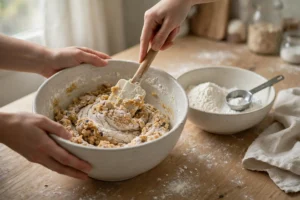
- Whisk the flour, baking powder, and salt in a second bowl, add to the butter mixture, and stir just until no dry streaks remain (WHY: overmixing develops the flour and makes the cookies tough).
Roll in Cinnamon Sugar
- Stir the coating sugar and cinnamon together in a small shallow bowl until the colour is even.
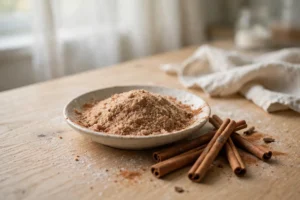
- Scoop the dough into 2 tablespoon balls, roll smooth between your palms, then roll each ball generously in the cinnamon sugar until fully coated (a second roll gives the deepest crust).

Bake and Serve
- Place the balls on two parchment lined baking sheets, about 2 inches apart.

- Bake at 350°F (175°C) for 10 to 12 minutes, until the edges are set and the tops are crackled while the centres still look slightly soft (WHY: they finish setting on the hot tray, and this is what keeps them soft).

- Serve: cool on the tray for 5 minutes, move to a wire rack, and serve warm or at room temperature.

Notes
- The exact swap: 1 tablespoon baking powder replaces 2 teaspoons cream of tartar + 1 teaspoon baking soda. Never use the baking powder and the soda together, the cookies over-rise and taste soapy.
- No chilling needed; chill the rolled balls 30 minutes for a slightly thicker cookie, same bake time.
- Softness lives in the bake: pull the tray when the centres still look soft and puffy.
- Brown sugar version: swap half the dough sugar (3/4 cup / 150 g) for packed brown sugar for a chewier, darker cookie.
- Small batch: halve everything for 12 cookies; use 1 egg plus 1 yolk instead of 2 eggs.
- Storage: airtight at room temperature up to 5 days; a small piece of plain bread in the container keeps them soft.
- Freezing: coated dough balls freeze up to 3 months; bake from frozen at the same temperature, adding 1 to 2 minutes. Baked cookies freeze up to 3 months.
- UK/Australia: all-purpose flour is plain flour; baking powder is the same product in both, and the swap works the same way.