
How do you make a flaky all butter pie crust?
To make a flaky all butter pie crust, cut 1 cup (226g) cold butter into 2½ cups (315g) flour until pea-sized pieces remain, stir in 6 to 8 tbsp ice water until the dough just holds together, and chill for 1 hour. Roll it out, chill the shaped crust again for 30 minutes, then bake until deep golden.
Out of butter mid-recipe? Our ingredient substitution calculator gives exact swaps for 20 common ingredients.
My First Homemade Pie Crust Shrank Into a Sad Little Bowl
The first Thanksgiving I made pie from scratch, I was proud of my crust right up until it went into the oven. I had added water until the dough felt smooth and easy to roll, stretched it a little to reach the edges of the pan, and slid it straight into a hot oven with no rest.
It came out with the sides shrunk an inch down the pan, the crimped edge slumped into a flat ring, and a bottom that was somehow both pale and doughy. The crust was tough enough that my cousin asked, very politely, whether it was meant to be a cracker.
Every mistake had a simple cause. The extra water made the dough easy to roll and also made it tough. Stretching it to fit made it spring back in the heat, which is exactly why it shrank. And skipping the chill meant the butter was already soft before the oven even started.
This flaky all butter pie crust fixes all three, plus the small details most recipes skip, so your crust comes out crisp, tender, and layered every time. It is also the crust for every pie on this site, so it is worth getting right once.
Why This Is the Best Flaky All Butter Pie Crust Recipe
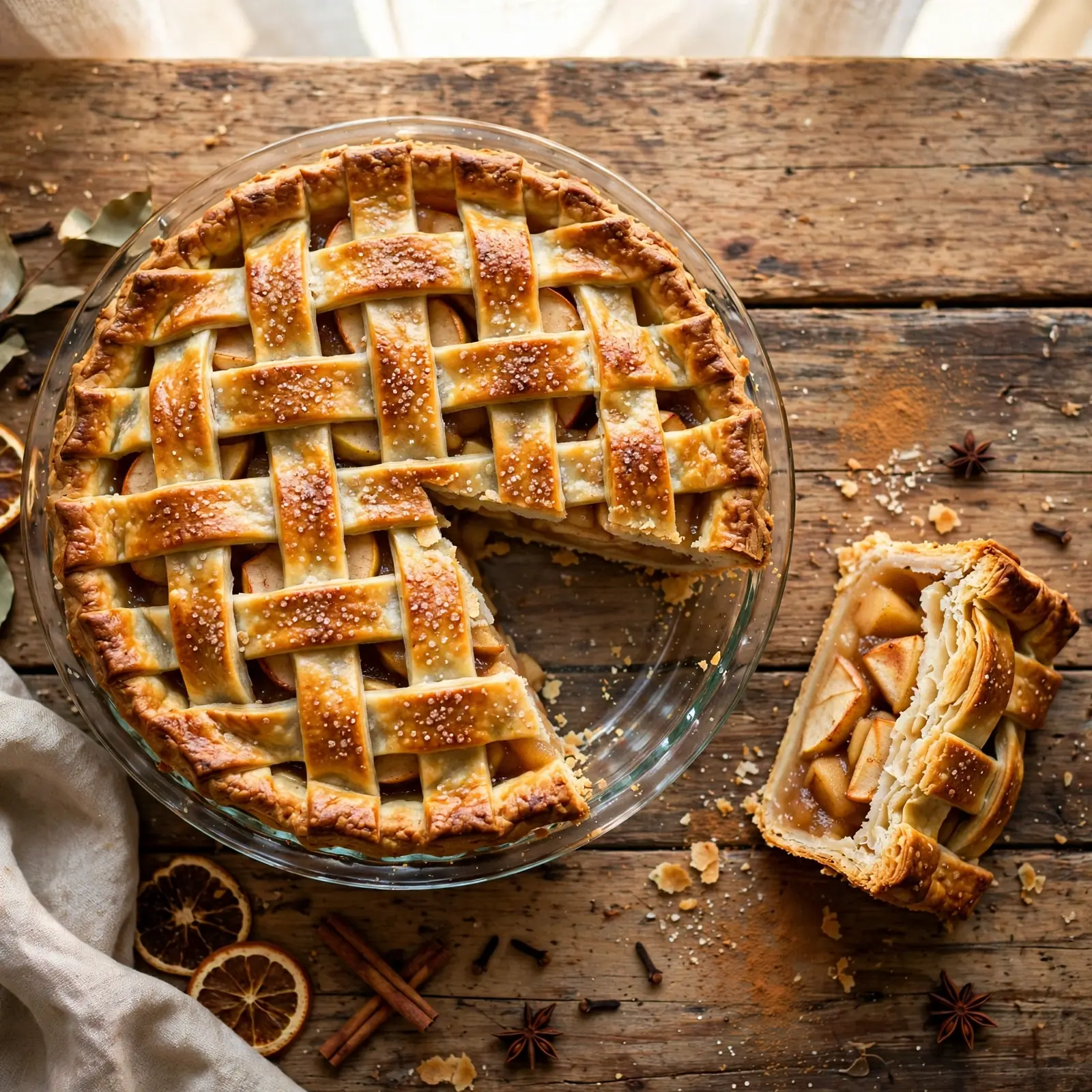
You get real layers. Two sizes of butter, a quick letter fold, and a hot oven work together so the crust shatters on the first bite and still stays tender.
It does not shrink. The full list of shrinking causes is covered, with the fix for each one, instead of one vague tip to “chill the dough.”
One crust, every pie. A quantity guide tells you how much dough each pie needs, and the variations cover blind baking, lattice, savory, and gluten-free versions.
Built for Thanksgiving. A make-ahead timeline spreads the work across two weeks so pie day is the easy day.
The honest comparisons are included. Butter choice and the cutting-in method are compared in plain tables, because recipes online disagree with each other and you deserve to know why.
A Quick History, Where Pie Crust Comes From
Pie crust is far older than butter-rich pastry. Early pies were made in ancient times, often as meat baked inside a simple casing of ground grain and water. In medieval Europe the crust was called a coffyn, a word that meant a box, and it was thick, dense, and built to hold the filling and help preserve it rather than to be eaten. Over time, bakers began adding fat to the dough, which made the crust tender, flaky, and something people actually wanted to finish.
Pies traveled to North America with early settlers and became a fixture of home baking, from apple pie to the pumpkin and pecan pies that now anchor the Thanksgiving table. For the short version of how the pie went from a cooking container to a dessert, Britannica Kids’ article on pie is a good read. Our Types of Pie Guide covers the modern styles, and this crust works in nearly all of them.
Why Pie Crust Turns Out Tough, Shrunken, or Soggy and How to Fix Each

Here is what is actually happening in the dough, explained simply.
Why Does Cold Butter Make Pie Crust Flaky?
Cold butter makes pie crust flaky because solid pieces of butter melt in the oven and release steam, which pushes the dough apart into thin layers. Butter is mostly fat with a little water in it. When the pieces stay cold and separate inside the dough, the water in them turns to steam in the heat while the flour around each piece sets. The steam leaves tiny gaps, and those gaps are the flaky layers you see when you cut a slice. If the butter melts into the dough before baking, there is nothing left to make steam, and the crust turns dense and cracker-like.
Why Should Some Butter Pieces Stay Big and Others Small?
A mix of butter sizes gives you both tenderness and visible layers: small pea-sized pieces make the crust tender, and larger flat pieces make big flaky sheets. Work about half the butter in until it is pea-sized, and leave the rest in larger, flattened pieces about the size of a lima bean. Cutting everything into tiny crumbs makes a crust that is tender but closer to shortbread. Leaving everything large makes the dough hard to roll and more likely to leak butter. Using both sizes gets the best of each.
Why Does Pie Dough Need Ice Water and Only Just Enough?
Pie dough needs ice water because warm water melts the butter, and it needs only just enough because extra water builds gluten and makes the crust tough. Water is what turns the proteins in flour into gluten. Add it a little at a time and stop as soon as a handful of dough holds together when you squeeze it. As a guide, this recipe uses more butter than water by weight, about 226g of butter to roughly 90 to 120g of water, and that balance is a big part of why the crust stays tender.
Why Do Pie Crusts Shrink and How Do You Stop It?
A pie crust shrinks when the dough is stretched to fit the pan or has not rested, because gluten springs back like a rubber band in the heat of the oven. Chill the dough for at least 30 minutes after mixing so the gluten relaxes, roll it large enough to settle into the pan without pulling, and chill the shaped crust again for 30 minutes before baking. When you blind bake, fill the crust with pie weights so the sides cannot slump. King Arthur Baking walks through each of these steps in their guide to keeping pie crust from shrinking.
Why Does a Hot Oven Make a Crispier, Flakier Crust?
A hot oven makes a crispier, flakier crust because the butter melts and turns to steam quickly, before the crust has time to slump and turn greasy. Starting at 425°F (220°C) sets the layers and browns the bottom, and you can lower the heat later so the filling cooks through without burning the edges. A cooler oven melts the butter slowly, so it leaks out and fries the dough instead of lifting it.
Why Does an All Butter Crust Slump and Lose Its Crimped Edges?
An all butter crust slumps at the edges because butter softens at a lower temperature than shortening, so a crimped rim can sag before it sets. Build the edge a little higher than the rim of the pan, freeze the crimped crust for 15 to 30 minutes right before baking, and start in a hot oven. A pie shield or strips of foil late in the bake keep the edge from over-browning. This is the one real trade-off of an all butter crust, and the flavor is worth it.
Why Is the Bottom Crust Soggy and How Do You Fix It?
A bottom crust turns soggy when a wet filling soaks into it before it has time to set. Bake the pie on the lower oven rack, set it on a preheated rimmed baking sheet so the bottom gets strong heat right away, and use a metal or glass pie plate, which heats faster than thick ceramic. For wet fillings like pumpkin, pecan, or custard, blind bake the crust first so it is already set before the filling goes in.
Butter Choice: An Honest Comparison
| Butter | What to Expect | Notes |
|---|---|---|
| Standard unsalted butter | Reliable flaky crust and good flavor | Easiest to find and this recipe’s default |
| European-style butter (82% fat or more) | Slightly richer flavor | Costs more. Recipes disagree on whether it bakes flakier, and both work. See our Homemade Croissants Recipe for how higher fat butter behaves |
| Salted butter | Works fine | Cut the added salt from 1 tsp to ½ tsp |
| Cheap, watery, or soft butter | Greasy, tough, or leathery crust | Avoid it. Butter should feel firm and cold straight from the fridge |
Cutting in the Butter: Which Method Is Best?
| Method | Speed | Risk | Best For |
|---|---|---|---|
| Pastry cutter or two knives | Moderate | Low | Beginners, the most control |
| Food processor | Fast | Easy to overwork, so pulse | Big batches |
| Fingertips | Slow | Warm hands melt the butter | Only if you work fast, rinse your hands under cold water first |
| Box grater and frozen butter | Fast | Butter warms if you grate slowly | Even, small shards |
How Much Dough Does Each Pie Need?
| Pie Type | How Much Dough |
|---|---|
| Single-crust 9-inch pie | Half the recipe (1 disc) |
| Double-crust or lattice 9-inch pie | Full recipe (2 discs) |
| Deep-dish 9-inch double-crust pie | 1½ times the recipe |
What You Need
For the Dough
- 2½ cups (315g) all-purpose flour, spooned and leveled, or weighed
- 1 tbsp (12g) granulated sugar
- 1 tsp (6g) fine salt (use ½ tsp if your butter is salted)
- 1 cup (226g, 2 sticks) very cold unsalted butter, cut into ½-inch cubes
- 6 to 8 tbsp (90 to 120ml) ice water, ice cubes removed
- 1 tsp white or apple cider vinegar (optional)
Equipment: Pastry cutter or food processor, large mixing bowl, kitchen scale, rolling pin, 9-inch pie plate, bench scraper, plastic wrap, parchment paper, pie weights or dry beans, rimmed baking sheet
Makes: 2 discs, enough for one 9-inch double-crust pie (8 slices) or two single crusts
How to Make Flaky All Butter Pie Crust, Step by Step

Prep the Butter and Dry Ingredients
Freeze the Butter First: Cut the cold butter into ½-inch cubes and freeze them for 15 minutes. Fill a cup with water and ice and let it sit while you work. Whisk the flour, sugar, and salt together in a large bowl. If you own a kitchen scale, weigh the flour, since a scooped cup can hold far more than a spooned and leveled one and too much flour makes a dry, crumbly dough.
Cut In the Butter
Aim for Two Sizes: Add the cold butter to the flour and toss to coat. Using a pastry cutter, cut and press the butter in until about half of it looks like coarse crumbs and pea-sized pieces, and the rest is left in larger, flattened pieces about the size of a lima bean. Stop there. You should still see plenty of visible butter, and that visible butter is what makes the layers.
Add the Water
Drizzle, Toss, Then Squeeze: Stir the vinegar into the ice water if using. Drizzle 6 tablespoons of the water over the flour and toss with a fork until the mixture looks shaggy. Grab a handful and squeeze it. If it holds together, you have enough water. If it crumbles apart, add more ice water 1 tablespoon at a time, up to 8 tablespoons total, squeezing to test after each addition. Stop as soon as the dough holds, since extra water makes a tough crust.
Fold and Chill the Dough
Fold for Extra Layers: Tip the shaggy dough onto the counter and press it into a rough rectangle. Fold it in thirds like a letter, press it down, turn it a quarter turn, and fold it in thirds once more. This quick fold stacks the butter into extra layers without any real work.
Chill Until Firm: Cut the dough in half, shape each half into a flat disc, wrap tightly in plastic wrap, and refrigerate for at least 1 hour, or up to 2 days. This rest relaxes the gluten and firms the butter, which is the first defense against shrinking.
Roll and Shape the Crust
Roll to the Right Size: Let a chilled disc sit at room temperature for 5 to 10 minutes if it is too firm to roll. On a lightly floured surface, roll from the center outward, giving the dough a quarter turn after every couple of rolls, until you have a round about 13 inches wide and ⅛ inch thick. Set your pie plate upside down on the dough to check: you want about 2 inches of dough beyond the rim all around.
Fit Without Stretching: Drape the dough over the rolling pin, lay it over the pie plate, and ease it into the corners, lifting the edge so the dough settles instead of being pulled. Trim the overhang to about 1 inch, fold it under to build a thick rim, and crimp. Never stretch the dough to reach the sides, since stretched dough springs back and shrinks.
Chill the Shaped Crust Again: Refrigerate the shaped crust for 30 minutes, or freeze it for 15 minutes. This second chill re-firms the butter after all the handling and helps the crimped edge hold its shape.
Blind Bake the Crust
Line and Weigh It Down: Preheat the oven to 375°F (190°C) with a rimmed baking sheet on the lower rack. Line the chilled crust with a sheet of parchment paper and fill it with pie weights or dry beans, pushing them up against the sides. Bake on the hot sheet for 20 minutes.
Finish Baking the Shell: Lift out the parchment and weights. Bake for another 20 to 25 minutes for a fully baked shell, until the bottom is deep golden. For a partly baked shell, which suits pumpkin and pecan pies, bake about 5 minutes more, just until the bottom looks dry and set. Cool completely before filling a fully baked shell.
For a Double-Crust Pie, Skip the Blind Bake: Fill the bottom crust, cover it with the top crust, cut vents, and brush with egg wash if you like. Bake at 425°F (220°C) for 20 minutes, then lower the oven to 375°F (190°C) and bake until the filling bubbles and the crust is deep golden.
Fill and Serve
Fill and Cool: Fill the cooled shell with a no-bake filling, or pour in a custard filling and finish baking as the recipe directs. Let any baked pie cool as long as its recipe says before slicing, so the filling sets and the crust stays crisp. Serve slices at room temperature.
J. ZaiB’s Expert Touch
Freeze the Butter for 15 Minutes Before You Start
Butter that has been frozen for 15 minutes stays in firm pieces much longer while you work. It is the easiest insurance against greasy dough, especially in a warm kitchen or in summer.
Use the Squeeze Test Instead of Trusting the Measuring Spoon
Flour, humidity, and even how you scoop change how much water the dough needs. Squeeze a handful after each addition. If it holds together, stop. This one habit does more for tenderness than any ingredient swap.
Add a Teaspoon of Vinegar as Optional Insurance
A little vinegar slightly slows gluten from forming, which can make the dough a bit easier to roll and more tender. The effect is small, so treat it as optional insurance and not a requirement. The crust tastes the same.
Bake on a Preheated Baking Sheet on the Lower Rack
The hot sheet gives the bottom crust a head start, which sets it before a wet filling can soak in. It also catches any drips, which saves your oven from burned fruit juice.
Use the Pie Plate as Your Rolling Guide
Flip the pie plate over the rolled dough before you lift it. If there are about 2 inches of dough past the rim, you can fit the crust without stretching it. If there are not, keep rolling.
I used to skip the second chill because it felt like an unnecessary extra step, until the one time I skipped it and watched the edges slide down the plate. It takes 30 minutes and costs nothing, so I never skip it now.
Variations to Try
Food Processor Pie Crust
Pulse the flour, sugar, and salt together, add the cold butter cubes, and pulse 8 to 10 times until the butter is mostly pea-sized with some larger pieces. Drizzle in the ice water and pulse 4 to 5 times, just until clumps begin to form. Finish by gathering the dough by hand. A food processor is quick and easy to overdo, so stop early.
Blind-Baked Shell for Wet and Custard Fillings
Follow the blind baking steps above. A fully baked, cooled shell suits no-bake and fresh fruit fillings like our Best Fresh Strawberry Pie. A partly baked shell suits custard-style pies like our Pumpkin Pie and Pecan Pie, where the filling bakes in the crust and needs a head start to stay crisp.
Lattice Top
Roll the second disc into a rectangle, cut it into strips about 1 inch wide, and slide the strips onto a tray in the fridge for 15 minutes before weaving, which keeps the butter cold. Our Blackberry Pie Recipe has a step-by-step lattice weaving tutorial, and the same crust works for Apple Pie, Cherry Pie, and Blueberry Pie.
Savory Pie Crust
Leave out the sugar and add ½ tsp black pepper and 1 tsp dried thyme, or 2 tbsp finely grated Parmesan, to the flour. This version is the right base for our Chicken Pot Pie and for quiche.
Gluten-Free All Butter Pie Crust
Swap the flour 1:1 for a gluten-free baking blend and add 1 to 2 extra tablespoons of ice water if the dough looks dry. Chill it for a full hour and roll it between two sheets of parchment, since gluten-free dough is more fragile and cracks easily.
Serving Ideas: Which Pie Gets Which Crust Treatment

This crust is the base for most pies on the site, and each one needs slightly different handling.
Apple, cherry, blueberry, and blackberry pie: Use the full recipe for a double crust, no blind baking, and start the pie in a hot 425°F (220°C) oven. See Apple Pie, Cherry Pie, Blueberry Pie, and Blackberry Pie.
Pumpkin and pecan pie: Use half the recipe and partly blind bake the crust so the wet filling does not soak through.
Fresh strawberry pie: Fully blind bake the shell, cool it completely, then fill.
Chicken pot pie: Use the savory variation for the top and bottom crust.
Not sure which pie to bake? Our Types of Pie Guide lays out the styles side by side.
Storage and Make-Ahead Guide
Refrigerating the Dough Discs
Wrap each disc tightly in plastic wrap and refrigerate for up to 2 days. If the dough is too firm to roll, let it sit at room temperature for 5 to 10 minutes.
Freezing the Dough Discs
Wrap each disc in plastic wrap, place it in a freezer bag, and freeze for up to 3 months. Thaw it overnight in the refrigerator before rolling.
Freezing Shaped and Baked Crusts
A shaped crust in its pie plate, wrapped tightly, freezes for up to 1 month and can be blind baked straight from the freezer with a few extra minutes. A fully baked, cooled shell can also be wrapped and frozen for up to 1 month.
Storing a Blind-Baked Crust
A cooled, fully baked shell keeps wrapped at room temperature for 1 day, so fill it within that time.
Thanksgiving Make-Ahead Timeline
- Two to three weeks before: make the dough, wrap the discs, and freeze them.
- The weekend before: move the discs to the refrigerator to thaw overnight.
- Tuesday: roll and shape the crusts, then chill or freeze them in the pie plates.
- Wednesday: blind bake the shells for pumpkin and pecan pies, and fill and bake any fruit pies.
- Thursday: bake any remaining pies, and enjoy the easy day.
Best Flaky All Butter Pie Crust Recipe
Ingredients
Equipment
Method
- Cut the cold butter into ½-inch cubes and freeze them for 15 minutes.

- Fill a cup with water and ice and set it aside.

- Whisk the flour, sugar, and salt together in a large bowl.

- Add the frozen butter cubes to the flour and toss to coat.

- Using a pastry cutter, cut and press the butter in until about half looks like coarse crumbs and pea-sized pieces, and the rest stays in larger flat pieces about the size of a lima bean.

- Stop there. You should still see plenty of visible butter.

- Stir the vinegar into the ice water if using.

- Drizzle 6 tablespoons of the water over the flour and toss with a fork until the mixture looks shaggy.

- Squeeze a handful. If it holds together, you have enough water. If it crumbles, add more ice water 1 tablespoon at a time, up to 8 tablespoons total.

- Tip the dough onto the counter and press it into a rough rectangle.

- Fold it in thirds like a letter, press down, turn it a quarter turn, and fold in thirds once more.
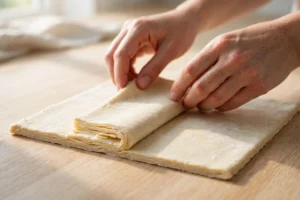
- Cut the dough in half and shape each half into a flat disc.
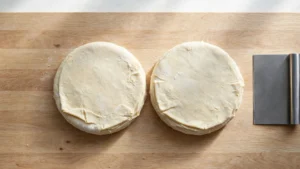
- Wrap each disc tightly in plastic wrap and refrigerate for at least 1 hour, or up to 2 days.

- Let a chilled disc sit at room temperature for 5 to 10 minutes if it is too firm to roll.
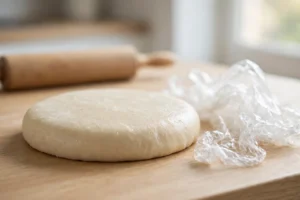
- On a lightly floured surface, roll from the center outward, turning the dough a quarter turn every couple of rolls, to a round about 13 inches wide and ⅛ inch thick.

- Drape the dough over the rolling pin and lay it over the pie plate. Ease it into the corners without stretching it.

- Trim the overhang to 1 inch, fold it under, and crimp the edge.

- Refrigerate the shaped crust for 30 minutes, or freeze it for 15 minutes.

- Preheat the oven to 375°F (190°C) with a rimmed baking sheet on the lower rack.

- Line the chilled crust with parchment paper and fill it with pie weights, pushing them up against the sides.
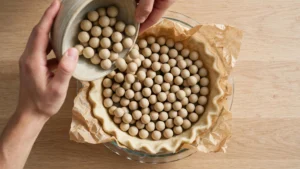
- Bake on the hot sheet for 20 minutes.
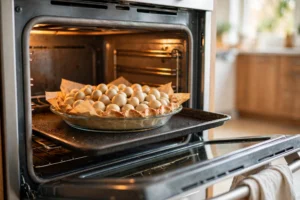
- Remove the parchment and weights, and bake for another 20 to 25 minutes until the bottom is deep golden.

- Cool the shell completely before filling.

- Fill with your favorite no-bake or custard filling, and finish baking as that recipe directs.
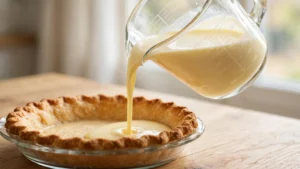
- Serve the pie at room temperature once the filling has set.

Notes
Nutrition
Per 1 slice (one eighth of both crusts), crust only, based on 8 slices. Values are estimates and vary based on the butter used and how thinly the dough is rolled. Filling is not included.
| Nutrient | Amount |
|---|---|
| Calories | ~350 kcal |
| Total Fat | 23g |
| Saturated Fat | 14g |
| Cholesterol | 60mg |
| Sodium | 290mg |
| Total Carbs | 31g |
| Sugars | 2g |
| Fiber | 1g |
| Protein | 4g |
Frequently Asked Questions
Why Is My All Butter Pie Crust Tough?
An all butter pie crust turns tough when it has too much water or too much handling, because both build gluten. Add water only until the dough holds when squeezed, stop mixing as soon as it comes together, and let it rest in the refrigerator before rolling.
Why Did My Pie Crust Shrink?
A pie crust shrinks when the dough was stretched to fit the pan or did not rest long enough, because gluten springs back in the heat. Fit the dough loosely, chill the shaped crust for 30 minutes, and fill it with pie weights when blind baking.
How Cold Should Butter Be for Pie Crust?
Butter for pie crust should be very cold, straight from the fridge or frozen for 15 minutes, so it stays in solid pieces until the oven. Soft or greasy butter blends into the flour and gives a dense crust instead of flaky layers.
Can I Make Pie Crust Ahead of Time?
Yes, pie dough keeps for up to 2 days in the refrigerator and up to 3 months in the freezer when wrapped tightly. Thaw frozen dough overnight in the refrigerator before rolling.
How Do I Blind Bake a Pie Crust?
To blind bake a pie crust, chill the shaped crust, line it with parchment, fill it with pie weights, and bake at 375°F (190°C) for 20 minutes. Remove the weights and bake 20 to 25 minutes more for a fully baked shell, or about 5 minutes more for a partly baked one.
Can I Use Salted Butter for Pie Crust?
Yes, you can use salted butter if you cut the added salt in this recipe from 1 teaspoon to ½ teaspoon. Unsalted butter gives you more control because the amount of salt varies by brand.
Why Is My Pie Crust Soggy on the Bottom?
A pie crust gets soggy on the bottom when a wet filling soaks it before it sets. Bake on the lower rack on a preheated baking sheet, and blind bake the crust first for wet fillings like pumpkin or custard.
Why Does My Pie Dough Crack When I Roll It?
Pie dough cracks when it is too cold or too dry. Let the chilled disc sit at room temperature for 5 to 10 minutes, and patch any cracks with a small piece of dough. Next time, add water a tablespoon at a time until the dough holds when squeezed.
What is the secret to a flaky pie crust?
The secret to a flaky pie crust is cold butter and just enough water. Solid pieces of butter melt in the oven and release steam, which pushes the dough into layers, while extra water builds gluten and makes the crust tough. Keep the butter in two sizes, add water only until the dough holds when squeezed, and chill the dough twice, once after mixing and once after shaping.
What is a flaky pie crust called?
A flaky pie crust is called pâte brisée, the French name for a butter shortcrust made by cutting cold fat into flour. In American home baking it is usually just called pie dough or flaky pastry, and it is the classic crust for fruit pies like apple, cherry, and peach.
What is an all butter pie crust?
An all butter pie crust is a pie dough made with butter as the only fat, with no shortening and no lard. Butter gives the crust its rich flavor, and because butter melts at a lower temperature than shortening, the dough needs cold ingredients and two chills to bake up flaky instead of slumping.
The Crust That Makes Every Pie Better
A great flaky all butter pie crust comes down to a few habits: keep the butter cold, leave it in two sizes, add only as much water as the dough needs, and chill twice so nothing shrinks.
None of it needs special skill. Once you see the butter streaks in the dough and the layers in the baked edge, store-bought crust stops being tempting. Get this one crust right and every pie on the table gets better.
Freeze the butter. Squeeze before you add more water. Do not stretch the dough. Chill it twice.
Tag us on Instagram @viralfoodhacks706 when your crust comes out golden. The close-up of the flaky edge always gets saved! Save this to Pinterest so the make-ahead timeline is ready before the next Thanksgiving.