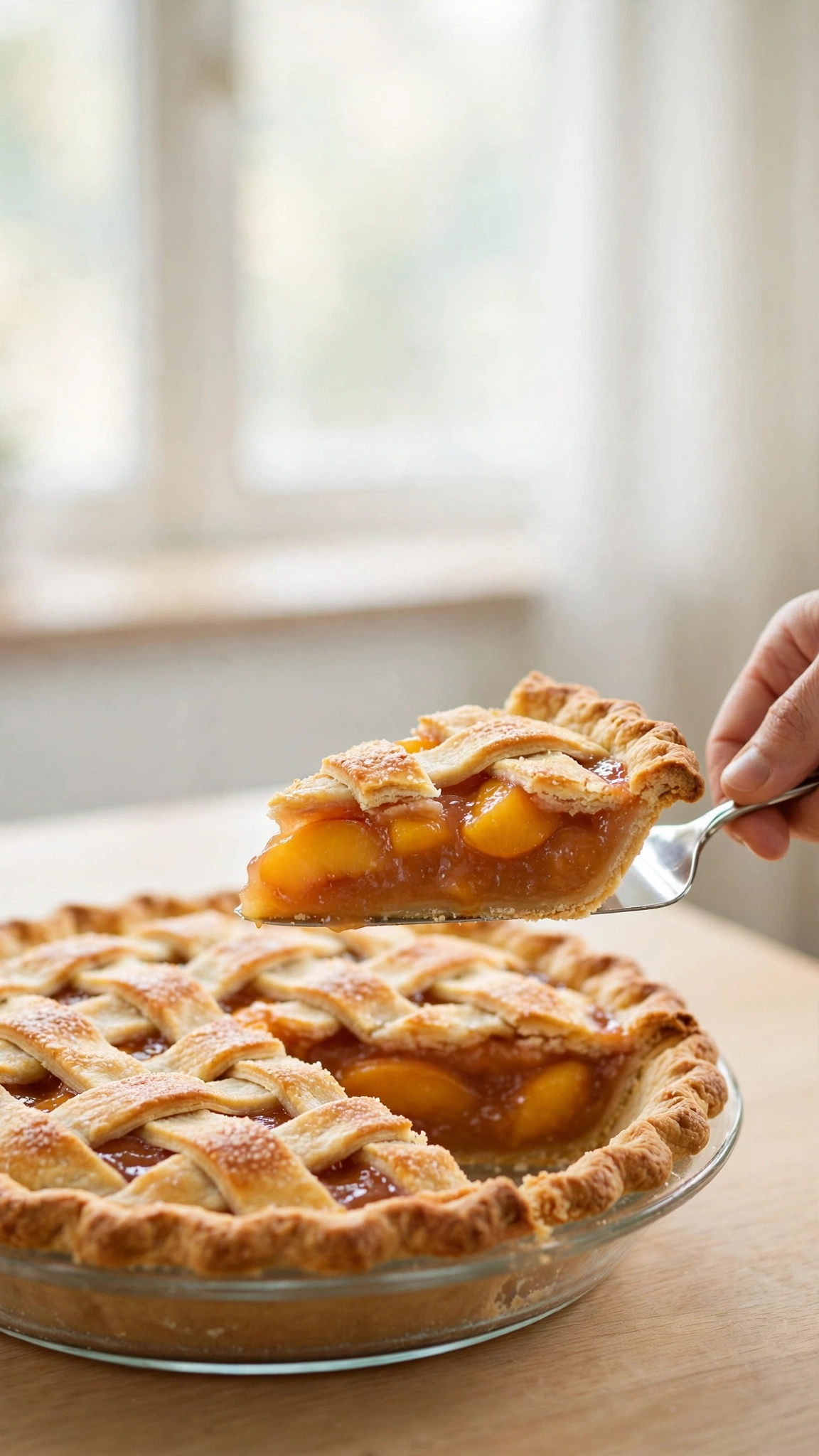
How do you make peach pie filling that is thick and not runny?
Four things decide it in this peach pie recipe. First, use enough thickener: 40 g of cornstarch for about 1.1 kg of peaches is the amount that sets this filling into a soft gel instead of a sauce. Second, macerate the sliced peaches with the sugar first, drain the juices that come out, and simmer those juices down into a syrup before the peaches go into the crust, so the extra water is handled before baking, not during it. Third, bake the pie until the filling bubbles thickly in the center, not just at the edges, because cornstarch only reaches its full thickening power at near boiling point.
Fourth, cool the pie for at least 3 hours before you even think about slicing. The gel sets as it cools. Skip any one of these four and you get peach soup in a crust. Do all four and every slice stands up on the plate.
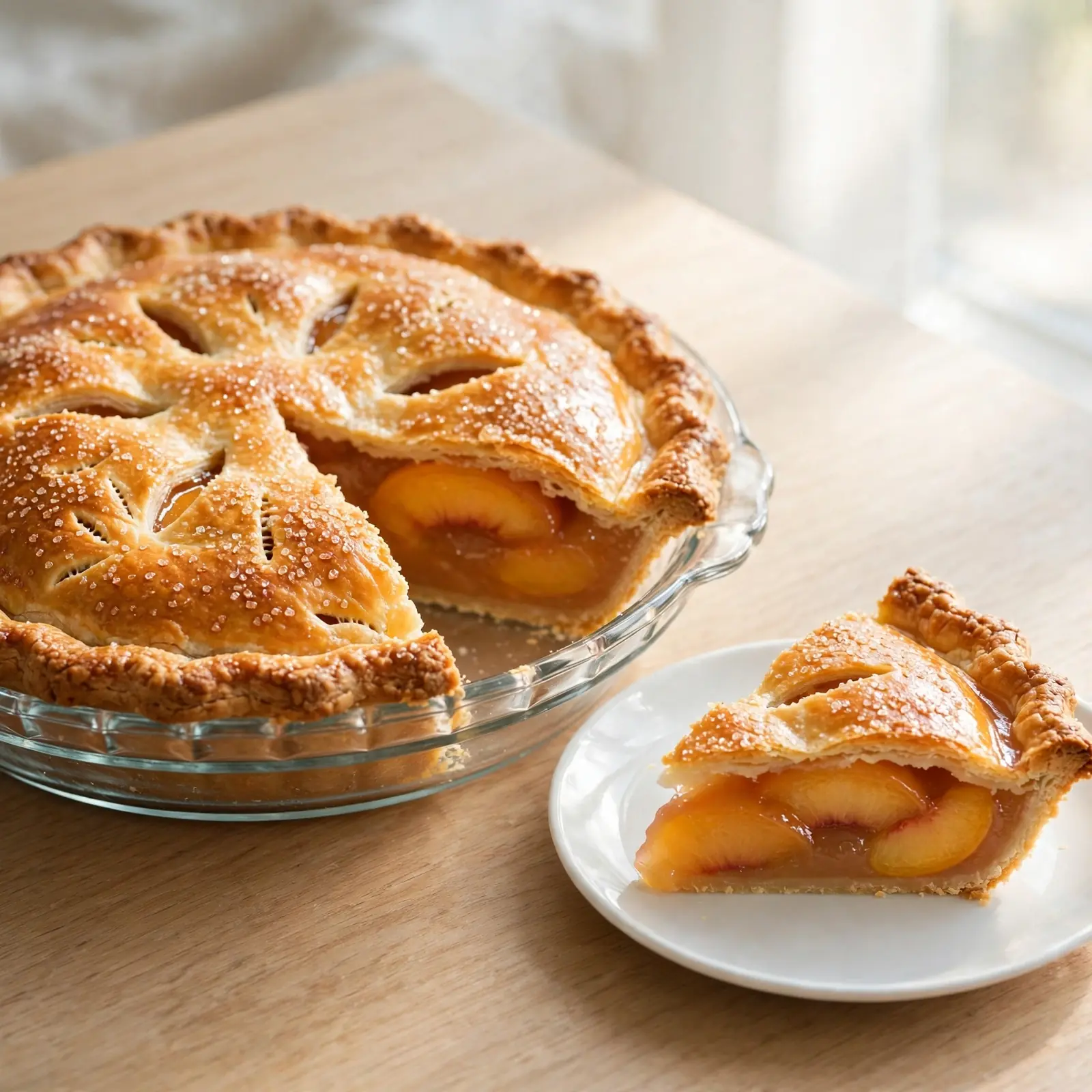
The Peach Pie Everyone Waits All Summer For
Think of the last week of peach season. The fruit is heavy, soft, and so ripe it perfumes the whole kitchen just sitting in the bowl. It is too good for a plain snack and there is too much of it to eat fresh before it turns. That is exactly the moment this pie exists for.
Here is the problem that stops most people. Peach pie has a reputation. Beautiful in the oven, a puddle on the plate. The first slice collapses, the filling floods the dish, and the bottom crust gives up completely. So the peaches get eaten over the sink instead, and the pie never happens.
This recipe is built around fixing that one failure. The filling is macerated and its juices are reduced before baking, the cornstarch is measured for this exact weight of fruit, and the pie bakes until the center itself bubbles, which is the only honest sign that the filling will set. The result is a slice that looks like the pictures: distinct peach slices held in a glossy, jammy gel, inside a crust that stays flaky top and bottom.
One honest note on time before we start: the baking takes about an hour, but the pie then needs a full 3 hours to cool and set. Plan on roughly 4 hours and 30 minutes from first peach to first slice. Most of that is the pie sitting on the counter doing its quiet work while you do anything else. Start it after lunch and it is ready for dinner, still faintly warm in the middle.
Why You’ll Love This Peach Pie
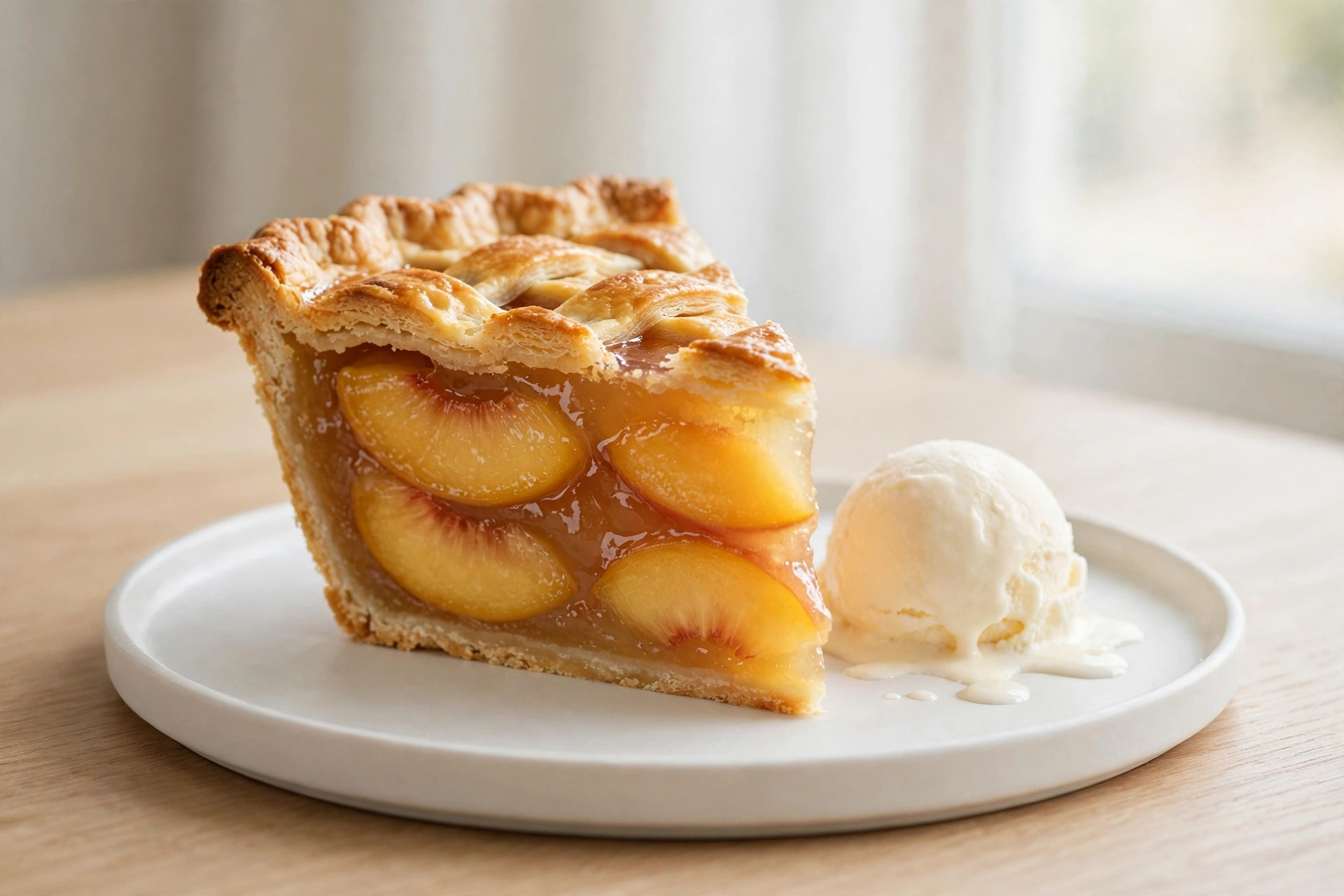
It slices clean, every single time. No flooding, no collapsing. The filling holds soft, distinct slices of peach in a gel that stays where the knife put it. This is the whole point of the recipe, and everything in it serves that goal.
It tastes like peaches, not like sugar. Two sugars, a little lemon, and warm spice sit behind the fruit instead of in front of it. Ripe peaches carry the flavor; everything else just makes them taste more like themselves.
Store-bought crust is welcome here. A good refrigerated double crust makes this a realistic weeknight project. Homemade crust is wonderful if you enjoy making it, but the filling is the star and it does not grade your pastry. If you do make it from scratch, use our flaky all butter pie crust.
It is the best use of a peach glut ever invented. When peaches are cheap and ripe by the box, one pie turns about 1.1 kg of fruit into the dessert everyone talks about for the rest of the summer.
It keeps beautifully. Covered in the fridge, slices stay good for days, and a gentle reheat brings the crust back to life. Peach season is short. This pie stretches it.
The Science Behind a Filling That Sets
Peaches are mostly water, and that water is the entire battle. Here is what is happening inside the pie.
Pectin and cornstarch work as a team. Peaches contain natural pectin, the same gelling agent that sets jam, but ripe peaches do not have quite enough of it to set a pie on their own. Cornstarch fills the gap. Its granules absorb the peach juices as the pie heats, swell, and form a gel network that traps the liquid. That is why the amount matters: too little cornstarch and the network is too weak to hold all that juice; the 40 g in this recipe is matched to this weight of fruit.
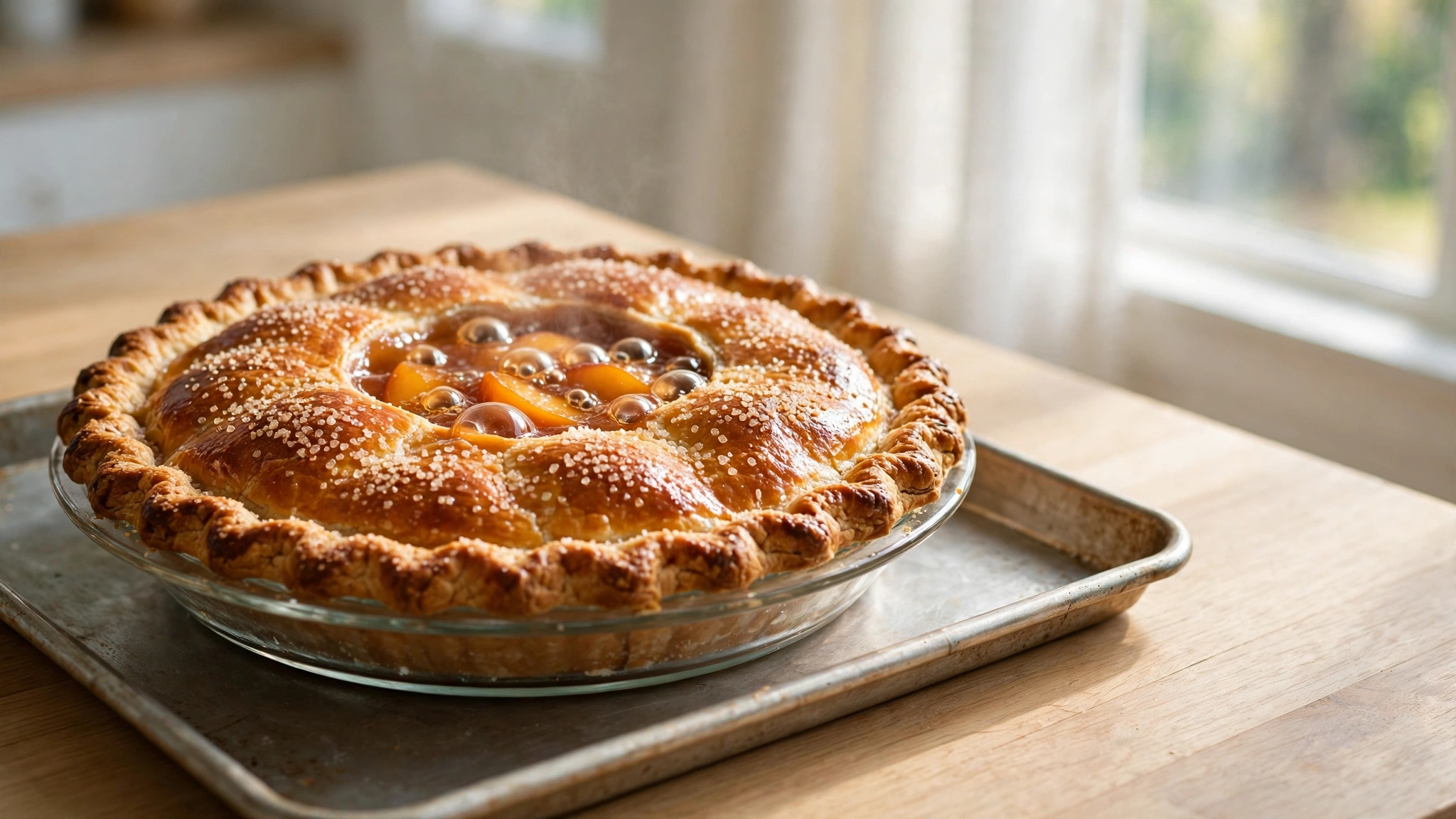
The center must bubble, and this is not optional. Cornstarch only reaches its full thickening power when it gets close to boiling, around 200°F to 212°F. The edges of a pie bubble long before the center does, because the crust and dish heat from the outside in. A pie pulled out when only the edges bubble has a center that never fully thickened, no matter how long it cools. Thick, slow bubbles rising right in the middle of the pie are the one true signal that the gel has formed everywhere.
Steam needs an escape route. As the filling heats, the fruit releases steam. Vents cut into the top crust, or the gaps in a lattice, let that steam out. Trapped steam has nowhere to go but down, where it soaks the bottom crust. Good venting is a big part of why this pie’s bottom stays crisp instead of pale and soft.
Cooling is when the pie actually finishes. The cornstarch gel is loose and flowing while the pie is hot, even a perfectly baked one. As the pie cools over those 3 hours, the gel firms up and the pectin sets, and the filling turns sliceable. Cutting a hot peach pie is not a test of the recipe. It is a refusal to let the recipe finish.
What You Need (Simple Ingredients, One Great Pie)
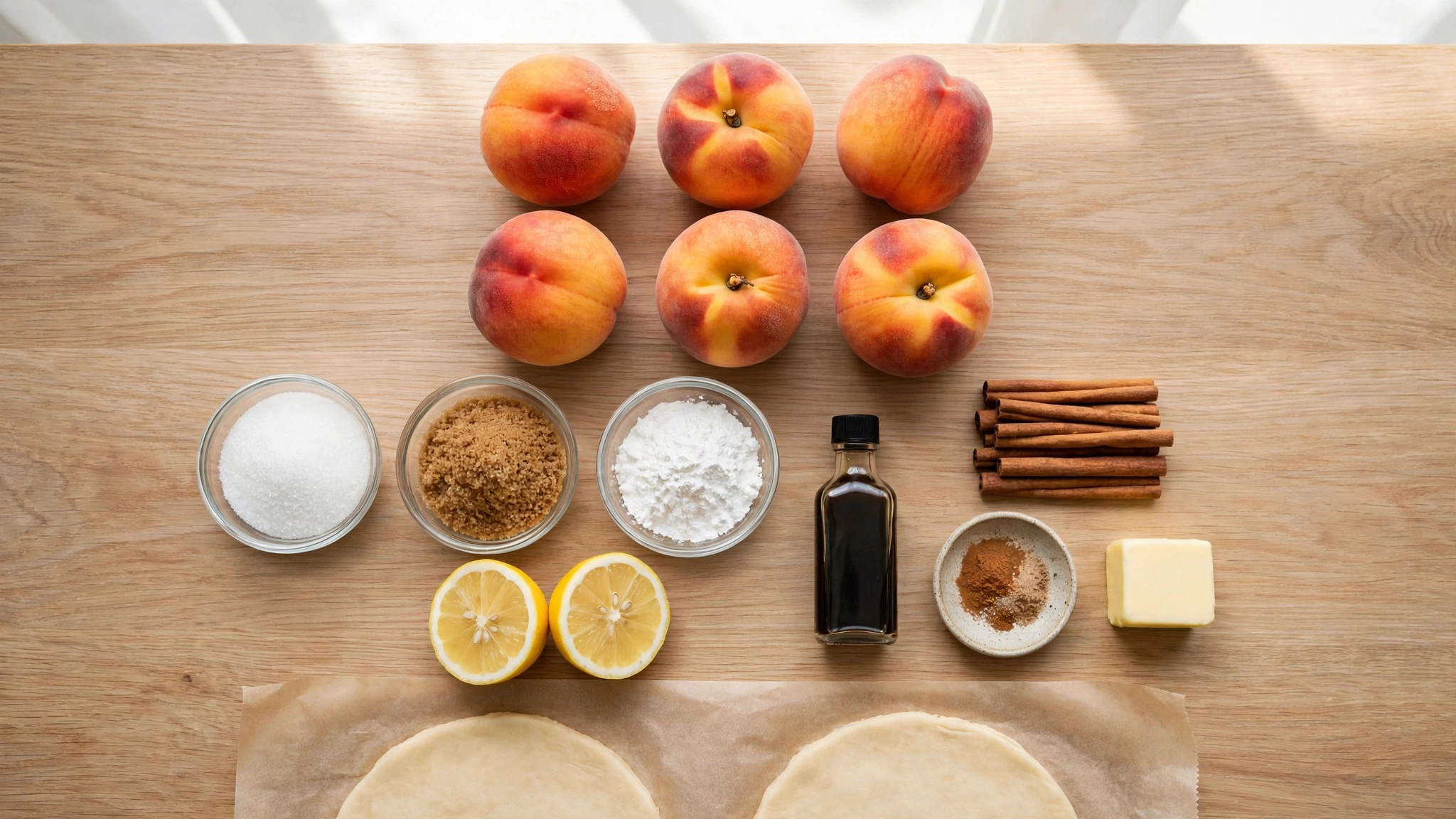
For the Filling
- About 1.1 kg ripe peaches, 6 to 7 large (ripe but still firm enough to slice cleanly; very soft peaches fall apart)
- 150 g granulated sugar
- 50 g brown sugar (adds a gentle caramel depth behind the fruit)
- 40 g cornstarch (this is the thickener that makes the filling set; do not reduce it)
- 1 tablespoon lemon juice (keeps the color bright and the flavor awake)
- 1 teaspoon vanilla extract
- 1/2 teaspoon ground cinnamon
- 1/4 teaspoon ground nutmeg
- 1 pinch of salt (small, but it makes the peaches taste more like peaches)
- 1 tablespoon cold butter, cut into small dots
For the Crust and Top
- 350 g all-purpose flour (about 2 2/3 cups), plus extra for rolling
- 1 tsp fine salt
- 1 tbsp granulated sugar
- 225 g unsalted butter (1 cup / 16 tbsp), very cold, cut into small cubes
- 6 to 8 tbsp ice water
- 1 egg beaten with 1 tablespoon water, for the egg wash
- 1 tablespoon coarse sugar, for sprinkling on top
Serves: 8 slices
Equipment: One 9-inch pie dish, a large bowl, a small saucepan, a rolling pin if using homemade dough, a baking sheet to catch drips
How to Make Peach Pie (Step-by-Step)
Make the Dough
Whisk the flour, salt and sugar together in a large bowl. Rub the cold butter cubes in with your fingertips until the mixture looks like coarse crumbs, with some pea-sized pieces of butter still visible. Sprinkle over 6 tablespoons of the ice water and mix with a fork just until the dough holds together when you press it, adding a little more water only if it feels dry. Divide it into two discs, one slightly larger than the other, wrap, and chill for at least 1 hour. Using store-bought discs instead? Skip straight to the peaches.

Prep the Peaches and Their Juices
Step 1. Peel the peaches. The easiest way: cut a small X in the bottom of each peach, drop them into boiling water for 30 to 45 seconds, then straight into a bowl of cold water. The skins slip off with your fingers. Slice the peeled peaches about 1/2 inch thick into a large bowl.
J.ZaiB micro-tip: If your peaches are ripe but the skin resists, skip the boiling water and use a vegetable peeler with a light hand. A slightly imperfect peel beats a torn, bruised slice every time.
Step 2. Add the granulated sugar, brown sugar, lemon juice, vanilla, cinnamon, nutmeg and salt to the peaches. Toss gently until every slice is coated, then leave the bowl for 30 minutes. The sugar pulls a surprising amount of juice out of the fruit. That is exactly what we want, because now we control that juice instead of it flooding the crust.
J.ZaiB micro-tip: Toss with a big spoon from the bottom of the bowl, not a vigorous stir. Ripe peach slices are delicate, and broken slices make a mushy filling instead of distinct, beautiful ones.
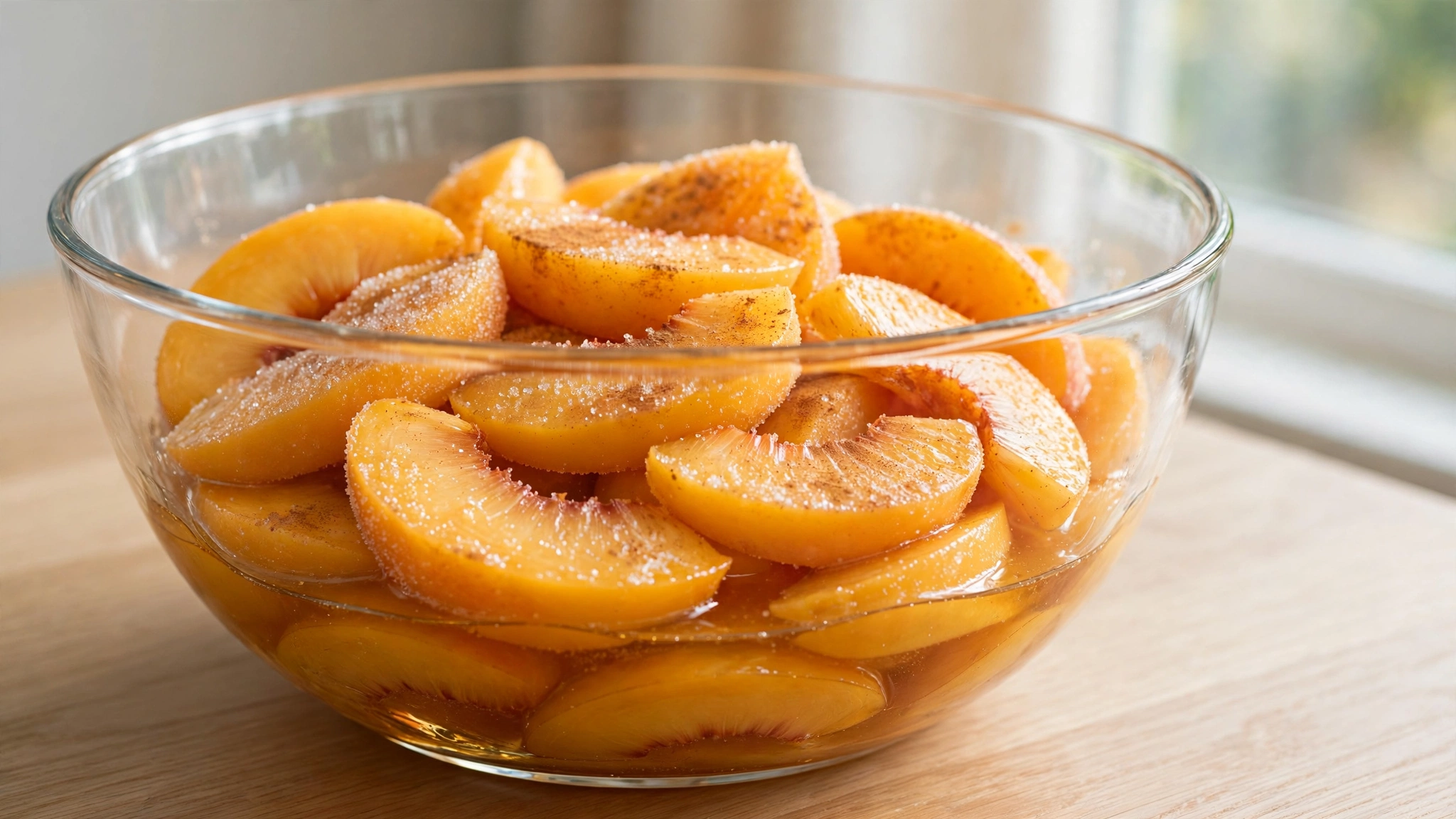
Step 3. Pour the peaches into a colander set over a saucepan and let the juices drain for a few minutes. Simmer the collected juice over medium heat for about 5 minutes, until it reduces by roughly half and looks like a thin syrup. Take it off the heat, whisk in the cornstarch until completely smooth, then pour the syrup back over the peaches and toss gently to coat.
J.ZaiB micro-tip: Whisk the cornstarch into the warm syrup off the heat and keep whisking for a full 20 seconds. Cornstarch stirred in lazily leaves white pockets that bake into chalky spots in the finished filling.
Build the Pie
Step 4. Roll the larger chilled disc into a circle about 12 inches wide and line a 9-inch pie dish with it, easing it into the corners without stretching it, and leave the excess hanging over the edge. Put the lined dish in the fridge while you roll or unroll the top crust. Cold pastry going into a hot oven is what gives you flakes instead of slump.
J.ZaiB micro-tip: Never stretch pie dough to fit. Stretched dough remembers, and it shrinks back during baking, pulling away from the dish. Ease it in and let the extra hang over the rim.
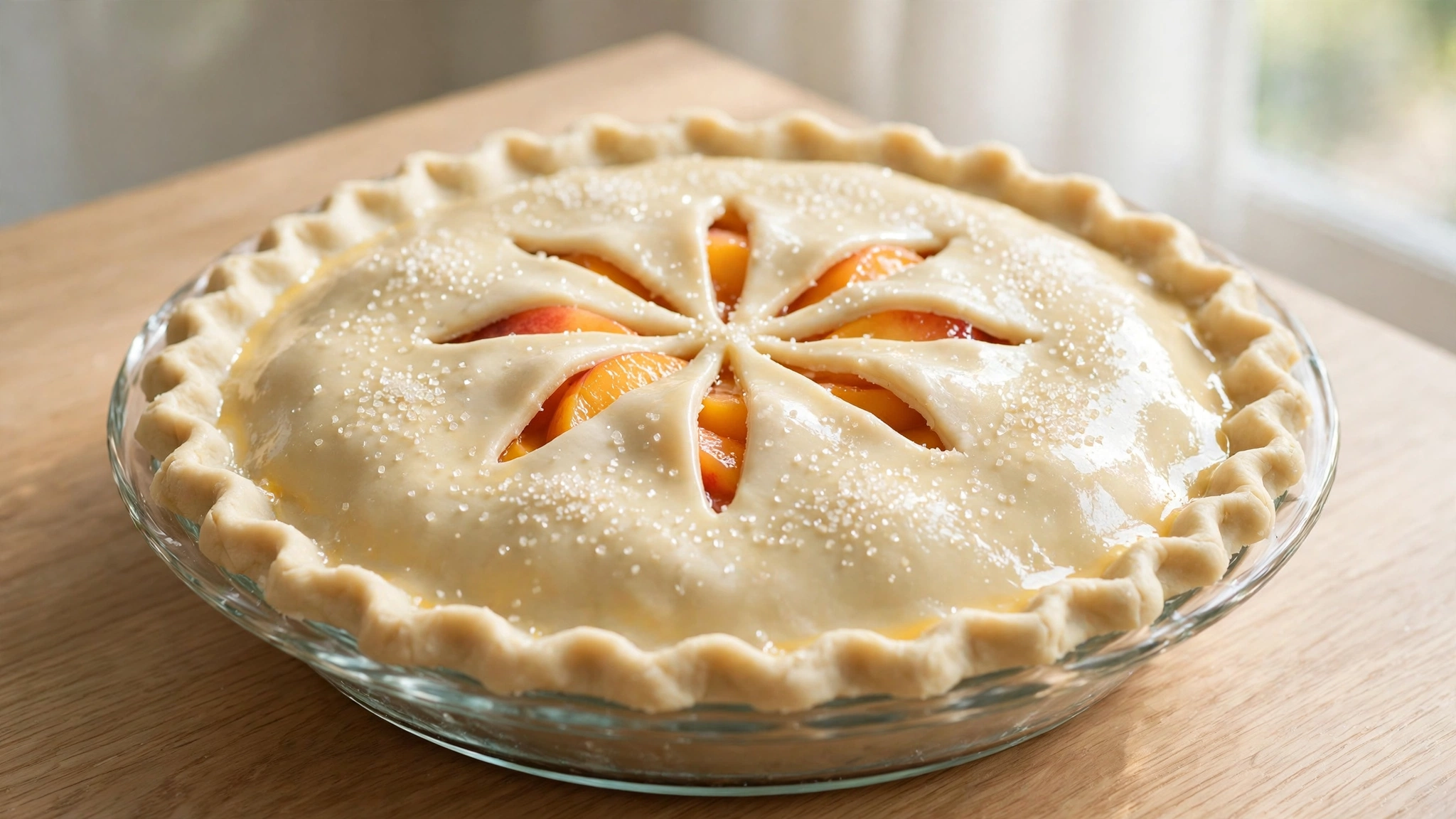
Step 5. Spoon the peaches and all their syrup into the chilled crust, mounding them slightly in the center. Dot the top with the small pieces of cold butter. Roll the second disc into a circle about 11 inches wide and lay it over the top. Trim both crusts to about 1/2 inch past the rim, fold the edges under together, and crimp with your fingers or a fork. Cut 4 to 5 slits in the top for steam vents. Brush the whole top with egg wash and sprinkle with coarse sugar.
J.ZaiB micro-tip: The vents are not decoration. Place at least one slit near the center of the pie. That center vent is also your window later: it is where you will watch for the thick center bubbles that tell you the filling has set.
Bake Until the Center Bubbles, Then Wait
Step 6. Put the pie on a baking sheet and bake at 425°F for 20 minutes. Then lower the heat to 375°F and bake for 35 to 40 minutes more. The pie is done when the crust is deep golden and the filling is bubbling thickly in the center, with slow, heavy bubbles rising through the vents. If the edges brown too fast, cover just the rim with foil or a pie shield for the last stretch.
J.ZaiB micro-tip: Thin, fast, watery bubbling at the edges means keep waiting. You are looking for the center to bubble like thick jam, slow and lazy. That difference is the whole difference between soup and slices.
Step 7. Move the pie to a wire rack and cool it for at least 3 hours before slicing. Not 1 hour. Not “mostly cool.” Three hours, so the gel can set completely. Slice with a sharp knife, wiping the blade between cuts, and lift the first slice out with a pie server and confidence.
J.ZaiB micro-tip: If a warm slice is truly non-negotiable, serve it in a bowl with ice cream and call it rustic. Just know the clean, standing slices in the photos only exist because somebody waited the full 3 hours.
J.ZaiB’s Expert Touch
Judge the peaches, not the calendar. This pie lives or dies on ripe fruit. A ripe peach smells sweet at the stem end and gives just slightly under your thumb. Hard, pale peaches bake up bland and no amount of sugar fixes them; they just become sweet. If the peaches are not ready, wait a day. The pie will thank you.
The center bubble rule outranks the timer. Oven times in any recipe, including this one, are a guide. Ovens run hot and cold, dishes differ, peaches differ. The thick center bubble is the only finish line that never lies. Bake to the bubble, not to the clock.
A baking sheet under the pie is not optional. A juicy fruit pie that does not bubble over slightly is a pie that was not full enough. The sheet catches the drips and saves your oven floor and your mood.
Cold crust, hot oven, no exceptions. If the assembled pie sat out while you did other things, put it back in the fridge for 15 minutes before baking. Warm, soft pastry melts before it can set into layers, and melted pastry is how bottoms go soggy.
Egg wash is the cheapest bakery finish there is. One beaten egg with a spoon of water, brushed on thin, turns a pale homemade crust deep golden and glossy, and it glues the coarse sugar in place. Two minutes of work, a completely different looking pie.
Variations to Try
Peach Cobbler Style: Love the fruit but want it simpler? My Best Peach Cobbler Recipe takes the same ripe peaches under a golden biscuit topping, with no crust work at all. It is this pie’s relaxed weekend cousin.
Lattice Top Peach Pie: Instead of a solid top crust, cut the second disc into strips and weave them over the filling. A lattice shows off the bubbling fruit and vents steam beautifully. Finish it exactly the same way, egg wash and coarse sugar included.
Ginger Peach Pie: Add 1 teaspoon of finely grated fresh ginger, or 1/2 teaspoon of ground ginger, to the filling with the cinnamon. Ginger and peach are quiet best friends, and it gives the pie a gentle warmth at the back of each bite.
Mixed Summer Fruit Pie: Swap about a third of the peaches for raspberries or blackberries. The method stays identical, macerate, reduce, and bake to the center bubble. For a full berry version, my Blueberry Pie uses the same anti-runny approach, and my Apple Pie is the autumn classic built on the same double crust.
Serving Ideas
The classic plate is a warm slice with a scoop of vanilla ice cream melting into the filling, and honestly it does not need improving. A spoonful of lightly sweetened whipped cream is the lighter option and lets the peach flavor lead.
Serve slices at room temperature or gently warmed, never piping hot, because the filling needs its set. For a summer table, this pie is the natural finish to grilled food: the bright, jammy fruit resets everyone’s palate after smoky, rich mains.
This peach pie belongs to the sweet fruit family in my Types of Pie guide, where you can browse the whole collection, from cream pies to custard pies, and plan your next bake.
Storage & Reheating Guide
Room temperature: A baked fruit pie like this one can sit, covered, on the counter for a short stretch, but be strict with the general rule: do not leave it out for more than 2 hours at a time once sliced and served, and in a hot kitchen above 90°F (32°C) that limit drops to 1 hour. Cover leftovers and move them to the fridge the same day.
Refrigerator: Covered tightly, the pie keeps well for 4 to 5 days. The filling stays set and the flavor deepens a little by day two, which many people quietly prefer.
Freezer: Wrap the whole baked pie, or individual slices, tightly in plastic and then foil, and freeze for up to 3 months. Thaw overnight in the fridge. An unbaked assembled pie also freezes well: bake it straight from frozen, adding about 15 to 20 minutes and watching for the same thick center bubbles.
Reheating: Warm slices in a 350°F oven for 10 to 12 minutes. The crust crisps back up and the filling turns glossy again. The microwave works in a pinch but softens the crust, so the oven is worth it when you have the time.
Classic Peach Pie (Double Crust)
Ingredients
Equipment
Method
- Make the dough (skip this step if using store-bought discs): Whisk the flour, salt and sugar together in a large bowl. Rub the cold butter cubes in with your fingertips until the mixture looks like coarse crumbs with some pea-sized pieces of butter still visible. Sprinkle over 6 tablespoons of the ice water and mix with a fork just until the dough holds together when you press it, adding a little more water only if it feels dry. Divide the dough into two discs, one slightly larger than the other, wrap them, and chill for at least 1 hour.
- Peel the peaches (30 to 45 seconds in boiling water, then cold water, and the skins slip off). Slice 1/2 inch thick into a large bowl.

- Toss the peaches with both sugars, lemon juice, vanilla, cinnamon, nutmeg and salt. Rest 30 minutes to draw out the juices.

- Drain the peaches over a saucepan. Simmer the juices about 5 minutes until reduced by half, whisk in the cornstarch off the heat until smooth, and toss the syrup back through the peaches.

- Roll the larger chilled disc into a circle about 12 inches wide and line a 9-inch pie dish with it, easing it in without stretching. Chill the lined dish while you prepare the top crust.

- Fill with the peaches and all their syrup, dot with butter. Roll the second disc into a circle about 11 inches wide and lay it over the top. Trim, fold and crimp the edges, cut 4 to 5 steam vents, brush with egg wash, and sprinkle with coarse sugar.

- Bake at 425°F for 20 minutes, then at 375°F for 35 to 40 minutes, until the crust is deep golden and the filling bubbles thickly in the center. Shield the rim with foil if it browns too fast.

- Cool on a wire rack for at least 3 hours before slicing, so the filling sets completely.

NUTRITION
Per 1 serving (1 slice, based on 8 slices)
| Nutrient | Amount |
|---|---|
| Calories | 360 kcal |
| Total Fat | 12g |
| Saturated Fat | 5g |
| Cholesterol | 10mg |
| Sodium | 280mg |
| Total Carbs | 62g |
| Sugars | 34g |
| Fiber | 3g |
| Protein | 4g |
Note: Values are estimates and vary based on exact ingredients and serving size used.
Frequently Asked Questions
Can I use frozen peaches instead of fresh?
Yes. Thaw them completely first and drain them very well, then follow the recipe exactly, including the macerating and juice reducing steps. Frozen peaches release even more liquid than fresh, so those steps matter more, not less. Keep the cornstarch at the full 40 g.
Can I use canned peaches?
You can, in the middle of winter when fresh peaches are a rumor. Drain them thoroughly and cut the granulated sugar down to about 100 g, because canned peaches arrive already sweetened. The flavor will be softer and less bright than a fresh peach pie, but the method and the setting rules stay the same.
Why is my peach pie runny even though I followed a recipe?
It is almost always one of the four setting rules: not enough cornstarch for the weight of fruit, the juices went into the pie unreduced, the pie came out before the center bubbled, or it was sliced before the full cooling time. Check which one slipped. It is nearly always the center bubble or the cooling.
Do I have to peel the peaches?
For the best texture, yes. Peach skins turn tough and separate into papery bits during baking, and they darken the filling. The boiling water trick in Step 1 makes peeling a two-minute job, so it is worth it.
How do I stop the bottom crust from going soggy?
Three things working together: the juices are reduced before the filling goes in, the lined dish waits in the fridge so the crust starts cold, and the pie bakes on a preheated surface or baking sheet until the center bubbles. A pie that fully bubbles has a fully baked bottom.
Can I make this pie a day ahead?
Yes, and it is a good idea. The filling sets even more firmly overnight and the slices are at their cleanest on day two. Bake it, cool it fully, cover it, and keep it in the fridge. Warm slices gently in the oven before serving if you like them warm.
My peaches are not very sweet. Should I add more sugar?
Taste a slice of the macerated fruit before the pie is assembled. If the peaches are tart, add up to 2 extra tablespoons of granulated sugar to the filling. If they are very ripe and sweet, you can pull the granulated sugar back slightly, but do not reduce the cornstarch. Sweetness is adjustable; the thickener is structural.
What is the best recipe for peach pie?
The best peach pie recipe starts with ripe peaches, a filling thick enough to slice clean, and a flaky double crust. This one macerates about 1.1 kg of peaches with sugar, reduces the juices into a syrup, and uses 40 g of cornstarch so the filling sets instead of running. It bakes at 425 degrees F for 20 minutes, then at 375 degrees F for 35 to 40 minutes, and needs at least 3 hours to cool before slicing.
What is peach pie made of?
Peach pie is made of ripe peaches, sugar, cornstarch, lemon juice, vanilla, cinnamon, nutmeg, salt, and butter, all baked in a double crust. The filling in this recipe uses about 1.1 kg of peaches with 150 g of granulated sugar, 50 g of brown sugar, and 40 g of cornstarch. The crust is made from flour, salt, sugar, cold butter, ice water, and an egg wash, with coarse sugar sprinkled on top.
What is peach cobbler vs. peach pie?
Peach pie is baked in a pie dish with a bottom crust and a top crust, so it can be sliced and served by the piece. Peach cobbler has no bottom crust and is served from the dish it was baked in. It is fruit baked under a golden biscuit topping, as in the cobbler variation in this recipe, so it is served with a spoon rather than sliced.
What is the recipe for old fashioned peach pie filling?
Old fashioned peach pie filling is sliced ripe peaches tossed with sugar, lemon juice, vanilla, cinnamon, nutmeg, and salt, then left to macerate for 30 minutes. The juices are drained off and simmered for about 5 minutes until reduced by half, then whisked with 40 g of cornstarch and tossed back through the peaches. In this recipe that filling uses about 1.1 kg of peaches, 150 g of granulated sugar, and 50 g of brown sugar, with dots of cold butter on top before the top crust goes on.
A Slice of Summer, Standing Tall
That is the whole secret, and it was never really a secret: respect the juice, bake to the center bubble, and let the pie cool like you mean it. Do those three things and peach pie stops being a gamble and becomes the dessert you volunteer to bring.
Peak peaches do not wait for anyone, and neither should you. Grab the ripest box you can find and make the pie this week, while the season is still showing off.
Tag me on Instagram @viralfoodhacks706 when your pie comes out of the oven. I want to see that golden crust. And save this peach pie recipe to Pinterest now, because when peach season hits next year, you will want it within reach.