
How do you make steak and kidney pie with tender meat and a rich, thick gravy?
For this steak and kidney pie recipe, brown the beef in batches so it sears instead of steaming, then braise it low and slow for about 2 hours until the tough collagen melts and the meat turns fork tender. Prep the kidney simply (trim the white core, soak 30 minutes in salted water or milk) and add it for the last 45 minutes so it stays tender. Reduce the gravy until it is thick before the pastry goes on, then bake the puff lid hot and fast at 400°F until deep golden. Patience in the pot, heat in the oven. That is the whole secret.
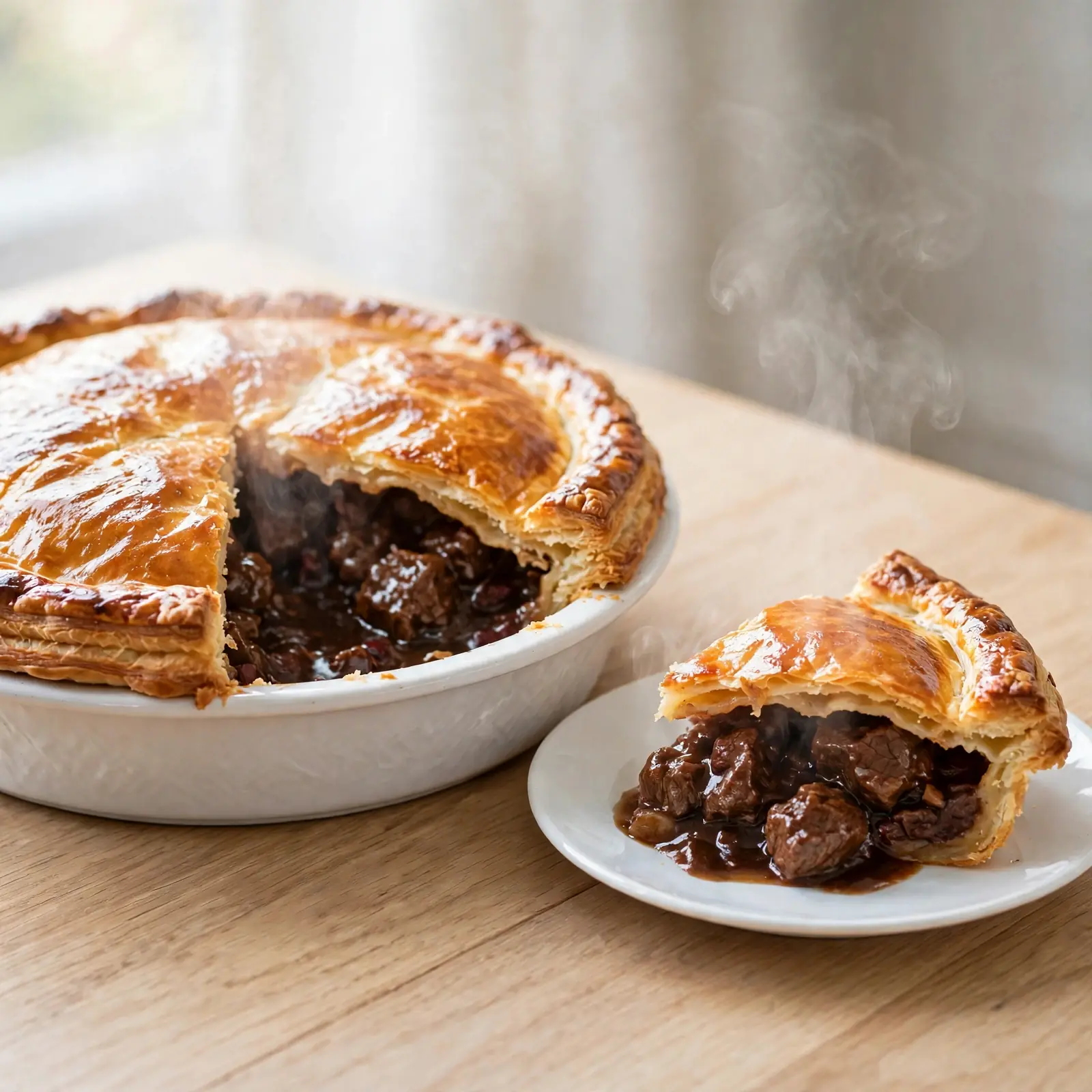
The Pub Classic You Can Absolutely Make at Home
Picture a cold evening. Rain on the windows, everyone hungry, and you want the kind of dinner that makes the whole table go quiet for the first few bites. That is steak and kidney pie: dark, beefy gravy, meat that falls apart, and a golden pastry lid you crack open with a spoon. It is the dish British pubs built their reputations on.
Most home versions disappoint for three fixable reasons. The beef stays chewy because it was rushed. The gravy is thin because it never got reduced. And the kidney tastes strong and bitter because nobody showed them the two simple prep steps that tame it. None of this needs talent. It just needs the right order of doing things, and this recipe is built around that order.
One honest note: this is a slow weekend recipe, not a weeknight sprint. From kidney soak to final rest takes about 3 hours and 20 minutes, but almost all of it is the pot quietly braising while you do other things. Your hands-on work is maybe 40 minutes.
Why You’ll Love This Steak and Kidney Pie
The meat really is fork tender. Stewing beef is full of collagen, and collagen only melts with time. The long, gentle braise turns it into gelatin, which is why the meat falls apart and the gravy feels silky instead of watery.
The kidney tastes deep and savory, not strong. A trimmed core and a 30-minute soak take away the harsh edge that puts people off. What is left is the rich, old-fashioned flavor that makes this pie different from a plain steak pie.
One pot for the filling, one sheet of pastry. The filling braises in a single heavy pot, and the lid is one sheet of shop-bought puff pastry. No bottom crust to go soggy, no pastry making required.
It feeds a table with zero serving stress. Six generous servings from one dish, and the filling actually improves made a day ahead. This is the recipe for when family is coming.
The gravy is the main event. Dark ale, Worcestershire sauce and the beef’s own juices reduce into a gravy so good you will want bread on the table just to chase the last of it around the plate.
The Science Behind Tender Meat and Thick Gravy
Collagen melts into gelatin, slowly. Stewing beef is full of connective tissue, mostly collagen. It does not melt like fat; it needs gentle heat over a long time, and past the 90-minute mark it converts into gelatin. Gelatin makes the meat feel moist and tender, and it gives the gravy that glossy, lip-coating body no flour trick can copy. Rush the braise and the collagen tightens and squeezes the meat dry.
Kidney cooks on a different clock. Kidney is lean and delicate next to stewing beef. Cooked for the full 2 hours it turns rubbery, and its flavor gets stronger, not milder. So it joins the pot for the last 45 minutes only: long enough to cook through and soak up gravy, short enough to stay tender. The soak matters too; salted water or milk draws out the compounds that make kidney taste harsh.
A steam vent saves your pastry lid. A pie filling is mostly water, and a hot oven turns that water into steam. With nowhere to go, the steam pushes into the pastry from below and makes the underside soft and pale. One small cut in the center of the lid lets the steam escape upward, so the pastry can rise into crisp, separate layers.
Egg wash is not just decoration. The proteins in beaten egg brown deeply in a hot oven, giving you that shiny, deep golden pub finish, and the thin egg layer helps seal the surface so the top stays crisp. Without it, the pie looks pale even when everything underneath is perfect.
What You Need
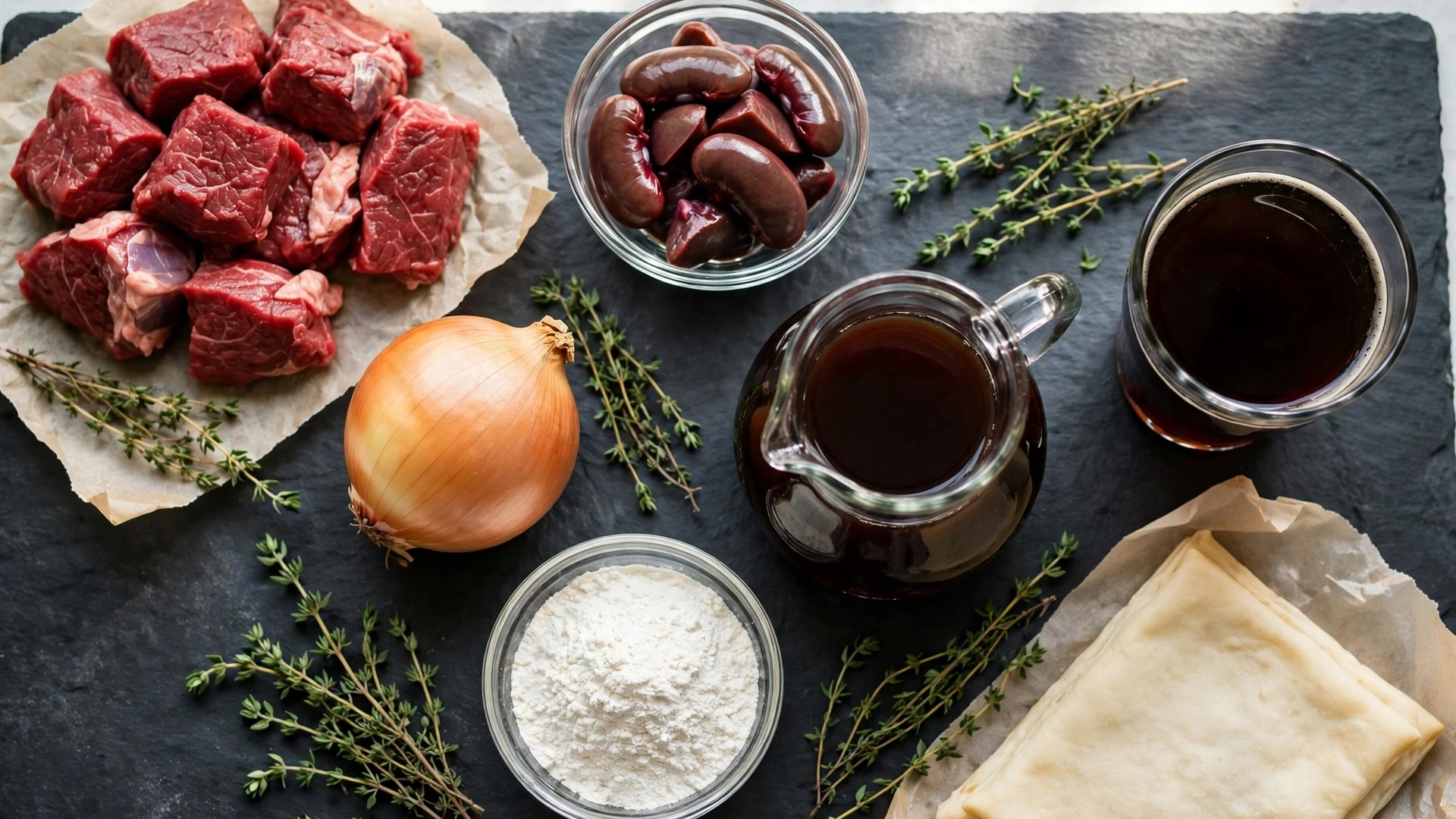
For the Filling
- 800 g stewing beef (chuck or shin), cut into chunks of about 1 inch (tough, well-marbled cuts are right here; lean steak goes dry)
- 250 g beef or lamb kidney (fresh from the butcher; it should smell clean and mild)
- 1 large onion (about 200 g), diced
- 2 tablespoons (20 g) all-purpose flour, mixed with 1 teaspoon salt and 1/2 teaspoon black pepper (coats the meat and thickens the gravy)
- 2 tablespoons (30 ml) neutral oil or beef dripping (dripping gives the most traditional flavor)
- 400 ml beef stock
- 150 ml dark ale (or extra beef stock; the alcohol cooks off, the malty depth stays)
- 1 tablespoon Worcestershire sauce
- 1 teaspoon dried thyme (or 3 to 4 sprigs of fresh thyme)
- 1 bay leaf
- Cold salted water or milk, for soaking the kidney (about 500 ml, with 1 teaspoon salt if using water)
For the Lid
- 250 g plain flour (about 2 cups), plus extra for rolling
- 1/2 tsp fine salt
- 200 g unsalted butter (about 14 tbsp), very cold, cut into rough chunks
- 120 ml ice-cold water (about 1/2 cup)
- 1 egg, beaten (for the egg wash)
Serves: 6 generous servings
Equipment: One large heavy pot with a tight lid (a Dutch oven is perfect), a deep pie dish of about 1.5 liters, a pastry brush, a small sharp knife for trimming kidney
How to Make Steak and Kidney Pie (Step-by-Step)
Make the Rough Puff Pastry
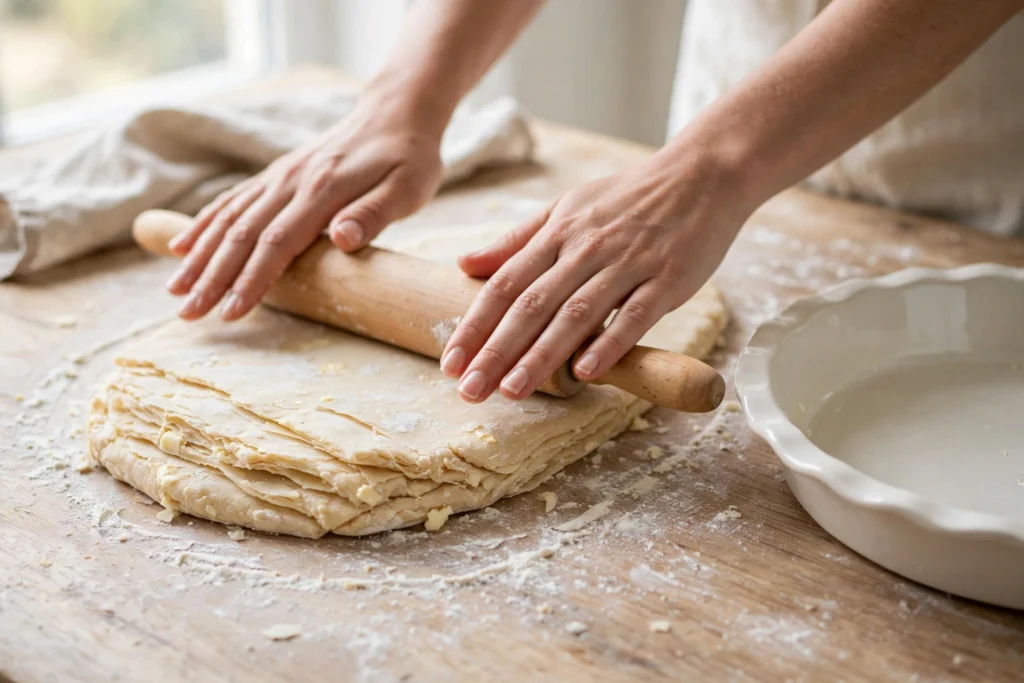
Put the flour and salt in a large bowl and toss the cold butter chunks through the flour, keeping them in big pieces. Sprinkle over the ice-cold water and mix with a fork just until a rough, shaggy dough forms; you should still see chunks of butter. Press it into a rough rectangle, wrap, and chill for 20 minutes. Using a store-bought sheet instead? Skip straight to the filling below.
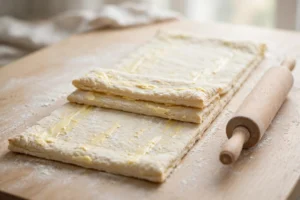
On a lightly floured surface, roll the dough into a long rectangle. Fold the top third down and the bottom third up over it, like a letter. Turn the dough a quarter turn, roll it out again, and fold the same way. Wrap and chill for 20 minutes, then repeat the roll and fold once more. Chill for a final 20 minutes, and roll it out to fit your dish when it is time to top the pie.
Prep the Kidney and Beef
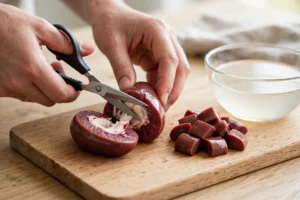
Step 1. Rinse the kidney under cold water, cut it in half lengthways, and snip out the white core in the middle with a small sharp knife or kitchen scissors; that core is tough and carries the strongest flavor. Cut the kidney into small pieces of about 1/2 inch. Cover with cold salted water or milk and soak for 30 minutes. Drain, rinse once more, and pat completely dry with paper towels.
J.ZaiB micro-tip: Dry kidney browns; wet kidney steams. Two minutes with paper towels is the difference between pieces that sear and pieces that boil in their own liquid.
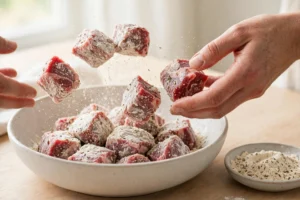
Step 2. While the kidney soaks, toss the beef chunks in the seasoned flour until every piece is lightly coated, then shake off the excess. Keep the leftover flour; you will use it in the pot.
J.ZaiB micro-tip: Coat the beef, do not bury it. A thin dusty layer is what you want. Thick clumps fall off in the pot and make the gravy pasty instead of glossy.
Brown and Braise
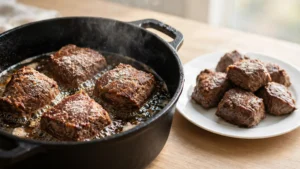
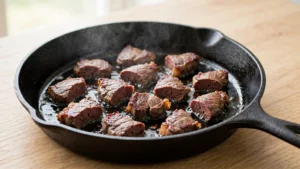
Step 3. Heat the oil or dripping in your heavy pot over medium-high heat until it shimmers. Brown the beef in two or three batches, giving each piece a deep brown crust on at least two sides, then lift each batch out onto a plate. Do not crowd the pan.
J.ZaiB micro-tip: If the pieces are touching, they steam in their own juices and turn grey. Browned meat is where the dark gravy color and deep flavor come from, so the batches are worth it.
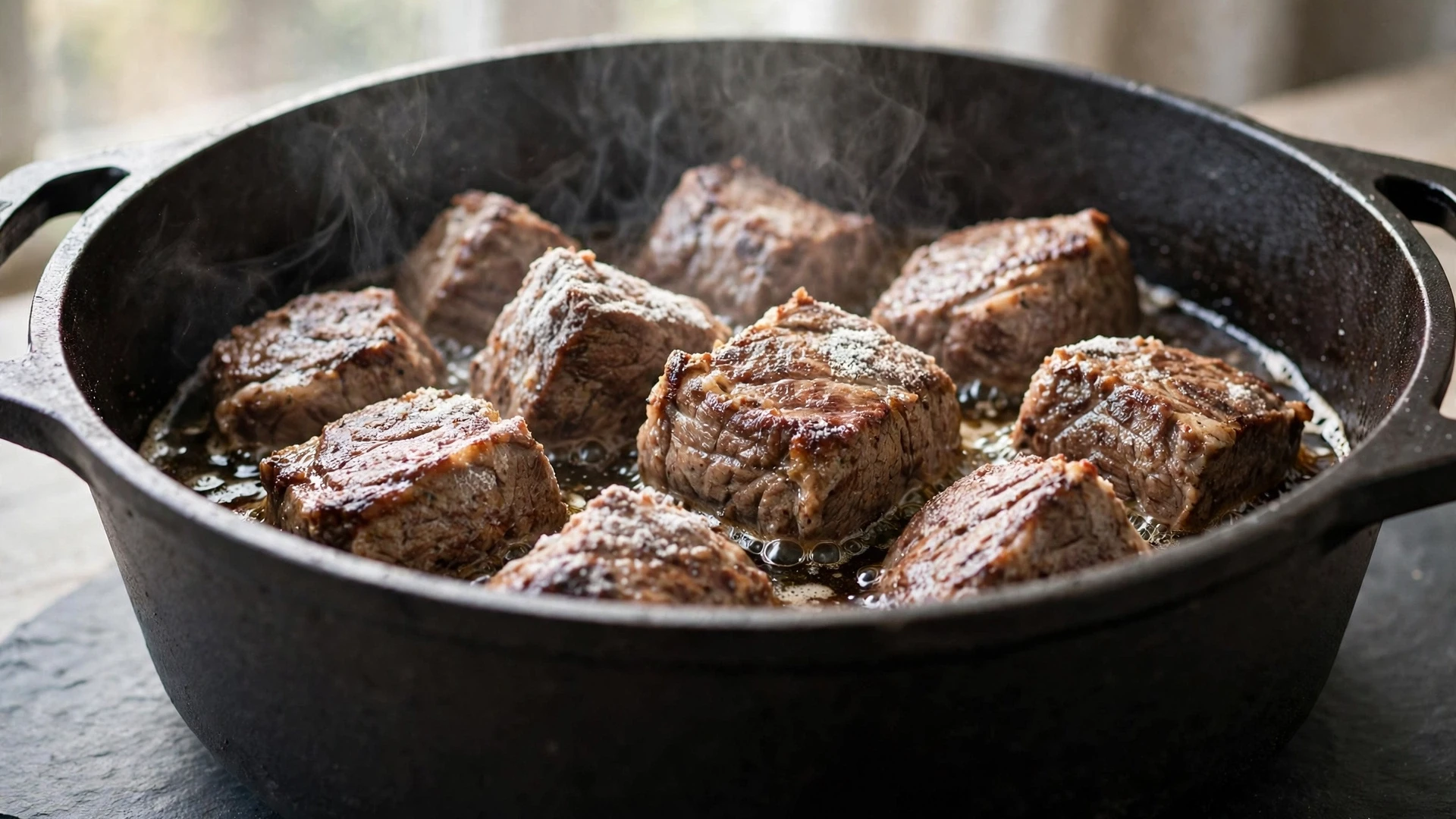
Step 4. Turn the heat down to medium. Add the onion to the same pot, with all the browned bits still in it, and cook for 5 to 6 minutes, stirring and scraping the bottom, until soft and golden at the edges. Sprinkle in the leftover seasoned flour and stir for 1 minute.
J.ZaiB micro-tip: Those dark bits stuck to the pot are concentrated flavor, not burnt food. The onion’s moisture lifts them as you scrape, and they melt straight into your gravy.
Step 5. Pour in the stock and ale, stirring well so no flour lumps survive. Add the Worcestershire sauce, thyme and bay leaf. Return the beef and all its plate juices. Bring to a gentle simmer, cover with the lid slightly ajar, and braise on the lowest heat (or in a 325°F oven) for 1 hour and 15 minutes. The liquid should barely bubble, never boil hard.
J.ZaiB micro-tip: A hard boil makes tough meat and cloudy gravy. Big, lazy bubbles every few seconds means your heat is right. Set a timer and walk away; the pot does not need you.
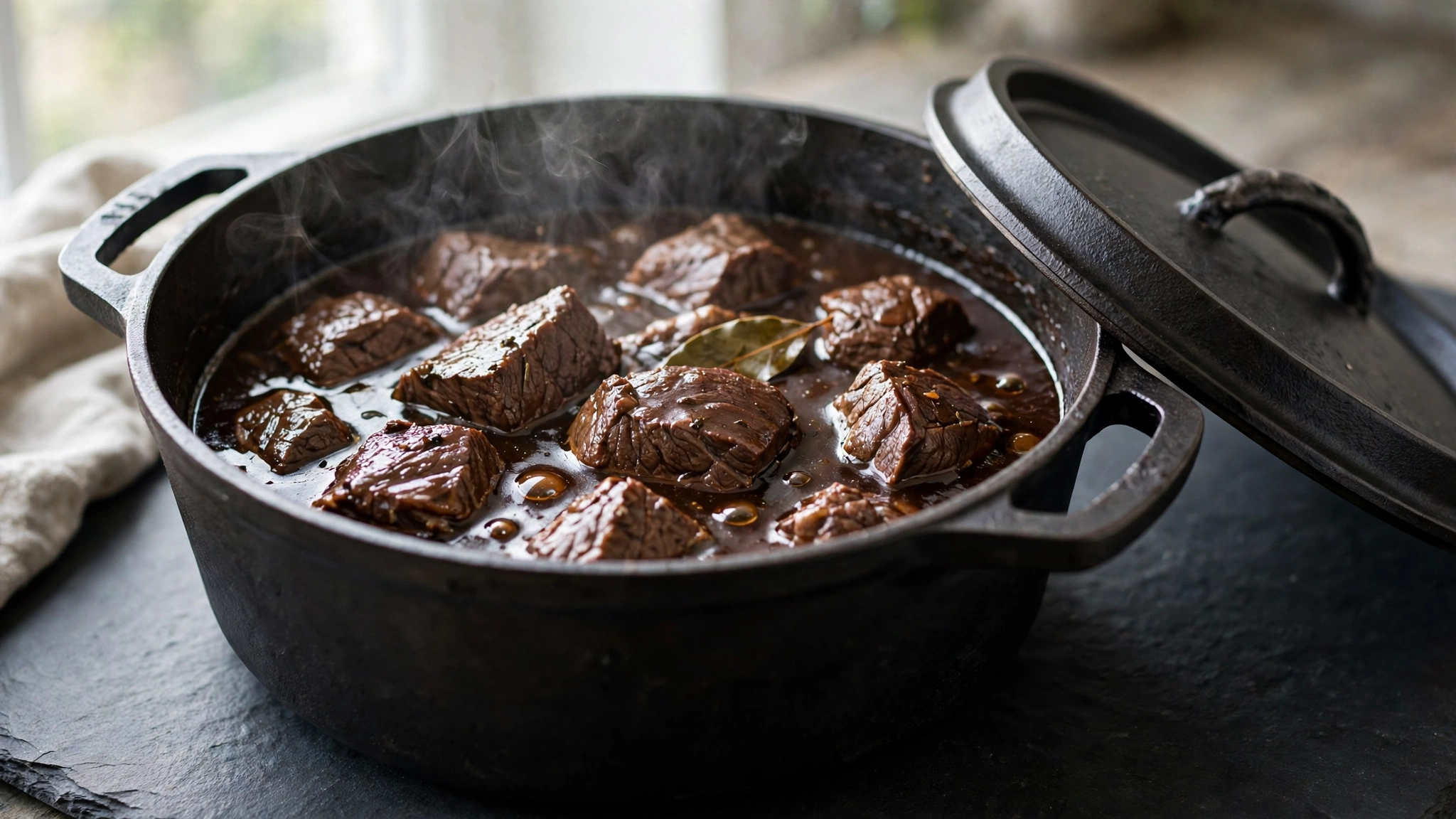
Step 6. Sear the drained kidney pieces in a hot, lightly oiled pan for about 2 minutes until just browned at the edges, then stir them into the pot. Cover and braise for the final 45 minutes, until the beef is fork tender and the kidney is cooked through. Fish out the bay leaf. If the gravy is thinner than you like, simmer uncovered for 5 to 10 minutes until it coats the back of a spoon. Taste, adjust the salt and pepper, and let the filling cool for at least 20 to 30 minutes. It can also be chilled completely and kept in the fridge for up to 2 days.
J.ZaiB micro-tip: Test the beef, not the clock. A piece should break apart when pressed with a spoon. If it fights back, give it another 15 minutes; every cut of stewing beef runs on its own schedule.
Top and Bake
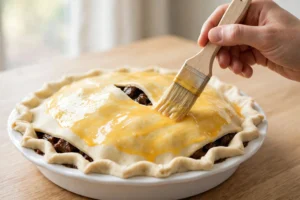
Step 7. Heat your oven to 400°F. Spoon the cooled filling into the pie dish; it should come close to the top so it supports the pastry. Lay the pastry sheet over the dish, let it drape slightly over the edges, trim the excess, and press it onto the rim to seal. Brush the whole lid with beaten egg, then cut one small slit in the center as a steam vent.
J.ZaiB micro-tip: Cool filling is not optional. Hot filling melts the butter layers inside puff pastry on contact, and melted layers cannot puff. Twenty patient minutes now buy you a tall, crisp lid later.
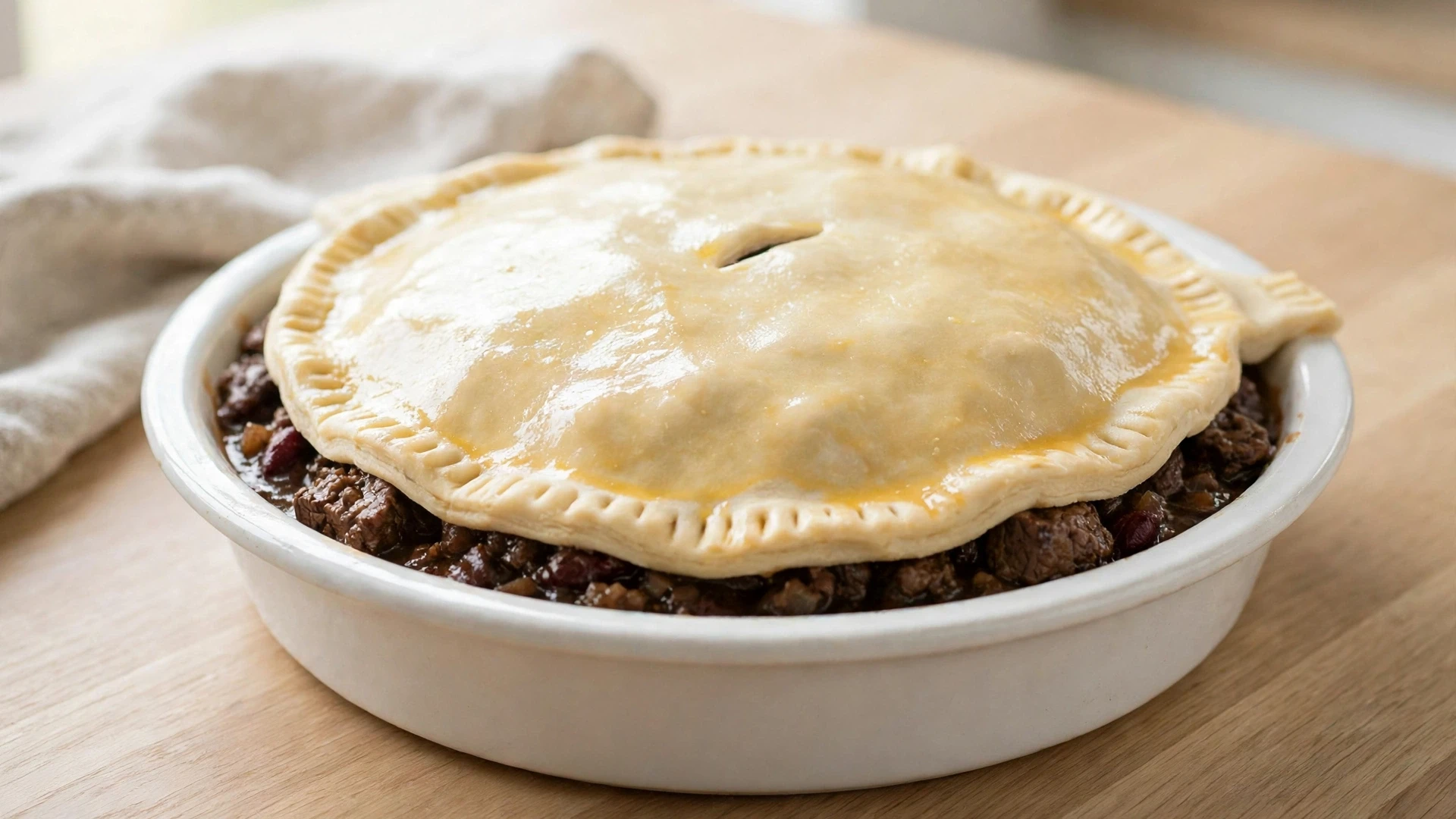
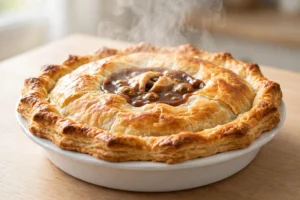
Step 8. Bake for 25 to 30 minutes until the pastry is deep golden, puffed and crisp, and the gravy bubbles up through the vent. Rest the pie for 10 minutes so the gravy settles and thickens a little more. Serve straight from the dish, piping hot.
J.ZaiB micro-tip: Watch the vent, not just the color. Bubbling gravy at the vent tells you the filling is heated all the way through, which matters most if your filling was chilled overnight.
J.ZaiB’s Expert Touch
Brown in batches, every single time. This is the rule that separates a dark, rich pie from a pale, boiled one. Meat needs dry, fierce heat and space to sear. Crowd the pot and you get steamed grey cubes and thin gravy, and no braising time fixes that start.
Reduce the gravy before the lid goes on. Once the pastry covers the dish, the gravy cannot reduce any further; it can only steam. So the gravy must already be the thickness you want to eat before Step 7. It should coat a spoon and hold a line when you drag a finger through it.
Add the kidney late. Beef needs 2 hours; kidney needs 45 minutes. Cooking both for the same time is the most common reason home steak and kidney pies have rubbery kidney. The two-clock approach is the whole fix.
Keep everything cold except the oven. Cold pastry, cooled filling, hot oven. Puff pastry rises because its butter layers turn to steam and push the layers apart. Warm pastry or warm filling melts that butter early, and the lid comes out heavy instead of flaky.
Make the filling a day ahead when you can. An overnight rest lets the flavors settle into each other, and the gelatin sets the filling firm, which makes topping and baking the next day easier. It is the rare recipe where planning ahead genuinely tastes better.
Variations to Try
Steak and Mushroom Pie: Skip the kidney and add 300 g of mushrooms, halved or quartered, browned in the pot after the beef and stirred back in for the last 30 minutes of the braise. Earthy, rich, and the version to make for anyone nervous about kidney. If you love steak in every form, my Pan Seared Steak gives you that same deep beefy satisfaction on a much faster night.
Steak and Ale Pie: Leave the kidney out entirely and raise the ale to 250 ml, reducing the stock to 300 ml. The gravy turns darker and maltier, and nobody at the table will miss a thing.
Individual Pies: Divide the filling between six oven-safe ramekins, top each with its own circle of puff pastry, egg wash, vent, and bake for 20 to 25 minutes. Everyone gets their own crisp lid, and there is no fighting over corner pieces.
Chicken Pot Pie: Same golden-lid idea, completely different filling: creamy chicken and vegetables under the pastry. My Easy Homemade Chicken Pot Pie is the one to follow when the table wants comfort without red meat.
Serving Ideas
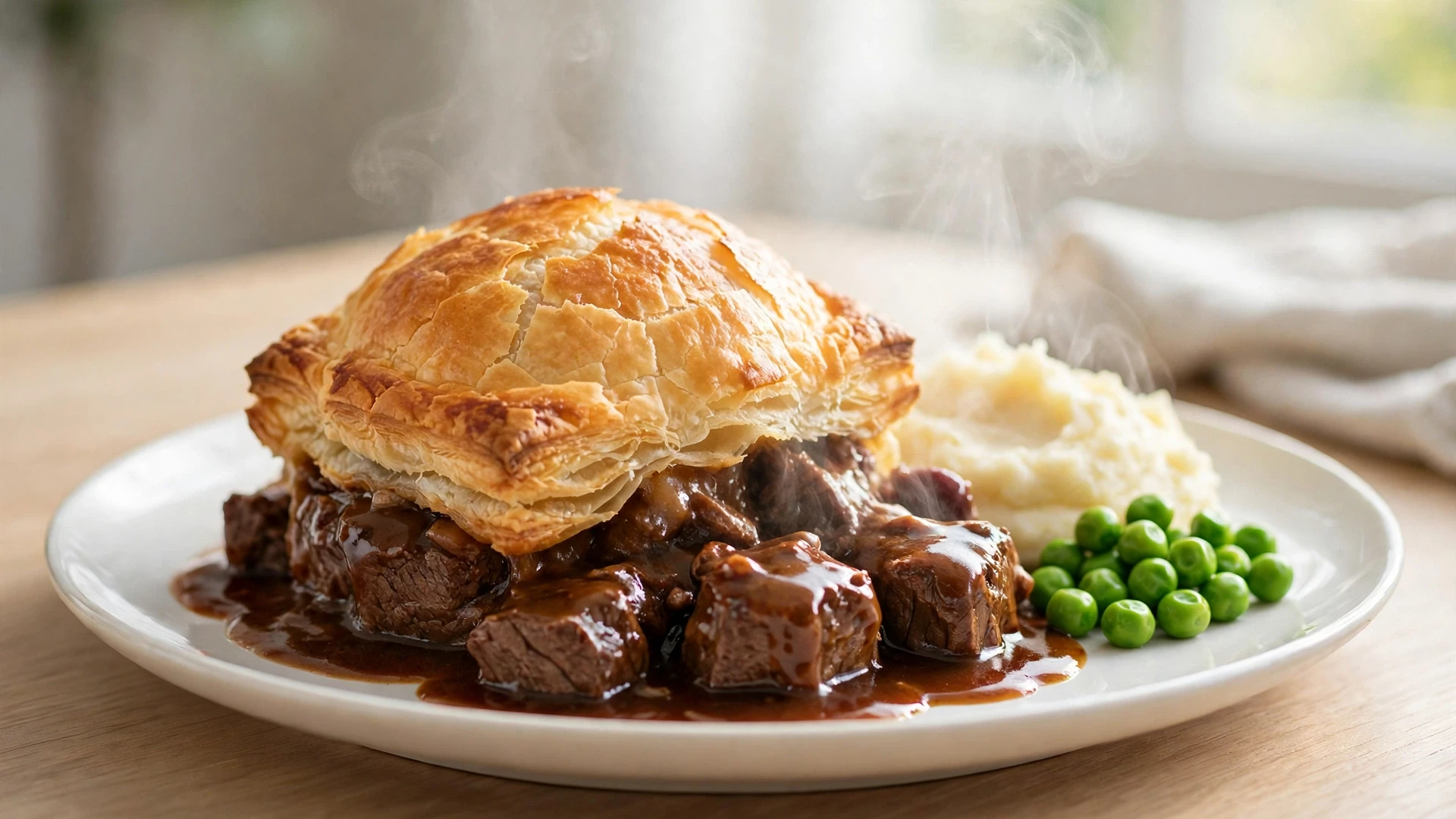
This pie wants simple, sturdy sides that can hold their own against the gravy. A big spoonful of Ultra Creamy Mashed Potatoes is the classic partner; the mash catches every drop of gravy that escapes. Buttered peas, honey-glazed carrots or steamed green beans keep the plate bright, and crusty bread on the side is never a mistake.
Serve it family style, straight from the dish in the middle of the table, and let everyone hear the pastry crack. That sound is half the experience. This pie also holds a proud place in my Types of Pie guide, where the whole family of sweet and savory pies lives in one place. Browse it after dinner and pick your next project.
Storage & Make-Ahead Guide
Room temperature: Do not leave the cooked pie out for more than 2 hours, and in a hot kitchen (above 90°F / 32°C) that limit drops to 1 hour. Meat and gravy are exactly the foods bacteria love, so get leftovers into the fridge promptly. The USDA’s leftover safety guidance is clear on this: refrigerate within 2 hours and reheat leftovers to 165°F.
Refrigerator: Covered, the baked pie keeps for 3 to 4 days. Reheat portions in a 350°F oven for 15 to 20 minutes until the filling is steaming hot all the way through; the oven also brings some life back to the pastry. A microwave works for the filling but softens the lid.
Freezer: The filling freezes beautifully for up to 3 months in an airtight container. Thaw overnight in the fridge, top with fresh pastry, and bake as normal. You can also freeze the assembled, unbaked pie: freeze it solid in its dish, wrap well, and bake from frozen at 400°F, adding 15 to 20 minutes and covering the pastry loosely with foil if it browns too fast.
Make-ahead: The filling is at its best made 1 to 2 days ahead and kept chilled. The gelatin sets it firm, the flavors deepen, and on serving day you only top, egg wash, and bake. This is the stress-free way to serve this pie to guests.
Steak and Kidney Pie
Ingredients
Equipment
Method
- Make the rough puff pastry (skip this step and the next if using a store-bought sheet): Put the flour and salt in a large bowl and toss the cold butter chunks through the flour, keeping them in big pieces. Sprinkle over the ice-cold water and mix with a fork just until a rough, shaggy dough forms; you should still see chunks of butter. Press the dough into a rough rectangle, wrap it, and chill for 20 minutes.
- Roll and fold: On a lightly floured surface, roll the dough into a long rectangle. Fold the top third down and the bottom third up over it, like a letter. Turn the dough a quarter turn, roll it out again, and fold the same way. Wrap and chill for 20 minutes, then repeat the roll and fold once more. Chill for a final 20 minutes before using, and roll the pastry out to fit your dish when the recipe tells you to lay it over the top.
- Rinse the kidney, halve it lengthways, and snip out the white core. Cut into 1/2-inch pieces, soak for 30 minutes in cold salted water or milk, then drain, rinse, and pat completely dry.
- Toss the beef chunks in the seasoned flour until lightly coated. Shake off the excess and keep the leftover flour.
- Heat the oil or dripping in a heavy pot over medium-high heat. Brown the beef in two or three batches until deeply crusted, then set aside on a plate.
- Cook the onion in the same pot for 5 to 6 minutes until soft and golden, scraping up the browned bits. Stir in the leftover seasoned flour and cook for 1 minute.

- Pour in the stock and ale, stirring out any lumps. Add the Worcestershire sauce, thyme and bay leaf. Return the beef and its juices, cover, and braise at a bare simmer (or in a 325°F oven) for 1 hour 15 minutes.
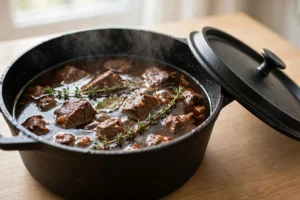
- Sear the kidney pieces in a hot, lightly oiled pan for about 2 minutes, then stir them into the pot. Braise for a final 45 minutes until the beef is fork tender. Remove the bay leaf. If the gravy is thin, simmer uncovered for 5 to 10 minutes to reduce. Cool the filling for at least 20 to 30 minutes.
- Heat the oven to 400°F. Spoon the filling into a pie dish, lay the puff pastry over the top, trim and seal the edges, brush with beaten egg, and cut a small steam vent in the center.
- Bake for 25 to 30 minutes until the pastry is deep golden and puffed and the gravy bubbles at the vent. Rest for 10 minutes, then serve piping hot.
Notes
- Kidney timing: Kidney needs only the last 45 minutes of the braise. Cooked for the full 2 hours it turns rubbery and its flavor gets stronger.
- Gravy thickness: Reduce the gravy before the pastry goes on. Once the lid is in place, the gravy cannot reduce further.
- Cool filling first: Hot filling melts the butter layers in puff pastry and stops the lid from puffing. Chill the filling completely if you have time.
- No alcohol: Replace the ale with extra beef stock. The pie stays rich; it simply loses the malty depth.
- Food safety: Get leftovers into the fridge within 2 hours (1 hour if the kitchen is above 90°F / 32°C) and reheat until steaming hot, 165°F in the center.
- Make ahead: The filling keeps for up to 2 days in the fridge and freezes for up to 3 months. Top with pastry and bake on serving day.
- Nutrition values are estimates; use a nutrition calculator with your exact brands.
Nutrition
Per 1 serving (one sixth of the pie)
| Calories | 560 kcal |
| Total Fat | 33 g |
| Saturated Fat | 13 g |
| Cholesterol | 265 mg |
| Sodium | 720 mg |
| Total Carbs | 21 g |
| Sugars | 4 g |
| Fiber | 2 g |
| Protein | 44 g |
Note: Values are estimates and vary based on exact ingredients and serving size used.
Frequently Asked Questions
Why does kidney taste strong, and how do I tone it down?
The strong flavor lives mostly in the white core and in the liquid around the kidney. Trim the core out completely, soak the pieces for 30 minutes in salted water or milk, rinse, and dry them well. Cooked for just the last 45 minutes of the braise, the kidney comes out mild, rich and savory instead of harsh.
Can I make steak and kidney pie without the kidney?
Yes. Leave it out and you have a classic steak pie, which is exactly what the Steak and Ale variation above does. Add mushrooms if you want to keep the same hearty volume in the filling. The gravy carries the dish either way.
What is the best cut of beef for steak and kidney pie?
Chuck or shin. Both are tough, collagen-rich cuts that turn tender and silky over a long braise, and both cost less than steak cuts. Avoid lean, quick-cooking cuts like sirloin or fillet; they have little collagen, so they dry out and turn stringy in the time this pie needs.
Why is my gravy thin and watery?
Three usual causes: the beef was crowded and steamed instead of browning, the braise was not reduced before the pastry went on, or the flour coating was skipped. The fix for a finished filling is simple: simmer it uncovered for 5 to 10 minutes until it coats the back of a spoon. Once the lid is on, the gravy cannot reduce any more, so always thicken before you top.
How do I stop the puff pastry lid from going soggy?
Cool the filling for at least 20 to 30 minutes before the pastry touches it, cut a steam vent in the center of the lid, and bake in a properly hot 400°F oven. Hot filling melts the pastry’s butter layers on contact, and trapped steam softens the underside. Cool filling plus a vent solves both problems at once.
Can I make the filling ahead of time?
Yes, and it is better for it. Make the filling up to 2 days ahead, cool it quickly, and keep it covered in the fridge. The flavors deepen and the gelatin sets the filling firm, which makes topping the pie easier. Before serving, make sure the baked pie is piping hot in the center; watch for gravy bubbling at the vent.
Can I freeze steak and kidney pie?
Both ways work. Freeze the filling alone for up to 3 months and top it with fresh pastry after thawing, or freeze the whole assembled pie before baking and bake it from frozen at 400°F with 15 to 20 extra minutes. Leftover baked pie also freezes for up to 3 months; reheat it from thawed in a 350°F oven until steaming hot.
What are the ingredients in a steak and kidney pie?
The filling is made with 800 g stewing beef, 250 g beef or lamb kidney, one large onion, flour, 400 ml beef stock, 150 ml dark ale, Worcestershire sauce, thyme and a bay leaf. The lid is puff pastry, made here from plain flour, cold unsalted butter, salt and ice-cold water, with a beaten egg for the egg wash. The kidney is first soaked in cold salted water or milk, and the ale can be swapped for extra beef stock if you prefer no alcohol.
What kidneys are in steak and kidney pie?
This recipe uses 250 g of beef or lamb kidney. Buy it fresh from the butcher, and choose kidney that smells clean and mild. Trim out the white core, soak the pieces for 30 minutes in cold salted water or milk, then rinse and dry them before cooking.
What pastry do you use for a steak and kidney pie?
Use puff pastry for the lid. This recipe gives a homemade rough puff pastry made from plain flour, cold unsalted butter, salt and ice-cold water, and it is brushed with beaten egg. If you are short on time, one sheet of shop-bought puff pastry works in its place. Either way, use a cold filling, cut a steam vent in the lid, and bake at 400°F until deep golden.
How is kidney pie made?
Soak the trimmed kidney for 30 minutes, then brown the floured beef in batches and braise it with onion, stock, dark ale and seasonings for about 2 hours. Stir the kidney in for the last 45 minutes, then cool the filling before spooning it into a pie dish. Top it with puff pastry, brush it with egg wash, cut a steam vent, and bake at 400°F for 25 to 30 minutes until the lid is deep golden and the gravy bubbles at the vent.
A Proper Pie Night, Sorted
That is it. Tough beef turned tender by patience, kidney made mild by two simple steps, a gravy worth writing home about, and a golden lid that crackles when the spoon goes in. Steak and kidney pie has survived centuries of British winters for a reason, and once you make it this way, you will understand every one of them.
You do not need any special skill for this. If you can brown meat in batches and leave a pot alone, you can make this pie exactly as good as the photos. Make it on a slow weekend, gather your people, and enjoy the quiet that falls over the table at the first bite.
Tag me on Instagram @viralfoodhacks706 when you make yours. I want to see that golden lid. And save this steak and kidney pie to Pinterest so it is waiting for you on the next cold evening.