
How do you keep shepherd’s pie from being soupy under the mash?
In this shepherd’s pie recipe, three things stop the soup. First, simmer the lamb gravy until it is properly thick, so thick that dragging a spoon across the pan leaves a clear trail that fills in slowly. Second, steam your boiled potatoes dry for a few minutes before mashing, because wet mash weeps water into the filling as it bakes. Third, rest the baked pie for 10 minutes before serving, so the filling settles and firms up. Do those three things and every spoonful holds together: rich gravy below, fluffy mash on top, no puddle on the plate.
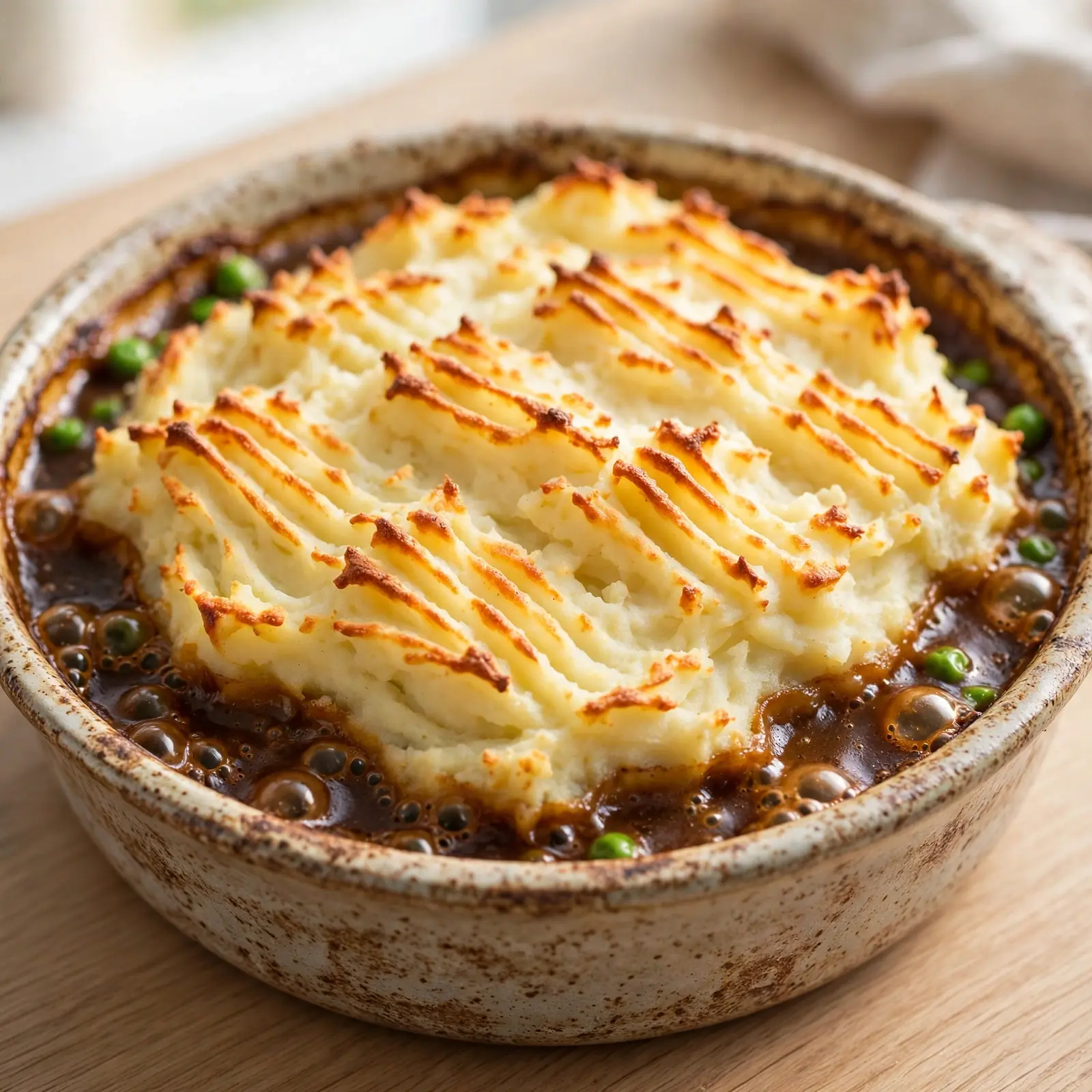
The Weeknight Dinner That Eats Like a Sunday Roast
Picture this. It is a cold evening, everyone is hungry, and you want the kind of dinner that makes the whole table go quiet for the first few bites. Rich meat, soft vegetables, gravy, and a cloud of mashed potato on top, crisp at the peaks. That is shepherd’s pie when it is done right.
Here is the problem with most attempts. The filling comes out thin and watery, so the mash slides around on a layer of soup. Or the potatoes go on wet and gluey, and the top never crisps. The dish looks right in the oven and falls apart on the plate.
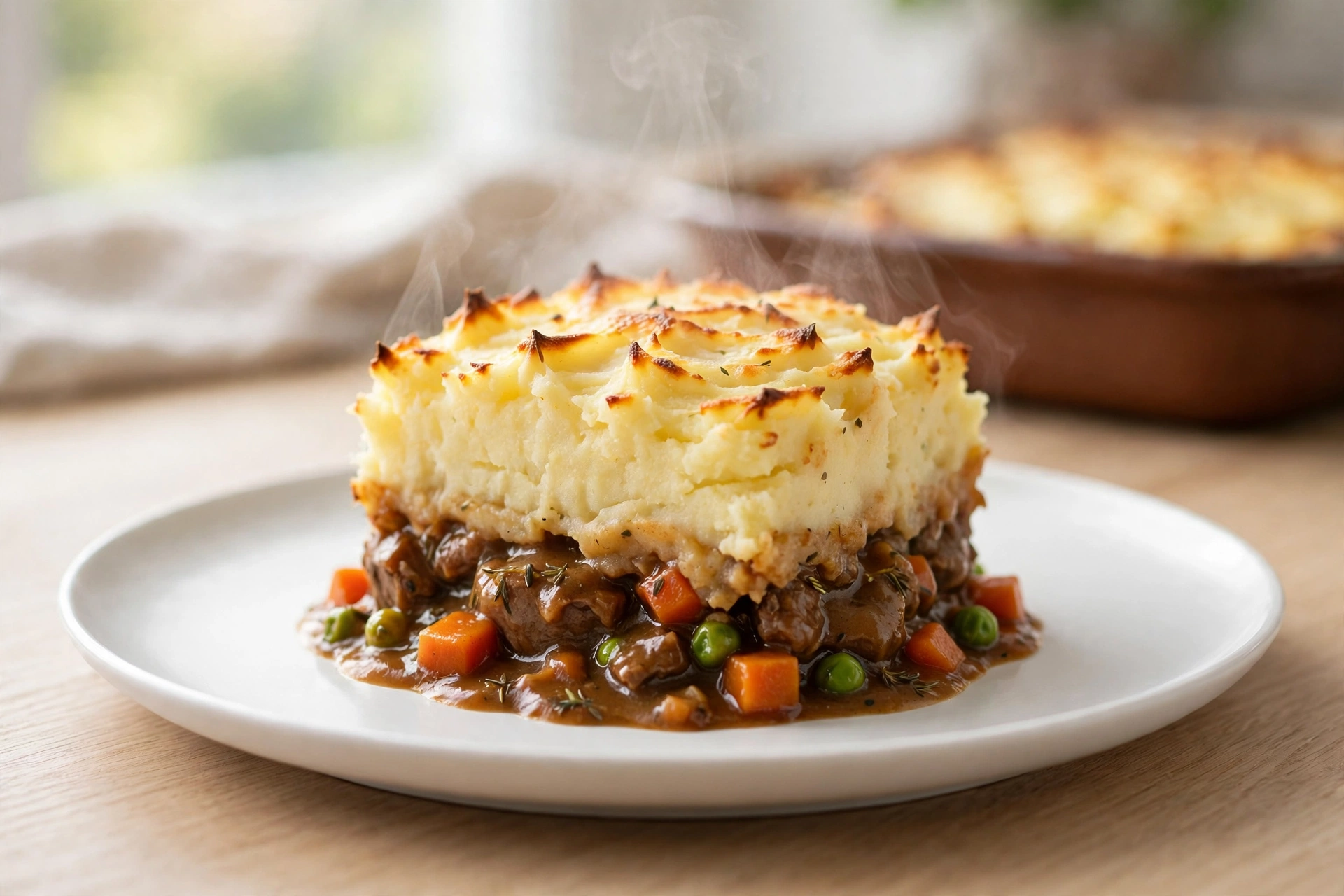
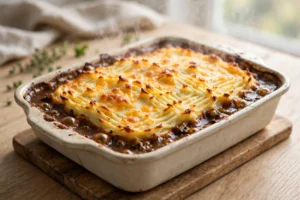
This version fixes both problems with simple technique, not extra ingredients. The lamb is browned hard so the gravy tastes deep and meaty. The gravy simmers down until a spoon leaves a trail. The potatoes get steamed dry before mashing, so the topping stays fluffy and drinks up the steam from the filling instead of adding water to it. Then a fork does the styling: rough ridges that turn golden and crisp in the oven.
One honest note on timing: this is about 1 hour and 20 minutes from start to table, including the 10 minute rest, and most of that is the oven and the simmer doing the work. Real comfort food, weeknight timing.
Why You’ll Love This Shepherd’s Pie
No soupy filling, ever. The gravy is reduced until it coats the meat like a sauce, not a broth. When you scoop a serving, it holds its shape on the spoon and on the plate.
The mash is a topping, not a lid. Steamed-dry potatoes mashed with butter and warm milk stay light and fluffy, and the fork ridges crisp into golden peaks. Every bite has a little crunch on top and softness underneath.
It tastes like it cooked all day. Browning the lamb properly and cooking the tomato paste in the pan builds a deep, savory gravy in about 20 minutes of simmering. Nobody at the table will guess it was a weeknight job.
One dish feeds the whole family. Six generous servings in a single baking dish, with the meat, vegetables and potatoes all in one scoop. Add a simple side and dinner is done.
Leftovers reheat beautifully. The filling firms up in the fridge and the flavors deepen overnight. A covered portion reheated until steaming tastes like a second roast dinner.
The Science Behind a Shepherd’s Pie That Holds Together
Browning builds the gravy. When ground lamb hits a hot pan and actually browns instead of steaming in its own juices, the surface of the meat develops deep savory flavors. The browned bits left stuck to the pan, called fond, are pure flavor. The stock lifts them back into the gravy, which is why a well-browned filling tastes rich and a gray one tastes flat.
Flour plus reduction makes real thickness. The tablespoon of flour coats the meat and vegetables, and its starch swells as the stock simmers, gently thickening the liquid. At the same time, simmering evaporates water and concentrates everything. The spoon trail test tells you both jobs are done: if the trail fills in instantly, the gravy is still too thin; if it closes slowly, it will sit proudly under the mash.
Dry mash is a sponge, wet mash is a leak. Boiled potatoes hold a surprising amount of water. Mash them wet and that water escapes during baking, thinning the filling from above. Steaming the drained potatoes in the hot pot drives the water off, so the mash absorbs a little steam from the hot filling instead of sliding on it.
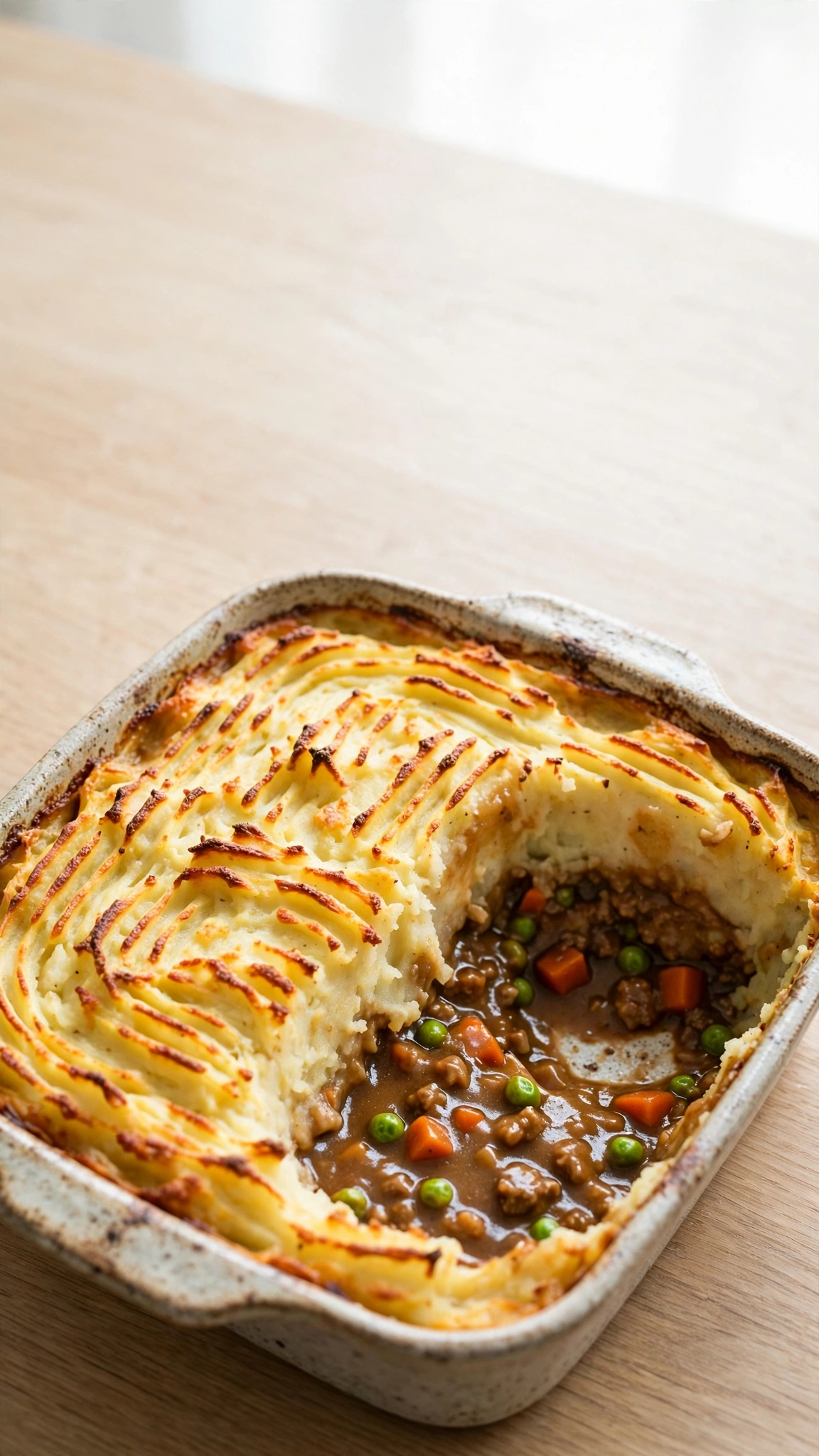
Fork ridges are surface area. A smooth mash top can only brown in a thin sheet. Ridges and peaks multiply the surface facing the oven heat, so you get many small crisp, golden edges instead of one pale one. More edges, more crunch.
What You Need
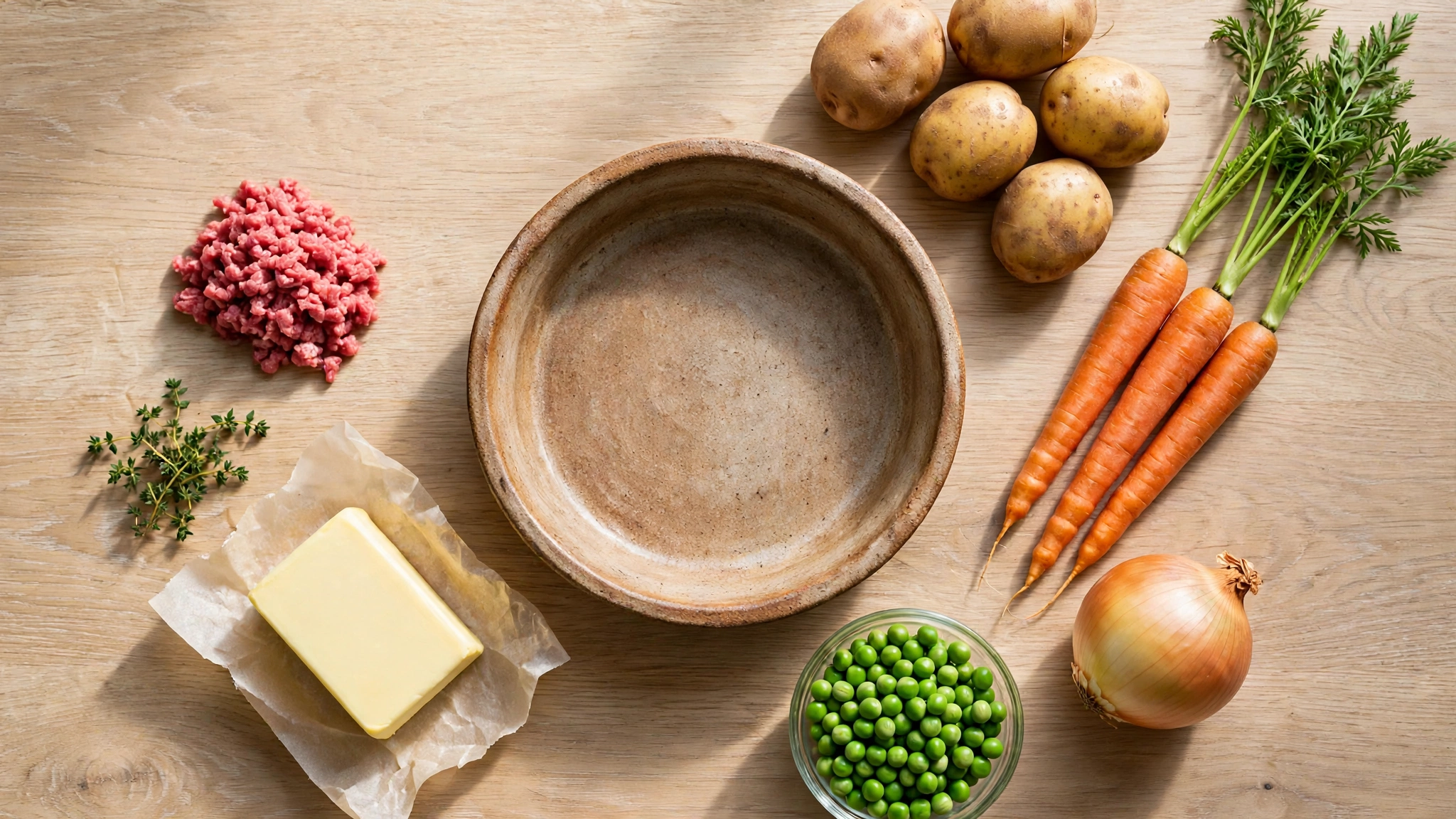
For the Lamb Filling
- 700 g ground lamb (regular mince is fine; you will drain the excess fat after browning)
- 1 large onion, finely diced
- 2 medium carrots, finely diced (small dice cooks in the same time as the meat)
- 2 cloves garlic, minced
- 2 tablespoons tomato paste
- 1 tablespoon Worcestershire sauce
- 1 teaspoon dried thyme (or 1 tablespoon fresh leaves)
- 250 ml beef stock
- 150 g frozen peas (no need to thaw, they warm through in the gravy)
- 1 tablespoon all-purpose flour
- Salt and black pepper, to taste
- 1 tablespoon oil, only if your lamb is very lean
For the Mash Topping
- 1 kg potatoes, peeled and cut into even chunks (floury, starchy potatoes like Russets mash fluffiest)
- 50 g butter
- 80 ml warm milk (warm, so the mash stays hot and smooth)
- Salt, to taste
- 50 g grated cheddar, optional (for a golden cheesy top)
Serves: 6 generous servings
Equipment: One large wide pan or skillet, one large pot for the potatoes, a potato masher, and an oven-safe baking dish of about 2 liters (a 9 by 13 inch dish works well)
How to Make Shepherd’s Pie (Step-by-Step)
Brown the Lamb and Build the Gravy
Step 1. Heat your wide pan over medium-high heat until it is properly hot. Add the ground lamb, break it into pieces, then leave it alone for a few minutes so the underside browns. Stir, brown the other side, and keep going until the meat is deeply browned all over, about 8 to 10 minutes. Spoon off and discard the excess fat, keeping about a tablespoon in the pan.
J.ZaiB micro-tip: If the pan fills with liquid and the meat boils instead of frying, the pan is crowded or not hot enough. Tip the liquid out, get the pan hot again, and brown in two batches. Brown is flavor; gray is a missed chance.

Step 2. Add the onion and carrots to the same pan with the lamb. Cook for 5 to 6 minutes, stirring now and then and scraping the bottom, until the onion softens and the carrots lose their raw edge. The vegetables will lift the browned bits off the pan as they release their moisture.
J.ZaiB micro-tip: Those browned bits on the pan bottom are the gravy flavor you built in Step 1. Scrape like you mean it; nothing should stay stuck and wasted.
Step 3. Stir in the garlic, tomato paste and flour. Cook for 1 full minute, stirring constantly. The tomato paste will darken slightly and the flour will coat everything, which cooks off the raw flour taste.
J.ZaiB micro-tip: Raw flour tastes pasty; cooked flour tastes like nothing and just thickens. That one minute of stirring is the whole difference, so do not rush it.
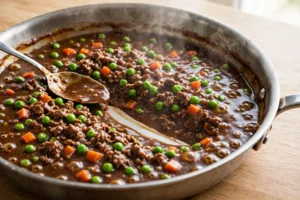
Step 4. Pour in the beef stock and Worcestershire sauce, add the thyme, and stir well. Simmer for 10 to 12 minutes, stirring occasionally, until the gravy is thick enough that a spoon dragged across the pan leaves a trail that closes slowly. Stir in the frozen peas, season with salt and pepper, and simmer 1 more minute. The filling should be fully cooked and steaming; ground meat is safe at 160°F, and this simmer takes the lamb well past that (USDA safe temperature chart). Take the pan off the heat.
J.ZaiB micro-tip: If your trail still fills in fast, give it 3 more minutes of simmering, not more flour. Reduction fixes thin gravy without making it pasty.
Make the Mash
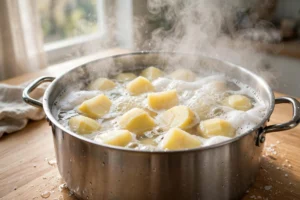
Step 5. While the filling simmers, put the potato chunks in a large pot, cover with cold water, add a good pinch of salt, and bring to a boil. Simmer for 15 to 18 minutes, until a knife slides into a chunk with no resistance at all.
J.ZaiB micro-tip: Starting potatoes in cold water cooks them evenly. Dropped into boiling water, the outside turns to mush while the center stays hard, and lumpy mash is born.
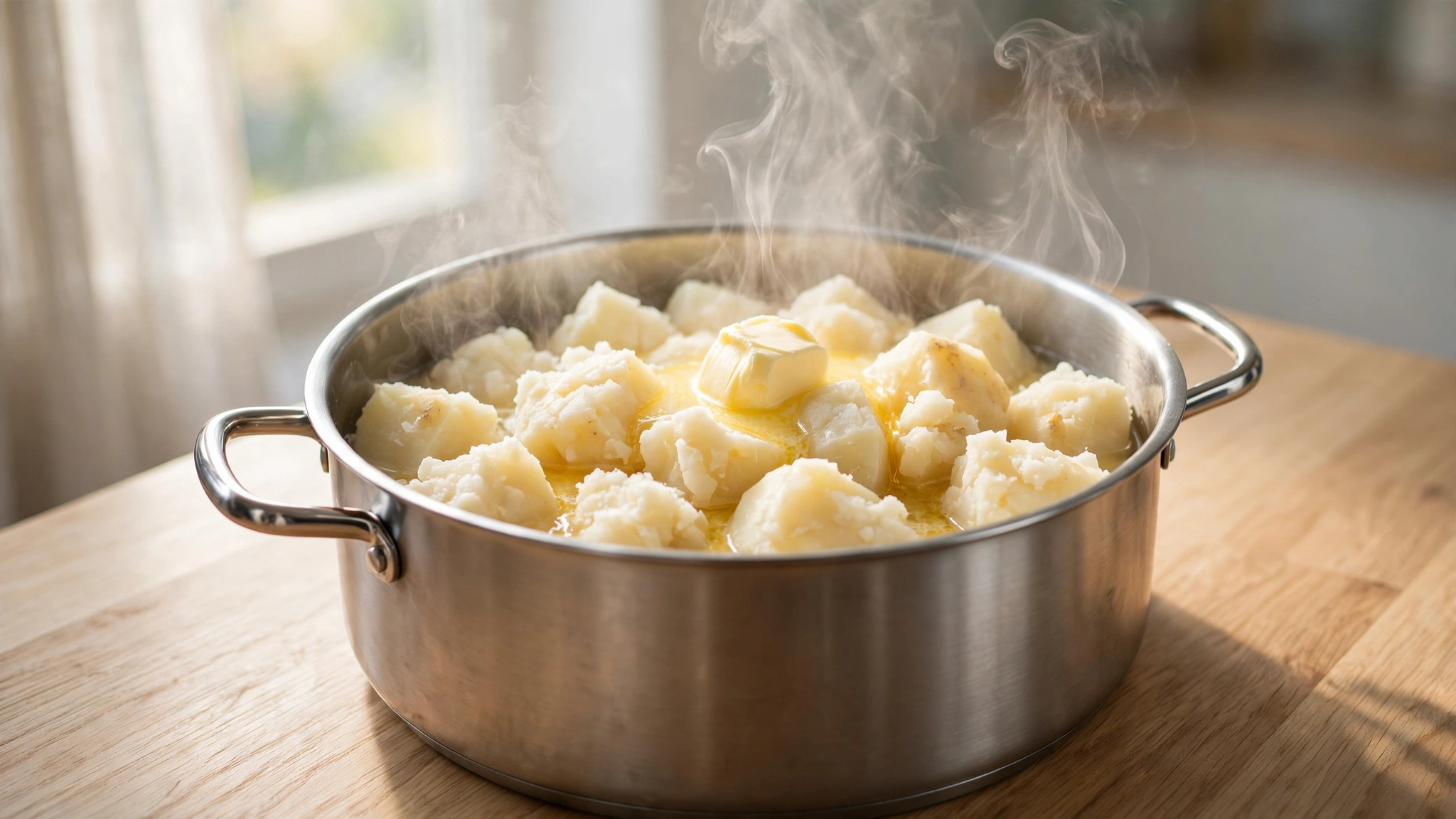
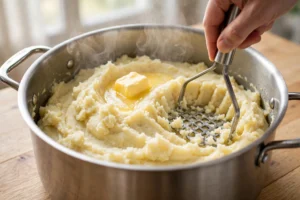
Step 6. Drain the potatoes well, return them to the hot empty pot, and set it back over low heat for 2 to 3 minutes, shaking gently, until the potatoes look dry and slightly floury on the surface and steam stops rising. Take the pot off the heat, add the butter and warm milk, and mash until smooth and fluffy. Season with salt.
J.ZaiB micro-tip: This steam-dry step is the secret of the whole recipe. Dry mash soaks up steam from the hot filling and stays in place; wet mash leaks water and makes soup. Watch for the floury surface, that is your signal.
Assemble and Bake
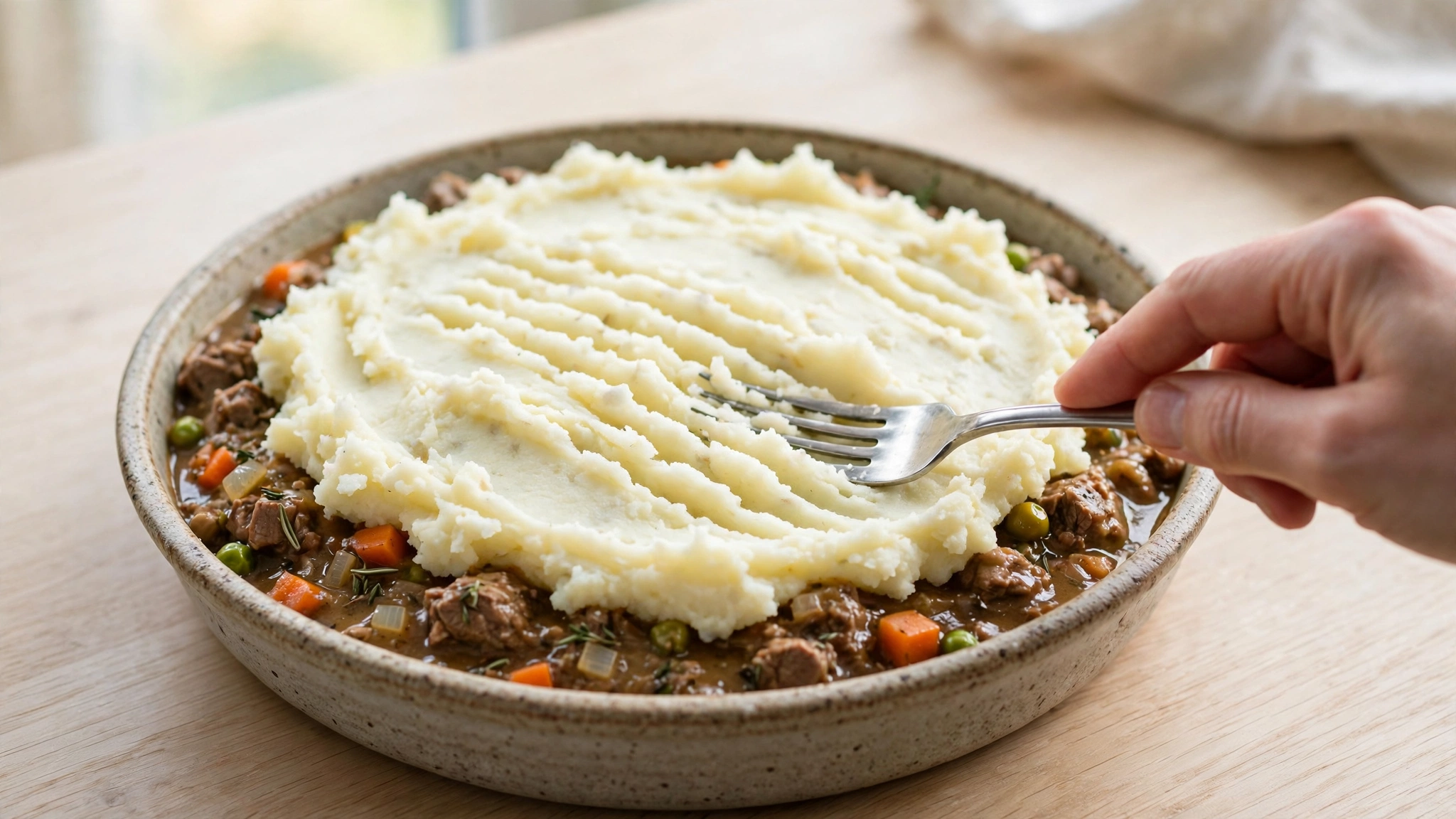
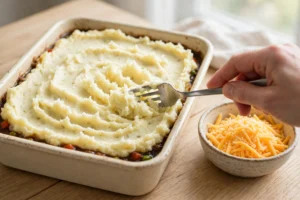
Step 7. Heat your oven to 400°F. Spoon the hot lamb filling into your baking dish and spread it level. Spoon the mash over the top in big dollops, then spread it gently to the edges, sealing the filling in. Drag a fork across the whole surface to raise rough ridges and peaks. Scatter the cheddar on top if you are using it.
J.ZaiB micro-tip: Sealing the mash right to the edges matters. It stops the gravy bubbling up over the top in one spot and keeps the layers neat when you serve.
Step 8. Bake for 20 to 25 minutes, until the mash peaks are golden, the cheddar (if used) is melted and spotted brown, and the gravy bubbles up at the edges of the dish.
J.ZaiB micro-tip: The bubbles at the edge are your doneness sign. They tell you the filling is piping hot all the way through, not just the top.
Step 9. Rest the pie for 10 minutes before serving. Scoop generous portions, making sure each one gets crisp peaks, fluffy mash and plenty of the thick lamb gravy.
J.ZaiB micro-tip: The rest is not dead time. The gravy thickens a little more as it stands, so your first serving comes out in one proud scoop instead of a slump.
J.ZaiB’s Expert Touch
Brown the meat like you mean it. Color is flavor. Give the lamb space, heat and time to brown deeply before anything else goes in. A crowded, steamy pan gives you gray meat and a thin-tasting gravy, no matter how long you simmer it afterward.
Keep a spoonful of the fat. Drain the excess lamb fat, but leave about a tablespoon in the pan. The onion and carrots cooked in it pick up the meaty flavor, and the fond lifts into the vegetables instead of going down the sink.
Trust the spoon trail, not the clock. Simmer times shift with your pan and your stove. The trail test never lies: drag, watch, and only move on when the trail closes slowly. Thick gravy on the stove means a pie that scoops cleanly at the table.
Warm milk, dry potatoes. Cold milk cools the mash and makes it gluey; warm milk keeps it soft and fluffy. And always steam the potatoes dry first. For an even fluffier topping built on the same trick, my Ultra Creamy Mashed Potatoes use the same dry-first logic.
Ridge it, then leave it. Once the fork ridges are up, stop fussing. Every extra pass of the fork flattens the peaks you just made, and flat mash does not crisp. Ridge, cheese, oven, done.
Variations to Try
Cottage Pie (Beef): Swap the lamb for the same amount of ground beef and follow the recipe exactly as written. That one change turns it into cottage pie, the beef cousin of this dish. The spoon trail test and the steam-dry mash matter just as much.
Cheesy Leek Mash: Stir a handful of grated cheddar and some softened sliced leeks (cooked gently in butter for 5 minutes) through the mash before spreading it on. The top bakes up extra golden and the leeks add a sweet, mellow bite.
Sweet Potato Topping: Replace half or all of the regular potatoes with sweet potatoes. The mash turns deep orange and slightly sweet against the savory lamb, and it still needs the same steam-dry treatment to stay fluffy.
Lentil and Vegetable Pie (Meat-Free): Swap the lamb for 400 g cooked brown lentils plus a diced zucchini and a handful of mushrooms cooked down well, and use vegetable stock. The gravy will be lighter, so give it a few extra minutes of simmering to reach the same spoon trail thickness. If you love this kind of cozy one-dish dinner, my Chicken and Dumplings belong to the same comfort family.
Serving Ideas
Shepherd’s pie is a full meal in one scoop, so sides should be simple and fresh. A crisp green salad with a sharp dressing cuts through the richness nicely, and steamed green beans or buttered peas work too. For a proper comfort spread, my Green Bean Casserole sits very happily next to it on the table.
Serve it straight from the baking dish, family style, so everyone sees those golden peaks before the first scoop breaks them. A little extra Worcestershire sauce or hot sauce on the table lets people season their own plate.
Storage & Make-Ahead Guide
Room temperature: Do not leave the baked pie out for more than 2 hours, and in a hot kitchen (above 90°F / 32°C) that limit drops to 1 hour. After serving, cover the dish and get it into the fridge.
Refrigerator: Covered, leftovers keep well for 3 to 4 days. The filling firms up and the flavors deepen, so day two tastes even better. Reheat portions in the oven at 350°F for about 20 minutes, or in the microwave, until steaming hot all the way through (165°F for leftovers).
Freezer: This pie freezes very well, baked or unbaked, for up to 3 months. Wrap the dish tightly. Thaw overnight in the fridge, then bake at 375°F until the center is bubbling, about 30 to 40 minutes for a full dish.
Make-ahead: Assemble the whole pie up to a day ahead, cover and refrigerate unbaked. Bake it straight from the fridge at 400°F, adding about 10 minutes to the baking time, and check that the gravy bubbles at the edges before serving.
Best Shepherd’s Pie (Thick Gravy, Golden Fluffy Mash)
Ingredients
Equipment
Method
- Brown the ground lamb in a hot wide pan for 8 to 10 minutes until deeply browned. Drain the excess fat, keeping about 1 tablespoon in the pan.
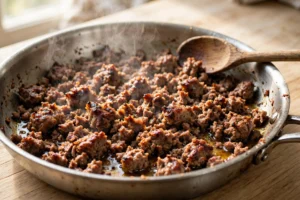
- Add the onion and carrots. Cook 5 to 6 minutes, scraping up the browned bits, until softened.

- Stir in the garlic, tomato paste and flour. Cook 1 minute, stirring constantly.
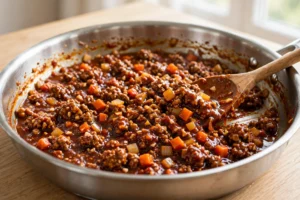
- Add the stock, Worcestershire sauce and thyme. Simmer 10 to 12 minutes until the gravy is thick enough that a spoon leaves a slow-closing trail. Stir in the peas, season, and simmer 1 more minute. Remove from the heat.
- Meanwhile, boil the potatoes in salted water for 15 to 18 minutes until completely tender. Drain well.
- Steam the drained potatoes dry in the hot pot for 2 to 3 minutes. Mash with the butter and warm milk until fluffy. Season with salt.
- Heat the oven to 400°F. Spread the hot filling in a baking dish, top with the mash, seal to the edges, and rough the surface with a fork. Add the cheddar if using.
- Bake 20 to 25 minutes, until the peaks are golden and the gravy bubbles at the edges.
- Rest 10 minutes before serving.

Notes
| Nutrient | Amount |
|---|---|
| Calories | 480 kcal |
| Total Fat | 24 g |
| Saturated Fat | 11 g |
| Cholesterol | 85 mg |
| Sodium | 480 mg |
| Total Carbs | 38 g |
| Sugars | 6 g |
| Fiber | 5 g |
| Protein | 26 g |
Per 1 serving (one sixth of the pie). Values are estimates and vary based on exact ingredients and serving size used. Values are calculated with the excess lamb fat drained after browning and without the optional cheddar.
Frequently Asked Questions
What is the difference between shepherd’s pie and cottage pie?
The filling meat. Shepherd’s pie is made with lamb (shepherds herd sheep, that is the memory trick), and cottage pie is made with beef. Everything else, the vegetables, the gravy and the mash topping, follows the same method, so you can swap the meat in this recipe and keep every other step identical.
Why is my shepherd’s pie runny?
Almost always one of two reasons: the gravy went under the mash before it was thick enough, or the potatoes were mashed wet. Simmer the filling until a spoon leaves a slow-closing trail, steam the boiled potatoes dry for 2 to 3 minutes before mashing, and give the baked pie its full 10 minute rest; it firms up as it stands.
Can I make shepherd’s pie ahead of time?
Yes, it is a great make-ahead dinner. Assemble the pie completely, cover it and refrigerate for up to 24 hours. Bake from the fridge at 400°F with about 10 extra minutes, until the gravy bubbles at the edges and the top is golden.
Can I freeze shepherd’s pie?
Yes, baked or unbaked, for up to 3 months if wrapped tightly. Thaw overnight in the refrigerator and bake at 375°F until the center bubbles, about 30 to 40 minutes for a full dish. The mash topping holds up well because it starts dry.
Which potatoes are best for the topping?
Floury, starchy potatoes such as Russets or Maris Piper. They mash light and fluffy and absorb butter and milk without turning gluey. Waxy potatoes make a denser, heavier topping that can feel pasty, so save those for salads.
Can I use ground beef or turkey instead of lamb?
Beef works perfectly and makes cottage pie, as explained above. Ground turkey or chicken also works, but they are leaner and milder, so brown them well, keep the tablespoon of oil in the pan, and taste the gravy at the end; you may want an extra splash of Worcestershire sauce for depth.
How do I know the pie is fully cooked and safe?
The lamb filling simmers on the stove until fully cooked (ground meat is safe at 160°F), and the bake is done when the gravy bubbles at the edges of the dish and the top is golden. Leftovers should always be reheated until steaming hot throughout, about 165°F.
What are the ingredients for a shepherd’s pie?
For the filling, you need 700 g ground lamb, 1 large onion, 2 medium carrots, 2 cloves garlic, 2 tablespoons tomato paste, 1 tablespoon Worcestershire sauce, 1 teaspoon dried thyme, 250 ml beef stock, 150 g frozen peas, 1 tablespoon flour, and salt and black pepper. For the mash topping, you need 1 kg floury potatoes, 50 g butter, 80 ml warm milk, salt, and 50 g grated cheddar if you want a cheesy top. That is everything for 6 generous servings, with no extra ingredients needed.
What is the secret to a good shepherd’s pie?
The secret is thickness and dryness, not extra ingredients. Simmer the lamb gravy until a spoon dragged across the pan leaves a trail that closes slowly, and steam the boiled potatoes dry for 2 to 3 minutes before mashing so the topping stays fluffy. Brown the lamb hard for deep flavor, then rest the baked pie for 10 minutes before serving so the filling firms up and every spoonful holds together.
What are the ingredients in the original Shepherd’s pie?
The original shepherd’s pie is a traditional lamb dish, so lamb is the defining ingredient, with onion, carrots, peas, and a mashed potato topping. This recipe follows that tradition with 700 g ground lamb, beef stock, tomato paste, Worcestershire sauce, and thyme for the gravy, plus floury potatoes, butter, and warm milk for the mash. Ground beef makes the same dish a cottage pie, not a shepherd’s pie.
How is shepherd’s pie made?
Brown 700 g ground lamb for 8 to 10 minutes, then cook onion and carrots for 5 to 6 minutes and stir in garlic, tomato paste, and flour. Add beef stock, Worcestershire sauce, and thyme, simmer 10 to 12 minutes until the gravy is thick, then stir in the peas and simmer 1 more minute. While the filling simmers, boil 1 kg potatoes for 15 to 18 minutes, steam them dry, and mash with butter and warm milk, then spread the mash over the filling, fork ridge the top, and bake at 400°F for 20 to 25 minutes. Rest the pie for 10 minutes before serving.
What’s the secret ingredient in shepherd’s pie?
In this recipe, the small amount that makes the biggest difference is the tablespoon of Worcestershire sauce stirred into the gravy with the beef stock. It adds a savory, slightly tangy depth that makes the lamb gravy taste richer without standing out on its own. Tomato paste cooked in the pan for a minute adds a second layer of depth, so the gravy tastes slow cooked even though it simmers for only 10 to 12 minutes.
A Dish That Brings Everyone to the Table
That is shepherd’s pie the way it should be: a rich, thick lamb gravy that stays where it belongs, vegetables soft in every bite, and a golden, fluffy mash with crisp little peaks on top. No soup, no sliding, no sad puddle on the plate. Just a dish that disappears fast and gets requested again.
This pie is one of the savory stars of my Types of Pie guide, where I walk through the whole pie family from sweet fruit pies to hearty meat pies like this one. If pies are your thing, that guide is your map.
Make it on the next cold evening and watch what happens at the table. Tag me on Instagram @viralfoodhacks706 when you make yours; I want to see those golden peaks. And save this shepherd’s pie to Pinterest so the recipe is waiting for you the next time comfort food calls.