

I made brownie cookies for the first time after seeing a photo online of those gorgeous crinkly, shiny-topped cookies that look exactly like the top of a perfect brownie. Mine came out looking nothing like that. They were flat, dull, slightly greasy, and had no crinkle whatsoever. Tasty enough, but not what I came for.
The issue was that I had beaten the eggs and sugar for about 30 seconds before adding the chocolate. The recipe said “beat until pale and thick.” I figured that meant roughly combined, pale enough.
It does not. Beating the eggs and sugar together properly for a full 3 to 4 minutes creates a foam that traps air inside the batter. When the cookies hit the hot oven, that air expands rapidly, pushing the surface of the cookie upward and then causing it to crack and crinkle as the structure sets. Without that foam, the batter is too dense to rise and crack. The surface stays flat, smooth, and ordinary looking.
This Brownie Cookies Recipe is built around getting that beating step exactly right, plus the two other things that separate a genuinely fudgy interior from one that is just a thin, crunchy chocolate wafer.
Why This Is the Best Brownie Cookies Recipe
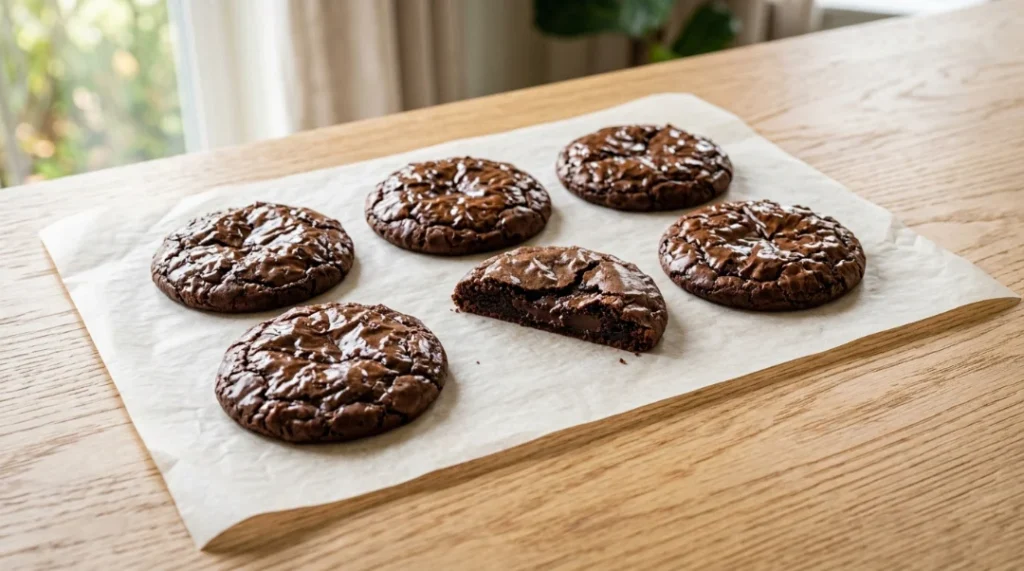
The crinkle top is explained, not just promised. Most brownie cookie recipes include the crinkle top in the photo and cross their fingers. This one explains exactly what creates it and what prevents it, so it works every single time.
Melted dark chocolate, not cocoa powder. The fat in real chocolate produces the fudgy, dense interior that makes a brownie cookie different from a regular chocolate cookie. Cocoa powder alone cannot replicate this.
A full troubleshooting guide included. Flat cookies, no crinkle, spreading too much, all three problems have specific causes and specific fixes that are covered properly here.
Genuinely fudgy center, not cakey. The low flour ratio and high chocolate content produce a center that is closer to the interior of a fudge brownie than a chocolate cake. This is the texture that makes people eat three before they realize what happened.
A Quick History, Where Brownie Cookies Come From
The brownie itself has been part of American baking since the late 1800s, though its exact origin is debated. Chocolate has been consumed in the Americas for thousands of years, with the cacao plant native to South America and Central America. According to Britannica’s entry on chocolate, the transformation of cacao from a bitter ceremonial drink into the sweetened confection we know today happened largely through European influence in the 16th and 17th centuries.
The brownie cookie, sometimes called a brookie, is a more recent invention born from the entirely reasonable desire to have a brownie that is portable, individually sized, and bakes in less than 25 minutes. It takes everything that makes a brownie great, the dense chocolate interior, the shiny crinkled surface, the fudgy bite, and puts it into a form you can eat without a fork or a plate.
Why Brownie Cookies Look and Taste the Way They Do
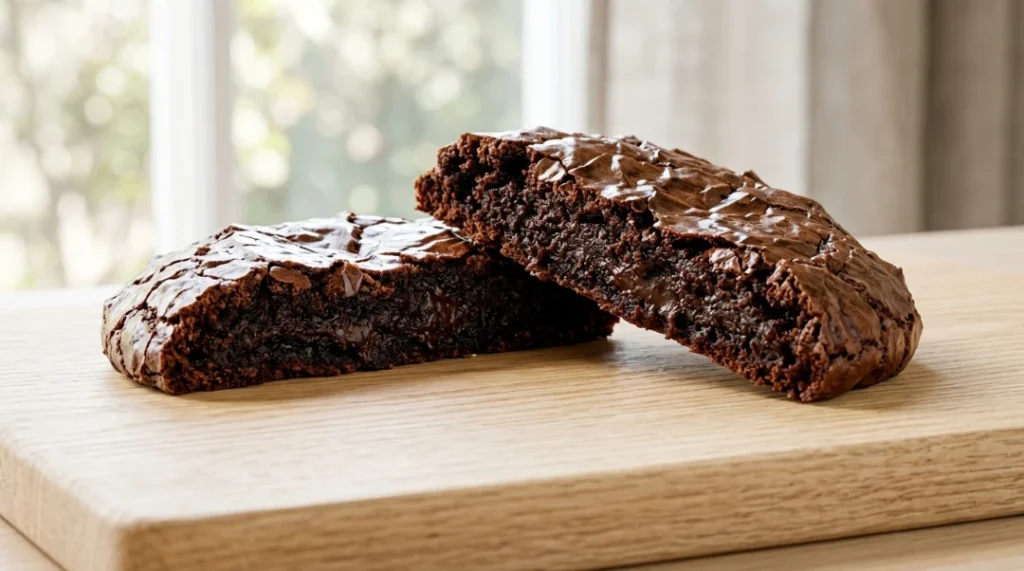
Here is what is happening inside the batter, explained in plain terms every home baker can use.
Why beating the eggs and sugar creates the crinkle top. When you beat eggs and sugar together for several minutes, the mixture becomes thick, pale, and ribbon-like. This happens because the beating action incorporates air into the egg proteins, creating a foam structure similar to a very loose meringue. When this foam-filled batter goes into the oven, the trapped air expands rapidly from the heat. The surface of the cookie rises quickly, and then as the chocolate sets and the structure firms up, the expanded surface folds and cracks into those characteristic wrinkles. Without the foam, the batter is too dense and heavy to rise and crack. It simply spreads flat and stays smooth. The beating step is not optional and 30 seconds is not long enough. Three to four minutes at high speed is the minimum.
Why melted chocolate produces a fudgier cookie than cocoa powder. Dark chocolate contains roughly 50 percent cocoa butter, which is pure fat. When melted and folded into cookie batter, that fat coats the flour proteins and prevents them from forming as much gluten during baking. Less gluten means a more tender, denser, less chewy structure. Cocoa powder contains almost no fat on its own. A cookie made only with cocoa powder relies on butter as the only fat source, which produces a chewier, drier texture. The combination of real melted chocolate plus butter is what creates the fudgy brownie-like interior that defines a great brownie cookie. For more on chocolate’s role in baked goods, King Arthur Baking’s brownie cookie guide goes into this in useful practical detail.
Why brownie cookies spread more than regular cookies. Standard chocolate chip cookies have enough flour to hold their shape during baking. Brownie cookie batter has significantly less flour relative to the amount of liquid and fat, because more flour would make the interior cakey rather than fudgy. This lower flour content means the batter spreads more freely in the oven before the structure sets. This is by design, not a mistake. The spread is what creates the thin, crispy edge that contrasts with the fudgy center. However, it also means that warm or loose batter will spread too much before setting, which is why the temperature of the chocolate when it is added matters more in this recipe than in almost any other cookie.
Why pulling them out early is even more important than with regular cookies. Brownie cookies are done when the edges look set and the tops are shiny and crinkled, but the centers look soft and slightly underdone. If the centers look set in the oven, the cookies will be dry and overcooked once cooled. The fudgy interior sets as the cookies cool on the pan, the same carryover cooking principle that applies to our Chocolate Chip Cookies Recipe. Pull them too soon and they will not hold together. Pull them at the right moment, when the edges are firm but the center still has a slight wobble, and they will set into exactly the fudgy texture you are after.
What You Need
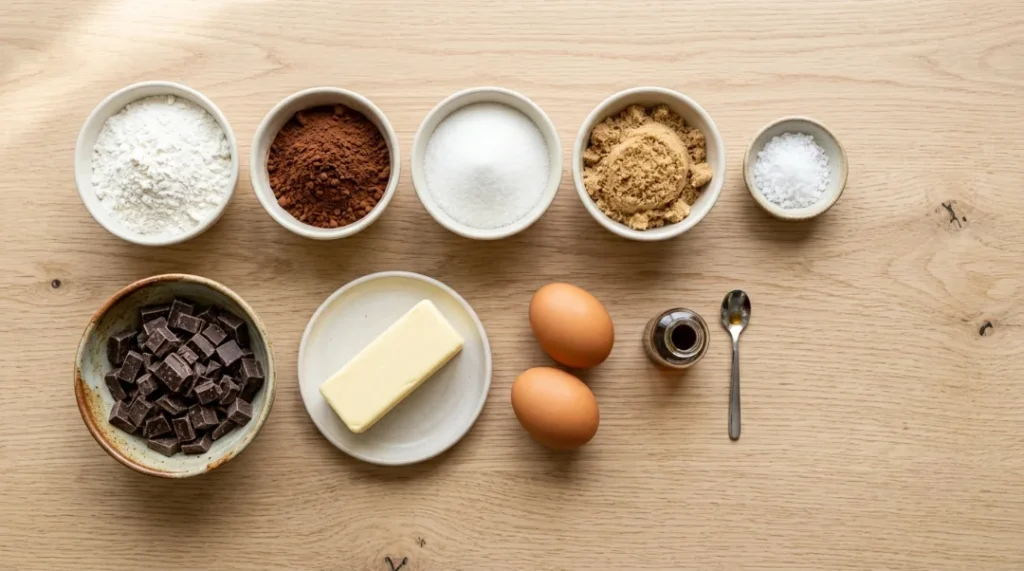
For the Brownie Cookies
- 200g (7 oz) good quality dark chocolate, 60 to 70 percent cacao, roughly chopped
- 3 tbsp (45g) unsalted butter
- 2 large eggs, room temperature
- 1 large egg yolk, room temperature
- ¾ cup (150g) granulated sugar
- ¼ cup (50g) light brown sugar
- 1 tsp pure vanilla extract
- ½ cup (65g) all-purpose flour
- 2 tbsp unsweetened cocoa powder (for extra depth)
- ½ tsp baking powder
- ¼ tsp fine sea salt
- ½ cup (85g) chocolate chips or chunks (optional, for extra chocolate pockets)
- Flaky sea salt for topping (optional but highly recommended)
Equipment: Double boiler or microwave-safe bowl, stand mixer or hand mixer, baking sheets, parchment paper, cookie scoop, wire rack Makes: 16 to 18 cookies
How to Make the Best Brownie Cookies Recipe, Step by Step
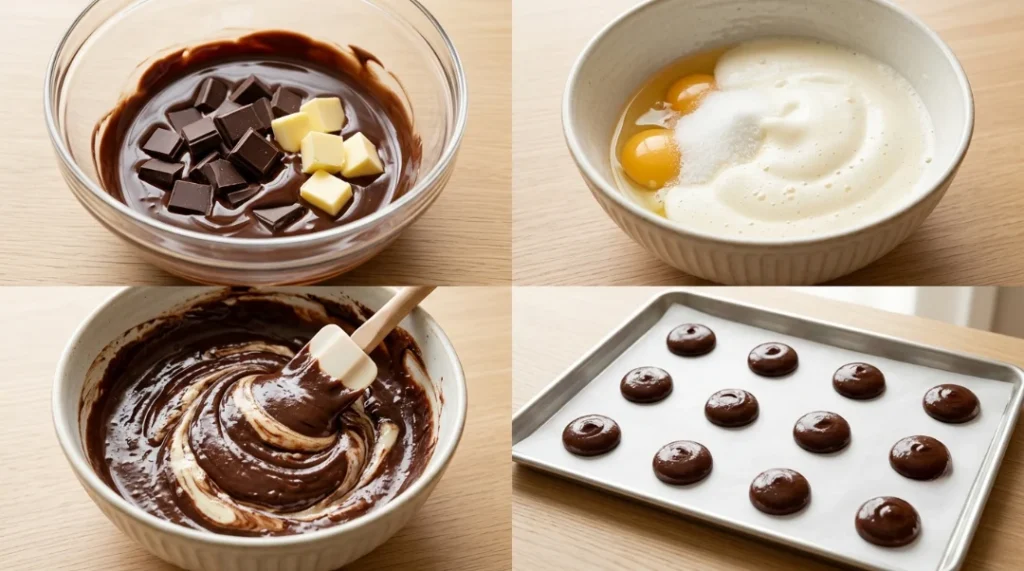
Melt the Chocolate and Butter
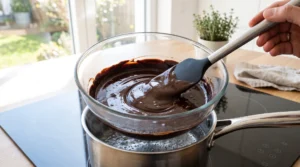
Go Low and Slow: Combine the chopped dark chocolate and butter in a heatproof bowl. Melt together using a double boiler over gently simmering water, stirring until completely smooth, or microwave in 20-second bursts at 50 percent power, stirring between each interval. Remove from heat and let the mixture cool for 10 full minutes. The chocolate must be warm but not hot when it meets the eggs. Hot chocolate scrambles the eggs and hot chocolate added to beaten eggs deflates the foam. Test the temperature by touching the bowl, it should feel pleasantly warm but not hot.
Beat the Eggs and Sugars
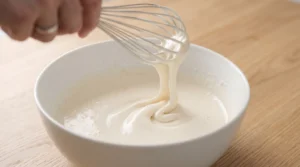
This Step Makes the Crinkle Top: In a large bowl, combine the room temperature eggs, egg yolk, granulated sugar, brown sugar, and vanilla extract. Beat with a stand mixer or hand mixer on high speed for a full 3 to 4 minutes until the mixture has doubled in volume, turned very pale and creamy, and falls in thick, slow ribbons from the beater when lifted. Set a timer for this step rather than guessing. Under-beating is the single most common reason brownie cookies come out flat without a crinkle. The pale, thick ribbon stage is the correct endpoint, not just combined.
Add the Chocolate
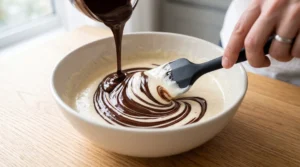
Fold Gently to Keep the Foam: Pour the cooled chocolate mixture into the beaten egg mixture. Using a rubber spatula, fold together with gentle, sweeping motions from the bottom of the bowl upward. Stop as soon as the chocolate is fully incorporated with no streaks remaining. Do not stir vigorously or beat, since aggressive mixing at this stage knocks out the foam you just spent 4 minutes building.
Add the Dry Ingredients
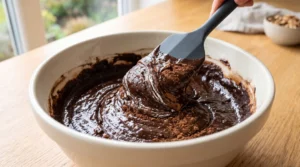
Fold Until Just Combined: Sift the flour, cocoa powder, baking powder, and salt together into the chocolate batter. Fold gently with the spatula until no dry flour streaks remain. Fold in the chocolate chips if using. The batter will look quite loose and shiny, almost like thick brownie batter. This is correct.
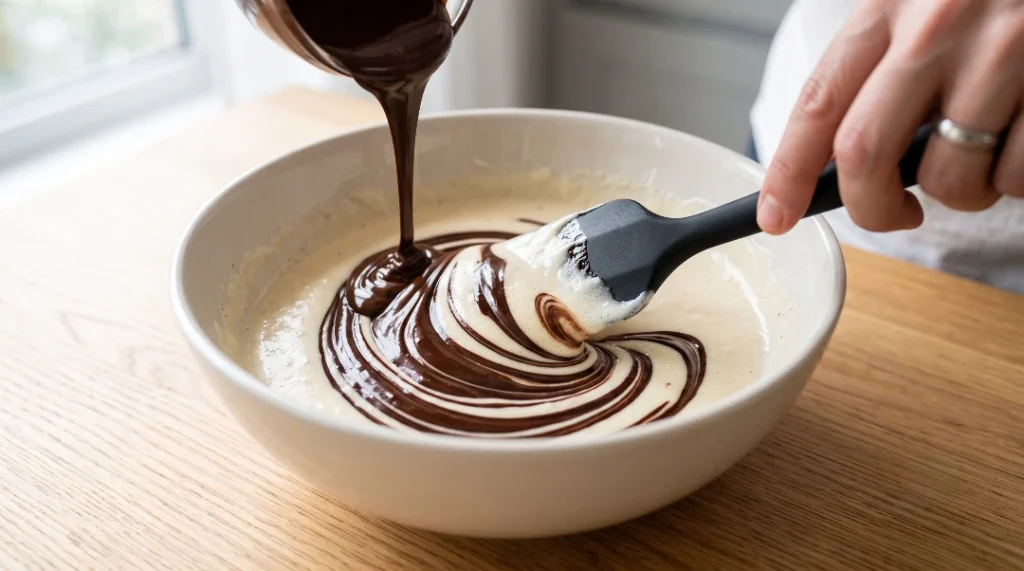
Rest the Batter
10 Minutes Makes It Scoopable: Let the batter rest at room temperature for 10 minutes. During this time it thickens slightly as the chocolate sets further, making it much easier to scoop into neat rounds without spreading before it reaches the oven. If the kitchen is warm and the batter still seems very loose after 10 minutes, refrigerate for an additional 10 to 15 minutes.
Scoop and Bake
Space Generously: Preheat the oven to 350°F (175°C). Line baking sheets with parchment paper. Scoop the batter into rounds of about 1.5 tablespoons each using a cookie scoop, spacing them at least 2.5 inches apart since these cookies spread more than standard cookie dough. Sprinkle a pinch of flaky sea salt over each cookie before baking.
Watch for the Crinkle, Not the Clock: Bake for 10 to 12 minutes. The cookies are done when the edges look set and slightly matte, the tops have developed their crinkly, shiny surface, and the centers still look slightly soft and glossy when you peek at them. Start checking at the 10-minute mark. The center should still have a very slight wobble when you gently shake the pan.
Cool on the Pan
Do Not Rush This Step: Remove the baking sheet from the oven and let the cookies cool completely on the pan for at least 10 minutes before attempting to move them. Brownie cookies are very fragile when hot and will fall apart if handled too soon. They firm up significantly as they cool and the chocolate re-sets.
Serve
Best Within the First Hour: Transfer to a serving plate once fully set. These brownie cookies are at their absolute best eaten within an hour of baking, when the exterior is still slightly crisp and the interior is at its most fudgy. They are still excellent at room temperature for up to 3 days but the crinkle top softens slightly by day two.
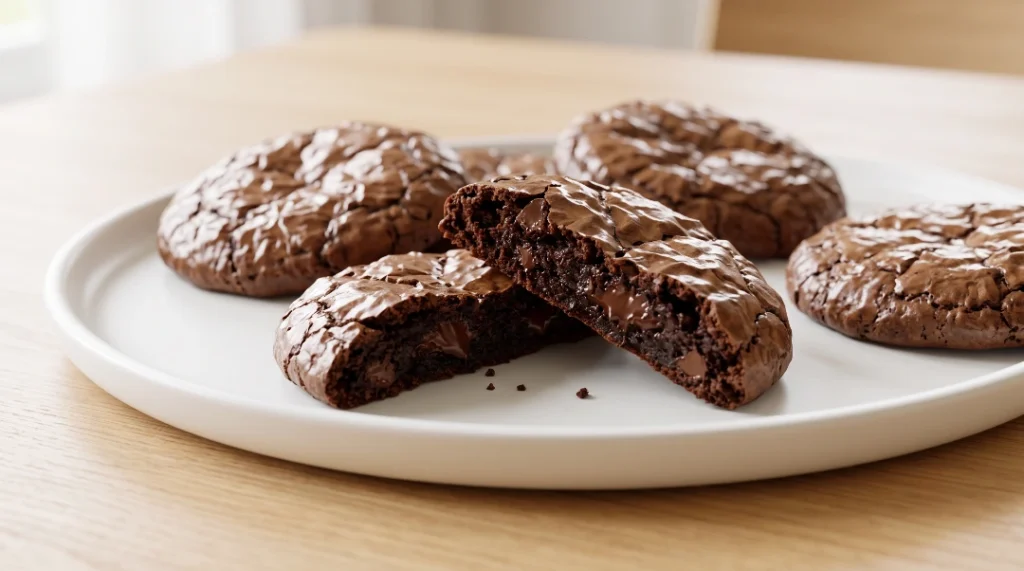
J.ZaiB’s Expert Touch
Quality of chocolate is everything in this recipe. In a recipe where chocolate is the primary ingredient and the only real flavor, the quality of the chocolate determines the quality of the cookie. A bar of good dark chocolate between 60 and 70 percent cacao produces a noticeably more complex, less sweet, more intensely chocolatey result than standard chocolate chips or low-quality baking chocolate. Buy the best chocolate bar you can reasonably afford for this recipe.
The egg and sugar beating stage is the most important step. I cannot overstate this enough. When I first made brownie cookies, I beat for about 90 seconds and got flat, ordinary looking chocolate cookies. When I beat for a full 4 minutes, the batter turned pale, thick, and ribbon-like, and the cookies came out with beautiful crinkled shiny tops. The difference is entirely in this step. Set a timer. Do not stop early.
Slightly underbake rather than overbake. A brownie cookie that looks done in the oven will be dry and disappointing once cooled. A brownie cookie that looks slightly underdone in the center at the oven door will be perfectly fudgy once it sets on the pan. When in doubt, pull them out a minute early rather than a minute late.
Add a second layer of chocolate. Folding in chocolate chips or roughly chopped chocolate pieces alongside the base batter creates pockets of melted chocolate within the already chocolate batter. These pockets stay molten longer than the surrounding cookie and produce little surprises of intense chocolate in each bite, similar to how chopped chocolate works in our Chocolate Chip Cookies Recipe.
Do not skip the rest before scooping. Ten minutes of rest time allows the batter to thicken enough to hold its round shape on the pan. Scooping immediately produces cookies that spread into thin puddles before the oven heat can set the edges. The rest is not optional.
Variations to Try
Sea Salt Brownie Cookies: This is the recipe as written. The flaky sea salt on top is already included but worth emphasizing as a non-negotiable. The salt contrast against the deeply sweet, bitter chocolate is what makes these cookies memorable rather than simply good.
Espresso Brownie Cookies: Add 1 teaspoon of instant espresso powder to the melted chocolate and butter mixture before adding it to the eggs. Espresso does not make the cookies taste like coffee. It amplifies the chocolate flavor significantly, making it taste darker and more intense without adding a coffee note. The same technique behind the coffee addition in our Chocolate Fudge Cake Recipe.
Peppermint Brownie Cookies: Add ½ teaspoon of pure peppermint extract to the egg and sugar mixture. Fold in white chocolate chips instead of dark chocolate chips at the end. Top with a small piece of crushed candy cane pressed into the warm cookie as it comes out of the oven. A genuinely excellent holiday variation.
Brownie Cookies with Nuts: Fold ½ cup of roughly chopped toasted walnuts or pecans into the batter alongside the chocolate chips. The slight bitterness of the toasted nuts cuts through the richness of the chocolate in a way that makes the cookies taste more complex and balanced.
Triple Chocolate Brownie Cookies: Use a mix of dark, milk, and white chocolate chips folded into the base batter. Each type of chocolate melts at a slightly different rate in the oven, creating layers of different chocolate intensity in every bite.
Serving Ideas
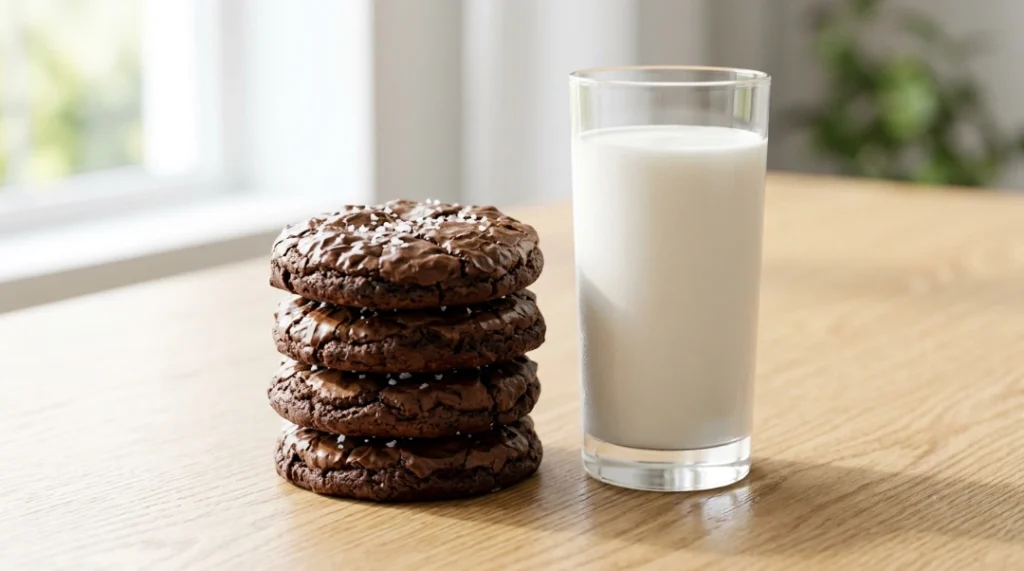
After dinner dessert: Two brownie cookies slightly warm from the oven with a small scoop of vanilla ice cream. The cold ice cream against the still-warm fudgy cookie is one of the best simple dessert combinations possible.
Dessert table: Arrange on a tiered stand alongside our Chocolate Chip Cookies Recipe for a full chocolate cookie spread. The contrast between the two styles, fudgy and crinkled versus golden and chewy, gives everyone a choice.
Gifting: Stack 6 to 8 brownie cookies in a clear cellophane bag tied with ribbon. The shiny crinkled tops look bakery-professional and photograph beautifully. Far more impressive than most homemade gifts despite requiring no special equipment.
Holiday spread: Serve alongside our Funfetti Cake Recipe for a celebration dessert table that covers both a showstopper cake and an elegant small bite people can eat standing up.
Storage Guide
Room temperature: Store in an airtight container for up to 3 days. Place a sheet of parchment paper between layers to prevent sticking. The crinkle top softens slightly by day two but the fudgy interior remains excellent.
Freezer, baked: Stack cooled cookies between parchment paper layers in a sealed freezer bag. Freeze for up to 2 months. Thaw at room temperature for 30 minutes or warm in a 300°F oven for 4 to 5 minutes to restore the slightly crisp edge.
Freezer, raw batter: Scoop the rested batter into rounds and freeze on a parchment-lined tray until solid, then transfer to a sealed bag. Freeze for up to 2 months. Bake from frozen at 350°F, adding 2 to 3 extra minutes to the baking time.
Do not refrigerate baked cookies: Refrigerating baked brownie cookies dries them out quickly and hardens the texture significantly. Room temperature storage in an airtight container is always better.
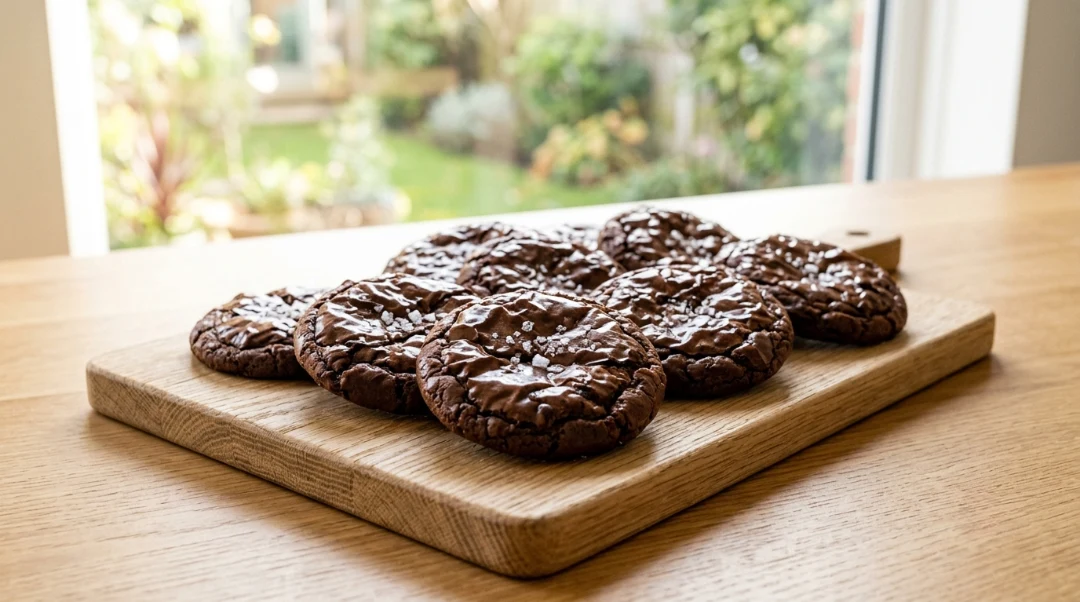
Best Brownie Cookies Recipe
Ingredients
Equipment
Method
- Low Heat, Then Cool Completely: Combine the chopped dark chocolate and butter in a heatproof bowl. Melt together over a double boiler or in the microwave in 20-second bursts at 50 percent power, stirring between each interval until completely smooth. Remove from heat and let the mixture cool for a full 10 minutes before using. The chocolate must feel pleasantly warm but not hot when it touches the eggs. Hot chocolate scrambles the eggs and deflates the foam you are about to build.

- Beat Until Pale, Thick, and Ribbony: Place the room temperature eggs, egg yolk, both sugars, and vanilla extract in a large bowl. Beat with a stand mixer or hand mixer on high speed for a full 3 to 4 minutes. Set a timer and do not stop early. The mixture is ready when it has doubled in volume, turned very pale and creamy, and falls in thick, slow ribbons from the lifted beater. This foam is what creates the crinkle top, and under-beating is the number one reason brownie cookies come out flat.
- Gentle Strokes to Keep the Foam: Pour the cooled chocolate mixture into the beaten egg mixture. Fold together with a rubber spatula using slow, sweeping motions from the bottom of the bowl upward. Stop the moment no chocolate streaks remain. Do not stir vigorously or the foam collapses
- Fold Until Just Combined: Sift the flour, cocoa powder, baking powder, and salt directly into the chocolate batter. Fold gently with the spatula until no dry flour streaks remain. Fold in the chocolate chips if using. The batter will look loose and shiny, almost like pourable brownie batter. This is correct.
- 10 Minutes to Firm Up: Let the batter rest at room temperature for 10 minutes. It thickens slightly as the chocolate continues to set, making it much easier to scoop into neat rounds. If the kitchen is very warm and the batter still looks too loose, refrigerate for an additional 10 to 15 minutes before scooping.
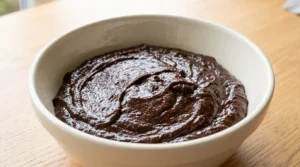
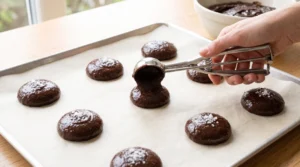
- Space Well, Watch Carefully: Preheat the oven to 350°F (175°C). Line baking sheets with parchment. Scoop the rested batter into rounds of about 1.5 tablespoons each, spacing them at least 2.5 inches apart. Sprinkle a small pinch of flaky sea salt on top of each cookie. Bake for 10 to 12 minutes until the edges look set and the tops are shiny and crinkled but the centers still look soft and slightly glossy. Start checking at 10 minutes.
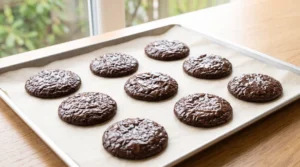
- Wait the Full 10 Minutes: Remove from the oven and leave the cookies on the pan for at least 10 full minutes before moving. Brownie cookies are very fragile when hot and will fall apart if transferred too soon. They firm up completely as the chocolate re-sets during cooling.
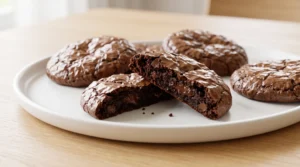
- Best Within the First Hour: Transfer carefully to a serving plate. These brownie cookies are at their best eaten within an hour of baking when the edges are still slightly crisp and the centers are at their most fudgy.
Notes
- Quality chocolate makes a real difference here. This recipe has very few ingredients and chocolate is the primary flavor. A good 60 to 70 percent dark chocolate bar produces a noticeably better cookie than low-quality baking chips.
- Beat the eggs for the full 3 to 4 minutes. This is the single most important step. Under-beating produces flat, crinkle-free cookies. Set a timer and do not stop early.
- Cool the chocolate before adding to eggs. Hot chocolate scrambles eggs and collapses the foam. The bowl should feel warm but comfortable to touch, not hot.
- Rest the batter before scooping. 10 minutes of rest firms the batter enough to hold its shape. Skipping this step causes excessive spreading.
- Pull out before they look done. Centers should still look soft and slightly glossy when you remove from the oven. They firm up to fudgy perfection as they cool on the pan.
- Cool completely on the pan. At least 10 minutes before moving. These cookies are very fragile when hot.
- Do not refrigerate baked cookies. This dries them out. Store at room temperature in an airtight container up to 3 days.
- Freeze raw scooped batter for up to 2 months. Bake from frozen, adding 2 to 3 extra minutes.
- UK/Australia notes: “All-purpose flour” equals plain flour. “Baking powder” is the same term. “Flaky sea salt” is available as Maldon or similar.
- Nutrition values are estimates and vary based on chocolate percentage and whether chocolate chips are included.
NUTRITION
Per 1 cookie, based on 17 cookies
| Nutrient | Amount |
|---|---|
| Calories | ~165 kcal |
| Total Fat | 8g |
| Saturated Fat | 5g |
| Cholesterol | 40mg |
| Sodium | 65mg |
| Total Carbs | 22g |
| Sugars | 16g |
| Fiber | 1g |
| Protein | 2g |
Note: Values are estimates and vary based on chocolate percentage used and whether chocolate chips are added.
Frequently Asked Questions
Why did my brownie cookies come out flat with no crinkle top?
The eggs and sugar were not beaten long enough. This is the single most common cause of flat, crinkle-free brownie cookies. The mixture needs to beat at high speed for a full 3 to 4 minutes until it is very pale, thick, and falls in slow ribbons from the beater. A 30-second or 1-minute beat is not sufficient to build the foam structure that creates the crinkle. Also check that the melted chocolate was fully cooled before adding it, since hot chocolate deflates the foam immediately on contact.
Why are my brownie cookies spreading too much?
The batter was too warm when scooped, or the baking sheet was still warm from a previous batch. Let the batter rest for 10 minutes after mixing to allow it to firm up before scooping. If the kitchen is warm, refrigerate the batter for an additional 10 to 15 minutes. Always use a completely cooled baking sheet for each batch.
Can I use cocoa powder instead of melted chocolate?
You can make a chocolate cookie with only cocoa powder, but it will not produce the same fudgy, dense, brownie-like interior. Melted dark chocolate contains cocoa butter fat that is essential for the characteristic brownie cookie texture. Recipes that use only cocoa powder produce a chewier, less fudgy result. This recipe uses both melted chocolate and a small amount of cocoa powder for the best of both.
How do I know when brownie cookies are done?
The edges should look set and slightly matte while the center still appears soft, glossy, and slightly underdone. The tops should have developed their characteristic crinkled, shiny surface. A gentle shake of the pan should produce a very slight wobble in the center cookies. If the centers look fully set and matte in the oven, they are already overbaked. Start checking at the 10-minute mark.
Can I chill the brownie cookie batter overnight?
Yes, with one consideration. The batter thickens significantly when chilled and may need 10 to 15 minutes at room temperature before it is soft enough to scoop easily. The overnight chill deepens the chocolate flavor noticeably and is worth doing when you have the time. The crinkle top still forms correctly from chilled batter.
Why do my brownie cookies fall apart when I try to move them off the pan?
They were moved too soon. Brownie cookies are very fragile when hot and need at least 10 minutes of cooling time on the pan before they are firm enough to handle. The chocolate needs time to re-set and the structure to firm up after coming out of the oven. Transfer only once the edges feel set and the cookies no longer look shiny on the surface.
The Cookie That Tastes Like the Best Part of a Brownie
A great Brownie Cookies Recipe delivers everything you love about a brownie in individual, portable, no-utensil-required form. The shiny crinkled top. The fudgy center. The slightly crispy edge. The intense chocolate flavor in every single bite.
Beat the eggs properly. Cool the chocolate before adding it. Pull them out before they look done. Rest them on the pan before moving.
Four habits. One genuinely impressive cookie that people will ask you to make again before they have finished the first one.
Tag us on Instagram @viralfoodhacks706 when yours come out. The crinkle top close-up shot is always the most shared! Save this to Pinterest for the next time someone needs a chocolate fix that a full cake would be too much for.