

For years I ordered mango lassi at every single Indian restaurant I went to. Every time, same story — thick, golden, faintly floral, cardamom barely there but somehow perfect. I tried making it at home three times and got something that tasted like mango yogurt dumped in a glass.
The problem was not the ingredients. It was two things nobody tells you: the cardamom goes in warm milk first, not directly into the blender. And the yogurt absolutely cannot be low-fat.
This Mango Lassi Recipe fixes both. Five minutes, four main ingredients, and the result is genuinely closer to a good Indian restaurant version than anything I managed in those first three attempts. Thick, creamy, cold, with that unmistakable aromatic warmth that makes mango lassi unlike any other drink on earth.
Let’s make it.
Why This Is the Best Mango Lassi Recipe You’ll Try
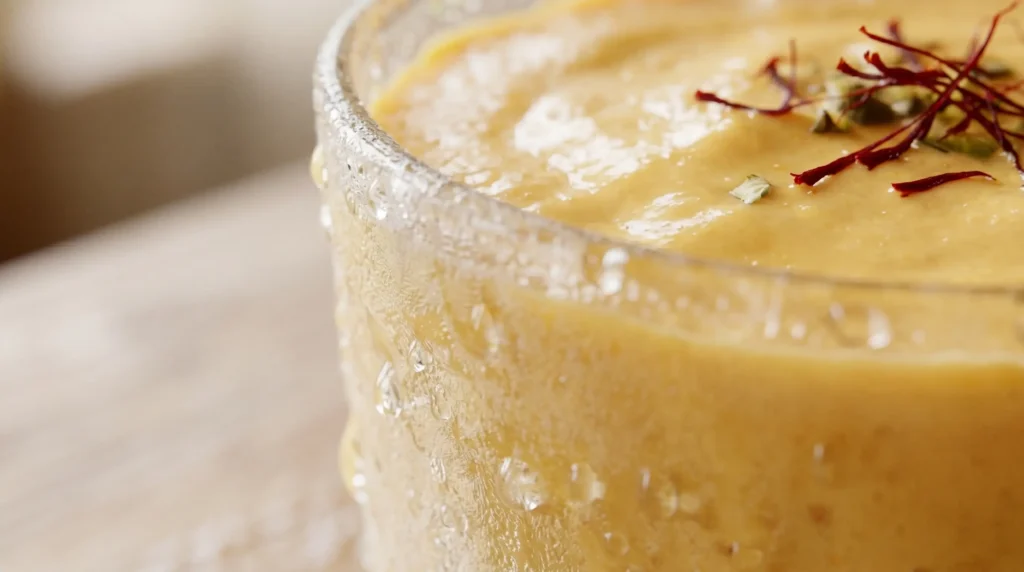
The cardamom bloom trick changes everything. Ground cardamom adds a warm, slightly floral note that gives your lassi an authentic aromatic touch — but only when it is properly released. Dissolving it in warm milk before blending extracts the volatile aroma compounds fully. Direct blending into cold yogurt traps most of those compounds. Same amount of cardamom, completely different flavor impact.
Whole milk yogurt is non-negotiable. Low-fat yogurt produces a thin, almost watery lassi regardless of how long you blend it. The fat in whole milk yogurt is what creates that velvety coating on the palate that makes a good lassi feel like more than just a smoothie.
5 minutes from blender to glass. No cooking, no reduction, no setting time. This is the fastest recipe on the site and one of the most impressive-tasting.
Probiotic-rich — genuinely. Mango lassi’s rise in Western markets aligns with growing demand for functional, probiotic-rich foods — marketed as a healthy, refreshing digestive beverage. Made with proper live-culture yogurt, it delivers real gut health benefits alongside the flavor.
Three consistency levels covered. Thick and spoonable. Classic pourable. Thin and refreshing. Exact ratios for each are below.
Mango Lassi vs Mango Smoothie — What’s Actually Different?
Most Americans assume these are the same drink. They are not — and understanding the difference explains why lassi tastes the way it does.
| Mango Lassi | Mango Smoothie | |
|---|---|---|
| Base | Fermented yogurt (dahi) | Fruit juice or non-dairy milk |
| Flavor | Tangy + sweet + aromatic | Sweet only |
| Texture | Dense, coating, velvety | Light, airy |
| Spices | Cardamom, saffron, rose water | Usually none |
| Origin | Indian subcontinent — 1000+ years | Modern Western |
| Gut benefit | ✅ Probiotic (live cultures) | ❌ Typically none |
| Purpose | Digestive aid + cooling drink | Energy/nutrition drink |
Mango lassi is similar to a smoothie but has key differences — it is traditionally made with yogurt, mango, cardamom, and milk or water, giving it a tangy, slightly savory edge. Fruit smoothies are usually all-sweet, made from fruit and fruit juice, and are often dairy-free.
The fermentation is the key difference. Yogurt’s lactic acid bacteria have transformed the milk proteins and sugars — which is why lassi has that distinctive tang that no smoothie can replicate.
The Science: Why Mango Lassi Is Actually Good for You
This section explains the actual science behind why this mango lassi recipe is more than just a sweet drink.
Lactobacillus — the bacteria that makes yogurt worth drinking. Yogurt is made by fermenting milk with specific bacterial strains, primarily Lactobacillus bulgaricus and Streptococcus thermophilus. These live active cultures — also called probiotics — survive into the finished yogurt and, when consumed, contribute to gut microbiome balance. The presence of probiotics in the yogurt used in mango lassi plays a crucial role in maintaining a balanced gut flora, which is integral to sustaining a healthy metabolism. The critical condition: the yogurt must say “live active cultures” on the label — pasteurized-after-fermentation yogurt has killed most of the beneficial bacteria.
Lactic acid — why lassi is tangy and why that tang matters. During fermentation, Lactobacillus converts lactose (milk sugar) into lactic acid. This lactic acid is what gives yogurt its characteristic tang — and it also partially denatures the milk proteins, causing them to coagulate into that thick, creamy texture. In a lassi, that lactic acid tang balances the sweetness of the mango, creating the flavor equilibrium that makes the drink so distinctive. Yogurt is rich in probiotics and lactic acid, which can help improve skin health — the probiotics promote a healthy gut, which in turn reflects on the skin.
Cardamom’s volatile compounds — why blooming matters. Cardamom contains cineole and terpinyl acetate — volatile aromatic compounds responsible for its floral, eucalyptus-like warmth. These compounds are fat-soluble and heat-activated, meaning they release most fully when exposed to warm fat — in this case, warm milk. Adding cardamom directly to a cold yogurt blender traps most of those compounds. Blooming it in 2 tablespoons of warm milk first releases the full aromatic potential before it ever hits the blender. The flavor difference is significant. For more on cardamom’s chemical profile and culinary applications, Britannica’s guide to cardamom covers its botanical and flavor science in detail.
Why mango lassi is a traditional digestive drink. Within Ayurvedic tradition, lassi is regarded as a seasonally suitable dietary component associated with digestive comfort and internal cooling. The yogurt’s lactic acid soothes the stomach lining after spicy food. The mango adds beta-carotene and natural enzymes. The cardamom has historically been used as a digestive carminative — reducing gas and bloating. This is why mango lassi is traditionally served alongside or after a spicy Indian meal, not as a standalone sweet drink. The science behind lassi’s probiotic properties has been explored in a recent peer-reviewed study published in Probiotics and Antimicrobial Proteins — one of the first comprehensive scientific reviews of lassi’s microbial and functional properties.
The Mango Guide — Which One to Use
For achieving a creamy, smooth texture, prefer Ataulfo or Keitt mangoes since they have minimal fibers.
| Mango Type | Flavor | Fiber | Best For | Where to Find |
|---|---|---|---|---|
| Alphonso | Saffron-rich, intensely sweet | ✅ None | Premium — richest lassi | Indian grocery, Apr–Jun |
| Ataulfo (Honey) | Buttery, honey-sweet | ✅ None | Best everyday choice in USA | Most supermarkets, Mar–Jul |
| Canned Alphonso/Kesar pulp | Sweet, concentrated, consistent | ✅ None | Best year-round option | Indian grocery stores |
| Frozen mango chunks | Good — thaw fully | Varies | Convenient substitute | Freezer section |
| Tommy Atkins | Mild, slightly tart | ❌ Fibrous | Avoid if possible — strain if using | All US supermarkets |
Why Tommy Atkins can make your lassi bitter: Tommy Atkins mango skin contains higher levels of tannins — bitter compounds that can leach into the flesh near the skin during cutting. Always peel deeply and cut away any flesh that sat against the skin. The fibers also create a stringy texture even after blending. If you must use Tommy Atkins, strain through a fine mesh sieve after blending.
What You Need
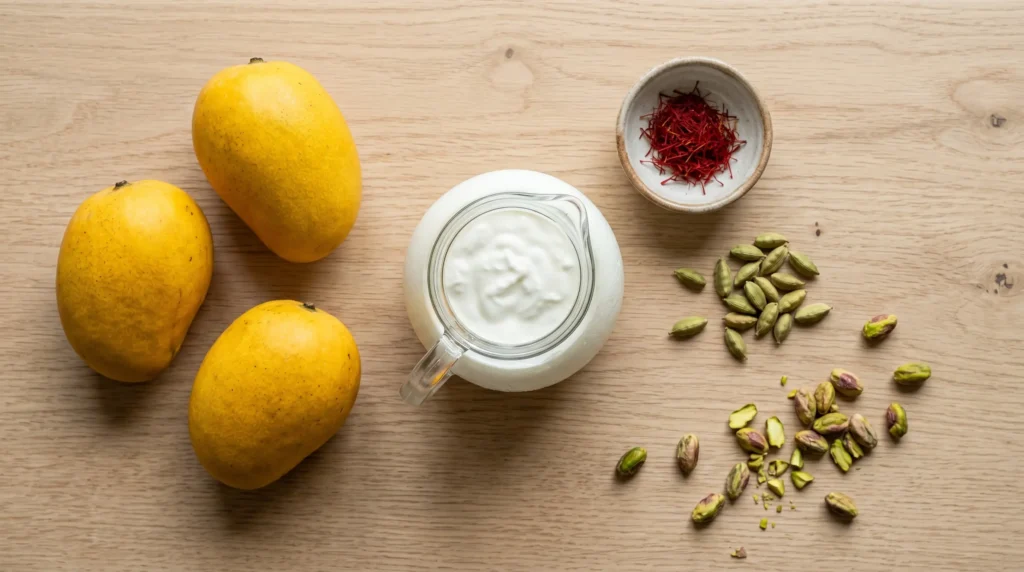
For the Mango Lassi Recipe (Serves 2 large glasses)
- 1 cup (240ml) mango puree — Alphonso/Ataulfo fresh OR canned Kesar/Alphonso pulp
- 1½ cups (360ml) whole milk plain yogurt (full-fat — NOT low-fat or Greek)
- ¼ cup (60ml) cold whole milk (adjust for thickness — see guide below)
- 2–3 tbsp sugar or honey (adjust to mango sweetness)
- ¼ tsp ground cardamom + 2 tbsp warm milk (for blooming — see Step 1)
- Pinch of salt (enhances sweetness)
- 6–8 ice cubes (optional — for chilled version)
Optional Upgrades
- 8–10 saffron threads + 1 tbsp warm milk (bloom separately — restaurant-style)
- 1 tsp rose water (add after blending — delicate floral note)
- 2 tbsp heavy cream (for extra richness)
For Garnish
- Pinch of ground cardamom
- 4–5 saffron threads
- Chopped pistachios
- Fresh mint leaf
Equipment: High-speed blender, small bowl for blooming spices
How to Make the Best Mango Lassi Recipe — Step by Step
Step 1 — Bloom the Cardamom (The Game-Changer)
In a small bowl, combine ground cardamom with 2 tablespoons of warm (not hot) milk. Stir and let sit for 3 minutes. The milk will turn slightly golden and fragrant — that is the volatile aroma compounds releasing into the fat. This bloomed cardamom milk goes into the blender, not dry cardamom powder.
If using saffron: bloom separately in 1 tablespoon of warm milk for 5 minutes until the milk turns golden yellow. Add both bloomed mixtures to the blender.
J.ZaiB micro-tip: The warm milk must be warm — not hot, not cold. Hot milk kills some of the aromatic compounds. Cold milk doesn’t release them. Aim for the temperature of a warm bath — comfortable on your wrist.
Step 2 — Prep the Mango
If using fresh mango: peel, remove flesh, blend separately until completely smooth. If using canned pulp: measure directly — no blending needed. If using frozen mango: thaw completely at room temperature for 30 minutes before blending — cold frozen mango makes the yogurt seize and creates an uneven texture.
J.ZaiB micro-tip: Taste your mango before adding sugar. Alphonso and Ataulfo are often sweet enough that you need very little added sweetener. Tommy Atkins typically needs more sugar. Adjust after tasting.
Step 3 — Blend
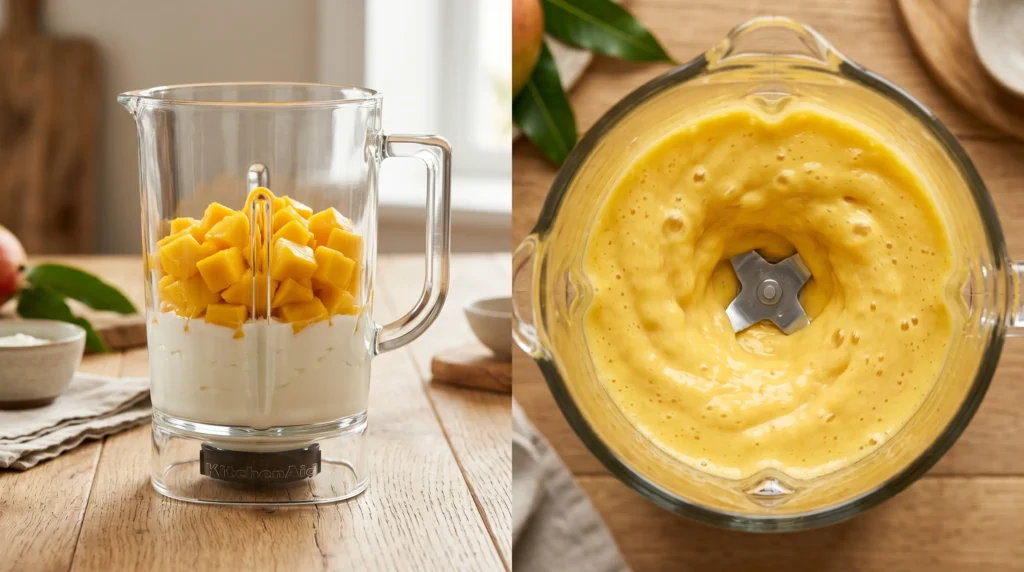
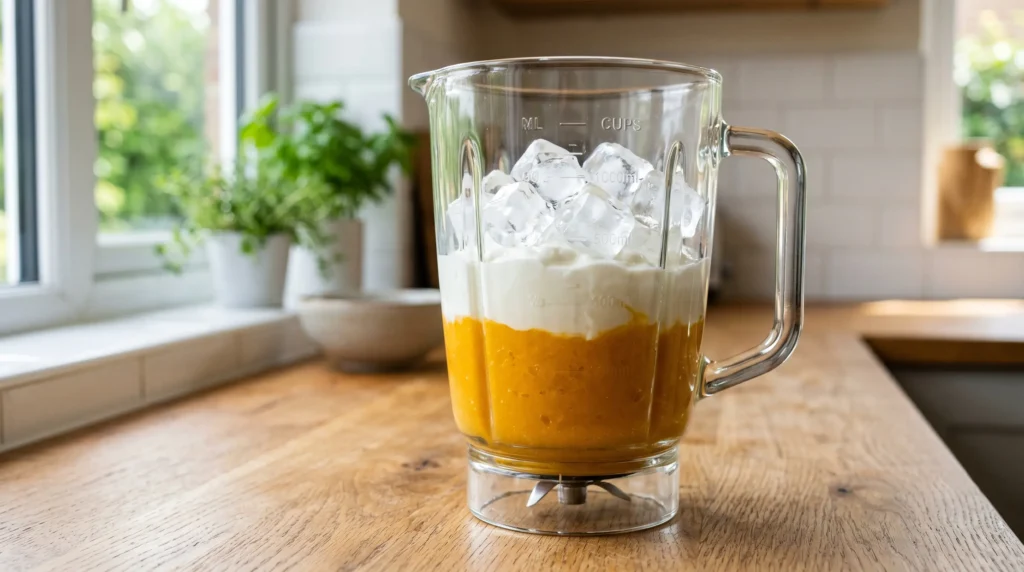
Add mango puree, whole milk yogurt, cold milk, bloomed cardamom milk, sugar, salt, and ice cubes (if using) to a high-speed blender. Blend on high for 45–60 seconds until completely smooth and frothy. If using rose water, add after blending and stir gently — do not blend rose water, it turns bitter when over-processed.
J.ZaiB micro-tip: Start on low speed and gradually increase to high. Starting on high with cold ingredients creates a pressure build-up in the blender that can cause the lid to pop. 10 seconds on low, then high — every time.
Step 4 — Taste and Adjust
Taste before serving. Not sweet enough? Add sugar 1 teaspoon at a time and blend 5 seconds. Too thick? Add cold milk 2 tablespoons at a time. Too thin? Add 2 more tablespoons of yogurt. Not enough mango flavor? Add 2 more tablespoons of mango puree and blend again.
J.ZaiB micro-tip: The first time I made this properly, it still wasn’t quite right — the yogurt was slightly too sour for the mango I used. A teaspoon of honey (not sugar) balanced it immediately. Honey adds sweetness plus a subtle floral note that works beautifully with mango.
Step 5 — Serve
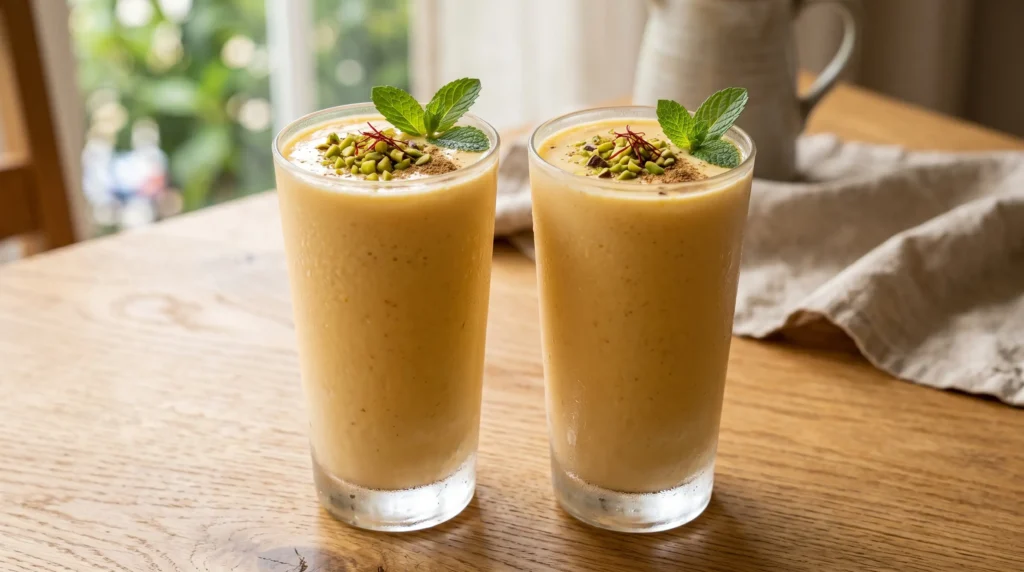
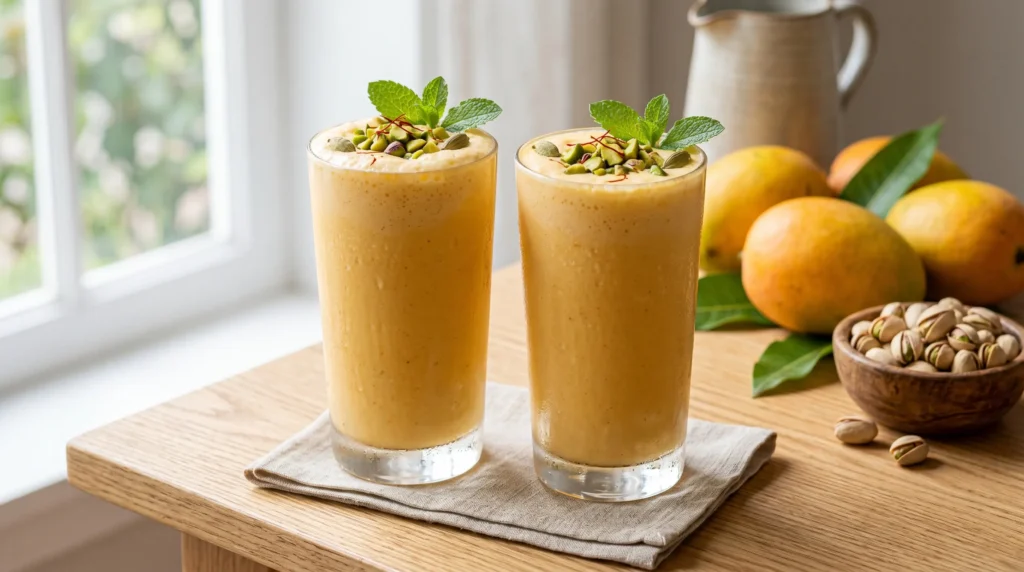
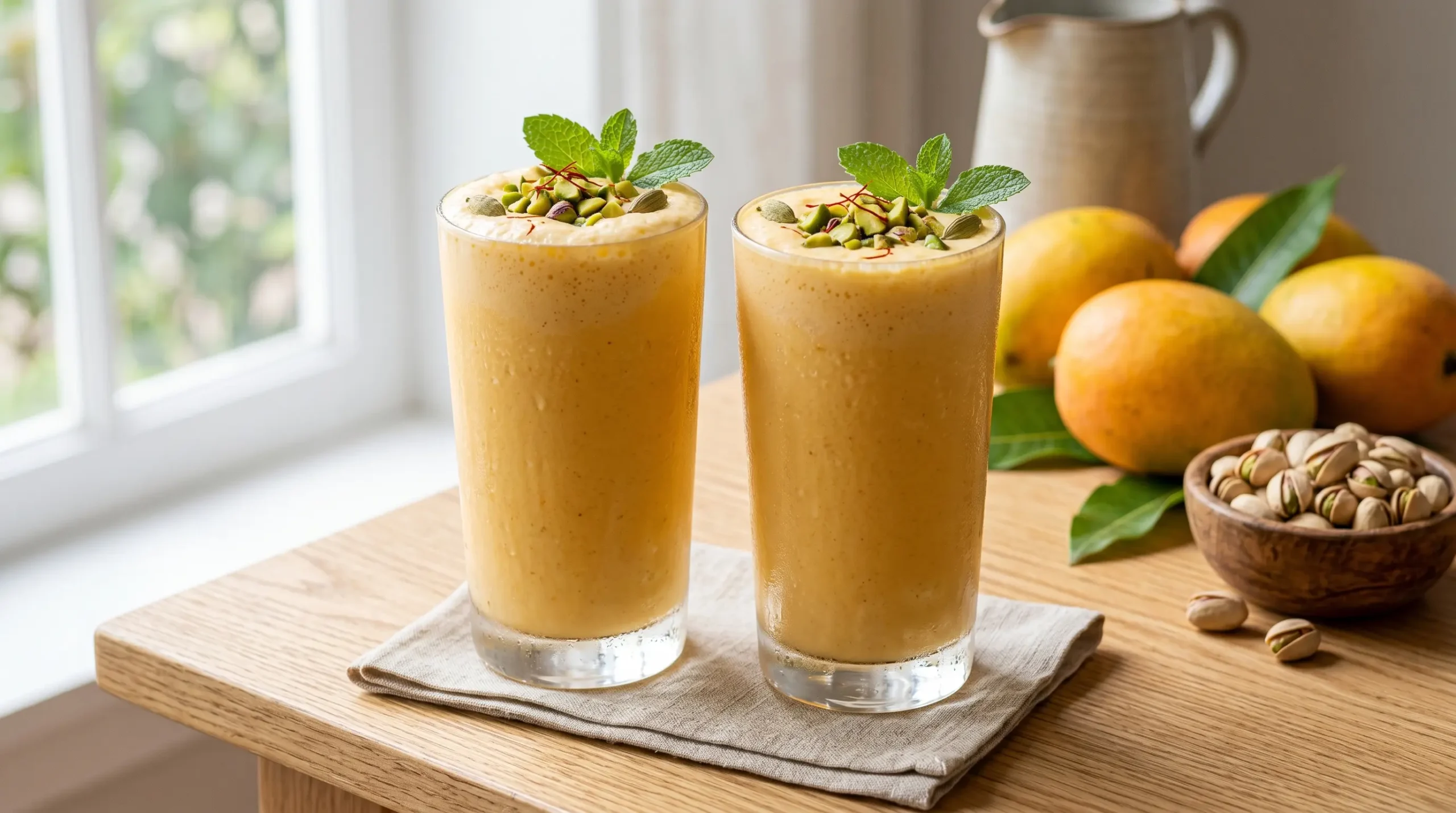
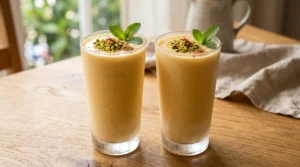
Pour into tall chilled glasses. Garnish with a pinch of cardamom, a few saffron threads, chopped pistachios, and a mint leaf. Serve immediately — lassi separates as it sits and tastes best in the first 10–15 minutes after blending.
J.ZaiB micro-tip: Chill your glasses in the freezer for 5 minutes before serving. A frosted glass keeps the lassi cold longer and looks dramatically more impressive.
Thickness Control Guide — Choose Your Level
This is something no other mango lassi recipe gives you — exact ratios for four different thickness levels:
| Level | Yogurt | Milk | Result | Best For |
|---|---|---|---|---|
| Extra thick | 2 cups | 0 | Spoonable, dessert-like | Smoothie bowl, eating with spoon |
| Restaurant thick | 1½ cups | ¼ cup | Classic pourable | Standard serving — this recipe default |
| Light & refreshing | 1 cup | ½ cup | Thinner, more drinkable | Hot day, large quantities |
| Thin chaas-style | ¾ cup | ¾ cup | Very drinkable, almost liquid | After spicy meals, digestive purpose |
J.ZaiB’s Expert Touch
Full-fat whole milk yogurt — not Greek, not low-fat. Greek yogurt is too thick, too tangy, and creates a lassi that tastes more like sour cream than yogurt drink. Low-fat yogurt is too thin and watery. Plain whole milk yogurt — the kind with live active cultures — gives you the right tang, the right fat content, and the right texture.
Bloom saffron separately from cardamom. Cardamom blooms quickly in warm milk — 3 minutes. Saffron needs 5 minutes and releases a different set of compounds. Bloom them in separate spoons of warm milk and add both to the blender. The two aromatic profiles complement each other without competing.
Add honey instead of sugar for a more complex sweetness. White sugar adds pure sweetness. Honey adds sweetness plus subtle floral notes that harmonize with the cardamom and mango. The difference is small but noticeable — especially in a simple recipe with so few ingredients where every flavor contribution matters.
Make a double batch and refrigerate for up to 24 hours. Lassi separates in the fridge — the mango solids sink and the liquid rises. This is normal. A 10-second stir or a 20-second blend brings it back perfectly. The flavor actually deepens after a few hours as the cardamom fully integrates. Make it the night before a brunch and it will taste better the next morning.
Serve with spicy food — not just as a standalone drink. Lassi is a refreshing, quick-to-make favourite that blends tradition with a modern spin — and its traditional role is as a cooling digestive alongside heat. The lactic acid in the yogurt coats the stomach and genuinely reduces the burn from capsaicin. Serve this with our Carrot Cake for an unexpected but excellent pairing — the warm spices in the cake echo the cardamom in the lassi beautifully.
Variations to Try
Frozen Mango Lassi / Smoothie Bowl: Use 2 cups of yogurt, no milk, and 1½ cups of frozen mango chunks. Blend until thick and creamy — it will be spoonable, not drinkable. Pour into a bowl, top with granola, fresh mango cubes, chia seeds, and a drizzle of honey. The same flavor as a mango lassi — in a completely different format that works as breakfast.
Saffron Rose Lassi (Kesar Lassi): Add bloomed saffron + 1 tsp rose water + 2 tbsp heavy cream to the base recipe. Skip the ice. This is Punjab’s most luxurious version — golden, floral, richer than standard mango lassi. Serve in small glasses as a dessert drink.
Spicy Mango Lassi: Add ¼ tsp cayenne pepper and a tiny pinch of black salt (kala namak) to the blender. The heat from the cayenne builds slowly behind the sweet mango — a genuinely addictive combination that is popular in street food versions across India.
Vegan Mango Lassi: Replace whole milk yogurt with full-fat coconut yogurt or almond milk yogurt. Replace milk with oat milk or coconut milk. Use maple syrup or dates instead of sugar. The flavor profile changes — more tropical, slightly less tangy — but it is genuinely delicious and completely plant-based.
Mango Lassi Popsicles: Pour the blended lassi mixture into popsicle molds. Freeze for 6 hours. The result is a creamy, cardamom-spiced frozen treat that tastes like mango kulfi in popsicle form. If you love frozen mango desserts, our No-Churn Mango Ice Cream uses a similar flavor profile in a creamier frozen format.
Thick Mango Lassi Cheesecake Pairing: Serve a small glass of lassi alongside a slice of our No-Bake Mango Cheesecake — the tangy lassi cuts through the rich cream cheese perfectly and creates a genuinely impressive mango-themed dessert experience.
Serving Ideas
As a digestive after spicy food: This is the traditional purpose — the lactic acid in the yogurt coats the stomach and soothes the heat from capsaicin. Serve immediately after a curry, biryani, or any spicy meal. Cold, thick, and slightly sweet — exactly what the stomach needs.
As a breakfast drink: Thick mango lassi with a handful of granola stirred in is a genuinely satisfying breakfast — protein from the yogurt, natural sugar from the mango, and probiotics for the gut. Faster than making oatmeal and infinitely more interesting.
Summer party drink: Make a large pitcher — triple the recipe — and set it on ice. Let guests pour their own. Add a garnish station with chopped pistachios, saffron threads, and dried rose petals. It looks spectacular and requires zero last-minute work.
Mango-themed dessert pairing: For a full mango experience, serve this Mango Lassi Recipe alongside our No-Bake Mango Cheesecake or a scoop of No-Churn Mango Ice Cream. Three textures, one tropical theme — perfect for a summer dinner party.
Storage Guide
Fresh: Best consumed within 10–15 minutes of blending — the froth settles and flavors are brightest immediately after making.
Refrigerator: Up to 24 hours in a sealed jar or pitcher. Will separate naturally — stir or blend for 20 seconds before serving. Flavor actually deepens overnight as cardamom and saffron fully integrate.
Freezer (popsicle form): Pour into molds and freeze up to 2 months. Thaw at room temperature 5 minutes before eating.
Make-ahead for parties: Make the full batch up to 24 hours ahead. Keep refrigerated. Stir or blend briefly before serving. Garnish fresh right before guests arrive.
Do not freeze and re-blend: Frozen and re-blended lassi loses its creamy texture — the yogurt proteins break down during freezing and the result is watery and grainy. Freeze only in popsicle form.
Best Mango Lassi Recipe
Ingredients
Equipment
Method
- In a small bowl, combine ground cardamom with 2 tablespoons of warm (not hot) milk. Stir and let sit for 3 minutes until the milk is fragrant and slightly golden. If using saffron, bloom separately in 1 tablespoon warm milk for 5 minutes until the milk turns golden yellow.

- If using fresh mango — peel, remove flesh, blend until completely smooth. If using canned pulp — measure directly. If using frozen mango — thaw completely at room temperature for 30 minutes before using.
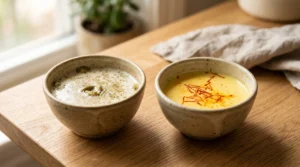
- Add mango puree, whole milk yogurt, cold milk, bloomed cardamom milk (and saffron milk if using), sugar or honey, salt, and ice cubes to a high-speed blender. Start on low speed for 10 seconds, then increase to high. Blend for 45–60 seconds until completely smooth and frothy.
- If using rose water — add after blending and stir gently. Do not blend.
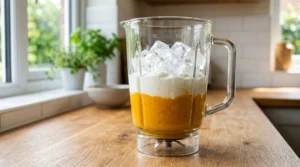
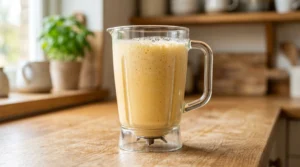
- Taste the lassi. Add more sugar if needed (blend 5 seconds). Add cold milk for thinner consistency (2 tbsp at a time). Add more yogurt for thicker (2 tbsp at a time). Add more mango puree for stronger mango flavor.
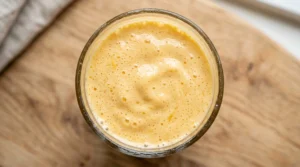
- Pour into tall chilled glasses. Garnish with a pinch of ground cardamom, saffron threads, chopped pistachios, and a mint leaf. Serve immediately for best flavor and texture.
Notes
- Whole milk yogurt only. Low-fat yogurt is too watery and produces a thin, disappointing lassi. Greek yogurt is too thick and too tangy. Plain whole milk yogurt with live active cultures is the correct choice.
- Bloom the cardamom first. This is the single most important technique in this recipe. Cardamom’s volatile aromatic compounds are fat-soluble and release in warm fat — dissolving in warm milk before blending gives dramatically more flavor than adding dry cardamom directly.
- Thickness control: Extra thick (spoonable): 2 cups yogurt + 0 milk. Restaurant thick (this recipe): 1½ cups yogurt + ¼ cup milk. Light: 1 cup yogurt + ½ cup milk. Thin chaas-style: ¾ cup yogurt + ¾ cup milk.
- Best mango choices: Canned Alphonso or Kesar pulp (Indian grocery — most consistent year-round). Fresh Ataulfo/honey mango (supermarkets Mar–Jul). Fresh Alphonso (Indian grocery Apr–Jun). Avoid Tommy Atkins — fibrous and bitter near skin. If you must use Tommy Atkins — peel deeply and strain puree through a fine mesh sieve.
- Why is my lassi bitter? Either Tommy Atkins mango with flesh too close to the skin (tannins), or rose water over-blended (turns bitter when processed). Always add rose water after blending and stir gently.
- Saffron tip: Bloom separately from cardamom — both need different bloom times. Saffron needs 5 minutes, cardamom needs 3.
- Rose water warning: Add after blending only. Blending at high speed over-processes rose water and creates a bitter, soapy note.
- Vegan version: Use full-fat coconut yogurt or almond milk yogurt, oat milk or coconut milk, and maple syrup instead of sugar.
- No sugar version: Use very ripe Alphonso or Ataulfo mango — sweet enough without added sugar. Taste before deciding.
- Storage: Best consumed immediately. Refrigerate up to 24 hours — stir or blend briefly before serving. Natural separation is normal.
- UK/Australia notes: “Whole milk yogurt” = full-fat natural yogurt. “Heavy cream” = double cream. “Ground cardamom” = same term used globally.
- Nutrition values are estimates. Actual values vary based on yogurt brand, mango variety, and exact sweetener quantity used.
NUTRITION
(Per 1 large glass — based on 2 servings, with sugar, no cream)
| Nutrient | Amount |
|---|---|
| Calories | ~220 kcal |
| Total Fat | 6g |
| Saturated Fat | 4g |
| Cholesterol | 20mg |
| Sodium | 85mg |
| Total Carbs | 36g |
| Sugars | 32g |
| Fiber | 1g |
| Protein | 7g |
Note: Values are estimates. Actual values vary significantly based on yogurt brand fat content, mango sweetness, and amount of sugar added.
Frequently Asked Questions
Why is my mango lassi bitter?
Usually one of two issues. First: you used Tommy Atkins mango and did not peel deeply enough — the flesh near the skin contains higher tannin concentrations that taste bitter. Second: you blended rose water at high speed — rose water turns bitter when over-processed. Always add rose water after blending and stir gently. Also check that your cardamom is fresh — old cardamom loses its sweetness and develops a slightly medicinal, bitter note.
Can I make mango lassi with canned mango?
Yes — canned Alphonso or Kesar mango pulp is actually the preferred option for consistency and year-round availability. It is already smooth, intensely flavored, and sweet. Use 1 cup of canned pulp directly — no blending needed before adding to the recipe. Reduce added sugar since canned pulp is typically already sweetened.
What is the difference between mango lassi and a mango smoothie?
The key difference is the base and fermentation. Mango lassi uses fermented yogurt — which adds lactic acid tang, probiotics, and a distinctive velvety texture. Mango smoothies typically use fruit juice or non-dairy milk — sweet, smooth, but no tang and no live cultures. Lassi also traditionally contains spices like cardamom and saffron that smoothies do not.
Can I make mango lassi without sugar?
Yes — especially if using Alphonso or Ataulfo mangoes, which are naturally very sweet. Taste the mango first. With very ripe, sweet mango, you may not need any added sweetener at all. If you want zero added sugar, use ripe Alphonso mango pulp and let the mango carry all the sweetness.
Why did my mango lassi turn out watery?
Almost certainly the yogurt. Low-fat or non-fat yogurt has a much higher water content than whole milk yogurt — even a small quantity produces a watery result. Always use plain whole milk yogurt with live active cultures. Greek yogurt makes it too thick and tangy — regular whole milk plain yogurt is the correct choice.
Is mango lassi good for gut health?
Mango lassi made with yogurt containing live active cultures provides real probiotic bacteria — primarily Lactobacillus strains — that support gut microbiome balance. The key is to ensure your yogurt label says “live active cultures” and has not been heat-treated after fermentation. The mango adds beta-carotene and the cardamom has historically been used as a digestive carminative in Ayurvedic tradition.
How long does mango lassi last in the fridge?
Up to 24 hours in a sealed container. It separates naturally — mango solids settle at the bottom, liquid rises to the top. This is completely normal. A brief stir or 20-second blend restores it perfectly. After 24 hours, the yogurt’s lactic acid continues fermenting and the flavor becomes noticeably more sour.
Can I make mango lassi vegan?
Yes — use full-fat coconut yogurt or almond milk yogurt as the base, oat milk or coconut milk instead of dairy milk, and maple syrup or blended dates instead of sugar. The flavor shifts slightly — more tropical and coconut-forward, slightly less tangy — but it is genuinely delicious. Ensure your plant-based yogurt also contains live active cultures for the probiotic benefit.
The Five-Minute Drink That Changes How You Think About Yogurt
A good Mango Lassi Recipe is one of those things that feels like it should be harder than it is. Five ingredients. Five minutes. And the result is one of the most satisfying, most complete drinks you can make at home — cooling when it needs to be, digestive when it matters, and simply delicious when you just want something extraordinary in a glass.
Bloom the cardamom. Use whole milk yogurt. Choose your mango wisely. Those three things separate the restaurant version from the average homemade attempt — and now you have all three.
Tag us on Instagram @viralfoodhacks706 when yours is poured — the garnished glass shots are always stunning! Save this to Pinterest for every summer gathering, spicy dinner night, or Tuesday morning that deserves something golden. 🥭🥛