

The first time I made garlic parmesan chicken pasta, the sauce started beautifully. Cream in the pan, fragrant with garlic, Parmesan going in, looking glossy and rich. Then I added the pasta and turned the heat back up to get everything hot at once.
Within thirty seconds the sauce had broken. The Parmesan had clumped into strings and the cream had separated into an oily, grainy liquid that coated nothing properly. The chicken was fine. The pasta was fine. But the sauce looked like a failed science experiment.
The problem was heat. Parmesan is a hard aged cheese with very low moisture and a high concentration of proteins. When those proteins hit high heat, they seize up and clump together instead of melting smoothly, the same way ricotta turns grainy when overheated as covered in our Ricotta Pasta Recipe. The correct technique is to add the Parmesan off the heat entirely, or at the very lowest possible simmer, and let the residual warmth of the sauce melt it in gradually.
This Garlic Parmesan Chicken Pasta is built around getting that sauce silky and glossy every single time, plus the fond trick that makes the sauce taste like it came from a proper restaurant kitchen, not a weeknight home stove.
Why This Is the Best Garlic Parmesan Chicken Pasta Recipe
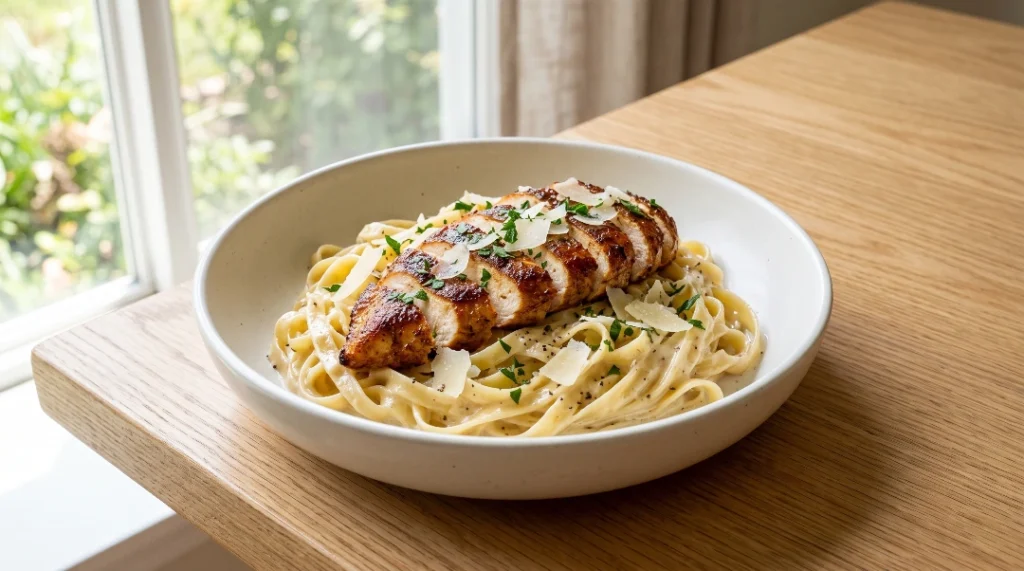
The sauce never breaks, because the Parmesan goes in correctly. The heat management in this recipe is explained step by step so the sauce stays smooth, glossy, and coating rather than grainy, stringy, or separated.
The fond from the chicken builds the sauce base. After searing the chicken, there is a layer of golden-brown caramelized bits left in the pan. Deglazing with a splash of pasta water or white wine lifts those bits into the sauce and adds a depth of savory flavor that plain cream alone simply cannot produce.
Fresh Parmesan only. Pre-grated Parmesan from a bag or the green shaker contains anti-caking agents that prevent it from melting smoothly into a cream sauce. This recipe explains why, simply and clearly.
One pan, 30 minutes. Chicken seared in the pan, sauce built in the same pan, pasta added to finish. One washing up item instead of four.
A Quick History, Where This Dish Comes From
Garlic Parmesan Chicken Pasta is not a traditional Italian dish. It is a thoroughly American comfort food creation, born from the Italian-American tradition of combining pasta with cream sauces and using Parmesan as the primary flavoring. True Italian cooking rarely combines cream with Parmesan in a pasta sauce, since Italian culinary tradition uses pasta water and pasta starch as the emulsifier rather than cream.
The American version emerged from the same cultural moment that produced chicken Alfredo and Chicken Parmesan as restaurant staples, the mid-20th century Italian-American dining scene in cities like New York, Philadelphia, and Chicago, where immigrant cooks adapted Italian ingredients to American tastes and ingredient availability. Heavy cream became the shortcut for the silky sauce that Italian cooks achieved through patient pasta water technique. According to USDA FoodData data on Parmesan cheese, Parmesan is one of the most protein-dense common cheeses available, which is both why it adds such richness to a sauce and why heat management matters so much when melting it.
The result, whatever its origins, is one of the most satisfying weeknight dinner combinations possible. Rich, garlicky, cheesy, and filling.
Why the Sauce Goes Wrong and How to Fix Every Cause
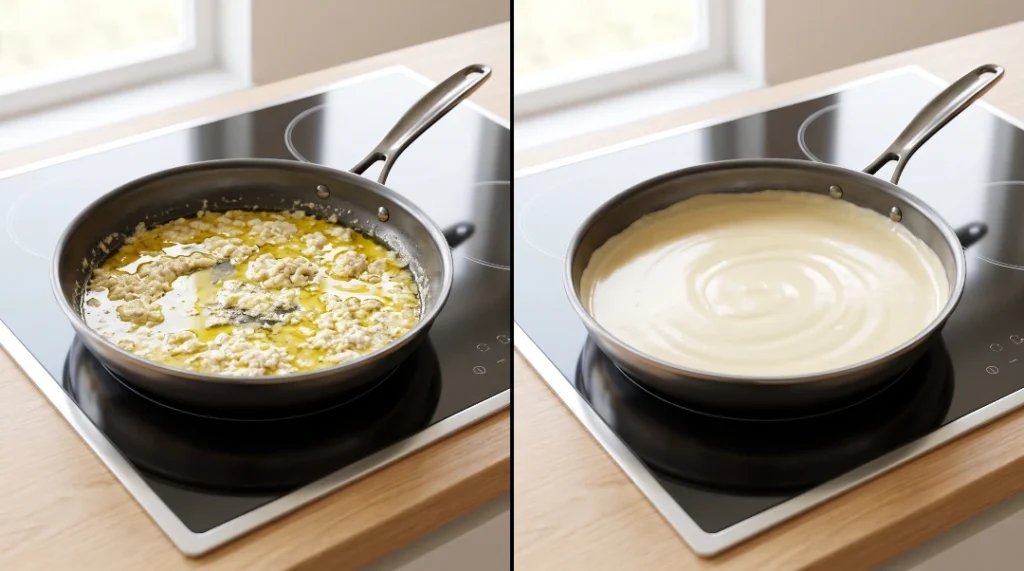
Here is what is happening in the pan at every stage, explained simply.
Why freshly grated Parmesan melts into the sauce while pre-grated stays clumpy. Pre-grated Parmesan sold in bags and the green shaker contains anti-caking agents, usually cellulose or potato starch, that are added to prevent the grated cheese from clumping together in the packaging. In a sauce, those same anti-caking agents interfere with the cheese melting smoothly by coating the protein strands and preventing them from releasing properly into the liquid. The result is a slightly grainy or powdery texture instead of a smooth, glossy melt. Freshly grated Parmesan from a block, using a microplane or the fine side of a box grater, contains only cheese and melts cleanly into a cream sauce without any interference.
Why the Parmesan must go in off the heat. Parmesan is aged for a minimum of 12 months and often much longer, which concentrates its proteins significantly compared to younger cheeses like mozzarella. When those concentrated proteins hit direct high heat, they denature and clump together rather than melting smoothly. Taking the pan off the heat before adding Parmesan, or reducing to the lowest possible simmer, gives the cheese time to melt gradually from the residual warmth of the sauce rather than seizing up from direct heat.
Why deglazing the pan after searing creates a better sauce base. When chicken sears in a hot pan, a thin layer of caramelized proteins and sugars builds up on the bottom of the pan, called fond. This fond contains an enormous concentration of savory flavor from the Maillard browning reaction. Pouring a small amount of pasta water, chicken broth, or white wine into the hot pan and scraping the bottom with a wooden spoon dissolves the fond directly into the liquid, incorporating all that flavor into the sauce base. Skipping this step and wiping the pan clean before making the sauce wastes the single most flavorful thing in the entire pan.
Why pasta water makes the sauce clingy instead of watery. The starchy water from cooking pasta contains dissolved starch that acts as an emulsifier, helping fat and water-based ingredients bind together and stay combined. Adding a splash of pasta water to the cream and Parmesan sauce before adding the pasta produces a sauce that coats every piece of pasta from within rather than pooling at the bottom of the bowl. The same principle that makes our Ricotta Pasta Recipe sauce silky applies here with a cream-based sauce.
Why lemon juice goes in last, not at the start. A small squeeze of lemon juice added right at the end of cooking does two things. It cuts through the richness of the cream and Parmesan with its acidity, preventing the dish from feeling heavy or cloying bite after bite. And it brightens all the other flavors simultaneously, making the garlic taste more pronounced and the Parmesan taste sharper without adding any lemon flavor to the dish itself. Lemon juice added at the start of cooking dissipates during the simmer and produces neither of these effects.
What You Need
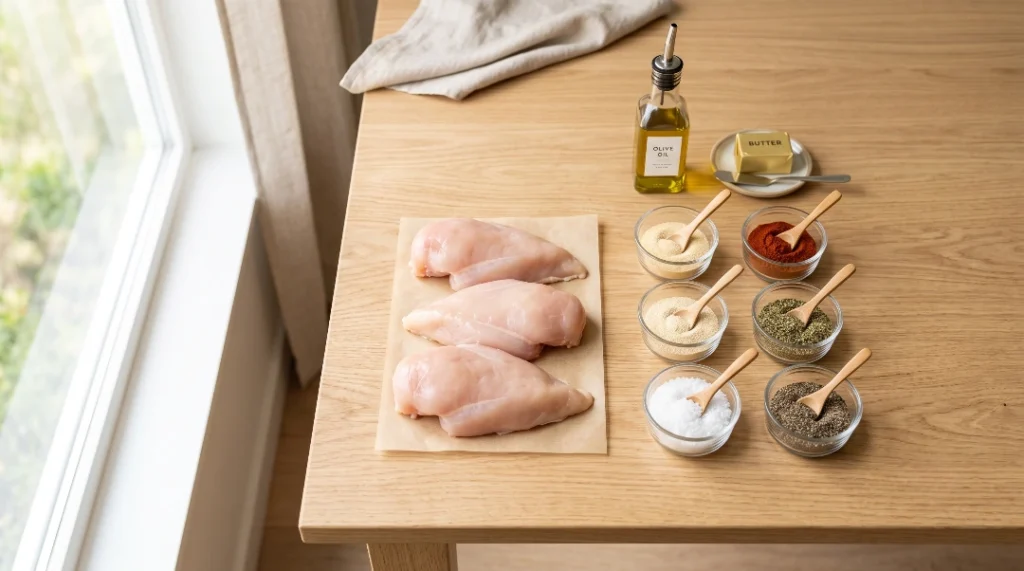
For the Chicken
- 2 boneless skinless chicken breasts (about 200 to 225g each)
- 1 tsp garlic powder
- 1 tsp smoked paprika
- ½ tsp onion powder
- ½ tsp dried Italian seasoning
- ½ tsp salt
- ¼ tsp black pepper
- 1 tbsp olive oil
- 1 tbsp unsalted butter
For the Garlic Parmesan Sauce
- 3 tbsp unsalted butter
- 6 garlic cloves, minced (do not use jarred garlic here)
- 1 cup (240ml) heavy cream
- ½ cup (120ml) chicken broth
- ¾ cup (75g) Parmesan cheese, freshly grated (plus more for serving)
- Salt and black pepper to taste
- 1 tbsp fresh lemon juice (added at the very end)
- ¼ tsp red pepper flakes (optional)
For the Pasta
- 12 oz (340g) rigatoni or penne (ridged shapes hold this sauce best)
- Salt for the pasta water
- ½ cup (120ml) pasta water (reserved before draining)
For Garnish
- Fresh parsley, chopped
- Extra shaved or grated Parmesan
- Black pepper
Equipment: Large skillet or cast iron pan, large pasta pot, meat thermometer, microplane or box grater for Parmesan, wooden spoon Serves: 4
Pasta Shape Guide for Garlic Parmesan Sauce
| Shape | How Well It Holds Sauce | Notes |
|---|---|---|
| Rigatoni | Excellent | Ridged exterior and hollow center both grab the thick sauce |
| Penne | Excellent | Ridges hold cream sauce beautifully |
| Fusilli | Very good | Spirals trap sauce in every curve |
| Fettuccine | Good | Wide surface works well with cream-based sauces |
| Spaghetti | Okay | Smooth surface lets sauce slide off, pools at the bottom |
| Angel hair | Not recommended | Too thin, sauce overwhelms the pasta immediately |
How to Make Garlic Parmesan Chicken Pasta, Step by Step
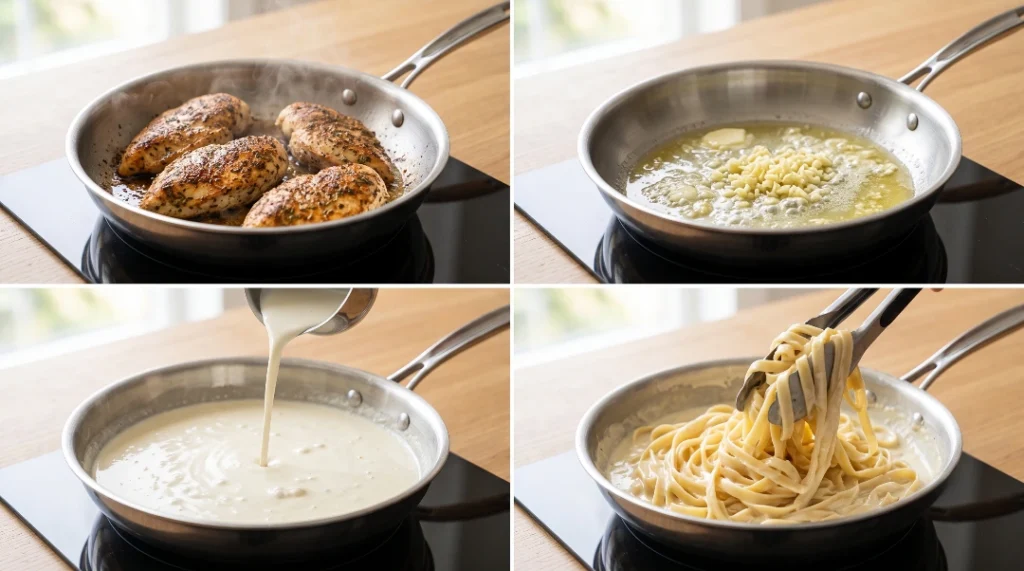
Season and Sear the Chicken
Build a Golden Crust First: Mix garlic powder, smoked paprika, onion powder, Italian seasoning, salt, and pepper in a small bowl. Pat the chicken breasts completely dry with paper towels, then rub the seasoning blend evenly over both sides. Heat olive oil and butter together in a large skillet over medium-high heat until the butter foam subsides. Place the chicken smooth-side down and cook undisturbed for 5 to 6 minutes until a deep golden crust forms. Flip once and cook another 4 to 5 minutes. Check the internal temperature with a meat thermometer and pull at 160°F. According to FDA safe cooking temperature guidelines, chicken needs to reach 165°F, which the carryover heat during the 5-minute rest will achieve. Transfer to a cutting board and tent loosely with foil.
Deglaze and Build the Sauce Base
Do Not Wipe the Pan: Remove the chicken but leave all the golden-brown bits on the pan bottom. These are pure flavor. Add the butter to the same pan over medium heat. Once the butter melts, add the minced garlic and cook for 90 seconds, stirring constantly, until very fragrant and just beginning to turn golden at the edges. Do not rush this step or skip it. The garlic blooms in the butter fat, releasing its aromatic compounds far more effectively than it would in a water-based liquid, which is what makes this sauce taste so intensely garlicky without being sharp or raw.
Pour in the chicken broth and use a wooden spoon to scrape every bit of browned fond from the pan bottom. This fond dissolves into the broth and becomes part of the sauce base, adding a depth of savory flavor that makes the finished dish taste like it cooked for much longer than 30 minutes.
Add the Cream and Simmer
Reduce Slightly for Body: Pour in the heavy cream and add the red pepper flakes if using. Increase heat to medium-high and bring to a gentle simmer, stirring occasionally. Let the sauce reduce for 4 to 5 minutes until it thickens slightly and coats the back of a spoon. The sauce should not be pourable like water but should flow slowly when you tilt the pan. Taste and season with salt and pepper.
Cook the Pasta
Salt the Water Generously: While the sauce simmers, bring a large pot of salted water to a rolling boil. Cook the pasta until al dente, about one minute less than the package directions, since it will finish cooking briefly in the sauce. Before draining, scoop out at least half a cup of the cloudy starchy pasta water and set it aside. Drain the pasta.
Finish the Sauce
Off the Heat for the Parmesan: Reduce the skillet heat to the lowest possible setting, or remove the pan from heat entirely. Add the freshly grated Parmesan a small handful at a time, stirring gently between each addition until each handful melts before adding the next. Never add all the Parmesan at once or it clumps. Once all the Parmesan is incorporated and the sauce looks smooth and glossy, add the drained pasta directly to the skillet. Toss to coat, adding reserved pasta water a splash at a time until the sauce clings to every piece of pasta without pooling at the bottom. Squeeze in the lemon juice and toss once more.
Slice the Chicken and Serve
Thin Slices, Against the Grain: Slice the rested chicken against the grain into thin pieces. Arrange the sliced chicken over the pasta in the skillet, or divide the pasta among bowls and fan the chicken slices on top. Finish each serving with a generous grating of fresh Parmesan, a pinch of black pepper, and fresh parsley. Serve immediately.
J.ZaiB’s Expert Touch
Use a whole head of garlic, not a couple of cloves. Most weeknight pasta recipes call for two to three garlic cloves. This recipe uses six and the result is a sauce where garlic is an actual flavor, not just a background note. Cooking minced garlic slowly in butter for 90 seconds eliminates the harsh raw edge while keeping the full aromatic depth. If you love garlic, go to eight cloves.
Never add cold cream to a very hot pan. Cold liquid hitting a very hot pan causes rapid temperature fluctuation that can break a cream sauce before it even gets started. Add the cream with the heat at medium rather than high, and let it come to temperature gradually as it hits the pan. This produces a more stable, better-emulsified sauce from the very beginning.
Finish with a microplane of fresh lemon zest as well as lemon juice. The lemon juice brightens the flavor. The zest adds the aromatic lemon oil from the peel that smells like the dish has been seasoned by a professional chef. Together they are noticeably better than either alone.
Rest the chicken five full minutes before slicing. The same resting principle from our Chicken Breast Recipe applies here. Chicken sliced immediately releases its juice onto the cutting board rather than staying in the meat. After five minutes of rest, the slices are juicier, more tender, and far more impressive fanned over the pasta than they would be if sliced straight from the pan.
Grate the Parmesan yourself immediately before using. Pre-grated Parmesan loses moisture and sharpness quickly once grated. Parmesan grated fresh off the block directly into the sauce has a noticeably more intense, more savory flavor and melts more smoothly than cheese that was grated even an hour ago.
Variations to Try
Garlic Parmesan Chicken Pasta with Spinach: Add two large handfuls of baby spinach to the sauce after the cream reduces and just before adding the Parmesan. The spinach wilts in about 60 seconds and adds color, nutrition, and a slight earthiness that balances the richness of the cream and cheese.
Sun-Dried Tomato Garlic Parmesan Pasta: Add half a cup of drained, roughly chopped sun-dried tomatoes in oil alongside the garlic. The concentrated, slightly sweet, tangy tomato flavor cuts through the cream beautifully and adds a visual contrast that makes the dish look genuinely restaurant-worthy.
Spicy Garlic Parmesan Chicken Pasta: Double the red pepper flakes in the sauce and add a teaspoon of Calabrian chili paste alongside the cream. The heat builds slowly through each bite and provides a satisfying contrast to the cooling richness of the Parmesan cream.
Mushroom Garlic Parmesan Chicken Pasta: After removing the seared chicken and before making the sauce, add two cups of sliced cremini mushrooms to the pan with a knob of butter. Cook until deeply golden, about 4 to 5 minutes, then deglaze and proceed with the sauce. The mushrooms add an earthy, meaty depth that makes the dish feel substantially more complex.
Without Heavy Cream: For a lighter version, replace the heavy cream with half a cup of chicken broth plus half a cup of full-fat Greek yogurt added off the heat. The yogurt must go in off the heat like the Parmesan, since it curdles at high temperatures. The sauce is thinner but still coating and much lower in fat.
Serving Ideas
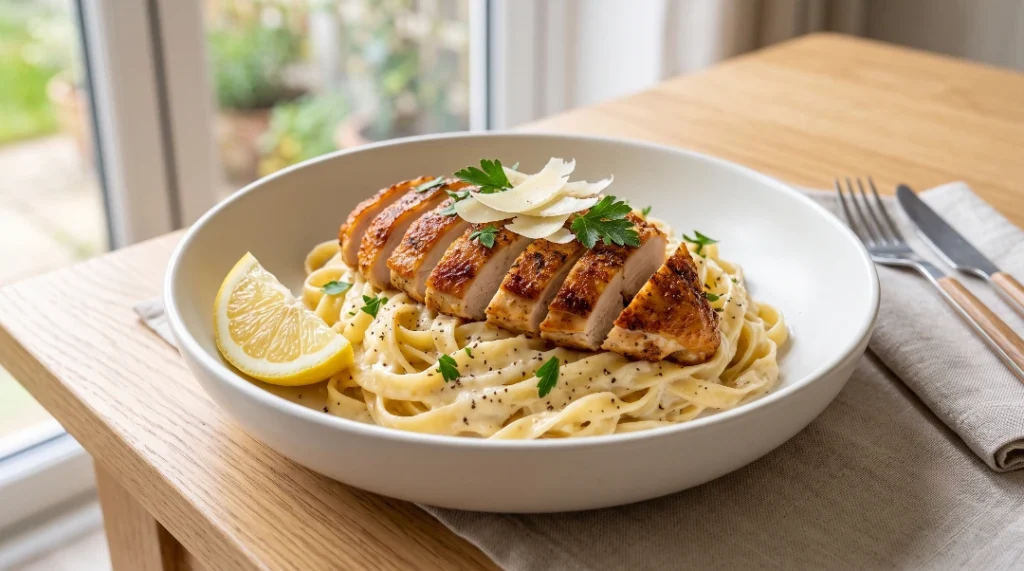
Weeknight dinner: This is the recipe that makes weeknight cooking feel effortless and impressive at the same time. On the table in 30 minutes with only one pan to wash. Serve with garlic bread and a simple green salad.
Date night at home: The same recipe, better plating. Twirl the pasta into a tall mound in the center of a wide bowl using tongs, fan the chicken slices elegantly over the top, shave the Parmesan with a vegetable peeler instead of grating, and finish with fresh parsley and a lemon wedge on the side.
Dinner pairing: Serve alongside our Homemade Lemonade Recipe for a refreshing drink that cuts through the richness of the cream sauce perfectly.
Part of an Italian-inspired spread: Serve alongside our Best Italian Meatballs Recipe as part of a larger Italian-American dinner for a group. Both dishes use similar flavor profiles and complement each other beautifully on a shared table.
Storage and Reheating Guide
Refrigerator: Store cooled pasta in an airtight container for up to 3 days. The sauce thickens significantly when cold as the cream and Parmesan set.
Reheating without breaking the sauce: Add 2 to 3 tablespoons of chicken broth or water to the pasta before reheating. Warm gently over low heat on the stovetop, stirring frequently, until the sauce loosens and coats the pasta again. Never reheat over high heat or the Parmesan will seize and the cream will separate. A microwave works at 50 percent power with the liquid added, stirring every 30 seconds.
Freezer: Not recommended for the complete dish. Cream-based pasta sauces separate when frozen and thawed, producing a watery, grainy result. If needed, freeze only the sauce before adding Parmesan, and add fresh Parmesan when reheating.
Make-ahead: The chicken can be seasoned and refrigerated up to 24 hours ahead. The sauce components can be measured and prepped ahead. Everything cooks fresh in 30 minutes when ready to serve.
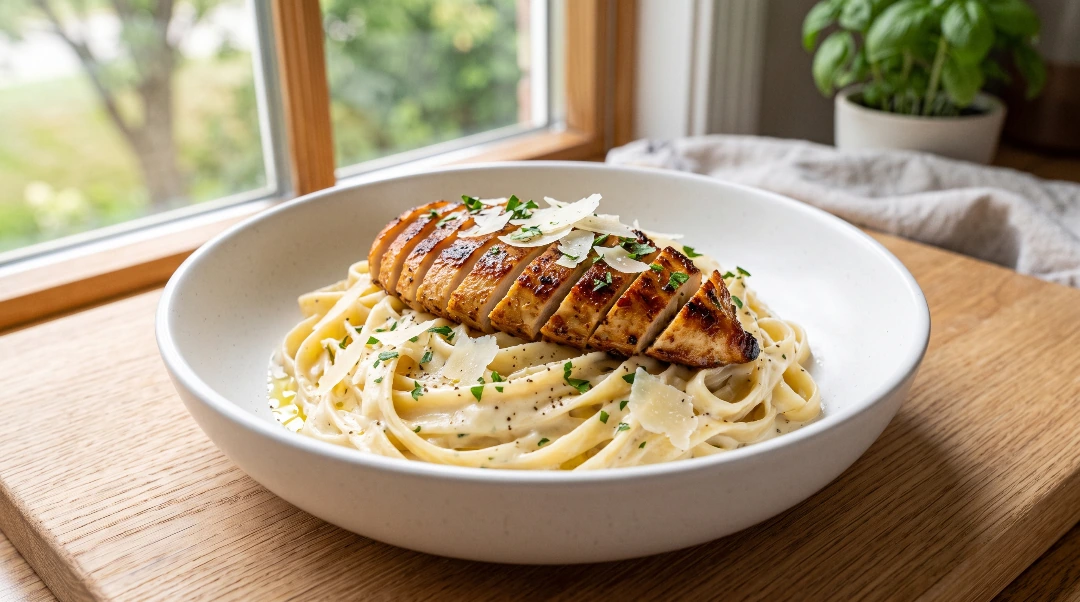
Garlic Parmesan Chicken Pasta
Ingredients
Equipment
Method
- Build a Golden Crust: Mix garlic powder, smoked paprika, onion powder, Italian seasoning, salt, and pepper in a small bowl. Pat the chicken completely dry with paper towels and rub the seasoning all over both sides. Heat olive oil and butter together in a large skillet over medium-high heat. Place the chicken smooth-side down and cook undisturbed for 5 to 6 minutes until a deep golden crust forms. Flip once and cook another 4 to 5 minutes until the internal temperature reaches 160°F on a meat thermometer. Transfer to a cutting board and tent with foil to rest for 5 minutes.

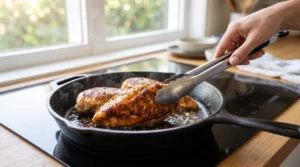
- Deglaze the Pan, Keep All the Flavor: Without wiping the pan, add butter over medium heat. Once melted, add the minced garlic and cook for 90 seconds, stirring constantly, until fragrant and just beginning to turn golden. Pour in the chicken broth and use a wooden spoon to scrape every golden-brown bit from the pan bottom. Those bits are pure flavor and must not be left behind.
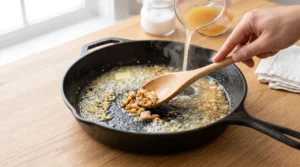
- Reduce for Body: Pour in the heavy cream and add red pepper flakes if using. Increase heat to medium-high and bring to a gentle simmer. Let reduce for 4 to 5 minutes, stirring occasionally, until the sauce thickens slightly and coats the back of a spoon. Season with salt and pepper.
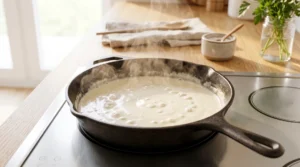
- Salt the Water, Save the Pasta Water: Bring a large pot of salted water to a boil. Cook the pasta until al dente, about one minute less than the package directions. Before draining, scoop out at least half a cup of the starchy pasta water. Drain the pasta.
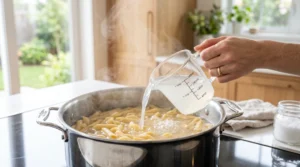
- Low Heat, Small Handfuls: Reduce the skillet to the lowest heat setting. Add the freshly grated Parmesan one small handful at a time, stirring gently after each addition until it melts before adding the next. Never add all the Parmesan at once. Once all the cheese is incorporated and the sauce is smooth and glossy, add the drained pasta and toss to coat. Add reserved pasta water a splash at a time until the sauce clings to every piece without pooling at the bottom. Squeeze in the lemon juice and toss once more.
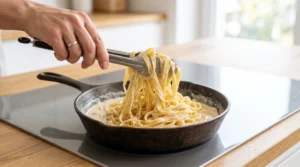
- Thin Slices Against the Grain: Slice the rested chicken against the grain into thin pieces. Divide the pasta among wide bowls and arrange the chicken slices on top. Finish each bowl with extra freshly grated Parmesan, black pepper, and fresh parsley. Serve immediately.
Notes
- Freshly grated Parmesan only. Pre-grated from a bag contains anti-caking agents that prevent smooth melting and produce a grainy sauce. Grate from a block immediately before using.
- Parmesan goes in off the heat. High heat causes Parmesan proteins to clump. Remove from heat or use the lowest possible simmer. Add one small handful at a time.
- Do not wipe the pan after searing chicken. The fond on the bottom is pure flavor. Deglaze with chicken broth to incorporate it into the sauce.
- Save pasta water before draining. Starchy pasta water helps the sauce cling to the pasta. This step cannot be substituted or skipped.
- Garlic must bloom in butter. Cook minced garlic in butter for 90 seconds before adding liquid. This releases its aromatic compounds far more effectively than adding it to cream directly.
- Lemon juice goes in last. Added at the end of cooking, it brightens all flavors without dissipating. Added earlier, the effect is lost during simmering.
- Rest the chicken 5 minutes before slicing. Slicing immediately releases juice onto the cutting board. Resting keeps the chicken juicy.
- Reheating: Add 2 to 3 tablespoons of broth or water to the pasta. Reheat over low heat on the stovetop stirring frequently, or microwave at 50 percent power stirring every 30 seconds.
- Lighter version: Replace heavy cream with half a cup of chicken broth plus half a cup of full-fat Greek yogurt added off the heat.
- UK/Australia notes: “Heavy cream” equals double cream or thickened cream. “Skillet” equals frying pan. “Rigatoni” and “penne” are available globally under the same names.
- Nutrition values are estimates and vary based on exact cream quantity and Parmesan amount.
NUTRITION
Per 1 serving, based on 4 servings
| Nutrient | Amount |
|---|---|
| Calories | ~680 kcal |
| Total Fat | 32g |
| Saturated Fat | 18g |
| Cholesterol | 155mg |
| Sodium | 580mg |
| Total Carbs | 58g |
| Sugars | 4g |
| Fiber | 3g |
| Protein | 42g |
Note: Values are estimates and vary based on exact cream quantity, Parmesan amount, and pasta shape used.
Frequently Asked Questions
Why is my garlic parmesan sauce grainy or stringy?
The Parmesan was added when the heat was too high. Parmesan’s concentrated proteins seize up and clump when they hit direct heat rather than melting smoothly. Remove the pan from heat completely before adding Parmesan, add it one small handful at a time, and stir gently between each addition until each melts before the next goes in. Also confirm you are using freshly grated Parmesan from a block, not pre-grated from a bag, which contains anti-caking agents that prevent smooth melting.
Can I use milk instead of heavy cream?
You can, but the sauce will be noticeably thinner and less rich. Whole milk is the closest substitute, producing a lighter but still pleasant sauce. Avoid low-fat milk since it tends to separate when simmered. If using milk, increase the Parmesan slightly to help thicken the sauce and add a teaspoon of cornstarch mixed with a tablespoon of cold water at the start of the simmer.
Why does my sauce taste flat even though I followed the recipe exactly?
Usually one of three causes. The garlic was not cooked long enough in the butter to bloom its flavor fully. The fond from the chicken was not scraped up and incorporated into the sauce base. Or the lemon juice was skipped or added too early and dissipated during cooking. All three together make an enormous difference to the final depth of flavor.
What pasta shape is best for garlic parmesan chicken pasta?
Rigatoni or penne are the best choices because their ridged surfaces and hollow centers hold a thick cream sauce on every surface. Spaghetti works but the smooth surface lets the sauce slide off and pool at the bottom of the bowl. See the full pasta shape guide in the recipe above.
Can I make this without chicken?
Yes. Skip the chicken entirely and use vegetable broth instead of chicken broth. Add two cups of roasted vegetables, mushrooms, or spinach to the sauce instead. The garlic parmesan sauce is so flavorful on its own that it works beautifully without meat.
How do I stop the sauce from being too thick?
Add reserved pasta water a splash at a time after combining the pasta with the sauce. The starchy pasta water loosens the sauce while also helping it cling to the pasta rather than just thinning it out. Add gradually and stop when the consistency looks glossy and coating rather than pooling.
The Pasta That Tastes Like a Restaurant Made It
Great Garlic Parmesan Chicken Pasta comes down to three things: golden seared chicken that rests before slicing, a sauce built on fond rather than starting in a clean pan, and Parmesan added off the heat in small handfuls rather than dumped in all at once.
None of those things require special equipment or rare ingredients. They just require understanding why each step matters, which is exactly what this recipe gives you.
Thirty minutes. One pan. A sauce that coats every piece of pasta like a proper restaurant dish.
Make it tonight.
Tag us on Instagram @viralfoodhacks706 when yours is plated. The sliced chicken fanned over the pasta always makes the best photo! Save this to Pinterest for every weeknight that needs dinner on the table fast but still wants something impressive.