

I made peach cobbler for the first time in August using the biggest, ripest peaches I could find at the farmers market. They looked incredible. The filling smelled like pure summer. The topping went on perfectly, golden and rustic looking.
Then I pulled it out of the oven and spooned into the first serving. The topping underneath was soft, pale, and completely uncooked looking, even though the outside was golden brown. The filling was thin and watery, not the thick, jammy sauce I expected.
Two things went wrong at once. I had covered every inch of the filling with topping batter, leaving no gaps, so the steam from the cooking peaches had nowhere to escape except downward, soaking back into the topping from beneath. And I pulled the cobbler the moment the top looked golden, before the filling had reached a full bubbling boil in the center, which meant the cornstarch never fully activated and the filling stayed thin.
This Peach Cobbler Recipe fixes both. Deliberate steam vents in the topping. Baking until the filling bubbles visibly in the center. And the one trick most recipes skip entirely: starting with a hot pan so the batter base crisps before the peach juice even gets near it.
Why This Is the Best Peach Cobbler Recipe
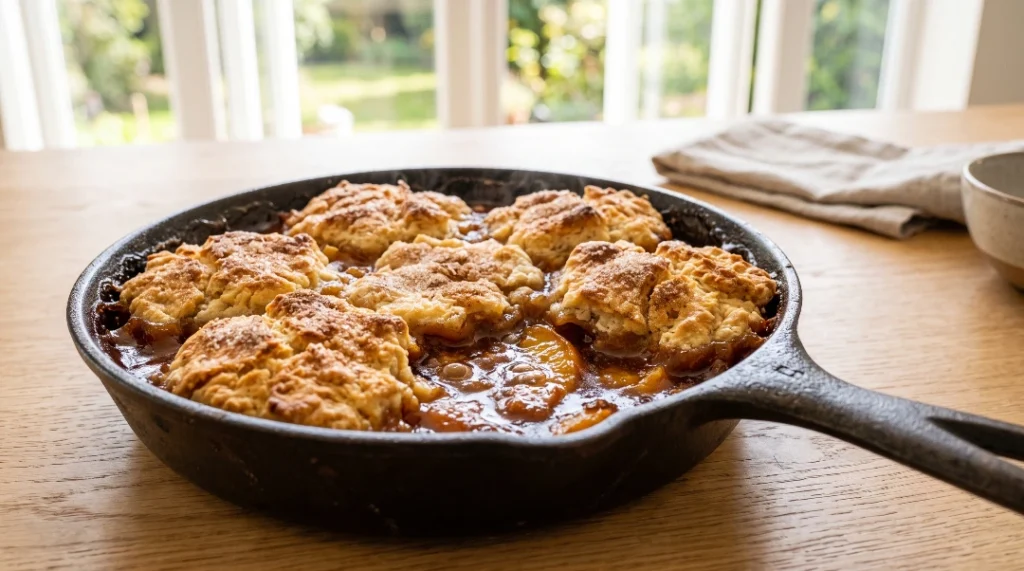
The topping stays crispy underneath, not just on top. The deliberate steam vents and hot pan technique together prevent the soggy bottom that ruins most homemade cobblers.
Fresh, frozen, or canned peaches all covered properly. Most recipes say all three work and stop there. This one gives you the specific adjustments each type needs so the filling turns out exactly right regardless of which you use.
The bubbling test tells you exactly when it is done. No guessing based on topping color alone. The filling must bubble visibly in the center before the cobbler comes out, and this recipe explains why that matters.
Brown sugar in the topping, not just white. The difference in flavor is immediately noticeable. Brown sugar caramelizes against the heat and produces a depth of flavor that plain white sugar simply does not.
What Is a Cobbler, and How Is It Different from a Crisp or Crumble
A lot of people use these terms interchangeably, but they are genuinely different desserts.
A cobbler has a biscuit-style or drop batter topping that bakes up soft and doughy in the center with slightly crisp edges, resembling the uneven, lumpy surface of a cobblestone road, which is where the name comes from.
A crisp has a topping made from oats, flour, butter, and sugar mixed together into a crumbly texture that bakes up crunchy throughout.
A crumble is similar to a crisp but without oats, producing a finer, sandier topping.
A grunt or slump, which is a New England equivalent, cooks on the stovetop with the fruit on the bottom and dumplings on top, steaming rather than baking.
This recipe is a true cobbler. Drop batter, rustic surface, soft and doughy in the center, slightly crisp at the edges. The filling is thick, jammy, and intensely peachy. The topping is buttery and golden. It is the right combination for a classic Southern summer dessert.
A Quick History, Where Peach Cobbler Comes From
The peach is native to China, where it has been cultivated for more than 4,000 years, and was introduced to the Americas by Spanish explorers in the 16th century. According to Britannica’s entry on the peach, peaches spread rapidly throughout the southern United States, where the warm climate proved ideal for cultivation, and Georgia became so associated with peach production that it earned the nickname the Peach State.
Peach cobbler developed in the American South as a practical adaptation of traditional British steamed puddings, which required specialized equipment that settlers did not always have. Colonial cooks improvised by placing fruit in cast iron pots over open fires and topping them with rough biscuit dough, cooking the whole thing until the dough baked through and the fruit softened. The result became one of the defining desserts of Southern cooking, served at church socials, family reunions, and summer gatherings across the region for over two centuries.
Why Peach Cobbler Goes Wrong and How to Fix It
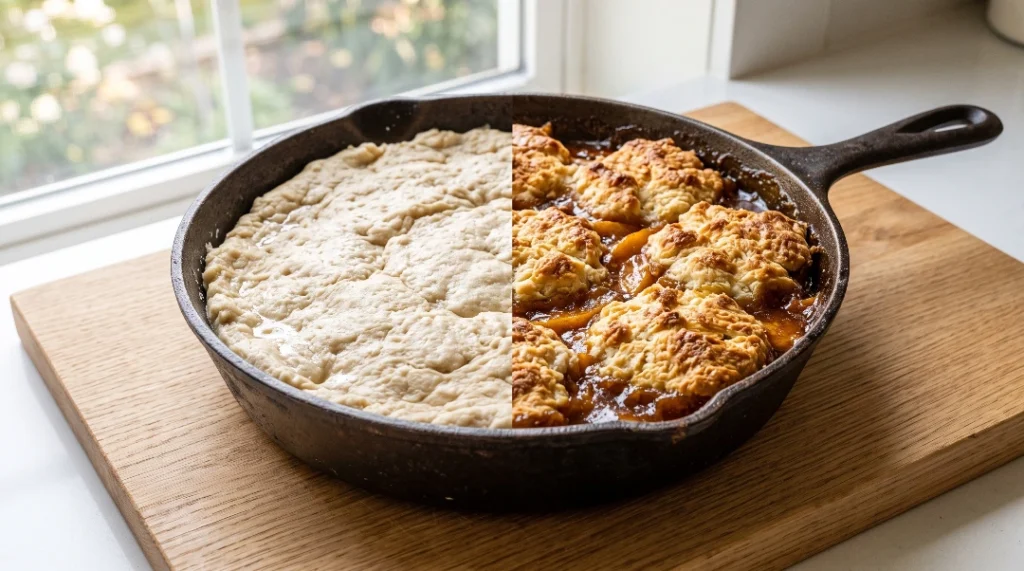
Here is what is happening inside the cobbler during baking, explained simply.
Why the topping goes soggy underneath. When peaches cook in the oven, they release a significant amount of juice that turns to steam as it heats. If the topping batter covers the filling completely with no gaps, that steam has nowhere to go except back down into the batter beneath it. The moisture condenses under the topping and prevents the underside from baking through, even when the top looks perfectly golden. Leaving deliberate gaps between the topping dollops gives the steam a path to escape upward rather than downward, which is the difference between a topping that is crisp from bottom to top and one that is golden on the surface but soft and pale underneath.
Why the hot pan trick creates a better base. If you heat the baking dish or cast iron skillet in the oven before adding the batter, the moment the cold batter hits the hot surface it begins cooking immediately from below. This creates a lightly crisp bottom layer before the peach juice has any chance to saturate the base. A room-temperature dish lets the batter sit in peach juice for several minutes before the oven heat reaches it, resulting in a softer, more saturated bottom. One or two minutes of preheating makes a noticeable difference.
Why the filling must bubble before you pull it out. Cornstarch thickens liquids only when it reaches boiling temperature. A filling that looks thick and glossy while still below boiling will thin out as it cools because the cornstarch never fully activated. Bubbling in the center of the cobbler confirms the filling has reached the correct temperature throughout and the cornstarch is doing its job. Pulling it too early based on topping color alone almost always produces a watery, thin filling. For more on this cornstarch-must-bubble principle, our Best Blackberry Pie Recipe covers the same science in detail.
Why slightly underripe peaches make a better filling. Very ripe, very soft peaches contain less natural pectin than peaches that are just barely ripe. Pectin is a natural thickener found in fruit that helps the filling set as it cooks alongside the cornstarch. A filling made entirely from overripe, very soft peaches often comes out thinner and more watery than one made from peaches that still have a little firmness. Ripe but firm is the goal. If your peaches are very soft and sweet, add an extra half tablespoon of cornstarch to compensate.
Why peach skins stay on or come off depending on preference. Peach skins are completely edible and become very tender during baking, but they do leave small pink and red bits throughout the filling that some people prefer not to see. For a cleaner looking, more elegant filling, blanch the peaches before using. Drop them in boiling water for 30 seconds, then immediately transfer to ice water. The skins slip off with almost no effort. For a more rustic, casual cobbler, leave the skins on entirely. The flavor difference is minimal. The texture difference is also minimal once baked.
For a complete guide to peach cobbler variations and techniques, King Arthur Baking’s Southern peach cobbler guide is an excellent additional reference.
Fresh vs Frozen vs Canned Peaches Guide
| Type | Prep Needed | Liquid Adjustment | Best Season | Notes |
|---|---|---|---|---|
| Fresh, ripe but firm | Peel, pit, slice | None, use as written | July to September | Best flavor and texture overall |
| Frozen | Do NOT thaw, use straight from bag | Add 1 extra tbsp cornstarch | Year round | Second best option, very convenient |
| Canned in juice | Drain well, pat dry | Reduce sugar by 2 tbsp | Year round | Softer texture, sweeter filling |
| Canned in syrup | Drain very well | Reduce sugar by 3 to 4 tbsp | Year round | Very sweet, use sparingly |
What You Need
For the Peach Filling
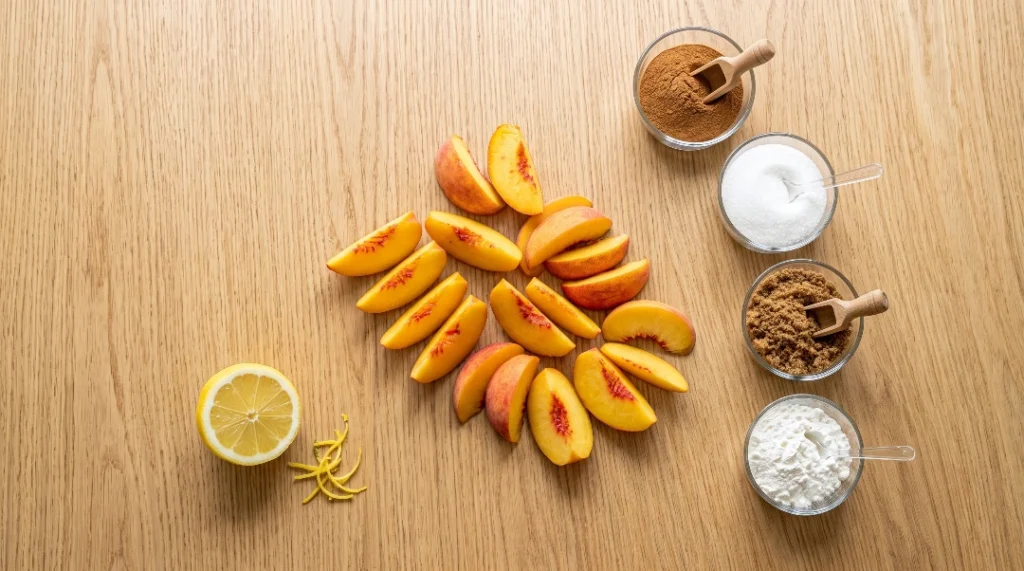
- 6 cups (about 900g) fresh peaches, peeled, pitted, and sliced (about 6 to 8 medium peaches, see guide above for frozen or canned)
- ½ cup (100g) granulated sugar (adjust based on peach sweetness)
- ¼ cup (50g) light brown sugar, packed
- 2 tbsp (16g) cornstarch
- 1 tbsp fresh lemon juice
- ½ tsp ground cinnamon
- ¼ tsp ground nutmeg
- ¼ tsp pure vanilla extract
For the Biscuit Topping
- 1½ cups (190g) all-purpose flour
- ½ cup (100g) granulated sugar
- 2 tbsp light brown sugar (for extra flavor depth)
- 1½ tsp baking powder
- ¼ tsp fine sea salt
- 6 tbsp (85g) cold unsalted butter, cut into small cubes
- ½ cup (120ml) whole milk or buttermilk
- 1 tsp pure vanilla extract
For Finishing
- 1 tbsp granulated sugar mixed with ¼ tsp cinnamon (for sprinkling on top)
- Vanilla ice cream for serving (genuinely not optional)
Equipment: 9×13-inch baking dish or 10 to 12-inch cast iron skillet, pastry cutter or two forks, large mixing bowl Serves: 8 to 10
How to Make the Best Peach Cobbler Recipe, Step by Step
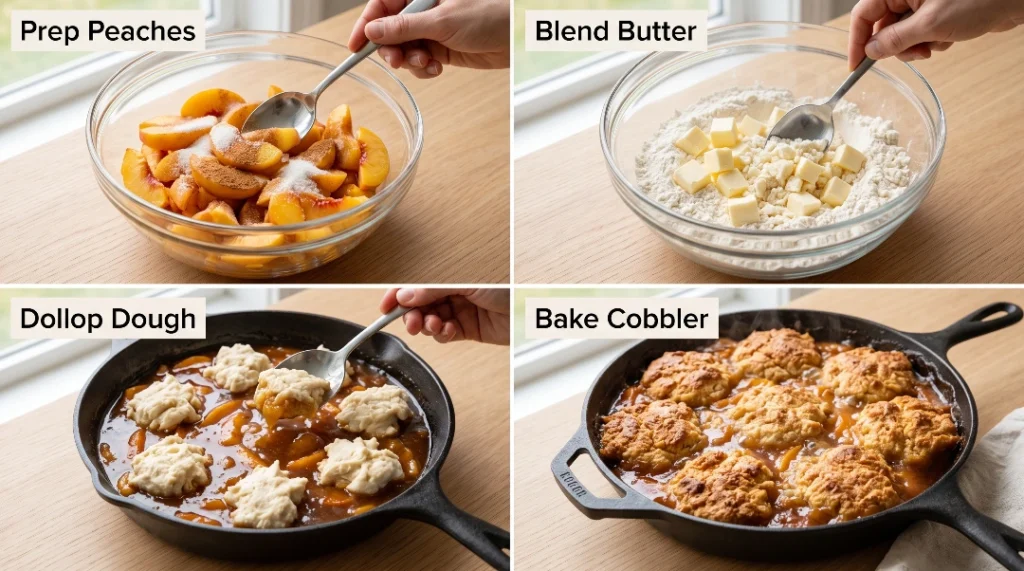
Prep the Peaches
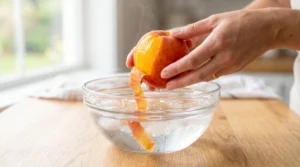
Peel Using the Blanching Trick: Bring a large pot of water to a boil. Score a small X on the bottom of each peach with a sharp knife. Drop peaches into the boiling water for exactly 30 seconds, then immediately transfer to a bowl of ice water. The skins slip off effortlessly with your fingers. Pit and slice each peach into wedges about half an inch thick. If you prefer a more rustic cobbler, skip the blanching and leave the skins on entirely.
Make the Peach Filling
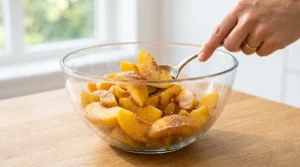
Toss and Rest: In a large bowl, combine the sliced peaches, both sugars, cornstarch, lemon juice, cinnamon, nutmeg, and vanilla extract. Toss gently until every peach slice is evenly coated. Let the mixture rest for 10 minutes. The sugar will begin drawing juice from the peaches, which will dissolve with the cornstarch and form the base of your glossy filling sauce.
Preheat the Pan
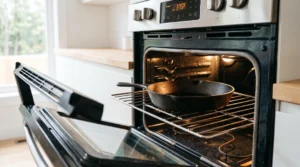
Hot Pan, Crispy Base: Place your 9×13-inch baking dish or cast iron skillet in the oven. Preheat the oven to 375°F (190°C) with the empty pan inside. The pan needs to be genuinely hot before the batter touches it, about 10 to 15 minutes of preheating. This is the step most recipes skip and the one that makes the biggest difference to the topping texture.
Make the Biscuit Topping
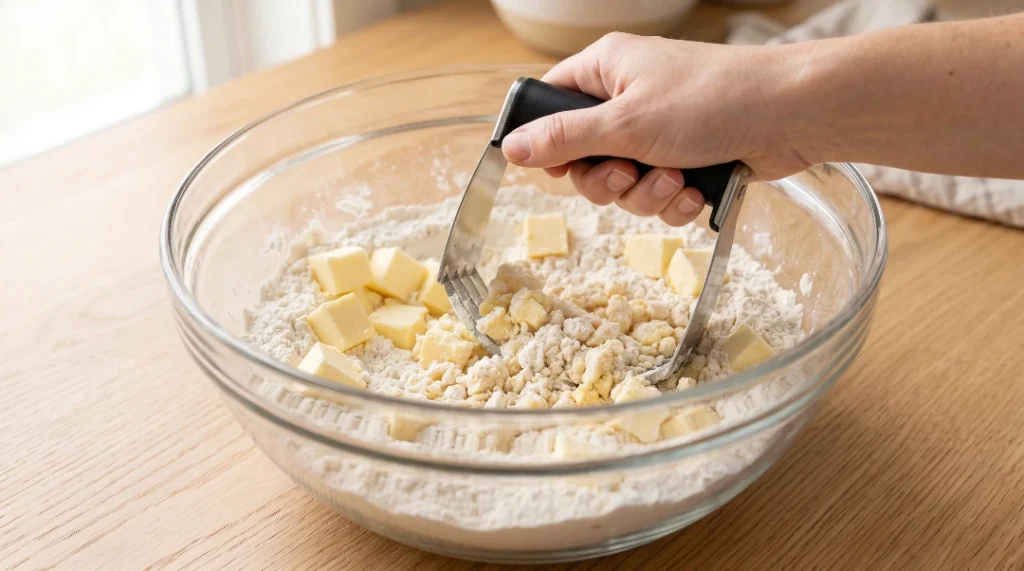
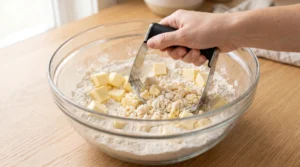
Keep Everything Cold: In a large bowl, whisk together the flour, both sugars, baking powder, and salt. Add the cold butter cubes and use a pastry cutter or two forks to cut the butter into the flour mixture until it resembles coarse breadcrumbs with some pea-sized butter pieces still visible. Those butter pieces are what create tenderness and a slight flakiness in the finished topping. Stir in the milk and vanilla extract until a soft, thick, shaggy dough just comes together. Do not overwork it. Overworking develops gluten and produces a tough, dense topping instead of a tender, biscuity one.
Assemble the Cobbler
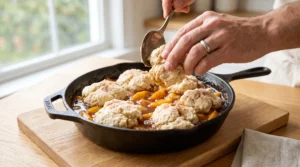
Pour Filling, Then Dollop Topping With Gaps: Carefully remove the hot pan from the oven using oven mitts. Pour the peach filling mixture directly into the hot pan and spread evenly. Drop large spoonfuls of the biscuit topping over the peaches, spacing them apart and leaving visible gaps between each dollop. These gaps are essential for steam to escape upward, which keeps the underside of the topping from going soggy. You want a rustic, uneven surface with about one-third of the peach filling still visible through the gaps.
Sprinkle the cinnamon-sugar mixture evenly over the top of the biscuit dollops.
Bake Until the Filling Bubbles
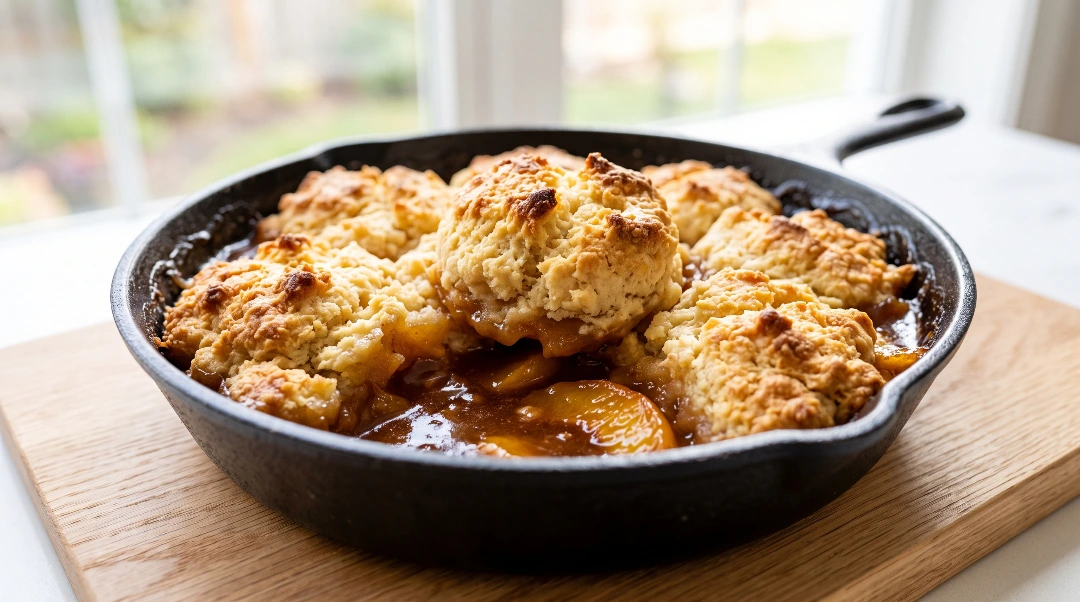
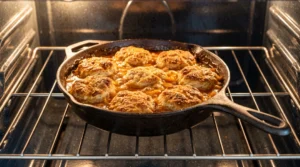
Watch the Center, Not Just the Topping: Bake at 375°F for 40 to 48 minutes. The cobbler is done when two things happen at the same time: the topping is deep golden brown all over, and the peach filling is bubbling visibly through the gaps in the center of the cobbler, not just at the edges. If the topping is browning too quickly before the center filling bubbles, lay a piece of foil loosely over the top and continue baking until the center bubbles.
Rest Before Serving
10 Minutes for the Filling to Set: Remove from the oven and let rest for 10 minutes before serving. The filling is still very liquid immediately after baking and needs this time to thicken slightly as it cools. Serving immediately after pulling from the oven produces a very runny filling. After 10 minutes, it thickens into that glossy, saucy consistency that pools around the biscuit topping perfectly.
Serve
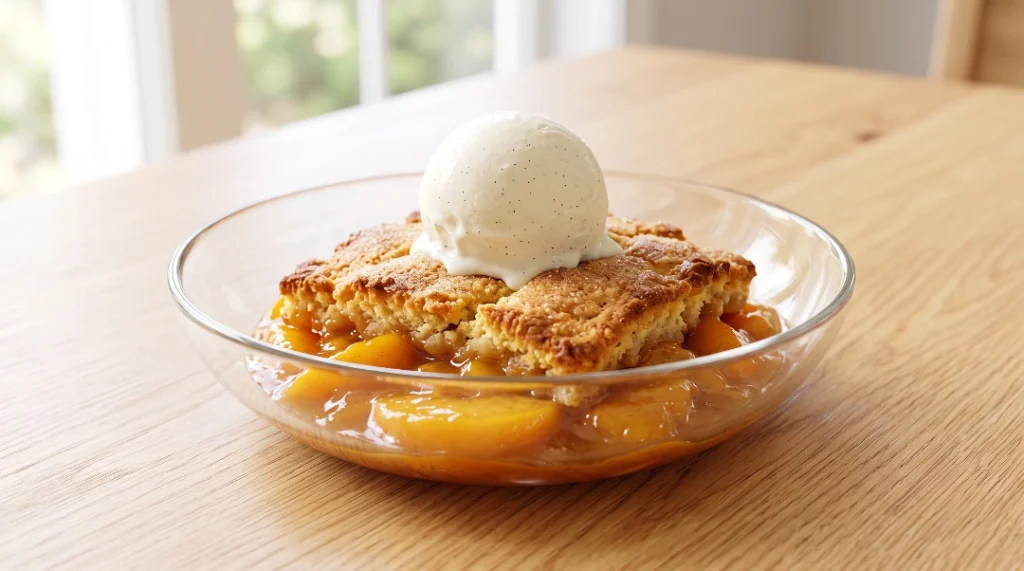
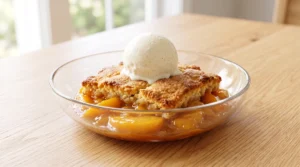
Warm, With Ice Cream: Spoon generous portions into bowls, making sure each serving gets both filling and topping. Top immediately with a scoop of good vanilla ice cream. The cold creaminess against the warm, spiced peach filling is what makes peach cobbler one of the most universally loved summer desserts in existence. Serve immediately while warm.
J.ZaiB’s Expert Touch
Add a pinch of cardamom alongside the cinnamon and nutmeg. Most peach cobbler recipes use cinnamon and nutmeg and stop there. A small pinch of ground cardamom, about one-eighth of a teaspoon, adds a floral, slightly citrusy warmth that makes the spice profile noticeably more complex and interesting. Cardamom and peach is a combination used in South Asian desserts for good reason. It lifts the whole filling without making it taste unfamiliar.
Sprinkle turbinado sugar on the topping instead of regular granulated sugar. Turbinado sugar, sometimes sold as raw sugar or demerara sugar, has a coarser crystal size and a slight molasses flavor. Sprinkled over the biscuit topping before baking, it creates a much more satisfying crunch on the surface that regular sugar simply cannot produce. Worth buying a small bag specifically for this purpose.
Taste the peaches before adjusting the sugar. Peak season August peaches can be dramatically sweeter than early-season peaches from the same variety. Taste your filling mixture before it goes in the pan and reduce the sugar by 2 to 3 tablespoons if the peaches are already very sweet. An oversweetened cobbler masks the natural peach flavor that should be the star of the dish.
Use buttermilk instead of regular milk in the topping. Buttermilk’s slight acidity reacts with the baking powder to produce a more tender, lighter biscuit topping than plain milk. The flavor difference is subtle but the texture difference is real. If you do not have buttermilk, add one tablespoon of white vinegar or lemon juice to half a cup of regular milk and let it sit for 5 minutes before using.
Serve within 2 hours of baking for the best topping texture. Peach cobbler topping softens significantly as it sits, absorbing moisture from the filling below. It is best eaten warm, within a couple of hours of coming out of the oven. Leftovers reheated the next day are still delicious but the topping will be noticeably softer. Plan accordingly for dinner parties.
Variations to Try
Peach and Blueberry Cobbler: Replace 1 cup of peaches with 1 cup of fresh or frozen blueberries. The blueberries add a tart, jammy contrast to the sweet peaches and turn the filling a beautiful deep purple-pink color where the juices mix together. One of the best summer fruit combinations possible.
Peach and Raspberry Cobbler: Replace 1 cup of peaches with 1 cup of fresh raspberries. The raspberry’s bright tartness cuts through the sweetness of ripe peaches in a way that makes the filling taste more complex and less one-dimensional. Add an extra teaspoon of cornstarch since raspberries release more juice than peaches during baking.
Brown Butter Peach Cobbler: Brown the butter for the topping before cutting it into the flour, using the same browned butter method from our Brownie Cookies Recipe. Let the browned butter cool until solid in the refrigerator before using, then cut into the flour as normal. The nutty, caramelized butter notes in the topping pair extraordinarily well with spiced peaches.
Ginger Peach Cobbler: Add 1 teaspoon of freshly grated ginger or half a teaspoon of ground ginger to the peach filling alongside the cinnamon and nutmeg. Ginger amplifies the sweetness of ripe peaches and adds a warming edge that makes this variation work beautifully in early autumn when peach season is just ending.
Cast Iron Peach Cobbler: Make the entire recipe in a 10 or 12-inch cast iron skillet, starting with the skillet on the stovetop to heat the butter, then transferring directly to the oven. Cast iron retains heat more evenly than a baking dish and produces a noticeably crispier bottom layer.
Serving Ideas
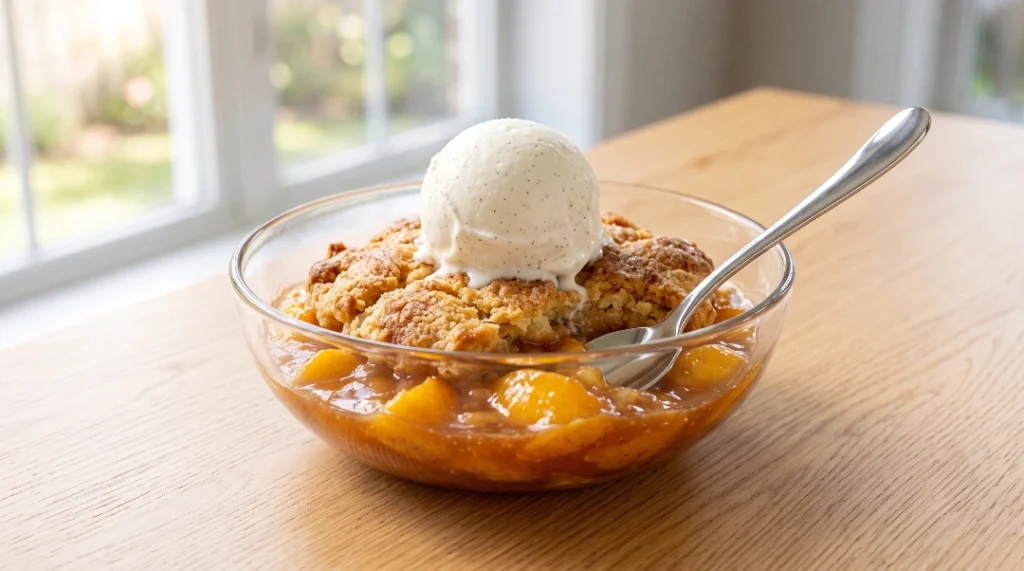
Classic summer serving: Warm peach cobbler straight from the oven into a bowl, topped with a generous scoop of vanilla ice cream. The ice cream melts into the warm filling and creates a creamy, saucy pool that mixes with every bite. This is the correct way to serve peach cobbler.
Summer barbecue dessert: This is the perfect dessert to bring to a backyard barbecue or potluck because it travels well in the baking dish, serves a crowd, and requires no plates or forks beyond a spoon and a bowl. Pair with a tall glass of our Homemade Lemonade Recipe for the full summer experience.
Dinner party dessert: Assemble the cobbler ahead of time and bake it while eating dinner, so it comes out of the oven warm and fresh exactly when you need it. Serve directly at the table from the baking dish. The smell alone when it comes out of the oven impresses every guest immediately.
Breakfast the next day: Cold peach cobbler from the refrigerator with a spoonful of Greek yogurt instead of ice cream is genuinely excellent as a next-morning breakfast. The topping softens overnight into something closer to a biscuit soaked in peach syrup, which is a different but equally good texture.
Storage and Make-Ahead Guide
Room temperature: Covered loosely, peach cobbler keeps at room temperature for up to 2 days. The topping softens by day two but the flavor is still very good.
Refrigerator: Cover tightly and refrigerate for up to 4 days. The topping will be softer but the filling stays excellent. Reheat individual portions in a 325°F oven for 10 to 12 minutes, or microwave for 60 to 90 seconds.
Freezer: Peach cobbler does not freeze particularly well since the topping becomes very soggy on thawing. For longer storage, freeze only the peach filling in an airtight container for up to 3 months. Make fresh topping and bake when ready to serve.
Make-ahead for a dinner party:
- Up to 2 days ahead: Make the peach filling and refrigerate.
- Up to 4 hours ahead: Make the biscuit topping dough and refrigerate.
- 1 hour before serving: Assemble and bake so it comes out fresh and warm.
Best Peach Cobbler Recipe
Ingredients
Equipment
Method
- Blanch for Easy Peeling: Bring a pot of water to a boil. Score a small X on the bottom of each peach and drop into boiling water for 30 seconds. Transfer immediately to ice water. The skins slip off effortlessly with your fingers. Pit each peach and slice into half-inch wedges. If you prefer a more rustic cobbler, skip the blanching and leave the skins on.

- Toss and Rest: In a large glass bowl, combine the sliced peaches, both sugars, cornstarch, lemon juice, cinnamon, nutmeg, and vanilla. Toss gently until every piece is evenly coated. Let rest for 10 minutes while the oven preheats. The sugar draws juice from the peaches which will combine with the cornstarch to form the glossy sauce.
- Hot Pan Is the Secret: Place the empty baking dish or cast iron skillet in the oven. Preheat to 375°F (190°C) with the pan inside for 10 to 15 minutes. The pan must be genuinely hot before the batter touches it to create a crispy base.
- Cold Butter, Do Not Overwork: Whisk together flour, both sugars, baking powder, and salt. Add the cold butter cubes and use a spoon or two forks to cut the butter into the flour until the mixture looks like coarse breadcrumbs with some pea-sized pieces still visible. Stir in the milk and vanilla until a soft, shaggy dough just comes together. Stop mixing the moment no dry flour remains. Overworking makes the topping tough instead of tender.
- Pour Filling, Dollop Topping With Gaps: Carefully remove the hot pan from the oven. Pour the peach filling in and spread evenly. Drop large spoonfuls of topping over the peaches, leaving deliberate gaps between each dollop so steam can escape upward and the underside of the topping stays crispy. About one-third of the filling should still be visible through the gaps. Sprinkle the cinnamon-sugar mixture evenly over the biscuit dollops.
- Watch the Center: Bake at 375°F for 40 to 48 minutes until the topping is deep golden brown and the filling is bubbling visibly in the center of the cobbler, not just around the edges. If the topping browns too quickly before the center bubbles, lay a piece of foil loosely over the top and continue baking.
- 10 Minutes, Then Ice Cream: Let the cobbler rest for 10 minutes after coming out of the oven. The filling continues thickening as it cools slightly. Spoon warm portions into bowls and top generously with vanilla ice cream. Serve immediately.
Notes
- Hot pan technique. Preheat the empty baking dish or skillet in the oven before adding filling and topping. This creates a crispy base layer before peach juice can soak in.
- Leave steam gaps. Always leave spaces between topping dollops. These gaps let steam escape upward rather than condensing back into the batter and making the underside soggy.
- The filling must bubble in the center. Cornstarch only fully activates at boiling temperature. Bubbling in the center confirms the filling is thick and will set properly as it cools.
- Fresh peaches: ripe but firm. Very soft, overripe peaches contain less natural pectin and produce a thinner filling. If peaches are very soft, add an extra half tablespoon of cornstarch.
- Frozen peaches: do NOT thaw. Use straight from frozen. Add 1 extra tablespoon of cornstarch and add 10 extra minutes to the baking time.
- Canned peaches in juice: Drain well. Reduce sugar by 2 tablespoons.
- Canned peaches in syrup: Drain very well. Reduce sugar by 3 to 4 tablespoons.
- Buttermilk topping: Substituting buttermilk for regular milk produces a more tender biscuit. No buttermilk: add 1 tablespoon of lemon juice to half a cup of regular milk and let sit 5 minutes.
- Taste peaches before adding sugar. August peaches can be very sweet. Reduce sugar if peaches already taste sweet to avoid an overly sugary filling.
- Storage: Room temperature up to 2 days. Refrigerator up to 4 days. Reheat in a 325°F oven for 10 to 12 minutes. Topping softens over time but flavor stays excellent.
- UK/Australia notes: “All-purpose flour” equals plain flour. “Baking powder” is the same term. “Cornstarch” equals cornflour. “Vanilla ice cream” is the same globally.
- Nutrition values are estimates and vary based on peach sweetness, exact sugar quantities, and serving size.
Frequently Asked Questions
Why is my peach cobbler topping soggy on the bottom?
The two most common causes are covering the filling completely with no steam gaps, or skipping the hot pan technique. Always leave deliberate spaces between topping dollops so steam escapes upward rather than condensing back into the batter. Preheating the empty baking dish before adding the filling also creates a lightly crisp base before the peach juice can soak in.
Can I use canned peaches for peach cobbler?
Yes. Drain canned peaches very well and pat them dry with paper towels to remove excess syrup. If using peaches canned in syrup rather than juice, reduce the recipe sugar by 3 to 4 tablespoons since they are already very sweet. The texture of canned peaches is softer than fresh, which is fine for cobbler.
How do I know when peach cobbler is done?
The topping should be deep golden brown and the filling should be bubbling visibly through the gaps in the center of the cobbler, not just around the edges. The center bubbling confirms the cornstarch has reached boiling temperature and fully activated, which is essential for a thick filling rather than a thin, watery one.
Do I need to peel peaches for cobbler?
No, peeling is optional. Peach skins become very tender during baking and are completely edible. If you prefer a cleaner looking filling, blanch the peaches in boiling water for 30 seconds and the skins slip off easily. For a more rustic version, leave the skins on entirely.
Can I make peach cobbler ahead of time?
The filling can be made up to 2 days ahead and refrigerated. The biscuit topping dough can be made up to 4 hours ahead. Assemble and bake fresh for the best topping texture. Pre-baked cobbler is still good reheated but the topping softens significantly after sitting.
What is the difference between peach cobbler and peach crisp?
Cobbler has a biscuit-style drop batter topping that bakes up soft in the center with slightly crisp edges. A crisp has a crumbly oat-and-butter topping that bakes up crunchy throughout. Both have a fruit filling underneath. Cobbler is more Southern and traditional. Crisp is quicker to assemble.
The Dessert That Tastes Like August
A great Peach Cobbler Recipe does not need many ingredients, complex technique, or hours of preparation. It needs ripe summer peaches, a few pantry staples, a hot oven, and the patience to let the filling bubble properly before calling it done.
Steam vents in the topping. Hot pan before adding the batter. Bubbling filling before pulling it out. Rest for ten minutes before serving.
Do those four things and what comes out of the oven is the dessert that defines summer in the American South, warm and golden and impossibly fragrant, with a filling so good that people scrape the baking dish clean and ask when you are making it again.
With vanilla ice cream. Always with vanilla ice cream.
Tag us on Instagram @viralfoodhacks706 when yours comes out of the oven. The bubbling filling shot through the topping gaps is always the most beautiful! Save this to Pinterest so every August has a plan for the best peaches of the season.