Ingredients
Equipment
Method
Dry Brine the Steak
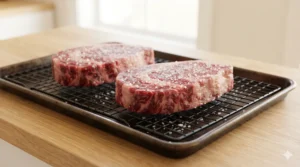
- Salt and Refrigerate Uncovered: Pat the steaks completely dry with paper towels. Season generously with coarse kosher salt on all sides. Place on a wire rack over a baking sheet so air circulates freely on every surface. Refrigerate uncovered for at least 40 minutes — 1 to 4 hours is ideal, and up to 24 hours gives the deepest flavor and driest, crust-ready surface. Do not rinse the salt off before cooking.
Bring to Room Temperature
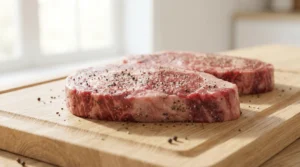
- Rest Before Cooking: Remove the steak from the fridge 30 to 45 minutes before you plan to cook. Pat the surface dry one more time with a paper towel. Season both sides with freshly ground black pepper right before cooking — pepper can scorch and turn bitter if it sits too long before high heat.
Heat the Pan
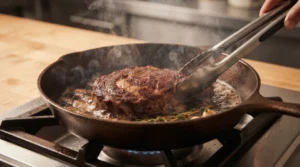
- Preheat Thoroughly: Place a cast iron or heavy stainless steel skillet over high heat and let it preheat for a full 3 to 4 minutes — longer than feels necessary, but essential for a proper crust. Add the high smoke point oil and let it heat until it shimmers and moves like water across the pan, about 30 seconds.

Sear the Steak
- Place and Do Not Touch: Carefully place the steak in the pan away from you to avoid splatter. Do not move it, shake the pan, or peek underneath. Let it sear undisturbed for 3 to 4 minutes. Use the release test instead of lifting to check — gently try to slide the steak with your tongs. If it moves freely, the crust has formed and it is ready to flip. If it resists, give it more time.
Flip and Baste
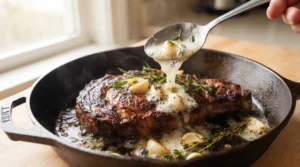
- Flip Once, Add Butter: Flip the steak with tongs — just once. Reduce heat to medium. Add the butter, smashed garlic, and herb sprigs to the pan. As the butter melts and foams, tilt the pan slightly and spoon the melted butter mixture continuously over the steak for 1 to 2 minutes. This also releases the flavorful browned fond from the pan into the butter, which bastes right back onto the steak.
Check Temperature and Pull Early
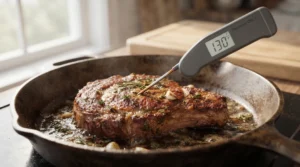
- Use a Thermometer — Pull Below Target: Insert an instant-read thermometer into the thickest part of the steak, avoiding bone or large fat pockets. Pull the steak from heat 5 to 10°F below your final target temperature — it will continue cooking from carryover heat for several minutes after removal. Thicker steaks need a bigger buffer; see the carryover guide above for exact numbers.
Rest the Steak
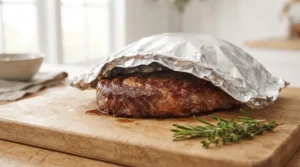
- Let It Sit: Transfer the steak to a cutting board. Tent loosely with foil. Rest for 5 to 10 minutes depending on thickness — this lets the tightened proteins relax and the juices redistribute evenly through the meat instead of spilling out the moment you cut in.
Serve
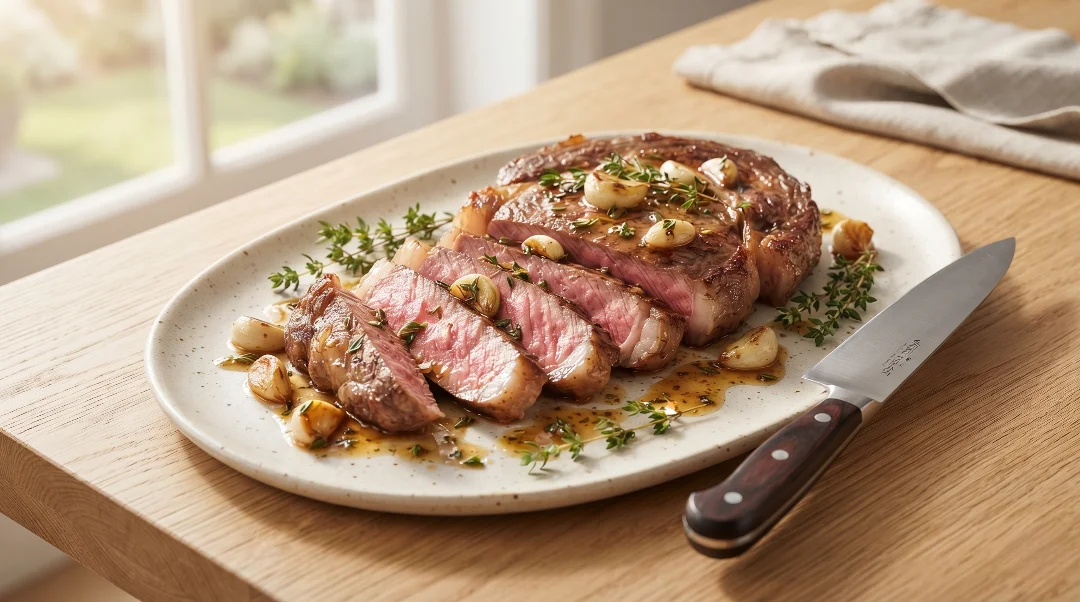
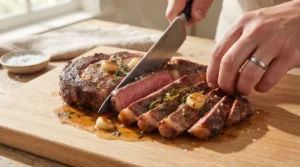
- Slice Against the Grain: Identify the direction the muscle fibers run on the surface of the steak and slice perpendicular to those lines — never parallel. This single step makes a dramatic difference in tenderness. Spoon any remaining garlic herb butter from the pan over the sliced steak and serve immediately while hot.
Notes
- Dry brine timing: 40 minutes minimum for noticeable improvement. 1 to 4 hours is the sweet spot for most home cooks. Up to 24 hours gives maximum seasoning depth and the best possible crust — plan ahead the night before for special occasions.
- Never rinse off dry brine salt. The salt has already done its work of seasoning and tenderizing — rinsing removes flavor for no benefit.
- Carryover cooking guide: ¾ inch steak rises 2–3°F after removal. 1 inch rises 3–5°F. 1.5 inches rises 5–8°F. 2+ inches can rise 8–15°F. Always pull below your target accordingly.
- Doneness reference (final temp after resting): Rare 120–125°F. Medium-rare 130–135°F. Medium 140–145°F. Medium-well 150–155°F. Well done 160°F+.
- High smoke point oil only. Avocado oil, refined canola, or grapeseed oil. Extra virgin olive oil and plain butter burn at searing temperatures and add bitter flavor.
- Smash garlic, don't mince it for basting — minced garlic burns almost instantly in hot butter. Smashed whole cloves release flavor slowly without burning.
- Cutting against the grain matters more than people think — identify the direction of the muscle fibers and always slice perpendicular to them for maximum tenderness.
- Reverse sear alternative for thick cuts (1.5+ inches): Bake at 275°F on a wire rack until 30–40°F below target temperature, then sear in a very hot pan for 1–2 minutes per side to finish. Best for porterhouse, thick ribeye, or any cut over 1.5 inches.
- Storage: Refrigerate cooked steak up to 3 days. Reheat gently in a 250°F oven, not the microwave, to avoid overcooking the edges. Raw dry-brined steak can be frozen up to 3 months.
- UK/Australia notes: "Kosher salt" = coarse cooking salt. "Cast iron skillet" = cast iron frying pan. "Instant-read thermometer" = digital probe thermometer.
- Nutrition values are estimates and vary significantly based on the specific cut and trim of steak used.