

I used to meal prep taco salad every Sunday a big container of everything tossed together, ready to grab all week. By Wednesday, it was depressing. Limp lettuce sitting in a pool of liquid. Brown avocado. A texture that could only be described as “salad soup.”
I assumed taco salad just did not hold up well. Turns out the problem was never the salad. It was how I was putting it together.
Salt and acid pull water OUT of lettuce cells through osmosis the same reason a salted cucumber goes limp in minutes. Every minute that dressing, salsa, or warm seasoned beef sits directly against raw lettuce, that water is leaving the cells and your crisp salad is turning into wilted mush. The fix is not a different lettuce or a different dressing. It is layering everything in the right order and keeping wet ingredients away from the lettuce until the very last moment.
This Taco Salad Recipe is built around that one fix plus a homemade seasoning that beats every packet, and a trick for avocado that actually stops the browning instead of just slowing it down a little.
Twenty minutes. Crisp the whole time. Let’s make it.
Why This Is the Best Taco Salad Recipe
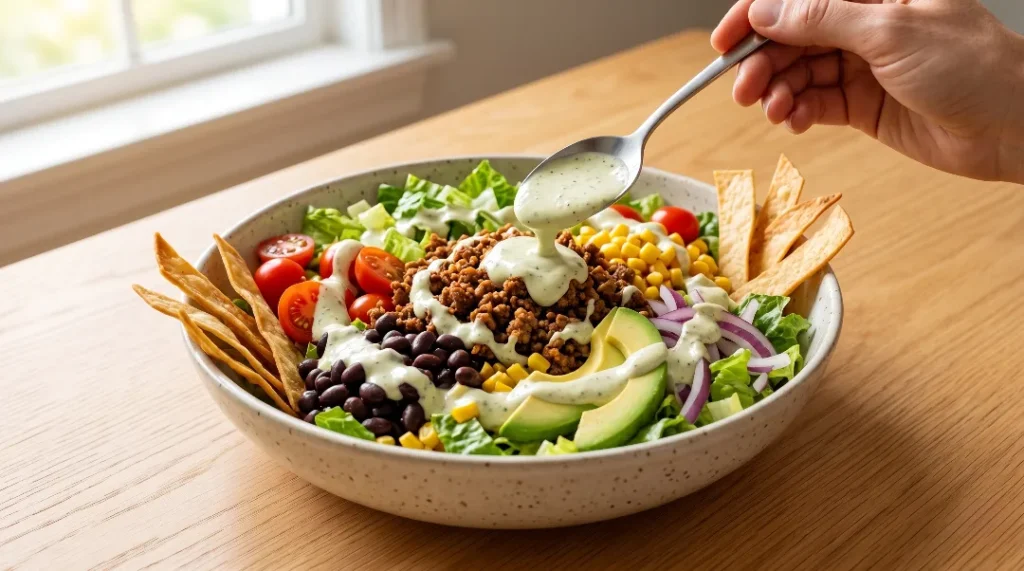
The layering strategy actually prevents sogginess it is not decoration. Lettuce goes in first and stays dry until serving. Warm components cool slightly before contact. Wet toppings like salsa and dressing go on top, never mixed in until the moment you eat. This single change is the difference between hour-one crisp and hour-five crisp.
Homemade taco seasoning beats every packet and you will taste why. Store-bought packets are loaded with anti-caking agents, excess sodium, and fillers that mute the actual spice flavors. A five-minute homemade blend gives you full control over heat, salt, and the depth of flavor genuinely noticeable in the first bite.
The avocado actually stays green. Most recipes say “add avocado last” and call it solved. This recipe explains exactly which acid stops the browning enzyme and how to apply it correctly so your avocado looks as good three hours later as it did when you cut it.
Built for meal prep properly. Most taco salad recipes mention storing components separately as an afterthought. This one gives you the exact timeline for every single ingredient, so Wednesday’s lunch tastes as fresh as Sunday’s dinner.
A Quick History: Where Taco Salad Actually Comes From
Taco salad is a distinctly American invention, not a traditional Mexican dish — it emerged in the American Southwest sometime in the mid-20th century as a way to serve all the components of a taco — seasoned meat, cheese, lettuce, tomato — in a single composed bowl instead of folded into a tortilla. Fast food chains like Taco Bell and Wendy’s popularized it nationally through the 1980s, often serving it in an edible fried tortilla shell bowl.
The homemade version has remained a weeknight staple in American kitchens for decades precisely because it solves a real problem: it delivers every flavor and texture of taco night — savory meat, melted cheese, fresh crunch, creamy avocado — without requiring anyone to assemble individual tacos. One bowl, endless customization, dinner in twenty minutes.
The Science: Why Taco Salad Goes Soggy and How to Stop It
This is the section that fixes every texture problem before it starts.
Why salt and acid wilt lettuce the osmosis mechanism. Lettuce cells are full of water held under pressure against the cell wall this internal pressure is exactly what makes a fresh leaf feel crisp and snap when you bite it. When salt, dressing, or salsa contacts the lettuce surface, it creates a higher concentration of dissolved particles outside the cell than inside. Water naturally moves from an area of lower concentration to higher concentration a process called osmosis meaning water flows OUT of the lettuce cells and into the surrounding liquid. As the cells lose their internal water pressure, they collapse, and the leaf goes from crisp to limp. This happens gradually but continuously from the moment salt or acid contacts the leaf — which is exactly why “dress it right before serving” is not just a suggestion, it is the entire solution.
Why avocado turns brown and what actually stops it. Avocado flesh contains an enzyme called polyphenol oxidase (PPO), which stays inactive and harmless while the cell structure of the avocado remains intact. The moment you cut into it, you rupture cell walls and expose PPO directly to oxygen in the air. <cite index=”843-1″>This phenomenon is known as enzymatic browning, primarily involving the enzyme polyphenol oxidase reacting with oxygen.</cite> The browning is purely cosmetic and not a safety issue, but it does change the texture slightly and looks unappetizing. The fix is acid: <cite index=”843-2″>coating cut fruits or vegetables with an acidic solution like lemon juice or vinegar slows browning by inhibiting enzymatic activity.</cite> Lime juice tossed directly onto cut avocado creates a more acidic surface environment that significantly slows PPO’s ability to react with oxygen — buying you hours instead of minutes.
Why draining the beef fat matters beyond just calories. When ground beef cooks, rendered fat pools in the pan. If that fat goes into your salad along with the meat, it coats the lettuce leaves in oil — and oil-coated lettuce wilts faster because the oil breaks down the leaf’s natural waxy cuticle (its outer protective layer), making it easier for water to escape through osmosis. Draining the fat thoroughly after browning is not just about reducing calories — it is a direct defense against soggy salad.
Why homemade seasoning tastes sharper than packet seasoning. Most commercial taco seasoning packets contain cornstarch or rice flour as an anti-caking filler, along with significant added sodium beyond what’s needed for flavor — both of which dilute the actual spice impact per spoonful. A homemade blend of chili powder, cumin, smoked paprika, garlic powder, onion powder, and oregano delivers full-strength spice flavor without filler dilution, and lets you control the salt level precisely rather than accepting whatever ratio the manufacturer chose.
Why layering order is a deliberate science, not décor. Cold, dry lettuce at the bottom creates a buffer base. Beans and corn (low-moisture, stable) go next. Warm seasoned beef should cool for 2–3 minutes before going on — hot meat directly on lettuce accelerates wilting through heat-driven moisture loss on top of the osmotic effect. Cheese goes on while the meat still has a little warmth to soften it slightly. Tomatoes, salsa, sour cream, and avocado — the wettest, most acidic components — go on top, last, right before serving, so they never have extended contact time with the lettuce underneath. For the full chemistry of how oxidation affects cut produce, McGill University’s Office for Science and Society breaks down enzymatic browning clearly and accessibly.
What You Need
For the Seasoned Beef
- 1 lb (450g) ground beef (85/15 recommended for flavor — see Notes for leaner options)
- 1 tbsp avocado oil or olive oil
- 2 tsp chili powder
- 1½ tsp ground cumin
- 1 tsp smoked paprika
- 1 tsp garlic powder
- ½ tsp onion powder
- ½ tsp dried oregano
- ¼ tsp cayenne pepper (optional — adjust heat to taste)
- ¾ tsp salt
- ¼ cup (60ml) water
For the Salad Base
- 1 large head romaine lettuce, chopped and thoroughly dried (see Expert Touch on a salad spinner)
- 1 can (15oz) black beans, drained and rinsed
- 1 cup corn kernels (fresh, frozen and thawed, or canned and drained)
- 1 cup cherry tomatoes, halved
- 1 cup shredded cheddar or Mexican blend cheese
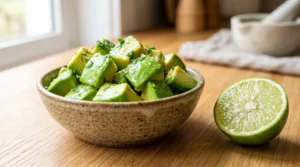
- 1 avocado, diced (tossed in lime juice immediately — see Notes)
- ½ cup red onion, finely diced
For the Lime Crema Dressing
- ½ cup (120g) sour cream (or full-fat Greek yogurt — see Notes)
- ¼ cup (60g) mayonnaise
- 2 tbsp fresh lime juice
- 1 tbsp milk (adjust for desired consistency)
- ½ tsp garlic powder
- ¼ tsp salt
Optional Toppings
- Crushed tortilla chips or homemade tortilla strips (see Variations)
- Fresh cilantro, chopped
- Sliced jalapeño
- Pickled red onion
Equipment: Large skillet, mixing bowls, salad spinner (highly recommended), large serving bowl Serves: 4–6
How to Make the Best Taco Salad Recipe — Step by Step
Make the Seasoned Beef
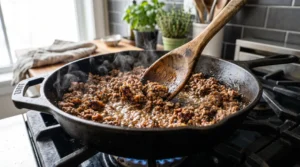
Brown the Beef: Heat avocado oil in a large skillet over medium-high heat. Add the ground beef and break it apart with a wooden spoon. Cook for 7 to 9 minutes, stirring occasionally, until no pink remains and the meat has developed some deep brown crust in spots — that browning is the Maillard reaction building real flavor, not just grey cooked meat.
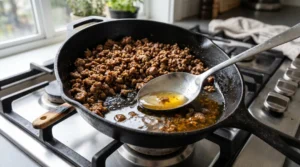
Drain Thoroughly: Tilt the pan and use a spoon to remove and discard as much rendered fat as possible, or transfer the meat to a colander set over a bowl for a minute. This step matters more than it seems — leftover fat is what makes lettuce wilt faster once everything is combined.
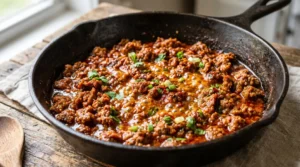
Season and Simmer: Return the drained beef to the pan over medium-low heat. Add chili powder, cumin, smoked paprika, garlic powder, onion powder, oregano, cayenne if using, and salt. Stir to coat every piece of meat evenly. Add the water and simmer for 3 to 4 minutes, stirring occasionally, until the liquid mostly absorbs and the seasoning clings to the meat rather than sitting in a watery pool. Remove from heat and let cool for 5 minutes before adding to the salad — warm meat directly on cold lettuce accelerates wilting.
Make the Lime Crema Dressing
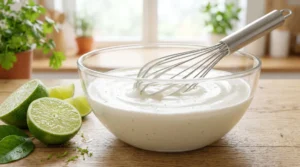
Blend Until Smooth: In a small food processor, blender, or simply a bowl with a whisk, combine sour cream, mayonnaise, lime juice, milk, garlic powder, and salt. Blend or whisk until completely smooth and pourable. Taste and adjust — more lime for brightness, more milk if it’s too thick to drizzle easily. Refrigerate until ready to serve; this dressing can be made up to 3 days ahead.
Prepare the Avocado — Stop the Browning Before It Starts
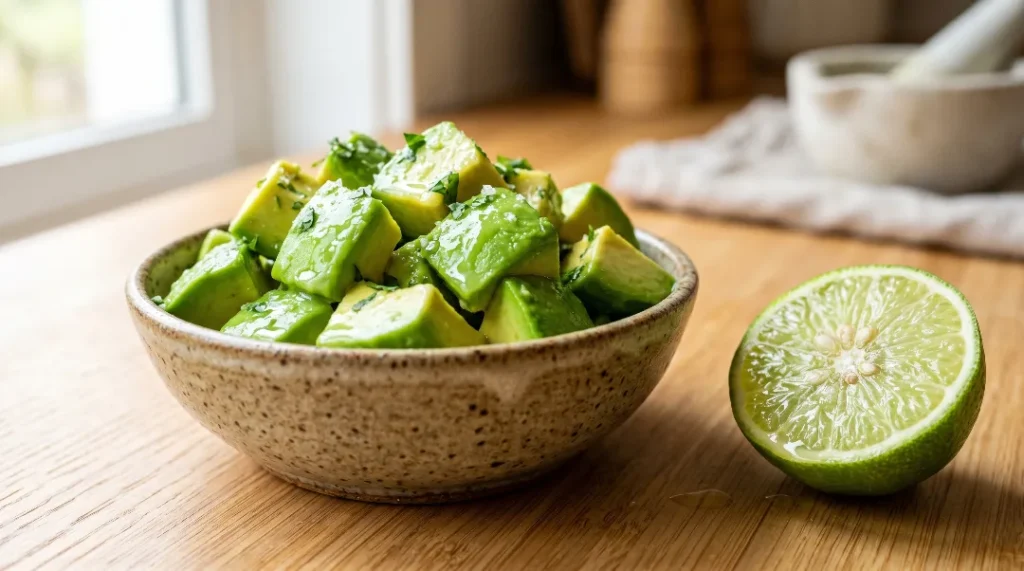
Toss Immediately: Dice the avocado and immediately toss it in a small bowl with 1 tablespoon of fresh lime juice, making sure every piece gets coated. Do this the moment you cut it — the acid needs contact with the exposed flesh right away to meaningfully slow the browning enzyme. Set aside; it will hold its green color for several hours this way.
Assemble in Layers — This Is the Step That Prevents Sogginess
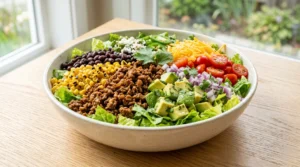
Build From the Bottom Up: Spread the thoroughly dried, chopped romaine across the bottom of a large serving bowl or divide among individual bowls. Scatter the black beans and corn evenly over the lettuce — these are dry, stable ingredients that won’t accelerate wilting. Add the cooled seasoned beef next, followed by the shredded cheese while the meat still has a touch of warmth to soften it slightly. Finish with cherry tomatoes, red onion, and the lime-tossed avocado arranged on top — these wet, acidic components stay on the surface, not mixed through, until the moment of serving.
Serve
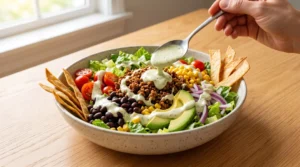
Dress and Toss at the Table: Drizzle the lime crema dressing generously over the top right before eating. Add crushed tortilla chips or homemade tortilla strips, fresh cilantro, and any other toppings. Toss everything together at the table, right before the first bite — not in advance. This final-moment toss is what keeps every leaf crisp instead of sitting in dressing for even ten extra minutes.
J.ZaiB’s Expert Touch
A salad spinner is not optional — it is essential. Water clinging to lettuce leaves dilutes the dressing and accelerates wilting even faster than salt and acid alone. Wash your romaine, then spin it thoroughly in a salad spinner until genuinely dry — not just damp-looking. This five-second step before assembly noticeably extends how long your salad stays crisp.
Homemade tortilla strips beat bagged chips every time. Cut corn tortillas into thin strips, toss lightly in avocado oil, and bake at 400°F for 8 to 10 minutes, flipping once, until golden and crisp. Avocado oil’s high smoke point means it crisps the tortillas cleanly without burning at this temperature — and the fresh-baked crunch is dramatically better than anything from a bag.
Greek yogurt instead of sour cream changes the dressing in a good way. Full-fat Greek yogurt has a higher protein content and a slightly tangier, more pronounced flavor than sour cream, with a similar fat-coating mouthfeel that balances the spice from the taco seasoning. Swap it 1:1 in the dressing recipe for a version with more protein and a brighter tang.
Salt your beef seasoning to taste, not by formula. Every brand of chili powder and every batch of paprika has slightly different salt content baked into other ingredients. Taste your seasoned meat before it goes into the salad and adjust salt in small increments — this single habit separates seasoned-properly meat from over-salted or under-seasoned meat far more reliably than any fixed measurement.
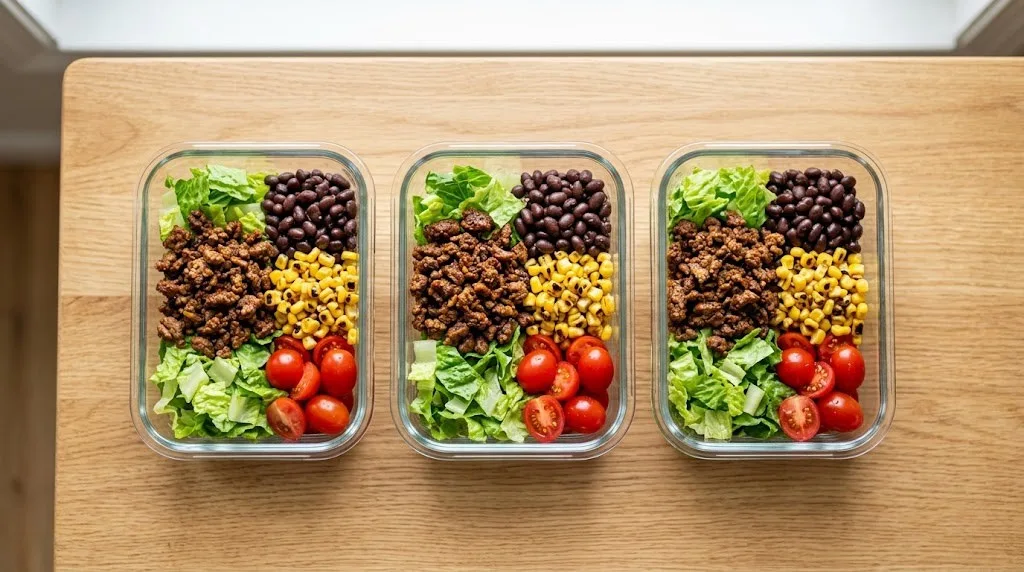
Build individual bowls for meal prep, never one shared container. When meal-prepping, portion lettuce, beans, corn, and protein into separate containers per serving rather than one giant bowl everyone scoops from across the week. Keep dressing, avocado, tomatoes, and any chips completely separate until the moment of eating. This is the single biggest factor in whether your Wednesday lunch tastes like Sunday’s dinner or like sad salad soup.
Variations to Try
Chicken Taco Salad: Swap the ground beef for diced or shredded cooked chicken, seasoned with the same spice blend. Ground chicken has less fat than 85/15 beef, so add an extra tablespoon of oil to the pan to prevent sticking and dryness. If you love a quick chicken protein swap, the technique pairs beautifully with the method in our Crispy Chicken Burger recipe — same seasoning logic, different format.
Vegetarian Taco Salad: Replace the beef entirely with an extra can of black beans plus a can of pinto beans, or with seasoned crumbled tofu cooked in the same spice blend. The same layering principle for preventing sogginess applies regardless of protein choice.
Loaded Nacho-Style Taco Salad: Build the salad in a large shallow dish instead of a bowl, scatter crushed tortilla chips across the entire base layer before the lettuce, and top generously with extra cheese, jalapeños, and a drizzle of queso. A genuine crowd-pleaser for game day gatherings.
Spicy Taco Salad: Increase the cayenne to ½ teaspoon in the seasoning, add diced jalapeño to the toppings, and stir 1 tablespoon of hot sauce into the lime crema dressing. The creamy dressing tempers the heat just enough to keep it enjoyable rather than overwhelming.
Steak Taco Salad: Use thinly sliced grilled or pan-seared steak instead of ground beef slice against the grain for maximum tenderness, the same technique used in our Pan-Seared Steak Recipe. A noticeably more elevated version, perfect for a dinner party take on taco night.
Gluten-Free Taco Salad: This recipe is naturally gluten-free as written just verify your taco seasoning spices have no cross-contamination, and use certified gluten-free corn tortilla chips rather than flour-based ones.
Serving Ideas
Weeknight family dinner: Set up a build-your-own taco salad bar with all components in separate bowls lettuce, beans, beef, cheese, toppings, and dressing and let everyone assemble their own. Zero sogginess because nothing sits combined for more than a few minutes.
Casual dinner party: Serve in individual wide bowls so the colorful layers are visible from above before guests toss everything together. Pair with our Homemade Lemonade for a refreshing, kid-and-adult-friendly drink that matches the casual Tex-Mex vibe.
Side dish pairing: A scoop of our Honey Glazed Carrots on the side adds a sweet contrast to the savory, spiced beef and creamy dressing — an unexpected but genuinely good combination.
Game day spread: Make the Loaded Nacho-Style variation above as part of a larger spread alongside dips and other shareable appetizers taco salad holds its own next to classic game day food without feeling out of place.
Storage & Meal Prep Guide
The golden rule: Store every component separately. Combined taco salad with dressing applied does not keep it will be noticeably soggy within an hour.
Lettuce: Washed and thoroughly dried, stored in an airtight container or bag with a paper towel to absorb excess moisture, lasts 4–5 days refrigerated.
Seasoned beef: Refrigerate in an airtight container up to 4 days. Reheat gently in a skillet or microwave before serving no need to bring fully to a sizzle, just warm through.
Beans, corn, cheese, onion: All keep well separately for up to 5 days refrigerated in individual containers.
Avocado (lime-tossed): Best within 24 hours even with the lime juice treatment — the acid slows browning significantly but does not stop it indefinitely. For longer storage, cut and toss the avocado fresh each day instead of prepping it days ahead.
Lime crema dressing: Keeps up to 3 days in a sealed container in the refrigerator. The flavor actually settles and improves slightly after a few hours.
Tortilla strips or chips: Store at room temperature in an airtight container up to 1 week never refrigerate, which introduces moisture and softens the crunch.
Assembly day strategy: Each morning or right before eating, layer your container fresh dry lettuce first, dry/stable ingredients next, protein, cheese, then wet toppings and avocado on top, dressing added last or kept in a tiny separate container to pour on right before eating.
Best Taco Salad Recipe
Ingredients
Equipment
Method
- Brown the Beef: Heat avocado oil in a large skillet over medium-high heat. Add the ground beef and break it apart with a wooden spoon. Cook for 7 to 9 minutes, stirring occasionally, until no pink remains and you see some deep brown crust forming in spots — that browning is real flavor developing, not just grey cooked meat.

- Drain Well: Tilt the pan and spoon out as much rendered fat as possible, or transfer the meat briefly to a colander. This matters for the final texture of the salad — leftover fat makes lettuce wilt noticeably faster once everything is combined.
- Season and Simmer: Return the drained beef to the pan over medium-low heat. Add the chili powder, cumin, smoked paprika, garlic powder, onion powder, oregano, cayenne if using, and salt. Stir well to coat every piece evenly. Pour in the water and simmer for 3 to 4 minutes, stirring occasionally, until the liquid mostly absorbs into the meat rather than sitting in a watery pool at the bottom. Remove from heat and let cool for 5 minutes before assembling warm meat directly against cold lettuce speeds up wilting.
- Blend Smooth: Combine the sour cream, mayonnaise, lime juice, milk, garlic powder, and salt in a small blender or bowl. Blend or whisk until completely smooth. Taste and adjust with more lime for brightness or more milk if it needs thinning. Refrigerate until you're ready to serve.
- Toss in Lime Right Away: Dice the avocado and immediately toss it with 1 tablespoon of fresh lime juice in a small bowl, coating every piece. Do this the instant you cut it the acid needs to contact the exposed flesh right away to slow the browning enzyme effectively. Set aside.
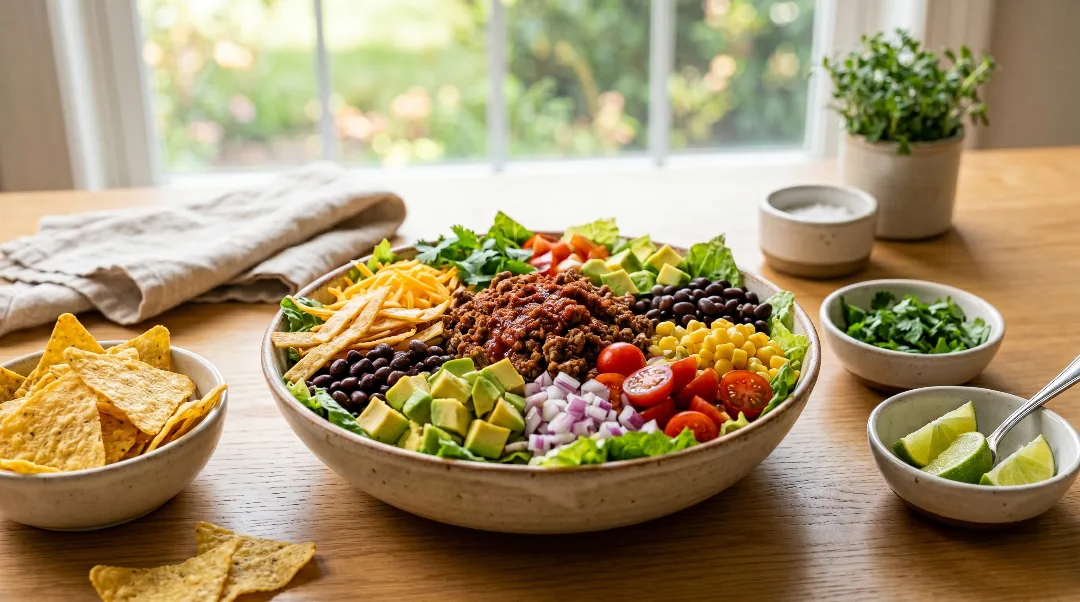
- Layer From the Bottom Up: Spread the thoroughly dried, chopped romaine across the bottom of a large bowl. Scatter the black beans and corn evenly over the lettuce. Add the cooled seasoned beef next, followed by the shredded cheese while there's still a little warmth left to soften it slightly. Top with the cherry tomatoes, red onion, and lime-tossed avocado keep these on the surface rather than mixing them through.
- Dress and Toss at the Last Moment: Drizzle the lime crema dressing generously over the top right before eating. Add tortilla chips or strips and any extra toppings. Toss everything together at the table immediately before the first bite this final-moment toss is what keeps every leaf crisp instead of sitting in dressing even a few extra minutes.
Notes
- Dry your lettuce thoroughly before assembly. A salad spinner removes clinging water that would otherwise dilute the dressing and speed up wilting. This is the single biggest factor in how long your salad stays crisp.
- Why layering order matters: Dry, stable ingredients (lettuce, beans, corn) go in first. Wet, acidic, or salty components (tomatoes, salsa, dressing, avocado) go on top last — they accelerate wilting through osmosis the moment they contact the lettuce, so minimizing contact time is the whole strategy.
- Toss avocado in lime juice immediately after cutting — the acid inhibits the enzyme (polyphenol oxidase) responsible for browning. This slows but does not stop browning indefinitely, so use within several hours for the best color.
- Drain the beef fat thoroughly — leftover fat coats lettuce and breaks down its protective outer layer, making it wilt faster. This step is about texture, not just calories.
- Homemade seasoning vs packet: Packet seasoning often contains anti-caking fillers and excess sodium that dilute spice flavor. The homemade blend in this recipe gives full-strength flavor with controlled salt.
- Greek yogurt substitute: Swap full-fat Greek yogurt 1:1 for sour cream in the dressing for a tangier, higher-protein version.
- Best lettuce choice: Romaine or iceberg — both are sturdy with lower water content than delicate greens, holding up much better under toppings and dressing.
- Protein swaps: Ground turkey or chicken work well with the same seasoning — add an extra tablespoon of oil since they’re leaner, and watch cook time closely to avoid drying out.
- Meal prep — store everything separately. Lettuce (4–5 days), seasoned beef (4 days), beans/corn/cheese (5 days), dressing (3 days). Avocado is best used within 24 hours even with the lime treatment. Assemble fresh right before each meal.
- Tortilla strips/chips: Store at room temperature, never refrigerated — moisture softens the crunch.
- UK/Australia notes: “Ground beef” = beef mince. “Sour cream” = same term. “Cilantro” = coriander leaves.
- Nutrition values are estimates. Actual values vary based on exact protein fat content, cheese amount, and dressing quantity used.
NUTRITION
(Per serving, based on 5 servings, with dressing and chips)
| Nutrient | Amount |
|---|---|
| Calories | ~420 kcal |
| Total Fat | 28g |
| Saturated Fat | 10g |
| Cholesterol | 75mg |
| Sodium | 620mg |
| Total Carbs | 22g |
| Sugars | 4g |
| Fiber | 7g |
| Protein | 24g |
Note: Values are estimates and vary based on exact ground beef fat content, cheese quantity, and amount of dressing and chips used. For internal cooking temperature safety, always verify ground beef reaches 160°F per USDA guidelines.
Frequently Asked Questions
Why does my taco salad get soggy so fast?
Salt and acid from dressing, salsa, or warm seasoned meat pull water out of lettuce cells through osmosis, causing the leaves to collapse and go limp. The fix is layering: keep wet, salty, and acidic components (dressing, salsa, tomatoes, hot meat) away from direct lettuce contact until the moment you serve, and always dress the salad right before eating, never in advance.
How do I stop avocado from turning brown in taco salad?
Toss diced avocado in fresh lime or lemon juice the moment you cut it. The acid inhibits polyphenol oxidase, the enzyme responsible for the browning reaction when avocado flesh is exposed to oxygen. This will not stop browning forever, but it noticeably slows it for several hours — long enough for a dinner party or next-day leftovers.
Can I make taco salad ahead of time for meal prep?
Yes but store every component completely separately, including the dressing in its own small container. Combined and dressed taco salad does not hold up; properly separated components each keep for 4–5 days. Assemble fresh right before eating each time for a salad that tastes as crisp on day four as it did on day one.
Is homemade taco seasoning actually better than the packet?
Yes, for two clear reasons. Packet seasoning typically contains anti-caking fillers like cornstarch that dilute the spice concentration, plus more added sodium than necessary for flavor alone. A five-minute homemade blend of chili powder, cumin, smoked paprika, garlic powder, onion powder, and oregano gives you full-strength spice flavor and lets you control the exact salt level to your taste.
What is the best lettuce for taco salad?
Romaine or iceberg are the best choices both are sturdy, crisp lettuces with lower water content per leaf compared to delicate greens like mesclun or butter lettuce, which wilt almost immediately under the weight of toppings and dressing. Romaine offers slightly more flavor; iceberg offers maximum crunch.
Can I use ground turkey or chicken instead of ground beef?
Yes both work well with the same seasoning blend. Ground turkey and chicken have less fat than beef, so add an extra tablespoon of oil to the pan to prevent sticking, and watch the cook time closely since leaner meat dries out faster if overcooked. The flavor profile stays excellent; the texture is slightly less rich than beef.
What dressing works best for taco salad besides lime crema?
Catalina dressing, ranch, or a simple combination of salsa and sour cream all work well as alternatives. The key factor with any dressing is timing apply it right before serving regardless of which dressing you choose, since the salt and acid in any dressing will accelerate wilting the moment it contacts the lettuce.
Is taco salad gluten-free?
This recipe is naturally gluten-free as written, provided you check your specific taco seasoning spices for any cross-contamination disclaimers and use certified gluten-free corn tortilla chips rather than flour-based tortilla strips. Always verify your specific beans, cheese, and sour cream brands have no hidden gluten additives.
The Salad That Actually Holds Up
A great Taco Salad Recipe is not just about flavor — though the homemade seasoning and lime crema dressing here deliver plenty of that. It is about understanding why salads fail and building around that knowledge from the very first step.
Dry your lettuce properly. Cool the meat before it touches the greens. Toss the avocado in lime the second you cut it. Keep everything wet on top, not mixed through, until the very last moment. Those four habits are the entire difference between a sad, soggy bowl by hour two and a genuinely crisp, vibrant taco salad that holds up through an entire dinner party — or an entire week of meal prep.
Make it tonight for dinner, or make the components on Sunday and build fresh bowls all week. Either way, you will finally understand why taco salad earned its place as a weeknight staple for decades — when it is built correctly, it never gets old.
Tag us on Instagram @viralfoodhacks706 when you build yours — I especially love seeing those colorful top layers before the toss! Save this to Pinterest for the next taco night that deserves a fork instead of a tortilla.