

Let me tell you about the first time I tried to make a No-Bake Mango Cheesecake.
I used fresh mango. Followed the recipe. Added the gelatin. Refrigerated overnight. Woke up the next morning full of hope — and found a golden puddle instead of a set cheesecake. The filling had never firmed. The mango jelly on top had somehow set, but the filling underneath was completely liquid.
What nobody told me: fresh mango contains bromelain — a protease enzyme that breaks down gelatin proteins before they can set. Raw mango + gelatin = gelatin that never firms. Every step of that recipe was technically correct. The mango was the problem.
That one discovery changed everything. This No-Bake Mango Cheesecake recipe explains exactly what went wrong, how to fix it, and how to make a golden, silky, genuinely sliceable cheesecake without turning on the oven — whether you use gelatin, agar agar, or no setting agent at all.
Three methods, one article. Let’s make it.
Before You Start — Choose Your Setting Method
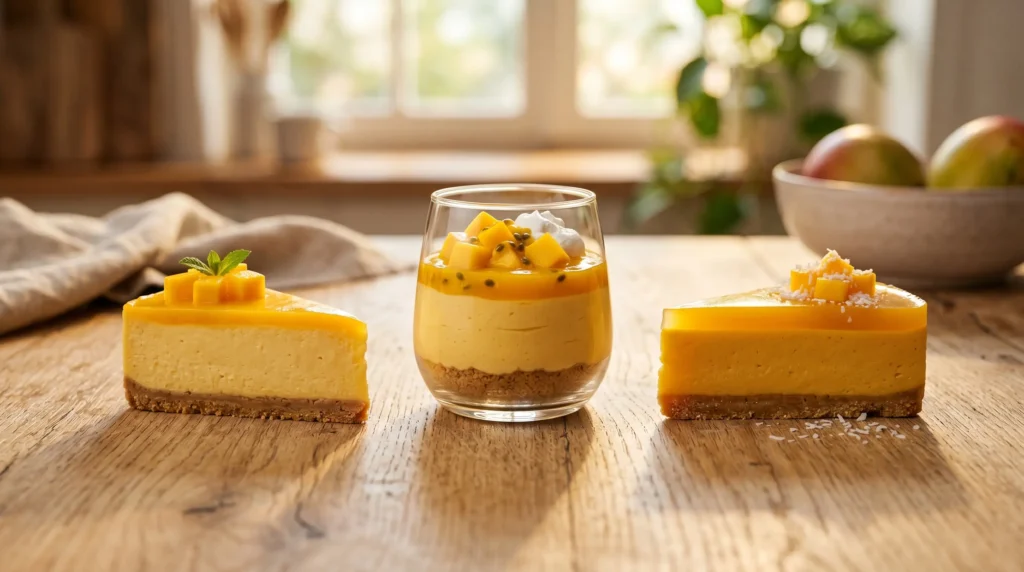
This is the decision that determines everything else about how you make this recipe. Read this first.
| Method | Best For | Texture | Difficulty | Vegetarian? |
|---|---|---|---|---|
| Gelatin | Classic soft cheesecake — sliceable | Silky, melt-in-mouth, jiggly | Easy | ❌ (pork/beef derived) |
| Agar Agar | Vegetarian/vegan — sliceable | Firmer, cleaner cut, less creamy | Medium | ✅ |
| No Setting Agent (Cups) | Easiest — no unmolding | Soft, mousse-like, spoonable | Easiest | ✅ |
My recommendation: Gelatin for the creamiest texture if dietary restrictions are not an issue. Agar agar for vegetarian or halal households. Cups/jars if you want zero risk and maximum ease.
The recipe below covers all three — choose before you start mixing.
Why This No-Bake Mango Cheesecake Recipe Actually Works
The bromelain problem is solved. Most No-Bake Mango Cheesecake recipes use fresh mango puree and gelatin together — and then quietly fail to set in half of kitchens. This recipe explains why and gives you the fix: either use canned mango pulp (heat-processed, bromelain deactivated) or heat fresh puree to 170°F before using. Details in the science section.
Both gelatin AND agar agar are fully covered. Not just “use agar as a substitute” — the actual ratios, technique differences, and texture expectations for each. You will know exactly what you are making before you make it.
Three mango layers. Mango in the crust (optional). Mango in the filling. Mango jelly on top. This is what makes a No-Bake Mango Cheesecake taste intensely of mango rather than just cream cheese with a yellow tint.
Cup version for zero stress. Individual cups or mason jars with the same filling — no gelatin, no unmolding, no anxiety. Perfect for parties where cutting a full cake feels like too much production.
The Story Behind Mango Cheesecake
Cheesecake in its earliest form dates back to ancient Greece, but the mango cheesecake combination is distinctly South and Southeast Asian in spirit — born from the pairing of tangy dairy and intensely sweet tropical fruit that defines so many desserts across India, the Philippines, and Malaysia.
The mango is indigenous to southern Asia, where it has been cultivated for over 4,000 years. It is a rich source of vitamins A, C, and D — and its name in English derives from the Malayalam word “manna,” adopted by Portuguese traders as “manga” when they arrived in Kerala in 1498. That 4,000-year cultivation history produced the Alphonso, the Kesar, the Ataulfo — the specific varieties that make mango cheesecake taste the way it does. For the full history of how mango traveled from ancient India to American grocery stores, Britannica’s guide to Mangifera indica is worth reading.
The Science: Why Your No-Bake Mango Cheesecake Might Not Be Setting
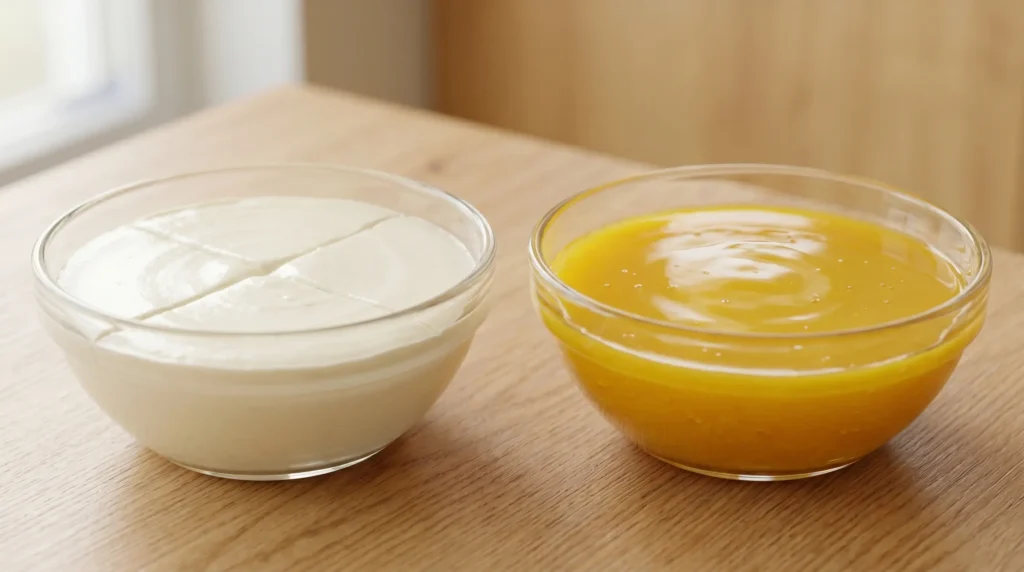
This is what most No-Bake Mango Cheesecake recipes never explain — and it causes more failures than any other single factor.
The bromelain problem — fresh mango and gelatin don’t always mix. Fresh, raw mango contains bromelain — the same protease enzyme we discussed in the carrot cake article that tenderizes gluten. In the context of cheesecake, bromelain does something different: it attacks the collagen proteins in gelatin, breaking the molecular bonds that form the gel structure before they can set. The result is a filling that never firms, regardless of how long you refrigerate it.
Agar agar can also be sensitive to enzymes in fresh fruit — including mango — which means even with agar, raw fresh mango puree can sometimes cause setting issues.
The fix is simple: Use canned Alphonso or Kesar mango pulp — which has been heat-processed, deactivating the bromelain — or heat fresh mango puree on the stovetop to at least 170°F (75°C) for 2 minutes before using. After that, it is safe to use with either gelatin or agar agar.
Gelatin vs agar agar — why they produce different textures. Understanding this difference means you can choose the right one for your goal rather than just defaulting to whichever one you have.
Gelatin creates a soft, stretchy, creamy texture with that characteristic melt-in-the-mouth quality — ideal for traditional desserts like mousse and cheesecake. Agar agar, derived from red algae, produces a firmer texture that sets more firmly at room temperature than gelatin.
At a molecular level: gelatin is made from animal collagen proteins that bond into a flexible, elastic network — soft when you bite in, then dissolving against your palate. Agar agar is made from polysaccharide chains extracted from red algae — they form a rigid, stable network that holds its shape firmly even at room temperature, with a cleaner, more brittle cut.
Agar powder is much stronger than gelatin — approximately 1 teaspoon of agar powder equals about 8 teaspoons of gelatin powder. Use too much agar and your cheesecake will be more jelly than creamy — use the correct amount and it slices beautifully with a slightly firmer texture than the gelatin version.
For a comprehensive breakdown of how these two gelling agents differ in both science and application, MasterClass has an excellent agar vs gelatin guide that covers the key differences in detail.
Why block cream cheese matters for structure. Just as in our New York Cheesecake, tub or spreadable cream cheese has a higher water content and added stabilizers — which create a softer, sometimes watery filling in no-bake applications. Full-fat block cream cheese provides the structural backbone that allows the cheesecake to hold its shape even with the added moisture from mango puree.
What You Need
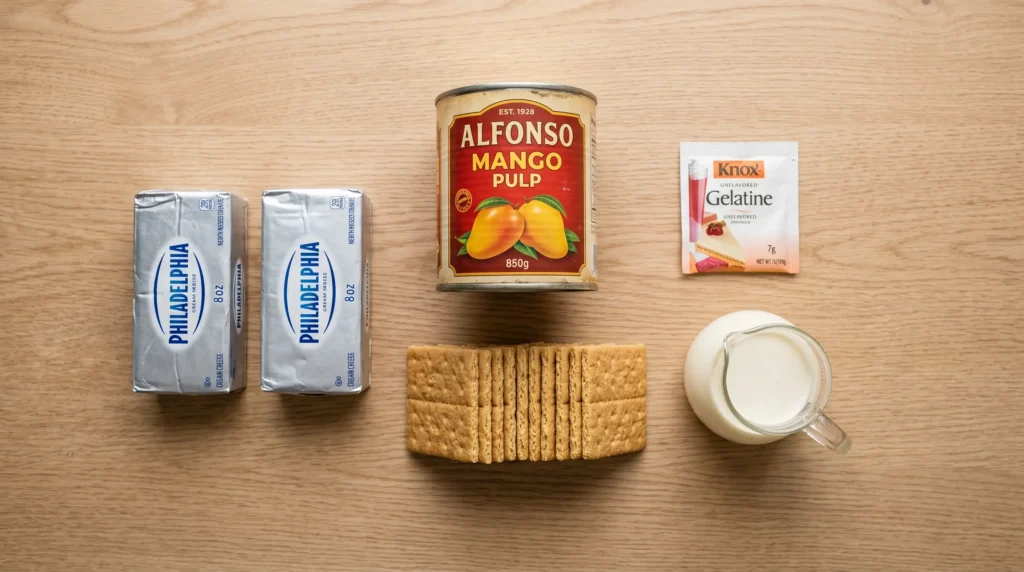
For the Graham Cracker Crust
- 2 cups (200g) graham cracker crumbs (about 14 full crackers — food processor)
- ¼ cup (50g) granulated sugar
- ½ cup (115g) unsalted butter, melted
- ½ tsp ground cinnamon (optional)
- Pinch of salt
For the Cream Cheese Filling
- 16 oz (450g) full-fat block cream cheese, room temperature
- 1 cup (240ml) heavy whipping cream, very cold
- ¾ cup (90g) powdered sugar, sifted
- 1 tsp pure vanilla bean paste (or vanilla extract)
- 1 cup (240ml) mango puree — MUST be heat-treated or canned (see Notes)
- 2 tbsp fresh lime juice
Setting Agent — Choose ONE:
Option A — Gelatin (classic, creamiest):
- 2½ tsp (7g / 1 packet) unflavored powdered gelatin
- 3 tbsp cold water (for blooming)
Option B — Agar Agar (vegetarian/vegan, firmer):
- ¾ tsp agar agar powder (NOT flakes — powder only)
- 3 tbsp water
Option C — No Setting Agent (cup/jar version):
- No additional ingredients needed — serve in cups/glasses
For the Mango Jelly Topping
- 1 cup (240ml) mango puree — heat-treated or canned
- 2 tbsp granulated sugar
- 1 tbsp fresh lime juice
- 1 tsp unflavored gelatin + 2 tbsp cold water (or ¼ tsp agar agar powder + 2 tbsp water)
For Garnish
- Fresh mango slices, sliced into fans or cubes
- Whipped cream
- Fresh mint leaves
- (Optional: passion fruit pulp drizzled on top)
Equipment: 9-inch springform pan, food processor, hand or stand mixer, small saucepan Serves: 10–12 slices Chill time: Minimum 4 hours — overnight best
How to Make No-Bake Mango Cheesecake — Step by Step
Step 1 — Make the Crust
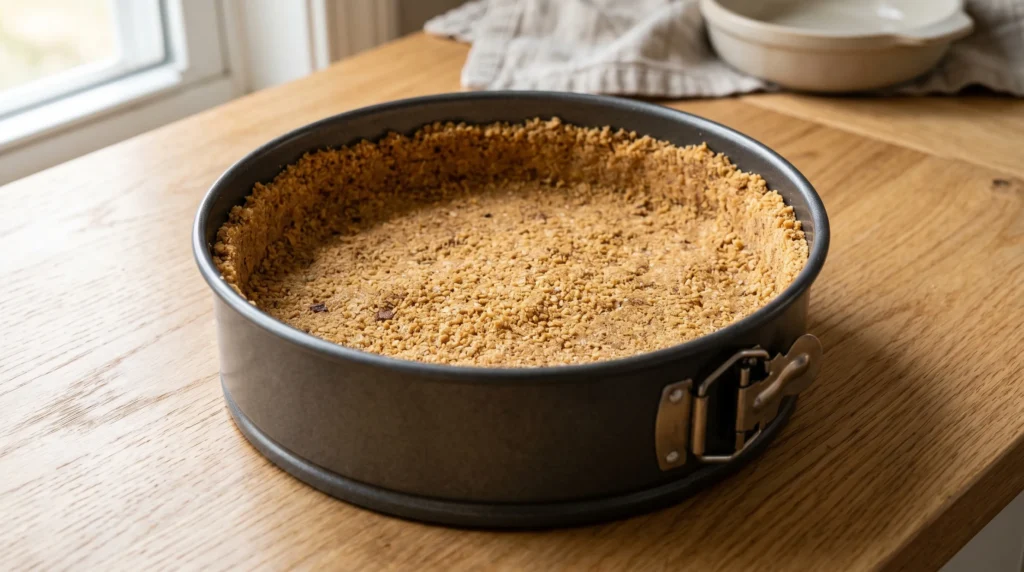
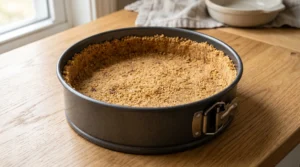
Line the base of a 9-inch springform pan with parchment paper. Pulse graham crackers in a food processor to fine crumbs. Mix with sugar, melted butter, cinnamon, and salt until the mixture resembles damp sand. Press firmly into the base of the pan and about 1 inch up the sides. Refrigerate for 30 minutes while you prepare the filling.
J.ZaiB micro-tip: Use the flat bottom of a measuring cup to press the crust firmly and evenly. A crust that is not compacted crumbles when you unmold the cheesecake. Press harder than you think you need to.
Step 2 — Prepare the Mango Puree (Critical Step)
If using canned Alphonso or Kesar mango pulp — it is already heat-processed and safe to use with gelatin or agar. Measure directly.
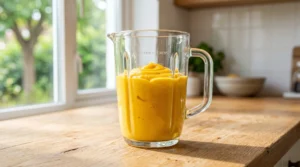
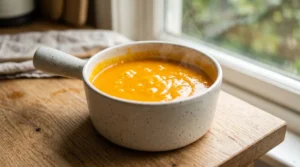
If using fresh mango — blend until completely smooth, then pour into a small saucepan and heat over medium heat to 170°F (75°C), stirring regularly. Hold at that temperature for 2 minutes. This deactivates the bromelain enzyme that would otherwise prevent your cheesecake from setting. Cool completely before using.
J.ZaiB micro-tip: I learned this the hard way after one completely liquid cheesecake. Save yourself the overnight disappointment — if you use fresh mango with gelatin, heat the puree first. Non-negotiable.
Step 3 — Prepare Your Setting Agent
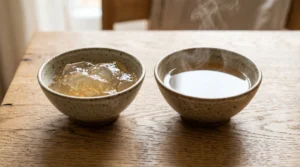
If using gelatin (Option A): Sprinkle gelatin powder over 3 tbsp of cold water in a small bowl. Do NOT stir. Let it bloom (hydrate) for exactly 5 minutes — the gelatin will absorb the water and become a solid, spongy mass. Microwave for 10–15 seconds until fully liquid. Do not overheat. Let cool to room temperature (not cold) before adding to the filling.
If using agar agar (Option B): Combine agar agar powder with 3 tbsp of water in a small saucepan. Heat over medium heat, stirring constantly, until it comes to a boil and the agar is completely dissolved — about 2–3 minutes. Remove from heat and use immediately while still warm — agar sets at room temperature.
If using cups — no setting agent (Option C): Skip this step entirely. Proceed directly to the filling.
J.ZaiB micro-tip: For gelatin — sprinkle over water, never dump in all at once. Dumping creates clumps that never fully dissolve, leaving rubbery specks in your filling. The sprinkle method ensures even hydration every time.
Step 4 — Make the Cream Cheese Filling
Beat room-temperature block cream cheese with a hand or stand mixer on medium speed for 2 minutes until completely smooth and lump-free. Add sifted powdered sugar and beat 1 minute. Add vanilla bean paste and lime juice, mix to combine.
In a separate chilled bowl, whip cold heavy cream to soft peaks — the cream holds its shape with a slight droop at the tip.
Add the cooled, treated mango puree to the cream cheese mixture and fold in gently with a spatula. Now add your setting agent:
- Gelatin version: Drizzle the cooled (not hot, not cold) liquid gelatin into the mango-cream cheese mixture while stirring constantly. Work quickly — gelatin begins setting as it cools.
- Agar version: Add the warm agar liquid immediately and mix quickly.
- Cup version: No setting agent — proceed directly.
Finally, fold in the whipped cream in two additions using gentle sweeping motions.
J.ZaiB micro-tip: Temperature matters critically with gelatin. Too hot — it starts cooking the cream cheese. Too cold — it sets in strings before distributing evenly. The gelatin should feel comfortably warm when you touch the bowl — like warm bathwater, not hot.
Step 5 — Pour and First Chill
Pour the filling over the chilled crust. Smooth the top with an offset spatula. Tap the pan gently on the counter 5 times to remove air bubbles.
Gelatin version: Refrigerate for 1.5–2 hours until the top feels set when lightly touched. Agar version: Let sit at room temperature for 30 minutes until set, then refrigerate. Cup version: Refrigerate for 2 hours minimum.
Step 6 — Make the Mango Jelly Topping
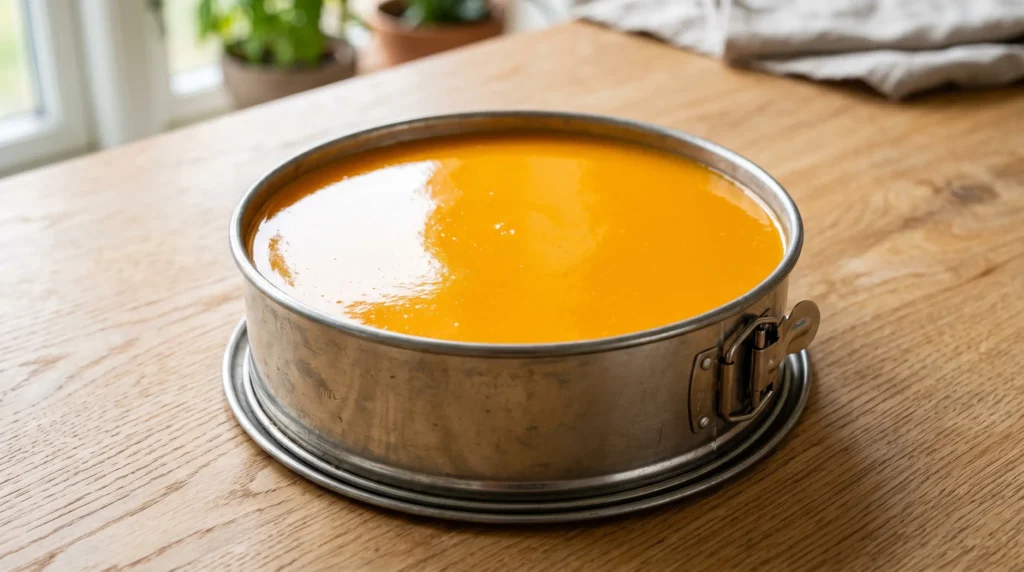
Combine the mango puree, sugar, and lime juice in a small saucepan. Warm over medium heat for 3–4 minutes until sugar dissolves. Bloom and dissolve your gelatin or agar agar as in Step 3 (using the smaller amounts). Stir into the warm mango mixture. Let cool to room temperature — it should be pourable but not hot.
Check that the cheesecake filling has set before pouring. Spoon a small amount onto the cheesecake surface — if it holds and does not sink in, the filling is ready. Gently pour the jelly topping over the surface and tilt the pan slowly to spread evenly.
Refrigerate for another 2–4 hours until the jelly is completely set. Overnight is best.
J.ZaiB micro-tip: Never pour hot or even warm jelly topping onto the cheesecake. The heat will melt the set filling underneath and you will lose your layers. Let it cool to room temperature — pourable but not warm to the touch.
Step 7 — Unmold and Decorate
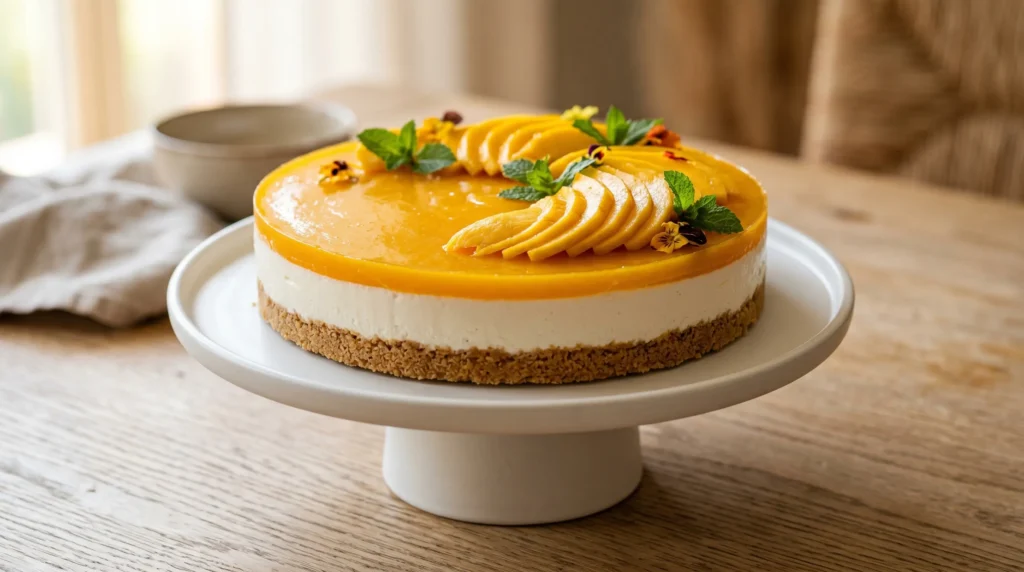
Run a thin knife around the inside edge of the springform pan. Slowly release the latch and lift the sides away. Slide an offset spatula between the parchment and the base to transfer to a serving plate.
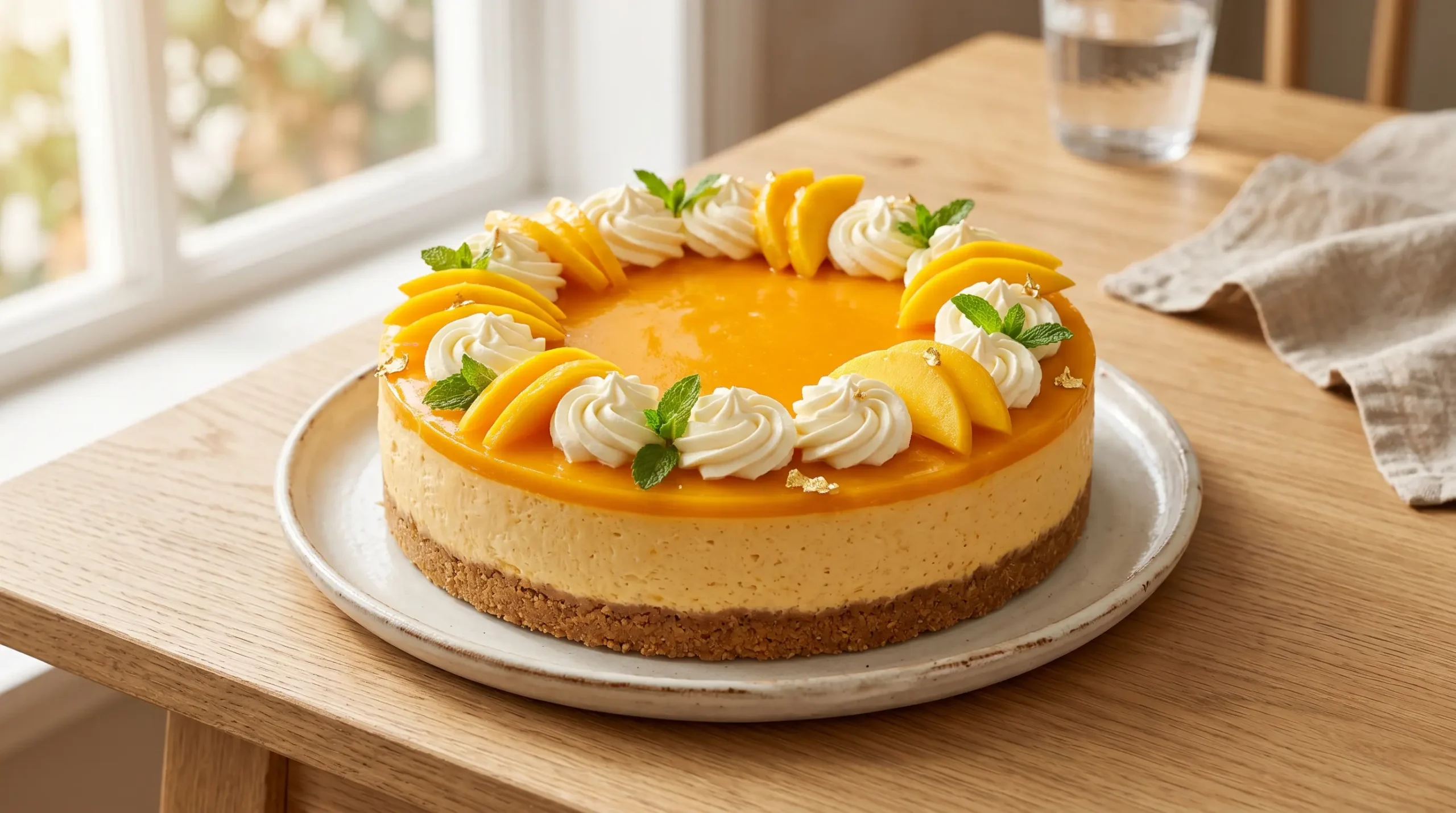
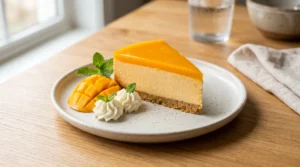
Decorate with fresh mango slices fanned around the edge, piped whipped cream rosettes, and fresh mint leaves. For a restaurant-quality finish, arrange thin mango slices in a rose pattern on top of the jelly layer.
Slice with a sharp knife dipped in hot water and wiped dry between every cut.
My Cheesecake Disaster — And What I Learned
Three important lessons from my failures so you don’t have to repeat them:
Lesson 1: Fresh mango + gelatin without heating = liquid cheesecake. Always heat fresh puree or use canned. Non-negotiable.
Lesson 2: Agar agar in the quantities most recipes give is too firm — the cheesecake tastes more like mango jelly than creamy cheesecake. Use ¾ tsp per full cheesecake, not the amounts designed for firm jellies.
Lesson 3: Pouring the mango jelly topping before the filling was fully set gave me a gorgeous marbled mess instead of clean layers. Always test with a spoon before pouring.
J.ZaiB’s Expert Touch
Canned Alphonso or Kesar mango pulp is your best friend for consistency. Fresh mangoes vary dramatically in sweetness, water content, and fiber — canned Alphonso pulp is standardized, intensely flavored, and already heat-processed (solving the bromelain problem automatically). Find it at any Indian or South Asian grocery store. It is the professional baker’s shortcut for mango desserts.
Add a pinch of saffron and cardamom to the filling. Bloom ¼ tsp saffron threads in 1 tbsp warm milk for 10 minutes, then add to the cream cheese mixture with ¼ tsp cardamom powder. The saffron adds a subtle floral warmth and a slightly deeper golden color. The cardamom adds a complexity that makes people ask what your secret ingredient is. This combination is traditionally Indian but feels entirely natural with mango.
The pistachio crust variation is extraordinary. Replace half the graham cracker crumbs with finely ground pistachios — the green-gold combination against the mango filling is visually stunning and the flavor contrast between buttery pistachio and sweet tropical mango is genuinely one of the best combinations in dessert.
Mascarpone instead of cream cheese for a richer, less tangy filling. Italian mascarpone has a fat content of 60–75% versus cream cheese’s 33%. The result is a denser, creamier, more luxurious filling with a neutral flavor that lets the mango speak more clearly. Use the same quantity and method as cream cheese — reduce the powdered sugar slightly since mascarpone is less tangy and needs less counterbalancing sweetness.
Passion fruit on the topping takes this to another level. Stir 3 tablespoons of passion fruit pulp into the mango jelly topping before pouring. The tartness of passion fruit cuts through the sweetness of the mango in a way that makes every bite more interesting. The tiny black passion fruit seeds in the golden jelly look spectacular.J.ZaiB’s Expert Touch
Canned Alphonso or Kesar mango pulp is your best friend for consistency. Fresh mangoes vary dramatically in sweetness, water content, and fiber — canned Alphonso pulp is standardized, intensely flavored, and already heat-processed (solving the bromelain problem automatically). Find it at any Indian or South Asian grocery store. It is the professional baker’s shortcut for mango desserts.
Add a pinch of saffron and cardamom to the filling. Bloom ¼ tsp saffron threads in 1 tbsp warm milk for 10 minutes, then add to the cream cheese mixture with ¼ tsp cardamom powder. The saffron adds a subtle floral warmth and a slightly deeper golden color. The cardamom adds a complexity that makes people ask what your secret ingredient is. This combination is traditionally Indian but feels entirely natural with mango.
The pistachio crust variation is extraordinary. Replace half the graham cracker crumbs with finely ground pistachios — the green-gold combination against the mango filling is visually stunning and the flavor contrast between buttery pistachio and sweet tropical mango is genuinely one of the best combinations in dessert.
Mascarpone instead of cream cheese for a richer, less tangy filling. Italian mascarpone has a fat content of 60–75% versus cream cheese’s 33%. The result is a denser, creamier, more luxurious filling with a neutral flavor that lets the mango speak more clearly. Use the same quantity and method as cream cheese — reduce the powdered sugar slightly since mascarpone is less tangy and needs less counterbalancing sweetness.
Passion fruit on the topping takes this to another level. Stir 3 tablespoons of passion fruit pulp into the mango jelly topping before pouring. The tartness of passion fruit cuts through the sweetness of the mango in a way that makes every bite more interesting. The tiny black passion fruit seeds in the golden jelly look spectacular.
Variations to Try
Pistachio Crust Mango Cheesecake: Replace half the graham cracker crumbs with ground pistachios in the crust. The green-gold color against the mango filling photographs beautifully and the flavor is extraordinary — earthy, buttery pistachio against tropical sweet mango.
Mango Cheesecake Cups / Mason Jars: Use the filling without any setting agent. Spoon crust crumbs into the bottom of individual glasses or mason jars (2–3 tablespoons each). Add the creamy mango filling. Top with a spoonful of fresh mango cubes. Refrigerate 2 hours. No unmolding, no anxiety, perfect individual portions for parties. This is our No-Bake Tiramisu Cups approach — applied to mango cheesecake.
Coconut Mango Cheesecake (Dairy-Free): Replace cream cheese with vegan cream cheese (Violife or Kite Hill). Replace heavy cream with full-fat coconut cream. Use agar agar (already vegan). The coconut + mango + lime combination is tropical perfection — and completely plant-based.
Mango Kulfi Cheesecake: Add ½ tsp cardamom, ¼ tsp saffron (bloomed in warm milk), and 2 tablespoons of condensed milk to the cream cheese mixture. Use the agar agar setting method. The result is a cheesecake that tastes like a luxurious hybrid of kulfi and New York cheesecake. Our No-Churn Mango Ice Cream uses a similar cardamom + mango approach — the flavors pair naturally.
Mini Mango Cheesecakes: Press crust mixture into lined muffin tins. Fill with cheesecake mixture. Top with a small spoonful of mango jelly. Refrigerate 4 hours. Makes 12 individual mini cheesecakes — perfect for parties where slicing feels impractical.
Mango + Lime Zest Cheesecake: Add 1 tablespoon of lime zest to both the filling and the jelly topping. The citrus oil compounds in the zest cut through the richness of the cream cheese and make the mango flavor pop significantly. One of the most refreshing summer desserts possible.
Serving Ideas
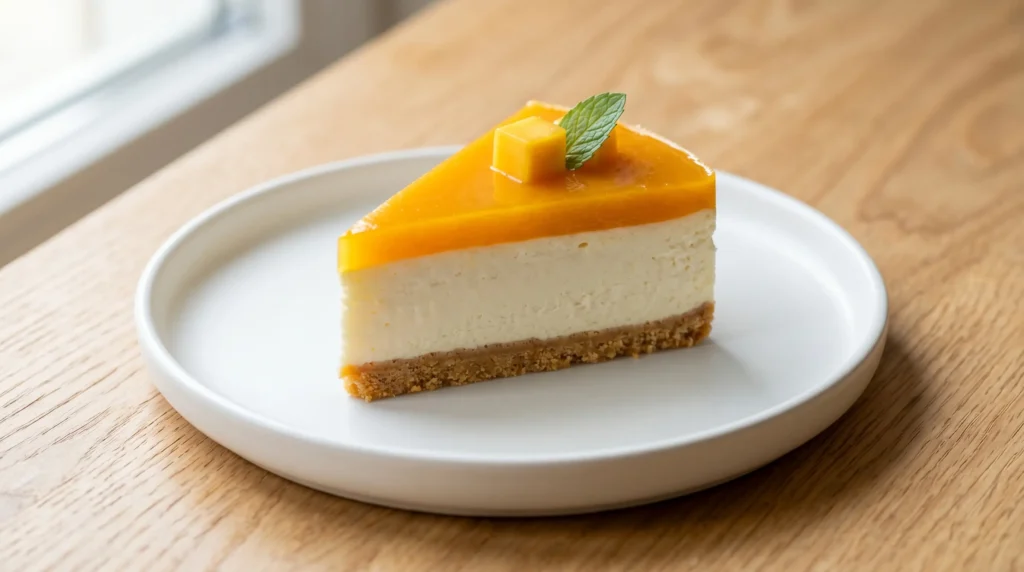
This No-Bake Mango Cheesecake is designed to be the star of the table — it needs no accompaniment to impress. But here is how to serve it for different occasions:
Summer dinner party: Slice tableside after dinner. Serve each slice with a small spoon of fresh passion fruit pulp drizzled on top and a single mint leaf. The drama of that golden cross-section on a white plate is worth every minute of preparation.
Birthday celebration: Individual cups or mini versions served in small glass jars with a small candle on top. No cutting required, no mess, perfectly portioned. Everyone gets their own jar to take home if they cannot finish — people love that.
Make-ahead brunch: The full cheesecake can be made 2 days ahead — it only improves. Add garnishes an hour before serving. The least stressful impressive dessert for any gathering.
Summer pairing: This cheesecake pairs beautifully with a scoop of our No-Churn Mango Ice Cream alongside — double mango, two textures, one spectacular summer dessert plate.
Storage & Make-Ahead Guide
Refrigerator: Covered tightly, up to 4–5 days. The jelly topping stays glossy for 2 days — after that, it begins to look less vibrant but still tastes excellent.
Freezer: Yes — this freezes well without the jelly topping. Freeze the set cheesecake (without jelly layer) covered tightly for up to 2 months. Thaw overnight in the refrigerator, then add the fresh jelly topping after thawing.
Make-ahead timeline:
- 2 days before: Make the crust, make the filling, pour and refrigerate
- 1 day before: Make and pour the mango jelly topping, refrigerate overnight
- Day of: Unmold, decorate with fresh fruit and cream, refrigerate until serving
- 1 hour before: Remove from fridge, garnish, plate
Individual cups: Can be made and refrigerated up to 3 days ahead — top with fresh mango only right before serving.
No-Bake Mango Cheesecake
Ingredients
Equipment
Method
- Line the base of a 9-inch springform pan with parchment paper. Pulse graham crackers in a food processor to fine, even crumbs. Mix with sugar, melted butter, cinnamon, and salt until it resembles damp sand. Press firmly and evenly into the base of the pan and about 1 inch up the sides using the flat bottom of a measuring cup. Refrigerate for 30 minutes.

- If using canned mango pulp — measure directly and set aside. If using fresh mango — blend until smooth, then heat in a saucepan over medium heat to 170°F (75°C), stirring regularly. Hold for 2 minutes. This deactivates bromelain enzyme that prevents gelatin from setting. Cool completely before using.
- GELATIN: Sprinkle gelatin powder over 3 tbsp cold water. Do not stir. Let bloom 5 minutes until spongy. Microwave 10–15 seconds until fully liquid. Cool to room temperature.AGAR AGAR: Combine agar powder with 3 tbsp water in a small saucepan. Bring to a boil over medium heat, stirring constantly, until fully dissolved (2–3 minutes). Use immediately while warm.CUP VERSION: Skip this step.
- Beat room-temperature cream cheese on medium speed for 2 minutes until completely smooth. Add powdered sugar, beat 1 minute. Add vanilla and lime juice, mix to combine.
- In a chilled bowl, whip cold heavy cream to soft peaks.
- Fold cooled mango puree into cream cheese mixture with a spatula. Add setting agent: drizzle cooled gelatin liquid while stirring constantly, OR quickly mix in warm agar liquid. Fold in whipped cream in two additions using gentle sweeping motions.
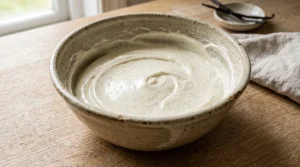
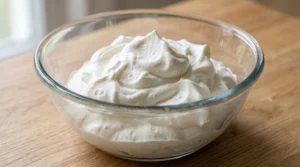
- Pour filling over chilled crust. Smooth the top. Tap pan on counter 5 times to remove air bubbles.Gelatin: Refrigerate 1.5–2 hours until top is set.Agar: Rest at room temperature 30 minutes, then refrigerate.Cups: Refrigerate 2 hours.
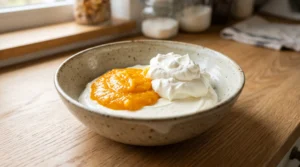
- Warm mango puree, sugar, and lime juice in a saucepan until sugar dissolves. Bloom and dissolve gelatin or agar agar as in Step 3 (using smaller amounts). Stir into the warm mango mixture. Cool to room temperature.
- Test that filling is set by touching lightly. Pour jelly topping gently over the set surface. Refrigerate 2–4 more hours until jelly is completely set. Overnight is best.
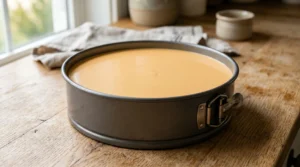

- Run a thin knife around the inside edge of the pan. Release the springform latch and lift the sides away carefully. Decorate with fresh mango slices, piped whipped cream rosettes, and mint leaves. Slice with a knife dipped in hot water, wiped dry between every cut. Serve cold.
Notes
- The Bromelain Rule — critical: Raw fresh mango contains bromelain enzyme that breaks down gelatin proteins — preventing the cheesecake from setting. ALWAYS either (a) use canned Alphonso/Kesar mango pulp (already heat-processed), or (b) heat fresh mango puree to 170°F (75°C) for 2 minutes before using with any setting agent.
- Block cream cheese only: Tub cream cheese has more water and stabilizers — the filling will be too soft and may not hold its shape. Full-fat block cream cheese is essential.
- Agar agar ratio: Use ¾ tsp agar powder per full 9-inch cheesecake — NOT the amounts designed for firm jellies. Too much agar makes the cheesecake taste like jelly, not creamy cheesecake.
- Gelatin temperature: Add dissolved gelatin when it has cooled to room temperature — comfortably warm but not hot. Too hot melts the cream cheese. Too cold makes it set in strings before distributing evenly.
- No-gelatin cup version: Fill individual glasses with crust crumbs, soft mango filling, and fresh mango cubes on top. Refrigerate 2 hours. No unmolding needed — perfect for parties.
- Mascarpone substitute: Replace cream cheese with mascarpone for a richer, creamier, less tangy filling. Reduce powdered sugar by 2 tbsp. Use same quantity and method.
- Vegan version: Use vegan block cream cheese (Violife or Kite Hill), full-fat coconut cream (whipped), and agar agar instead of gelatin. Ensure crackers are vegan.
- Best mango options: Canned Alphonso or Kesar mango pulp (Indian grocery stores) is the most consistent. Fresh Ataulfo/honey mangoes (heat treated). Avoid Tommy Atkins — too fibrous and mild.
- Clean slices tip: Refrigerate overnight minimum. Dip knife in hot water, wipe dry between every cut. For extra clean slices, freeze for 20 minutes before cutting.
- Storage: Refrigerator up to 4–5 days. Freeze (without jelly topping) up to 2 months. Thaw overnight in fridge, add jelly topping after thawing.
- UK/Australia notes: “Graham crackers” = digestive biscuits. “Heavy whipping cream” = double cream. “Powdered sugar” = icing sugar. “Block cream cheese” = standard Philadelphia brand.
- Nutrition values are estimates. Use a nutrition calculator with your exact brands for precise figures.
NUTRITION
(Per 1 slice — based on 12 slices, with jelly topping)
| Nutrient | Amount |
|---|---|
| Calories | ~380 kcal |
| Total Fat | 28g |
| Saturated Fat | 17g |
| Cholesterol | 85mg |
| Sodium | 260mg |
| Total Carbs | 28g |
| Sugars | 22g |
| Fiber | 1g |
| Protein | 5g |
Note: Values are estimates based on standard ingredient brands with gelatin setting method. Values will vary based on mango sweetness, cream cheese brand, and exact serving size.
Frequently Asked Questions
Why didn’t my No-Bake Mango Cheesecake set?
Almost certainly a bromelain issue — the protease enzyme in raw fresh mango breaks down gelatin’s collagen proteins before they can form a gel. The fix: always use canned mango pulp (already heat-processed), or heat fresh mango puree to 170°F (75°C) for 2 minutes before using with any setting agent. Also check that your gelatin was properly bloomed and fully dissolved before adding to the filling.
Can I make No-Bake Mango Cheesecake without gelatin?
Yes — two options. Use agar agar powder (vegetarian/vegan, firmer texture) at ¾ tsp per full 9-inch cheesecake. Or skip setting agents entirely and serve in individual cups or glasses — the filling is delicious in a softer, mousse-like form that does not need to be sliced. The cup version is actually the easiest and most stress-free version of this recipe.
What is the best mango for No-Bake Mango Cheesecake?
Canned Alphonso or Kesar mango pulp is the most consistent and reliable choice — it is already heat-processed (solving the bromelain problem), intensely flavored, and available year-round at Indian grocery stores. Fresh Ataulfo (honey) mangoes work well when heated first. Avoid Tommy Atkins — too fibrous and mild-flavored for cheesecake.
What is the difference between using gelatin vs agar agar in cheesecake?
Gelatin produces a soft, silky, melt-in-mouth texture that most people associate with classic cheesecake. Agar agar produces a firmer texture that holds its shape more rigidly — excellent for clean slices but less creamy on the palate. Agar is also much stronger than gelatin (1 tsp agar ≈ 8 tsp gelatin), so use precise amounts. Both work — choose based on your dietary needs and texture preference.
How long does No-Bake Mango Cheesecake need to set?
Minimum 4 hours for the gelatin or agar version — overnight is significantly better for texture, flavor development, and clean slicing. The cup version needs 2 hours minimum. Do not try to rush setting by putting the cheesecake in the freezer — it changes the texture and the jelly layer may crack when moved.
Can I use mascarpone instead of cream cheese?
Yes — mascarpone gives a richer, creamier, less tangy filling. Use the same quantity (16 oz). Reduce the powdered sugar by about 2 tablespoons since mascarpone is less tangy and needs less counterbalancing sweetness. The texture is more luxurious than cream cheese — worth trying for a special occasion version.
Can I make this vegan?
Yes — use vegan block cream cheese (Violife or Kite Hill brands work best), replace heavy cream with full-fat coconut cream (whipped), use agar agar instead of gelatin, and ensure your biscuits/graham crackers are vegan. Canned mango pulp is naturally vegan.
How do I get clean slices from No-Bake Mango Cheesecake?
Refrigerate overnight minimum. Run a thin knife around the inside edge of the springform pan before releasing. Use a sharp chef’s knife dipped in hot water and wiped dry between every cut. For the cleanest possible slices, freeze the cheesecake for 20 minutes before cutting — it firms just enough to cut without the jelly dragging.
The Golden Cheesecake That Makes Summer Worth Every Degree
There is something about that moment when you unmold a No-Bake Mango Cheesecake — that perfect golden jelly top catching the light, the cream cheese layers visible along the edge, the mango scent filling the entire kitchen.
No oven. No eggs. No water bath. No crack anxiety. Just three layers of tropical mango and tangy cream cheese on a buttery crust — assembled the day before, refrigerated overnight, and ready to silently impress at any table you set it on.
Follow the bromelain rule. Choose your setting method. Make it the night before. And when you slice that first piece and those clean layers hold — you will understand exactly why this is summer’s most rewarding dessert.
Tag us on Instagram @viralfoodhacks706 when yours is unmolded — the jelly top photos are always the most spectacular! Save this to Pinterest for every summer gathering that deserves a centerpiece dessert.