

There are two kinds of people in the world. People who own an ice cream maker and use it once a year when they can find it in the back of the cabinet. And the rest of us.
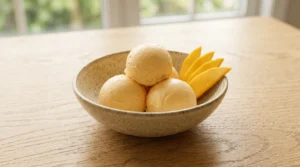
This No-Churn Mango Ice Cream was made for the rest of us.
Three ingredients. One bowl. No machine. No churning. No temperamental custard base. Just ripe mango, sweetened condensed milk, and heavy cream — folded together and frozen into the most gloriously golden, tropical, scoopable ice cream you have had all summer.
And here is the part most mango ice cream recipes get completely wrong: they skip the one step that is the difference between icy, grainy mango ice cream and the smooth, creamy version that scoops like a dream. Reducing the mango puree before it goes in. Takes eight minutes. Changes everything. The science is below.
Let’s make it.
Why This No-Churn Mango Ice Cream Recipe Actually Works
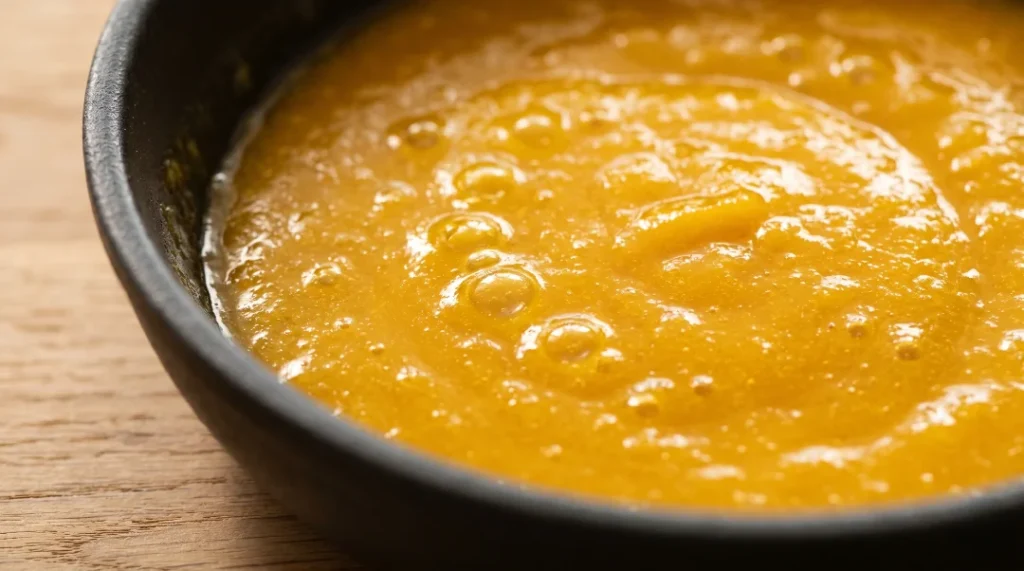
No machine needed — ever. The combination of whipped cream and sweetened condensed milk replicates what an ice cream machine does mechanically: aeration from the whipped cream, and freezing point depression from the high sugar content in the condensed milk. The result is genuinely scoopable, not the rock-hard frozen brick that most no-churn attempts produce.
Zero icy texture — if you follow the reduction step. Fresh mango is roughly 85% water. If you blend raw mango and freeze it, that water becomes ice crystals. Cooking the mango puree for 8 minutes removes a significant portion of that water, concentrates the sugars, and intensifies the flavor. This is the step most recipes skip — and the reason most mango ice creams disappoint.
3 main ingredients, grocery store only. Ripe mango, sweetened condensed milk, heavy whipping cream. Everything else is optional. No stabilizers, no egg yolks, no specialty equipment.
The color is real. Ripe mango’s golden color comes from beta-carotene — the same pigment in carrots. No food coloring needed. The deeper the orange, the riper the mango, the better the ice cream.
Customizable in every direction. Dairy-free with coconut cream? Yes. Spiked with lime and chili? Absolutely. Mixed with cardamom for a kulfi-style finish? That variation is below.
A Quick Note on Where Mango Ice Cream Comes From
Mango has been cultivated in South Asia for over 4,000 years. The mango is considered indigenous to southern Asia, and mango trees can be found today in Brazil, the West Indies, Florida, and other tropical environments. Mango fruits are a rich source of vitamins A, C, and D.
Frozen mango desserts trace back to ancient Indian kulfi — a dense, slow-frozen ice cream made by reducing milk and mango together, with no churning at all. The modern no-churn method essentially democratizes that technique: instead of reducing milk for hours, condensed milk — which is already reduced and heavily sweetened — does the same job in seconds. For more on the mango’s 4,000-year journey from ancient India to American grocery stores, Britannica’s full guide to Mangifera indica is genuinely fascinating.
The Science: Why Most Mango Ice Cream Turns Icy (And How to Fix It)
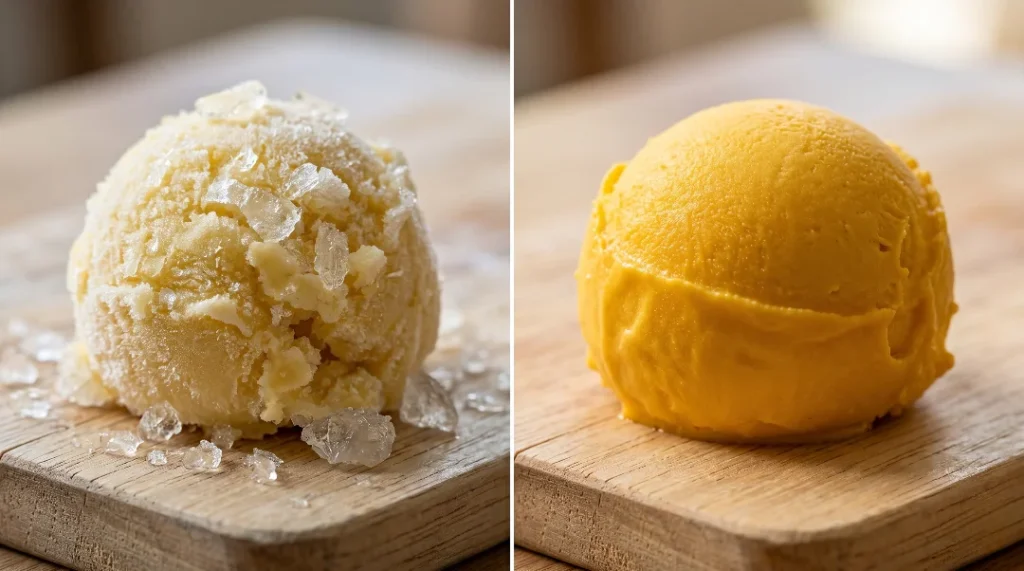
This section is what separates this No-Churn Mango Ice Cream from every other recipe online. Understanding the science means you can fix problems before they happen.
Problem 1: Too much water → Ice crystals. Fresh mango contains up to 85% water by weight. When frozen, that water forms ice crystals — and ice crystals are what give homemade ice cream that grainy, icy, disappointing texture. The fix is reducing the mango puree: simmering it for 8–10 minutes evaporates a significant portion of that water before it ever reaches your freezer. Less water = smaller crystals = creamier texture.
Problem 2: Not enough sugar → Freezing point too high. Here is the physics. Pure water freezes at 32°F (0°C). But when you dissolve sugar in water, you lower the temperature at which it freezes — a phenomenon called freezing point depression. Sweetened condensed milk is extraordinarily high in sugar, which means the water in your ice cream mixture freezes at a lower temperature than it would plain. Lower freezing point = smaller, finer ice crystals = the smooth, dense creaminess you want. As the Institute of Culinary Education explains in their ice cream science guide, the molecular weight of different sugars determines how much they lower the freezing point — and condensed milk’s sugar concentration is precisely why it works where plain sugar cannot replicate it.
Problem 3: Overwhipped cream → Buttery, heavy texture. Whipping cream to stiff peaks incorporates air into the fat globules — creating foam that lightens the ice cream and gives it that scoopable yield. But there is a line. Overwhipped cream begins to separate — the fat globules clump together and expel water, which is the first stage of making butter. Over-beaten cream in no-churn ice cream produces a dense, greasy texture instead of a light, airy one. Soft-to-medium peaks are the target: the cream holds its shape but still has some movement. When in doubt — stop earlier than you think.
Problem 4: Wrong mango variety → Stringy, fibrous texture. Not all mangoes behave the same way in a blender. Tommy Atkins mangoes — the big red ones that dominate US supermarkets year-round — are bred for shelf life and transportation, not flavor or texture. Their flesh is fibrous, which means even after blending you get a slightly stringy puree that does not integrate smoothly into the cream. Ataulfo (honey) mangoes or Alphonso mangoes puree into a silky, completely smooth liquid. If you use Tommy Atkins, strain the puree through a fine mesh sieve before using.
The Mango Variety Guide — Which One to Use
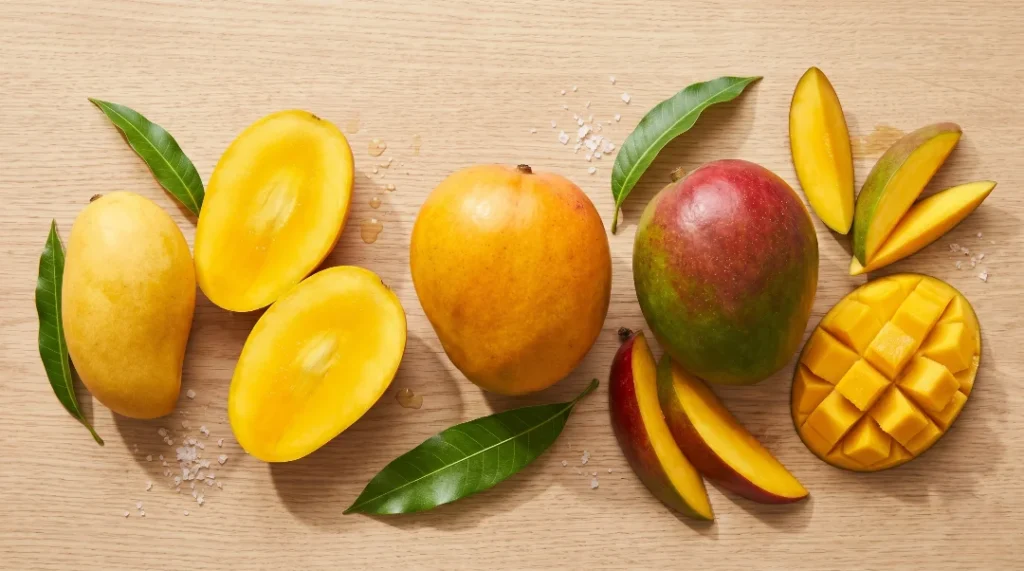
This is the guide no other mango ice cream recipe provides — and it matters more than almost any other single choice.
| Mango Type | Flavor | Fiber | Best For | Find It |
|---|---|---|---|---|
| Ataulfo (Honey/Champagne) | Buttery, honey-sweet, no tang | ✅ None | Best overall for US cooks | Most US grocery stores, Mar–Jul |
| Alphonso | Saffron-rich, intensely sweet, aromatic | ✅ None | Premium — richest flavor | Indian grocery stores, Apr–Jun |
| Tommy Atkins | Mild, slightly tangy | ❌ Fibrous | Use only if nothing else available — strain the puree | All US supermarkets year-round |
| Frozen Mango Chunks | Good — depends on variety | Varies | Excellent substitute — thaw fully before blending | Freezer section, year-round |
| Canned Mango Pulp (Kesar/Alphonso) | Sweet, concentrated, consistent | ✅ None | Best make-ahead option — reduce by half before using | Indian/Asian grocery stores |
Bottom line: Ataulfo is your everyday go-to. Alphonso is your special occasion upgrade. Frozen mango chunks work beautifully if you thaw them completely and reduce the puree. Never skip straining if you use Tommy Atkins.
What You Need
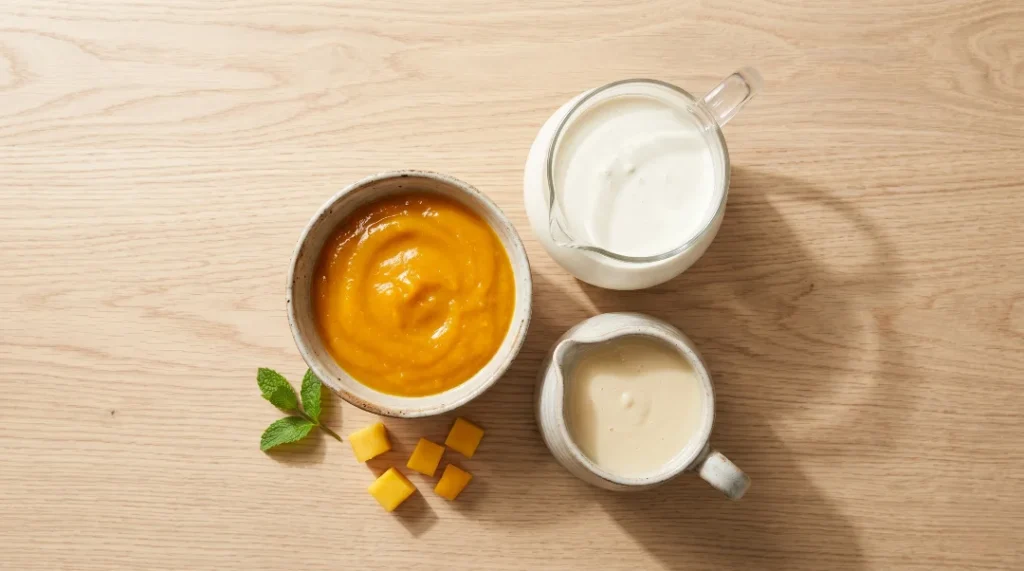
For the No-Churn Mango Ice Cream Base
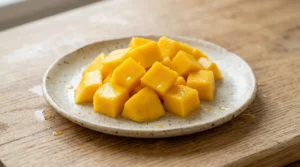
- 3 large ripe mangoes, peeled and diced (about 2½ cups mango flesh — or 2 cups thawed frozen mango chunks)
- 1 can (14 oz / 397g) sweetened condensed milk, chilled
- 2 cups (480ml) heavy whipping cream, very cold
- 1 tsp pure vanilla extract (optional but rounds out the flavor)
- Pinch of salt (enhances sweetness)
- 1 tbsp fresh lime juice (optional — brightens the tropical flavor dramatically)
Equipment: Blender or food processor, medium saucepan, hand mixer or stand mixer, loaf pan or airtight freezer-safe container
Makes: About 1 quart (6–8 scoops) Freeze time: Minimum 6 hours — overnight best
How to Make No-Churn Mango Ice Cream — Step by Step
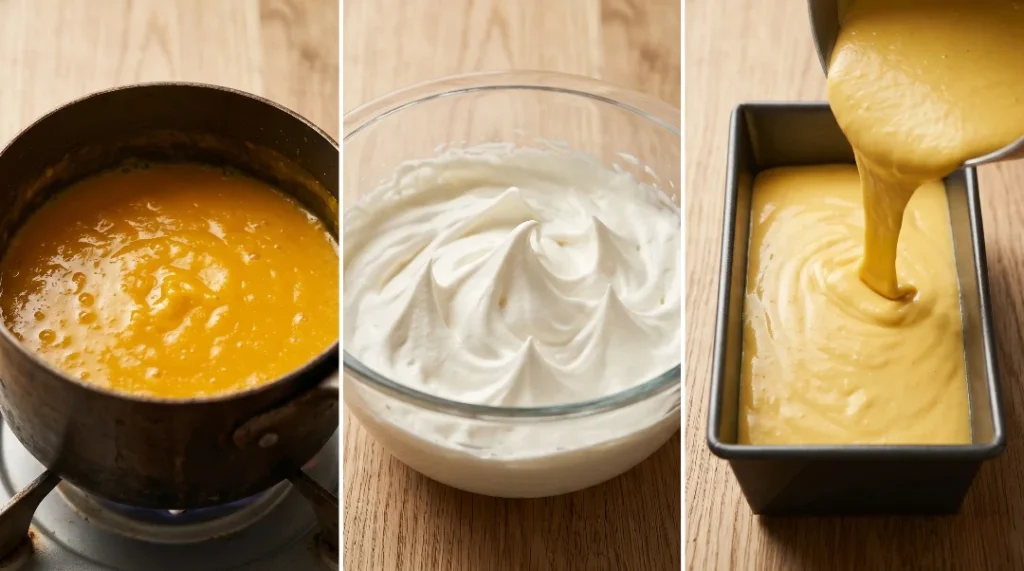
Step 1 — Chill Everything First
Place the condensed milk can and the heavy cream in the refrigerator for at least 1 hour before starting. Cold ingredients whip faster and more stably than room temperature ones. Also chill your mixing bowl and beaters in the freezer for 10 minutes — this makes a noticeable difference in how quickly and firmly the cream whips.
J.ZaiB micro-tip: The colder your cream, the faster it whips and the more stable the peaks. Room temperature cream whips but the structure is weaker — more likely to deflate when you fold in the mango. Take the temperature seriously.
Step 2 — Make the Mango Puree (The Step That Changes Everything)
Blend mango flesh in a blender or food processor until completely smooth. If using Tommy Atkins mangoes, pass the puree through a fine mesh sieve now — press with a spoon to extract as much smooth puree as possible, discard the fibers.
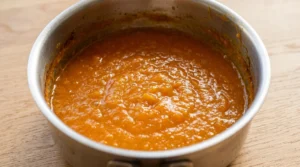
Pour the mango puree into a medium saucepan over medium heat. Cook, stirring regularly, for 8–10 minutes until the puree thickens noticeably and reduces by about one-third. You will know it is ready when you drag a spoon across the bottom and it leaves a clear path for 2–3 seconds before filling back in.
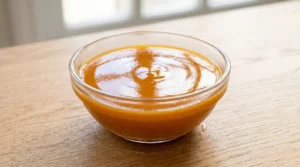
Remove from heat, stir in lime juice if using, and cool completely. Refrigerate until cold — at least 30 minutes, or up to 2 days ahead.
J.ZaiB micro-tip: Do not rush the cooling. Warm mango puree folded into whipped cream will deflate it immediately — you will lose all the air you worked to incorporate. The puree must be cold, not just room temperature.
Step 3 — Whip the Cream
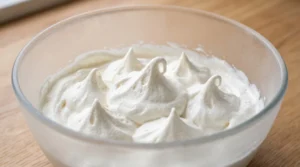
Pour the cold heavy cream into your chilled mixing bowl. Beat with a hand mixer or stand mixer on medium-high speed until soft-to-medium peaks form — meaning the cream holds its shape when you lift the beater, with a slight droop at the tip. Do NOT go to stiff peaks. Stop before you think you need to.
J.ZaiB micro-tip: Set a timer for 2 minutes and check. Then go in 30-second increments. The difference between medium peaks and overwhipped is about 45 seconds at high speed — easy to miss if you walk away.
Step 4 — Mix the Mango Base
In a separate large bowl, whisk the cold condensed milk, cooled mango puree, vanilla extract, and salt together until smooth and fully combined. Taste it — it should be slightly sweeter than you want the final ice cream to be, because the whipped cream will dilute it.
J.ZaiB micro-tip: If your mango was not very sweet, add 1–2 tablespoons of sugar to the condensed milk mixture now. Once frozen, sweetness perception drops — ice cream needs to taste slightly over-sweet at room temperature to taste right when frozen.
Step 5 — Fold Together
Add one large spoonful of whipped cream to the mango mixture and stir — this lightens the base and makes folding easier. Then add the remaining whipped cream in two additions, folding gently with a large spatula using a slow, sweeping motion from the bottom of the bowl upward. Stop as soon as no white streaks remain. Do not stir — fold.
J.ZaiB micro-tip: Every unnecessary stir knocks air out of the cream. Air is what makes the difference between scoopable ice cream and a frozen brick. Fold slowly, fold intentionally, and stop immediately when combined.
Step 6 — Freeze
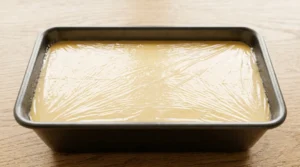
Pour the mixture into a loaf pan or airtight freezer-safe container. Smooth the top with a spatula. Press a sheet of plastic wrap directly onto the surface of the ice cream — this prevents ice crystals from forming on top. Cover with a lid or foil.
Freeze for minimum 6 hours. Overnight is better. Two days is peak texture and flavor.
J.ZaiB micro-tip: Place the container toward the back of the freezer, not the door. The temperature at the freezer door fluctuates every time it opens — causing partial thawing and refreezing that creates larger ice crystals. Back of the freezer = coldest, most consistent temperature = creamiest ice cream.
Step 7 — Scoop and Serve
Remove from freezer 5 minutes before serving — just long enough to soften slightly. Dip your scoop in hot water between each ball. Serve immediately.
J.ZaiB micro-tip: If the ice cream is rock hard after overnight freezing, 5 minutes on the counter makes it perfectly scoopable. More than 10 minutes and it starts to melt unevenly. Set a timer.
J.ZaiB’s Expert Touch
Reduce the mango in three intensity levels — choose your flavor profile. Light reduction (5 minutes): fresh, bright mango flavor. Medium reduction (10 minutes): deeper, concentrated tropical sweetness — this is the recipe default. Heavy reduction (15 minutes): almost jammy, intensely rich mango flavor closer to a frozen kulfi. Each version is excellent — your choice depends on how intensely you want the mango to come through.
Add a pinch of cardamom to the condensed milk mixture. Just ¼ teaspoon. Cardamom is traditionally paired with mango in Indian desserts — it adds a floral warmth that makes the ice cream taste more exotic and complex without being identifiable. People will ask what your secret ingredient is. You do not have to tell them.
Lime zest over lime juice. The juice brightens flavor. The zest adds an entirely different dimension — citrus aroma compounds that hit your nose before the first spoonful. Add both if you want the full tropical effect: 1 tbsp juice + ½ tsp finely grated lime zest.
Plastic wrap directly on the surface is non-negotiable. Air exposure on the surface of no-churn ice cream creates a layer of large ice crystals — the texture equivalent of freezer burn. Press the plastic wrap directly against the ice cream surface, removing all air contact. This one step is the difference between professional-looking ice cream and the typical home version.
Taste and adjust before freezing. Once frozen, your ability to correct the flavor is gone. Too sweet? Add more lime. Not sweet enough? A little more condensed milk. Not enough mango flavor? Fold in 2 extra tablespoons of the reduced puree. Taste it like it is the last chance — because it is.
Variations to Try
Spicy Mango Chili Ice Cream: Add ½ tsp cayenne pepper and 1 tsp tajin to the condensed milk-mango mixture. The heat builds slowly behind the sweetness and creates a genuinely addictive combination. Popular in Mexican street food culture — translated perfectly into no-churn format.
Mango Coconut Ice Cream (Dairy-Free): Replace heavy whipping cream with full-fat coconut cream (the solid portion from a refrigerated can of coconut milk — scoop off only the thick cream). Whip as directed — coconut cream whips to soft peaks similarly to dairy cream, though slightly less stable. The tropical coconut + mango combination is extraordinary. If you love coconut in desserts, our Moist Coconut Cake uses a similar tropical flavor layering approach.
Mango Kulfi Style: Skip the whipping entirely. Combine reduced mango puree with condensed milk, ½ tsp cardamom, and ¼ tsp saffron threads bloomed in 1 tbsp warm milk. Pour into kulfi molds or small cups. Freeze 8 hours. Dense, rich, and intensely flavored — the traditional Indian version of this dessert.
Mango Swirl: Make a plain vanilla no-churn base (condensed milk + heavy cream + vanilla). Ripple the reduced mango puree through it with a skewer before freezing — do not fully incorporate, just swirl. The contrast of white vanilla and golden mango in each scoop is visually stunning.
Mango Lassi Ice Cream: Replace ½ cup of the heavy cream with full-fat plain yogurt. Add ¼ tsp cardamom and a pinch of saffron. The yogurt adds a tangy edge that mimics a mango lassi — the ice cream version of the drink. A perfect bridge between our mango ice cream and the mango lassi article coming soon to Viral Food Hacks.
No-Bake Mango Ice Cream Pie: Press 1½ cups crushed graham crackers mixed with ¼ cup melted butter into a pie dish. Pour the no-churn mango ice cream mixture over the crust and freeze for 8 hours. Slice and serve frozen. The crunchy graham cracker base against the creamy mango filling is the summer pie you did not know you needed. If you love no-bake frozen desserts, our No-Bake Tiramisu Cups use a similar make-ahead frozen approach.
Serving Ideas
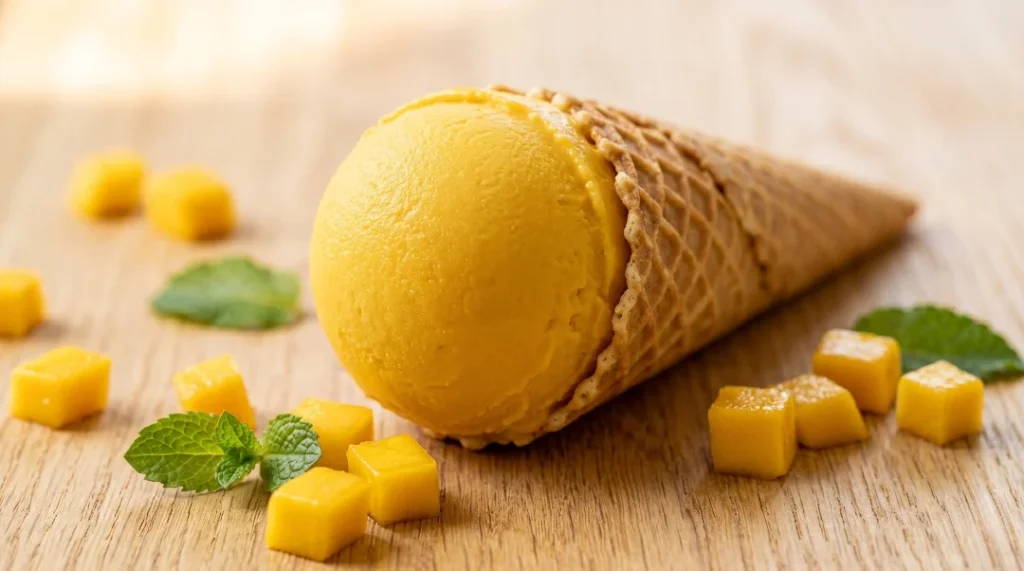
This No-Churn Mango Ice Cream is complete on its own — but here is how to serve it for every occasion:
Classic summer serving: Two scoops in a waffle cone with a squeeze of fresh lime juice and a sprinkle of tajin or chili salt on top. Simple, perfect, Instagram-worthy.
Dinner party dessert: Scoop into chilled bowls. Top with fresh mango slices, a few mint leaves, and a drizzle of passion fruit sauce or lime curd. Takes 2 minutes and looks like a restaurant dessert.
Tropical float: Place one large scoop in a glass of chilled sparkling water with a splash of coconut water and lime. Mango ice cream melts into the liquid as you drink — tropical, refreshing, summer in a glass.
Pairing suggestion: Serve alongside a slice of our New York Cheesecake for a two-dessert summer platter — the tangy cream cheese and the tropical mango complement each other without competing.
For kids: Scoop into small cups, press a popsicle stick into each while still soft, and refreeze for 2 hours. Homemade mango ice cream pops that cost a fraction of store-bought and taste ten times better.
Storage Guide
Freezer: Covered tightly with plastic wrap pressed directly to the surface, plus a lid or foil — up to 2 weeks for best texture and flavor. After 2 weeks, ice crystal formation increases noticeably.
After 2 weeks: Still edible but texture becomes icier. Blend briefly and refreeze for a sorbet-like consistency — a different texture but still delicious.
Thawing for serving: 5 minutes on the counter for a freshly frozen batch. Up to 10 minutes if it has been in the freezer more than a week. Use warm water on your scoop for cleanest scooping.
Do not refreeze once melted. Melted and refrozen no-churn ice cream becomes very icy due to enlarged crystal formation. If it melts significantly, enjoy it as a mango milkshake instead — blend with a little milk and serve immediately.
Make-ahead: The mango puree can be made and refrigerated up to 3 days ahead. The full ice cream can be made up to 2 weeks ahead of when you need it — making this the perfect make-ahead summer party dessert.
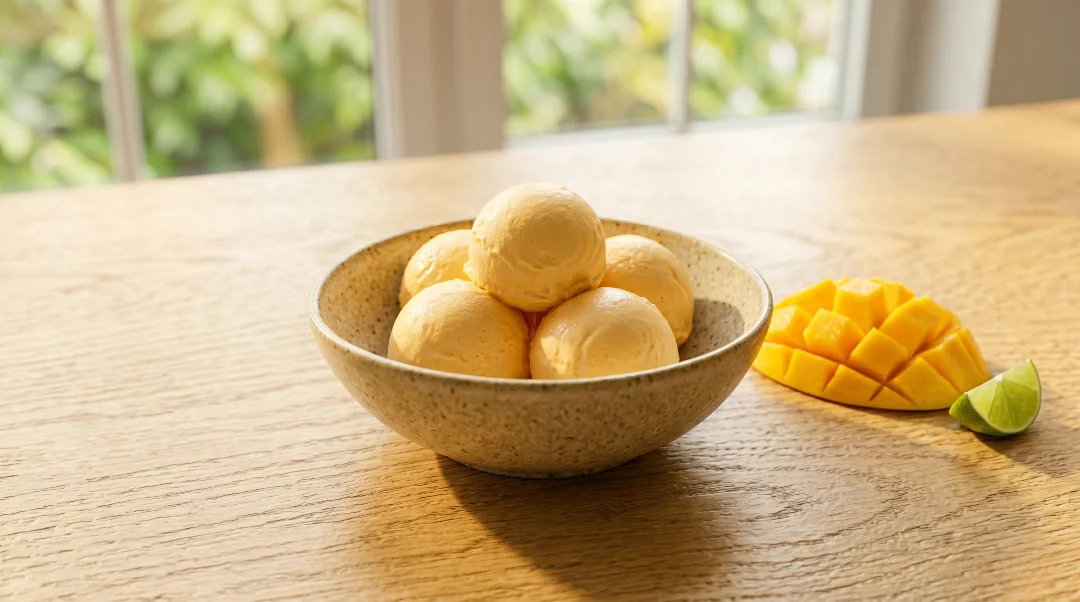
No-Churn Mango Ice Cream
Ingredients
Equipment
Method
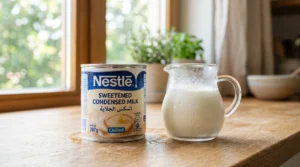
- Place the can of condensed milk and the heavy whipping cream in the refrigerator at least 1 hour before starting. Chill your mixing bowl and beaters in the freezer for 10 minutes before whipping. Cold ingredients are essential for stable whipped cream.

- Peel and dice the mangoes. Blend in a blender or food processor until completely smooth. If using Tommy Atkins or any fibrous mango, strain through a fine mesh sieve now — press with a spoon and discard the fibers.
- Pour the mango puree into a medium saucepan over medium heat. Cook, stirring regularly, for 8–10 minutes until the puree thickens and reduces by about one-third. Drag a spoon across the bottom — it should leave a clear path for 2–3 seconds. Stir in lime juice if using.
- Transfer to a bowl and refrigerate until completely cold — at least 30 minutes. Do not skip this step. Warm puree will deflate the whipped cream.
- Pour the cold heavy cream into the chilled mixing bowl. Beat with a hand or stand mixer on medium-high speed until soft-to-medium peaks form — the cream holds its shape when you lift the beater but has a slight droop at the tip. Do not overwhip. Stop before stiff peaks.
- In a large bowl, whisk together the cold condensed milk, cooled mango puree, vanilla extract, and salt until smooth. Taste — it should be slightly sweeter than you want the finished ice cream.
- Add one large spoonful of whipped cream to the mango mixture and stir to lighten it. Add the remaining whipped cream in two additions, folding gently with a spatula using slow, sweeping motions from the bottom up. Stop as soon as no white streaks remain. Do not stir.
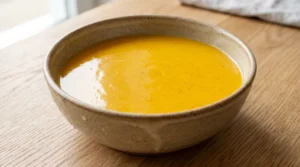
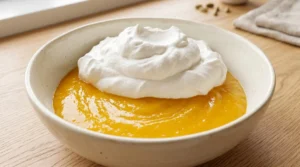
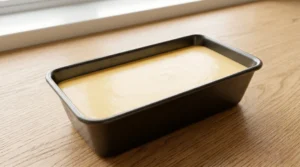
- Pour mixture into a loaf pan or airtight container. Smooth the top. Press a sheet of plastic wrap directly onto the surface — no air gaps. Cover with lid or foil.
- Freeze for minimum 6 hours. Overnight gives the best texture and flavor.
- Remove from freezer 5 minutes before serving to soften slightly. Dip scoop in hot water between each serving. Enjoy immediately with fresh mango slices, a squeeze of lime, or a sprinkle of tajin.
Notes
- Best mango varieties: Ataulfo (honey/champagne) mangoes are the top choice for US cooks — fiber-free, sweet, and widely available March–July. Alphonso mangoes (Indian grocery stores) give the richest flavor. Frozen mango chunks work well — thaw completely and drain before blending. Avoid Tommy Atkins if possible, or strain the puree.
- Why reduce the mango? Fresh mango is up to 85% water. That water becomes ice crystals when frozen. Reducing the puree removes excess water, concentrates sugars (improving creaminess), and intensifies mango flavor. This is the single most important step for creamy results.
- Do not overwhip the cream. Soft-to-medium peaks only. Overwhipped cream begins to turn buttery — the fat globules clump and the water separates, creating a heavy, greasy texture in the finished ice cream.
- Plastic wrap on surface is non-negotiable. Air contact creates ice crystals on the surface. Press plastic wrap directly onto the ice cream with no air gaps.
- Storage: Up to 2 weeks in the freezer for best texture. After 2 weeks, ice crystals increase. Still edible for 4–6 weeks.
- Dairy-free version: Replace heavy cream with full-fat coconut cream (solid portion from a refrigerated can). Replace condensed milk with sweetened condensed coconut milk. Whip and use exactly as directed.
- Keto/lower sugar: Replace condensed milk with ¾ cup powdered erythritol dissolved in ½ cup heavy cream. Results will be slightly icier but still good.
- Canned mango pulp: Kesar or Alphonso pulp works well. Since it’s thinner than fresh puree, reduce by half before using (start with 1½ cups, reduce to ¾ cup).
- Taste before freezing. Cold dulls taste perception — the mixture must taste slightly over-sweet and over-flavored at room temperature to taste balanced when frozen.
- UK/Australia notes: “Heavy whipping cream” = double cream. “Sweetened condensed milk” = same in most regions. “Ataulfo mango” = champagne mango or honey mango.
- Nutrition values are estimates. Actual values vary based on mango sweetness, condensed milk brand, and serving size.
NUTRITION
(Per 1 scoop — based on 8 servings, with full cream base)
| Nutrient | Amount |
|---|---|
| Calories | ~285 kcal |
| Total Fat | 16g |
| Saturated Fat | 10g |
| Cholesterol | 55mg |
| Sodium | 65mg |
| Total Carbs | 33g |
| Sugars | 30g |
| Fiber | 1g |
| Protein | 4g |
Note: Values are estimates. Actual values vary based on mango variety, condensed milk brand, and exact serving size. Use a nutrition calculator with your exact ingredients for precise figures.
Frequently Asked Questions
Why is my mango ice cream icy instead of creamy?
Almost always one of three reasons: the mango puree was not reduced (too much water content), the cream was not whipped to proper peaks (not enough air), or the ice cream was stored with air contact on the surface (press plastic wrap directly onto the surface). Fix all three and the texture problem disappears.
Can I make No-Churn Mango Ice Cream without condensed milk?
The condensed milk is doing two jobs that are hard to replace simultaneously: sweetening and freezing point depression. Without it, you would need a significant amount of regular sugar plus some stabilizer (like cream cheese or corn syrup) to prevent ice crystals. The texture will not be quite the same. If you must substitute, use ¾ cup powdered sugar dissolved in 2 tablespoons of cream — results will be icier.
What is the best mango for No-Churn Mango Ice Cream?
Ataulfo (honey/champagne) mangoes are the best choice for most US home cooks — fiber-free, buttery, and available at most grocery stores from March to July. Alphonso mangoes (available at Indian grocery stores) give an even richer, more complex flavor. Avoid Tommy Atkins if possible — strain the puree through a sieve if you must use them. Frozen mango chunks work well if thawed completely and reduced as directed.
How long does No-Churn Mango Ice Cream last in the freezer?
Up to 2 weeks for best texture and flavor when stored properly — plastic wrap pressed to the surface and tightly covered. After 2 weeks, ice crystals increase. It remains edible for up to 4–6 weeks but the texture becomes progressively icier.
Can I make this dairy-free?
Yes — replace the heavy whipping cream with full-fat coconut cream (the solid portion from a refrigerated can of full-fat coconut milk). Replace condensed milk with sweetened condensed coconut milk, available at most grocery stores and online. The flavor is tropical and rich — mango and coconut are one of the great natural flavor pairings.
Why do I need to reduce the mango puree?
Fresh mango contains up to 85% water by weight. That water, when frozen, forms ice crystals. Reducing the puree removes excess water, concentrates the sugars (which further depresses the freezing point for a creamier result), and intensifies the mango flavor. Skipping this step is the single most common reason homemade mango ice cream turns out icy instead of creamy.
Can I use canned mango pulp instead of fresh mango?
Yes — canned Kesar or Alphonso mango pulp (available at Indian grocery stores) is an excellent substitute and produces very consistent results. Since canned pulp is already slightly processed and thinner than fresh, still reduce it by half before using. Start with 1½ cups pulp and reduce to about ¾ cup.
Why does my mango ice cream taste less flavorful after freezing?
Cold temperatures suppress taste perception — frozen desserts always need to taste slightly over-flavored and over-sweet at room temperature to taste balanced once frozen. If your ice cream tastes mild after freezing, it tasted mild before freezing too. Taste and adjust the mixture before it goes into the freezer — that is your only opportunity.
The Summer Scoop Worth Waiting For
There is a reason No-Churn Mango Ice Cream trends every summer on Pinterest without fail — that golden color, that tropical aroma, that first scoop that tastes like you have somehow compressed an entire ripe mango into a single creamy spoonful.
Now you know exactly why it works. The freezing point depression from the condensed milk. The water reduction from the mango cooking step. The air from the whipped cream. The fiber-free variety choice. Put all of those together and you get an ice cream that could genuinely pass for machine-made — with three ingredients and no special equipment.
Make it tonight. Freeze it overnight. And tomorrow, five minutes out of the freezer, take that first scoop and tell me it is not the best thing you have made all summer.
Tag us on Instagram @viralfoodhacks706 when yours is scooped — I especially love the golden color shots in the sun! Save this to Pinterest so it is always there when mango season hits.