

If you’ve ever had a bagel with smoked salmon and cream cheese — you already know exactly what a Philadelphia Roll tastes like. Same flavor combination, same creamy-smoky magic, just wrapped up in seasoned sushi rice and nori instead of bread.
This is the Philadelphia Roll Recipe that beginner sushi makers dream about. No raw fish to worry about. No complicated techniques. No ingredients you can’t find at your regular grocery store. Just smoked salmon, cream cheese, cucumber, and sushi rice — coming together in one of the most satisfying rolls you will ever make at home.
And here’s the thing most people don’t know: the Philadelphia Roll is actually easier to roll than a California Roll. The cream cheese acts as a natural binder that holds your fillings in place while you roll. Less mess, less stress, better result.
Let’s make it.
Why You’ll Love This Philadelphia Roll Recipe
Zero raw fish. Smoked salmon is fully cured — no raw fish concerns whatsoever. Safe for everyone at the table including kids, pregnant women, and anyone who’s squeamish about raw seafood.
Only 5 main ingredients. Sushi rice, nori, cream cheese, smoked salmon, cucumber. Everything available at your regular supermarket.
The cream cheese is a cheat code. Unlike other rolls where fillings slide around during rolling, cream cheese sticks to the nori and keeps everything perfectly in place. Beginners get cleaner rolls on their very first try.
Ready in 30 minutes. Once your rice is done, assembly takes under 10 minutes per roll.
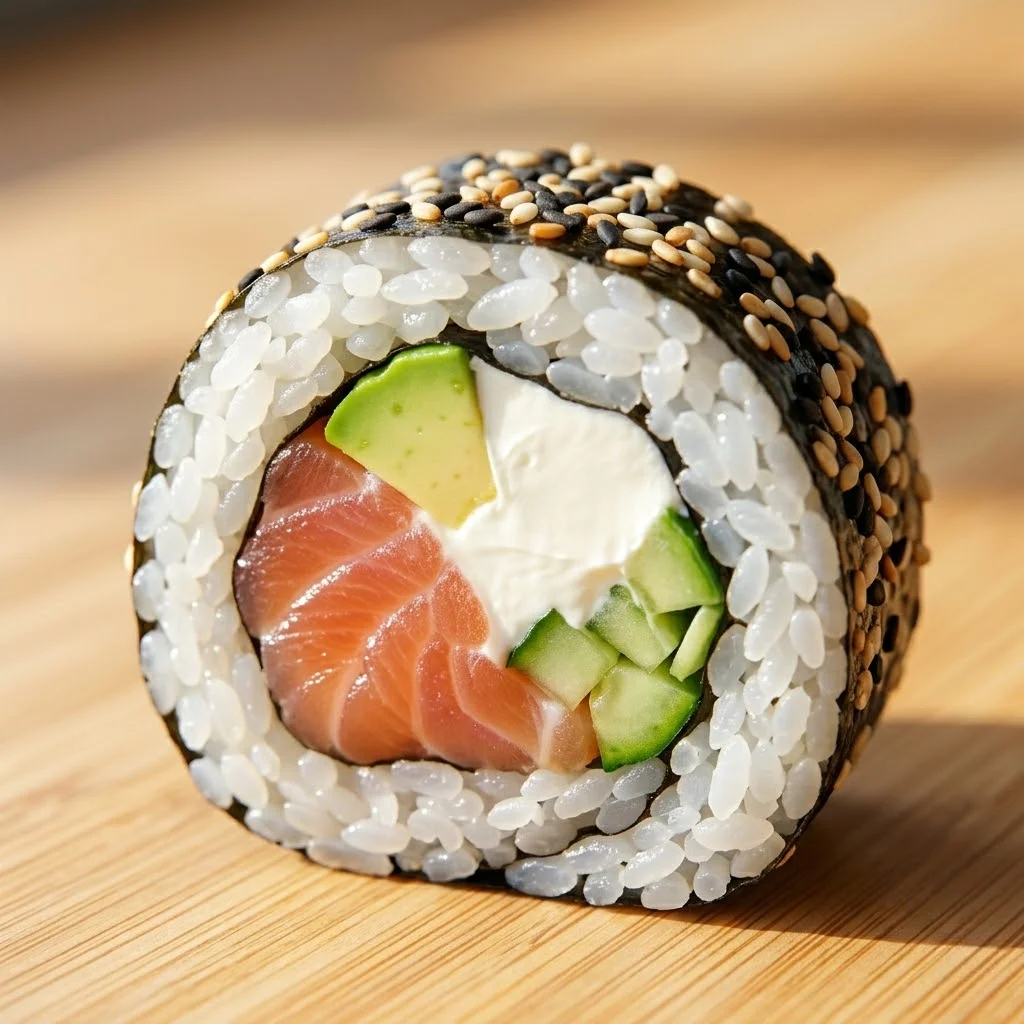
Cheaper than restaurants. A single Philadelphia Roll at a sushi restaurant costs $12–16. This recipe makes 4 full rolls for roughly the same price.
The Story Behind the Philadelphia Roll
Here’s something most Philadelphia Roll recipes skip entirely — the actual story behind this roll.
The Philadelphia Roll Recipe as we know it was invented in the 1980s by the owner of a Japanese restaurant called Tokio HeadHouse. The defining ingredient was Philadelphia brand cream cheese — the same block of cream cheese you find at every American grocery store — which is exactly where the roll gets its name.
The invention made perfect sense for the American market. Cream cheese was already a beloved ingredient in American kitchens, especially paired with smoked salmon on bagels — a classic New York-style combination. By bringing that familiar flavor into a sushi roll, the Philadelphia Roll gave American diners a comfortable bridge between their everyday food and Japanese cuisine.
It worked spectacularly. The Philadelphia Roll is now one of the most ordered sushi rolls across America, and it’s the reason many people tried sushi for the very first time. Some sushi fans even call it the “Japanese Bagel Roll” — and once you taste it, that nickname makes complete sense. For more on the history of sushi culture in Japan, Japan Guide has a great overview.
The Science: Why Cream Cheese and Smoked Salmon Work So Well Together
Traditional sushi purists will tell you cream cheese has no place in sushi. Historically, they are correct. But from a flavor science perspective, it is a brilliant combination — and here is why.
Smoked salmon is high in glutamates — the compound responsible for deep, savory, umami flavor. Cream cheese is high in fat and casein proteins, which coat your palate and slow the release of flavor compounds. When you eat them together, the fat in the cream cheese amplifies and extends the smoky, savory notes of the salmon. Every bite tastes richer than either ingredient alone.
The cucumber adds a third dimension — a fresh, watery crunch that cuts through the richness of both ingredients and keeps the roll from feeling too heavy. The sushi rice ties everything together with gentle sweetness and acidity that balances the saltiness of the smoked salmon perfectly.
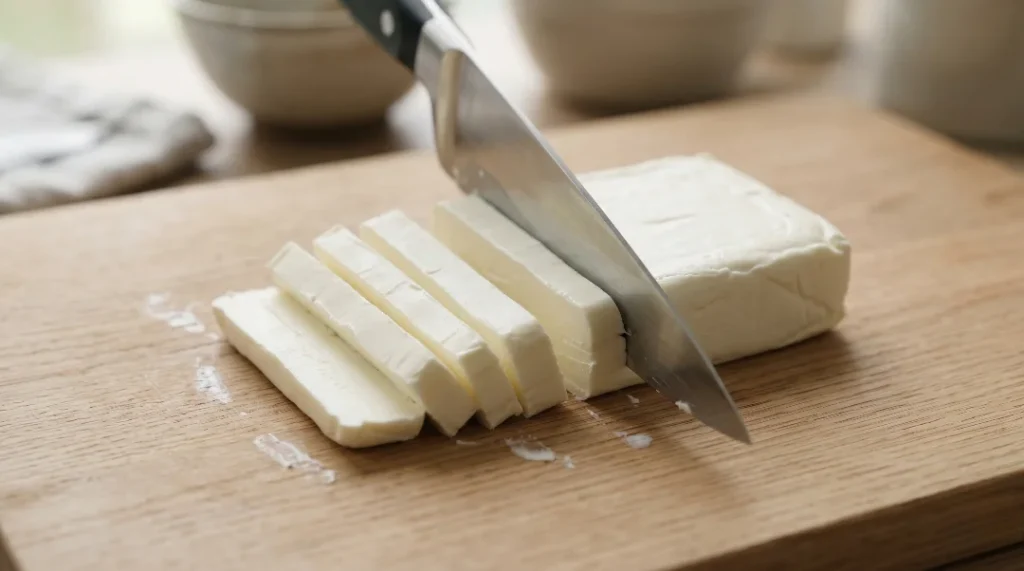
One critical ingredient tip: always use block cream cheese, not tub or spreadable. Block cream cheese has a lower water content and firmer texture — it cuts into clean strips that hold their shape during rolling and slicing. Spreadable cream cheese is too soft and will squish out when you cut your rolls. This single choice makes a huge difference in your final result.
What You Need
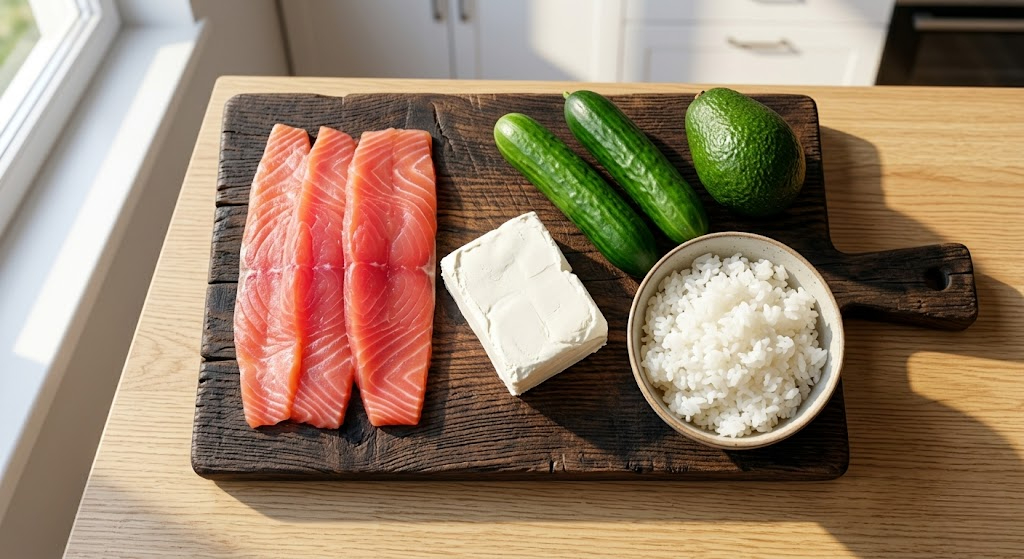
For the Sushi Rice
- 2 cups short-grain Japanese sushi rice
- 2½ cups water
- ¼ cup rice vinegar
- 2 tbsp sugar
- 1 tsp salt
For the Philadelphia Roll
- 4 sheets nori (roasted seaweed)
- 4 oz cold-smoked salmon, thinly sliced
- 4 oz block cream cheese, cut into strips
- 1 English cucumber, cut into thin matchsticks
- 1 ripe avocado, sliced (optional but recommended)
- Sesame seeds (optional, for topping)
- Soy sauce, wasabi, pickled ginger for serving
Serves: 4 rolls (24–32 pieces)
Smoked Salmon vs Raw Salmon — Which Should You Use?
| Cold-Smoked Salmon | Hot-Smoked Salmon | Raw Sashimi Salmon | |
|---|---|---|---|
| Texture | Silky, thin slices | Flaky, chunky | Buttery, delicate |
| Flavor | Smoky, rich, salty | Bold, smoky | Clean, mild, oceanic |
| Raw fish? | ❌ No | ❌ No | ✅ Yes |
| Best for rolling? | ✅ Perfect | ⚠️ Harder to roll | ✅ Authentic |
| Find it at | Regular grocery store | Regular grocery store | Japanese grocery / fish market |
Recommendation: Cold-smoked salmon for beginners — every time. Pre-sliced, zero raw fish concerns, and the smoky richness is exactly what makes a Philadelphia Roll taste like the restaurant version.
How to Make the Philadelphia Roll (Step-by-Step)
Step 1 — Make the Sushi Rice
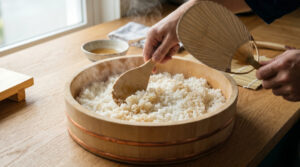
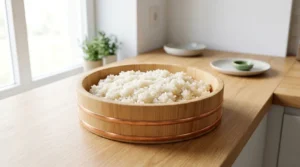
Rinse sushi rice under cold water until water runs clear — about 3 to 4 rinses. Cook with 2½ cups water (bring to boil, reduce to low, cover, 15–18 minutes, rest 10 minutes). Gently heat rice vinegar, sugar, and salt until sugar dissolves. Transfer cooked rice to a large non-metallic bowl and fold in vinegar mixture with a slicing motion. Fan as you fold for glossy finish. Cool to room temperature — never refrigerate.
Micro-tip: Metal bowls react with rice vinegar and can leave a metallic taste. Use wood, glass, or plastic.
Step 2 — Prep Your Fillings
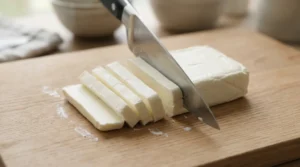
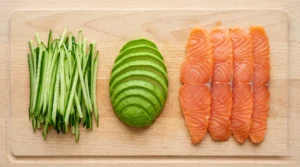
Cut cream cheese block into long strips about ½ inch wide. Cut cucumber into thin matchsticks. Slice avocado if using. Lay smoked salmon flat on a plate. Take cream cheese out of the fridge 10 minutes before using — slightly softened cream cheese is easier to place without cracking.
Step 3 — Set Up Your Rolling Station
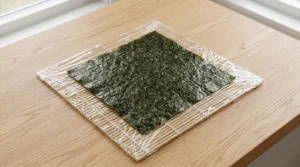
Cover bamboo mat with plastic wrap. Have nori sheets, cooled rice, all fillings, a bowl of water for your hands, and a damp cloth for your knife all ready before you start.
Step 4 — Spread the Rice
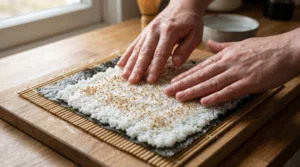
Place one nori sheet shiny-side down on the mat. Wet your hands. Spread a thin, even layer of sushi rice over the entire nori, leaving a 1-inch border at the top. Sprinkle sesame seeds if using.
Micro-tip: For an inside-out roll (uramaki — rice on outside), spread rice, sprinkle sesame seeds, then flip the nori so rice faces down on the mat.
Step 5 — Add the Fillings
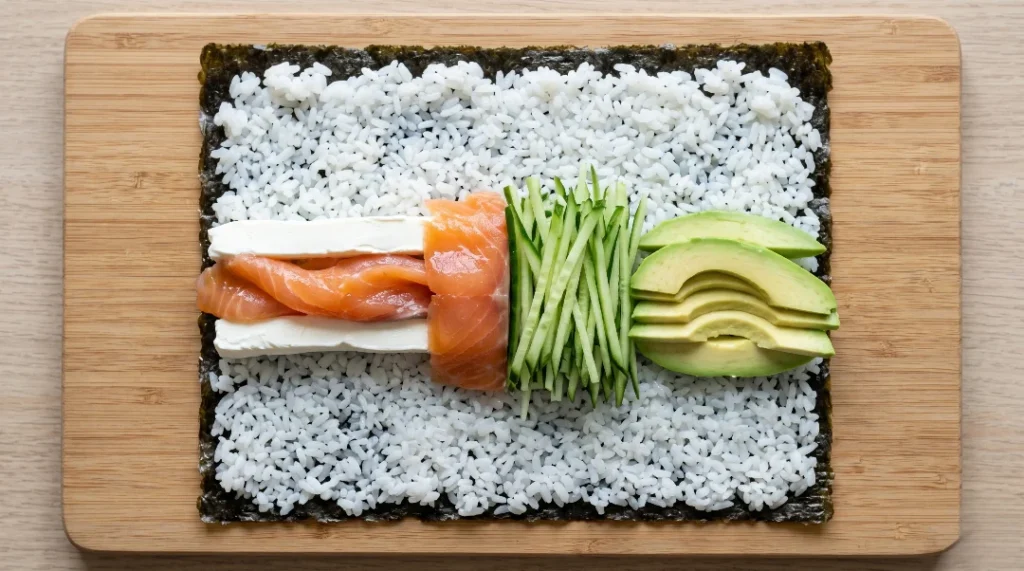
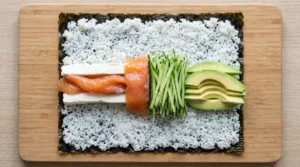
Place cream cheese strips horizontally across the center first — this is your anchor. Lay smoked salmon alongside. Add cucumber matchsticks and avocado slices. Keep everything neat in a single line. Do not overfill.
Step 6 — Roll Tightly
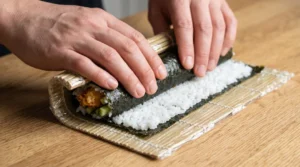
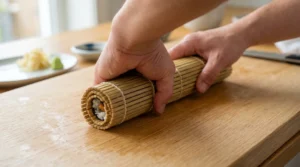
Lift the bottom edge of the mat and roll forward firmly, tucking the edge over the fillings. Use your fingers to keep fillings in place. Apply firm, even pressure all the way through. Squeeze the mat around the finished roll to tighten the shape.
Step 7 — Slice and Serve
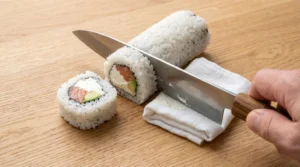
Wipe your knife with a damp cloth. Slice the roll in half. Line up the halves and cut each into thirds for 6 pieces per roll. Wipe the knife between every single cut — cream cheese sticks to the blade and causes messy cuts if you skip this step. Serve immediately.
J.ZaiB’s Expert Touch
Block cream cheese is non-negotiable. Tub cream cheese has too much water. It squishes out when you roll and makes a mess when you cut. Buy the block, cut into strips, done.
Cream cheese at the bottom, salmon on top. Always layer cream cheese first as your base, then salmon, then cucumber and avocado. This stacking order keeps the roll stable while you roll.
Wipe the knife after every single cut. Cream cheese is stickier than any other sushi filling. One dry cut ruins the whole cross-section. Wipe every time — no exceptions.
Score the nori before flipping for inside-out rolls. Lightly score the nori with your fingernail before flipping for uramaki style — this prevents the nori from cracking when you roll.
Thin salmon slices only. Thick chunks of salmon make uneven, lumpy rolls. Pre-sliced cold-smoked salmon from the grocery store deli section is already the perfect thickness — silky thin and easy to layer.
Variations to Try
Classic No-Salmon Version: Skip the salmon and double the cream cheese. Add avocado for richness. This is the kid-friendly version — creamy, mild, and universally loved. Great for sushi nights with young children.
Spicy Philadelphia Roll: Drizzle sriracha mayo inside the roll before rolling, or drizzle generously on top. The heat cuts through the cream cheese richness perfectly.
Philadelphia Roll with Avocado: Add sliced avocado alongside the salmon for an extra layer of buttery creaminess. Our personal favorite variation.
Inside-Out Philadelphia Roll: Rice on the outside, sesame seeds rolled on top. Restaurant-quality presentation for dinner parties. Roll in sesame seeds immediately after rolling while the rice is still slightly tacky.
Vegetarian Philadelphia Roll: Replace smoked salmon with extra cucumber, sliced avocado, and a drizzle of eel sauce inside. For more vegetable sushi ideas, check out our Easy Veggie Roll Sushi Recipe.
Serving Ideas
The Philadelphia Roll is the perfect centerpiece for a homemade sushi night. Serve alongside our Easy Sushi Recipe for Beginners (California Roll) and our Homemade Shrimp Tempura Roll for three completely different flavors on one platter.
Best dipping sauces for Philadelphia Roll: Eel sauce (unagi sauce) is the standout pairing — its sweet-savory caramelized flavor is incredible with cream cheese. Spicy mayo is equally good for heat lovers. Classic soy sauce and wasabi works perfectly for traditionalists.
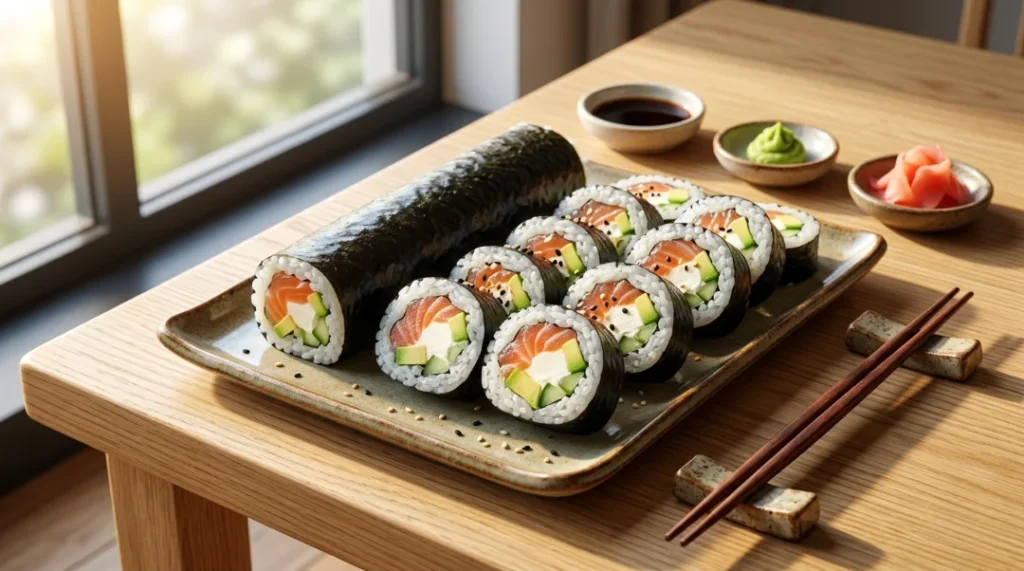
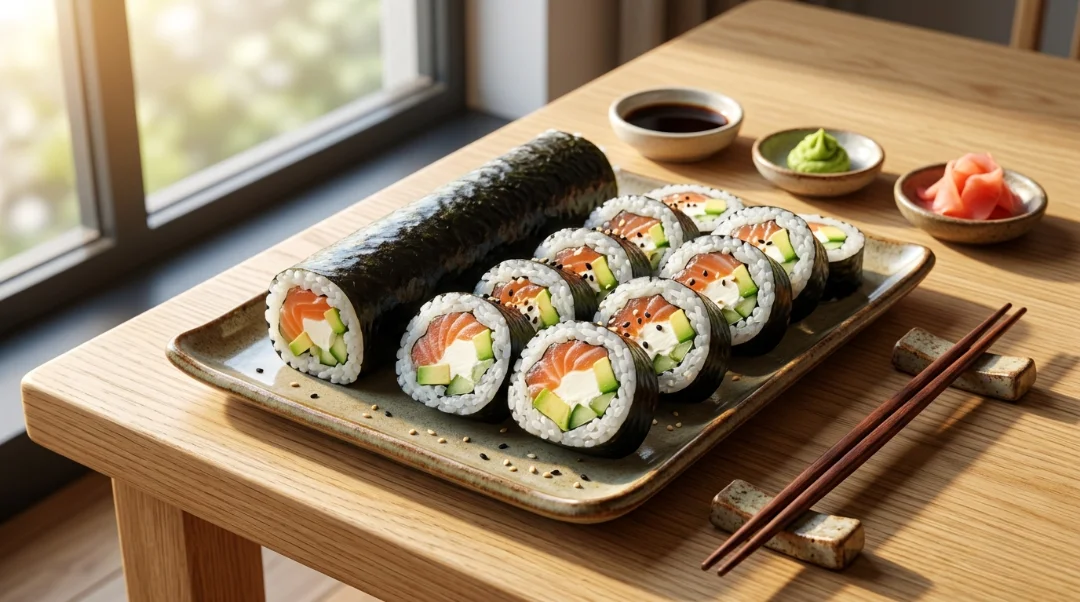
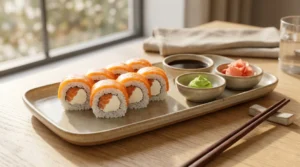
Presentation: Arrange sliced rolls on a rectangular plate or slate board. Pickled ginger on one side, small wasabi mound on the other. A sprinkle of sesame seeds or thinly sliced scallions on top makes it look restaurant-quality.
Storage & Make-Ahead Guide
Best eaten fresh within 30–60 minutes of rolling. Nori softens as it absorbs moisture, and cream cheese can make the roll slightly wet over time.
Refrigerator: Wrap unsliced rolls tightly in plastic wrap and refrigerate up to 24 hours. Let sit at room temperature 15 minutes before serving. Never refrigerate sliced rolls — rice hardens and cream cheese dries on cut surfaces.
Make-ahead for parties: Prep rice up to 2 hours ahead covered at room temperature. Slice all fillings and refrigerate. Roll fresh right before guests arrive — takes under 10 minutes once everything is prepped.
Freezing: Not recommended. Cream cheese texture completely breaks down after freezing and thawing.
Philadelphia Roll Recipe
Ingredients
Equipment
Method
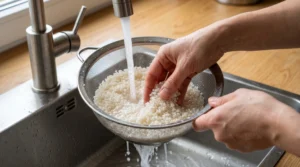
- Rinse sushi rice under cold water until water runs completely clear — about 3 to 4 rinses.

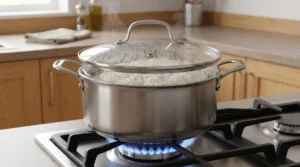
- Cook rice with 2½ cups water in a rice cooker or stovetop. Bring to a boil, reduce to low heat, cover, and cook for 15–18 minutes. Rest covered for 10 minutes after cooking.
- While rice cooks, combine rice vinegar, sugar, and salt in a small saucepan over low heat. Stir until sugar completely dissolves. Do not boil. Set aside to cool.
- Transfer cooked rice to a large non-metallic bowl. Pour vinegar mixture over rice and fold gently using a rice paddle with a slicing motion. Fan the rice as you fold to cool faster and create a glossy finish.
- Let rice cool completely to room temperature before rolling. Never refrigerate.

- Take block cream cheese out of the fridge 10 minutes before using. Cut into long strips about ½ inch wide.
- Cut cucumber into thin matchsticks. Slice avocado if using. Lay smoked salmon flat on a plate. Have all fillings ready before you start rolling.
- Cover bamboo mat with plastic wrap. Place one nori sheet shiny-side down on the mat.
- Wet your hands with water. Spread a thin, even layer of sushi rice over the entire nori sheet, leaving a 1-inch border at the top edge. Sprinkle sesame seeds over the rice if using.
- Place cream cheese strips horizontally across the center of the rice first — this is your anchor layer. Lay smoked salmon slices alongside the cream cheese. Add cucumber matchsticks and avocado slices. Keep everything in a neat single line. Do not overfill.
- Lift the bottom edge of the mat and roll forward firmly, tucking the edge over the fillings. Keep your fingers on the fillings as you start rolling to hold them in place. Apply firm, even pressure as you roll completely to the end. The seam should be on the bottom.
- Squeeze the bamboo mat firmly around the finished roll to tighten the shape. Hold for 5 seconds.
- Place the roll on a cutting board. Wipe your knife with a damp cloth. Slice the roll in half. Line up the two halves and cut each half into thirds — giving 6 pieces per roll. Wipe the knife with the damp cloth between every single cut. Cream cheese sticks to blades and causes messy cuts if you skip this step.
- Arrange on a plate and serve immediately with soy sauce, wasabi, and pickled ginger on the side.
Notes
- Block cream cheese only — non-negotiable. Tub or spreadable cream cheese has too much water content. It squishes out when you roll and makes messy cuts. Always use block cream cheese cut into strips.
- Cold-smoked salmon is the best choice for beginners. It is pre-sliced thin, has zero raw fish concerns, and gives the classic Philadelphia Roll flavor. Hot-smoked salmon is harder to roll due to its flaky texture.
- Cream cheese first, always. Place cream cheese as your first filling layer — it acts as a natural anchor that holds the other fillings in place while you roll.
- Wipe knife between every cut. Cream cheese sticks to the blade. One dry cut ruins the cross-section. Keep a damp cloth next to your cutting board and wipe after every single slice.
- Take cream cheese out of the fridge 10 minutes early. Slightly softened block cream cheese is much easier to cut into strips and place in the roll without cracking.
- For inside-out roll (uramaki): After spreading rice on the nori, sprinkle sesame seeds, then flip the entire sheet so rice faces down on the mat. Add fillings to the nori side and roll as normal.
- No-salmon version: Skip the salmon and double the cream cheese. Add extra avocado for richness. This is the kid-friendly version — mild, creamy, and universally loved.
- Spicy version: Drizzle sriracha mayo inside the roll before rolling, or drizzle on top before serving.
- Storage: Best eaten within 30–60 minutes. Wrap unsliced rolls tightly in plastic wrap and refrigerate up to 24 hours. Let sit at room temperature 15 minutes before serving. Do not freeze.
- Never refrigerate sushi rice alone. Cold hardens the starch. Keep seasoned rice covered at room temperature and use within 2 hours.
Note:
- Nutrition values are estimates. Values will vary based on exact cream cheese amount, salmon brand, and whether avocado is included. Use a nutrition calculator with your exact brands for precise figures.
Frequently Asked Questions
Is the Philadelphia Roll raw fish?
No. The classic Philadelphia Roll uses cold-smoked salmon, which is fully cured — not raw. This makes it completely safe for everyone including kids, pregnant women, and anyone avoiding raw fish. If you use raw sashimi-grade salmon instead, that version would contain raw fish, but the standard version does not.
What is in a Philadelphia Roll?
A classic Philadelphia Roll contains sushi rice, nori, Philadelphia cream cheese, smoked salmon, and cucumber. Many versions also add avocado. It is served with soy sauce, wasabi, and pickled ginger on the side.
Why is it called a Philadelphia Roll?
It is named after Philadelphia brand cream cheese — the key ingredient invented in 1880 in New York. The sushi roll itself was created in the 1980s by a Japanese restaurant owner who paired smoked salmon with cream cheese inside a sushi roll, inspired by the classic American bagel-and-lox combination.
Can I make a Philadelphia Roll without salmon?
Absolutely. A cream cheese, cucumber, and avocado roll with no salmon is delicious and very popular — especially for kids. Some people also use cooked shrimp or imitation crab as a substitute for the smoked salmon.
Block cream cheese or tub cream cheese?
Always block cream cheese. Tub or spreadable cream cheese has too much water content — it squishes out during rolling and makes messy cuts. Block cream cheese holds its shape perfectly.
How many calories are in a Philadelphia Roll?
Approximately 300–380 calories per roll of 6–8 pieces, depending on how much cream cheese and salmon you use. It is slightly higher in calories than a California Roll due to the cream cheese fat content, but still quite reasonable as a satisfying meal or appetizer.
Can I prepare Philadelphia Rolls ahead of time?
Yes — up to 24 hours in advance if kept unsliced and tightly wrapped in plastic wrap in the refrigerator. Let them come to room temperature for 15 minutes before slicing and serving. For best results, always slice fresh right before serving.
Your Creamiest Sushi Night Starts Here
There’s a reason the Philadelphia Roll Recipe has been winning over sushi skeptics for decades — that smoked salmon and cream cheese combination is simply irresistible. It’s rich, smoky, creamy, and fresh all at once. And now you can make it at home, cheaper and fresher than any restaurant version, in 30 minutes flat.
Make it once and it becomes a permanent part of your sushi night rotation. We guarantee it.
Tag us on Instagram @viralfoodhacks706 when you make yours — we want to see that creamy cross-section! Save this to Pinterest for your next sushi night.