Ingredients
Equipment
Method
Prep
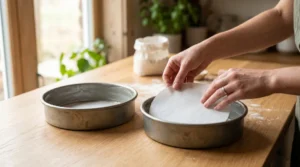
- Preheat oven to 350°F (175°C). Grease two 8-inch round cake pans. Line the bottoms with parchment paper circles, then grease the parchment. Set aside.
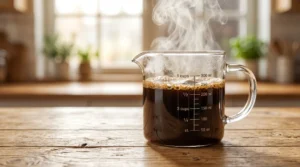
- Brew a strong cup of coffee and bring to a boil just before adding to batter. If using boiling water instead, bring water to a full boil.
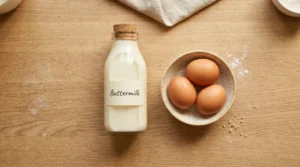
- Make sure all refrigerated ingredients — eggs, buttermilk — are at room temperature before starting.
Make the Cake Batter
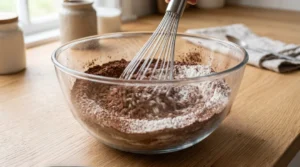
- In a large bowl, whisk together the flour, sugar, Dutch process cocoa powder, baking soda, baking powder, and salt. Whisk thoroughly for a full 30 seconds to ensure there are no lumps. Sift the cocoa if it has any clumps.
- Add the eggs, buttermilk, vegetable oil, and vanilla extract directly to the dry ingredients bowl. Using a whisk or hand mixer on low speed, mix until just combined — about 30 seconds. The batter will be thick at this stage.
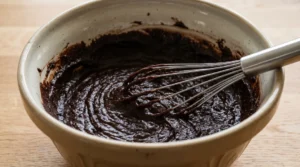
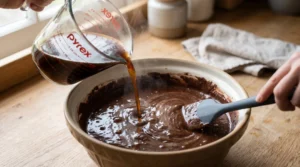
- With the mixer on low speed, carefully pour the boiling coffee (or boiling water) into the batter in a slow, steady stream. Mix until fully combined. The batter will become very thin and pourable — almost like chocolate milk. This is completely correct. Do not add more flour.
Bake
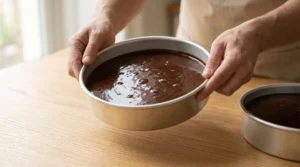
- Divide the batter evenly between the two prepared cake pans. Tap each pan gently on the counter 2–3 times to release air bubbles.
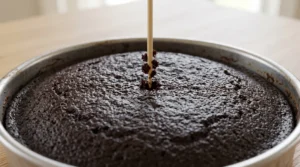
- Bake for 30–35 minutes until a toothpick inserted in the center comes out with just a few moist crumbs — not wet batter. Begin checking at 28 minutes. Do not overbake.
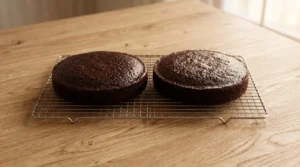
- Let cakes cool in their pans for exactly 10 minutes. Then carefully run a knife around the edges and turn out onto a wire rack. Cool completely before frosting — at least 1 full hour.
Make the Chocolate Fudge Frosting
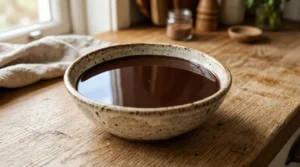
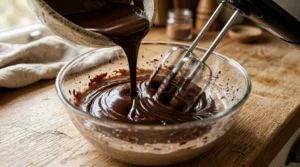
- Melt the dark chocolate in a microwave-safe bowl in 20-second bursts, stirring between each, until fully smooth. Set aside to cool to room temperature.
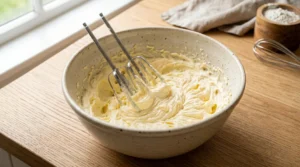
- In a large bowl, beat the softened butter with an electric mixer on medium-high speed for 3–4 minutes until pale and very fluffy. Scrape down the bowl halfway through.
- Add the sifted cocoa powder and beat for 1 minute on medium speed.
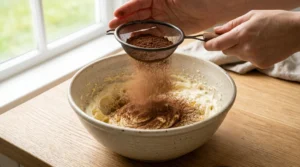
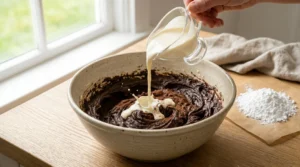
- Add powdered sugar and heavy cream in three alternating additions, beating well between each addition. Start and end with powdered sugar.
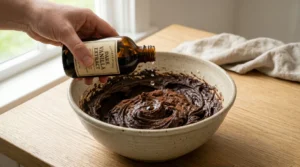
- Add vanilla extract and salt. Mix to combine.
- Pour in the cooled melted dark chocolate. Beat on high speed for 2 minutes until the frosting is glossy, thick, and smooth. If too thick, add cream 1 teaspoon at a time. If too thin, add powdered sugar 2 tablespoons at a time.
Assemble and Frost
- Place one cooled cake layer on a cake board or serving plate. Spread a generous layer of frosting (about ¾ cup) evenly across the top using an offset spatula.
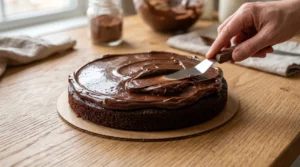
- Place the second cake layer on top, pressing gently to level.
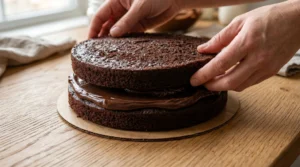
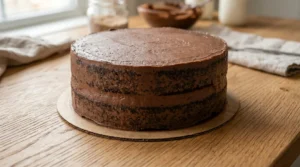
- Apply a thin "crumb coat" — a thin layer of frosting spread all over the top and sides of the cake to seal in any loose crumbs. Refrigerate for 15 minutes until the crumb coat is firm.
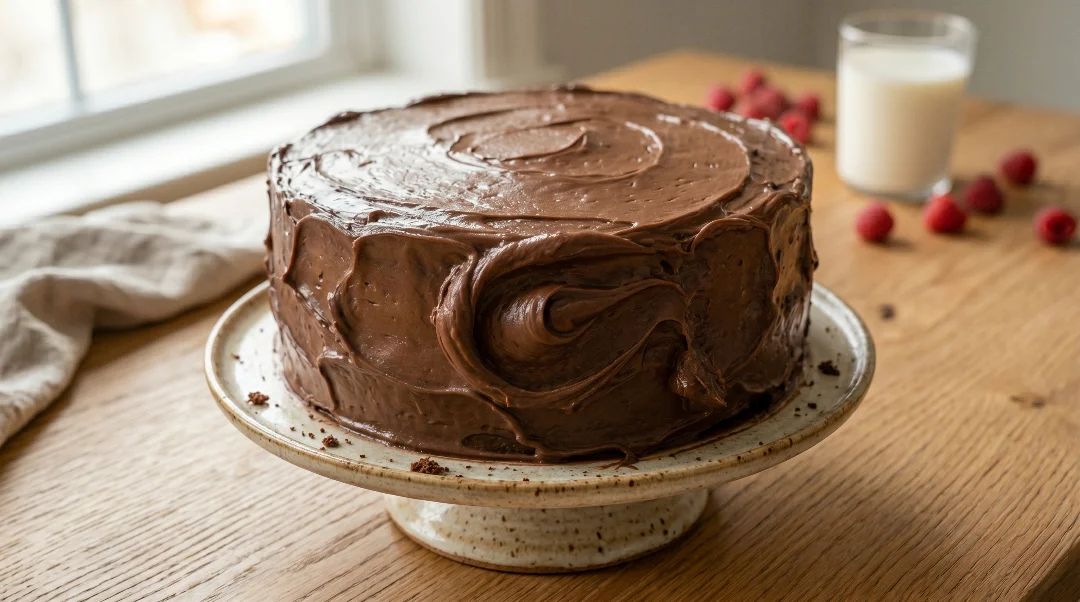
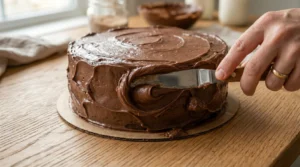
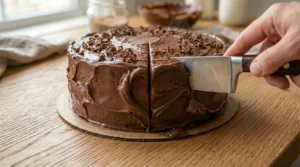
- Apply the final layer of frosting generously over the top and sides. Smooth with an offset spatula for a clean finish, or create swoops and swirls for a rustic look.
- Garnish with chocolate shavings, a dusting of cocoa powder, or fresh berries. Slice with a hot damp knife for clean cuts.
Serve
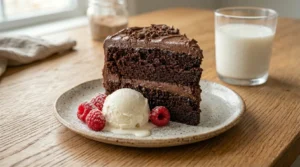
- Serve at room temperature for best flavor and texture. Pairs perfectly with a scoop of vanilla ice cream, fresh raspberries, or a cold glass of milk. Enjoy!
Notes
- Dutch process cocoa is essential. Do not substitute natural (unsweetened) cocoa powder — it reacts differently with the leavening agents and will give you a noticeably less chocolatey, lighter cake. Dutch process cocoa gives the signature deep color and smooth, intense flavor.
- The thin batter is correct. After adding boiling coffee, the batter will look like chocolate milk. This is the moisture secret — do not add more flour.
- No buttermilk? Add 1 tablespoon of white vinegar or lemon juice to 1 cup of regular whole milk. Stir and let sit 5 minutes. Full-fat Greek yogurt thinned with a splash of milk also works perfectly.
- Oil is non-negotiable for moisture. Do not substitute butter for the oil in the cake layers — butter solidifies when cold and creates a denser, drier texture. Oil stays liquid at room temperature, keeping the cake moist for days.
- Boiling coffee vs boiling water. Coffee deepens and amplifies the chocolate flavor without any detectable coffee taste. Use it. If you prefer, boiling water works but the chocolate flavor will be slightly less intense.
- Room temperature ingredients. Cold eggs and buttermilk do not emulsify properly and affect the final texture. Take everything out of the fridge 45–60 minutes before baking.
- Crumb coat is not optional. Skipping the crumb coat causes the final frosting layer to drag crumbs across the surface. 15 minutes of patience gives you a professional-looking finish.
- Brown sugar upgrade. Replace 1 cup of granulated sugar with 1 cup of brown sugar for extra moisture from the molasses. The cake will stay softer for 1–2 extra days.
- Mayonnaise secret. Add 2–3 tablespoons of mayonnaise to the wet ingredients for extraordinary moisture. Mayonnaise is just emulsified oil and eggs — it adds richness without any detectable flavor.
- Eggless version. Replace each egg with 3 tablespoons of aquafaba (chickpea liquid) or 1 tablespoon ground flaxseed + 3 tablespoons water (sit 5 min).
- Gluten-free version. Substitute all-purpose flour 1:1 with a quality GF baking blend (King Arthur Measure for Measure or Bob's Red Mill 1:1).
- UK/Australia note. "All-purpose flour" = plain flour. "Powdered sugar" = icing sugar. "Heavy cream" = double cream. "Granulated sugar" can be substituted with caster sugar.
- Storage — Room temp: Airtight container up to 3 days. Fridge: Up to 7 days — bring to room temperature 45 minutes before serving. Freezer (unfrosted layers): Wrapped tightly, up to 3 months. Freezer (frosted whole cake): Up to 2 months.
- Make-ahead party timeline: Bake layers 3 days ahead (freeze). Thaw 1 day before, frost and refrigerate. Remove from fridge 45 minutes before serving.