
Ingredients
Equipment
Method
Mix and knead
- Whisk the flour, yeast, salt and sugar together in a large mixing bowl, taake the yeast and salt start out evenly spread and not piled in one spot.
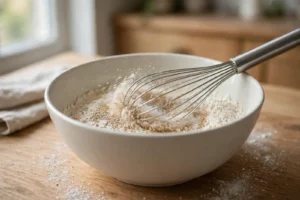
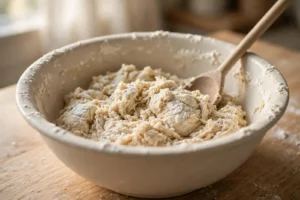
- Pour in the warm water and the olive oil. Stir with a wooden spoon until a shaggy dough forms and no dry flour is left at the bottom of the bowl.
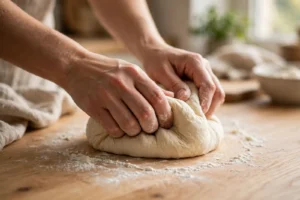
- Turn the dough onto a lightly floured surface and knead for 8 to 10 minutes, pushing, folding and turning, until it is smooth, elastic and passes the windowpane test from the basics section.
Rise and shape
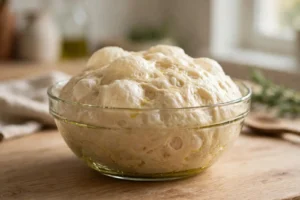
- Put the dough in a lightly oiled bowl, turn it once so the top is oiled, cover and leave it in a warm spot for 1 to 1 1/2 hours, until doubled in size.
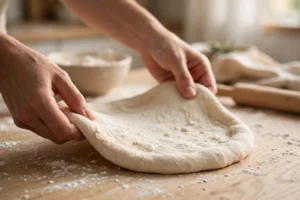
- Heat the oven to 475°F (245°C). Punch the dough down, divide it in two, and stretch or roll each piece into a 12 inch round on a floured surface, keeping a thicker rim for the crust edge.
Top and bake
- Set each round on a cornmeal-dusted pan, brush the rim with the melted butter, add your sauce and toppings, and bake for 12 to 15 minutes, until the crust is deep golden and the cheese is bubbling. Rest 2 minutes, slice and serve.

Notes
- Cold rise for better flavour: after kneading, refrigerate the dough for 24 to 72 hours. The crust tastes deeper and stretches easier. Bring it back to room temperature for 30 to 60 minutes before shaping.
- No bread flour: all-purpose works in the same amount; expect a slightly softer chew.
- Freeze it: freeze the divided dough balls in oiled bags for up to 3 months. Thaw overnight in the fridge.
- Too much topping makes a soggy middle. A thin layer of sauce and a light hand with wet vegetables keeps the base crisp.
- UK and Australia terms: bread flour is strong flour; a baking sheet is a tray; cornmeal is polenta in some shops, fine semolina also works for dusting.