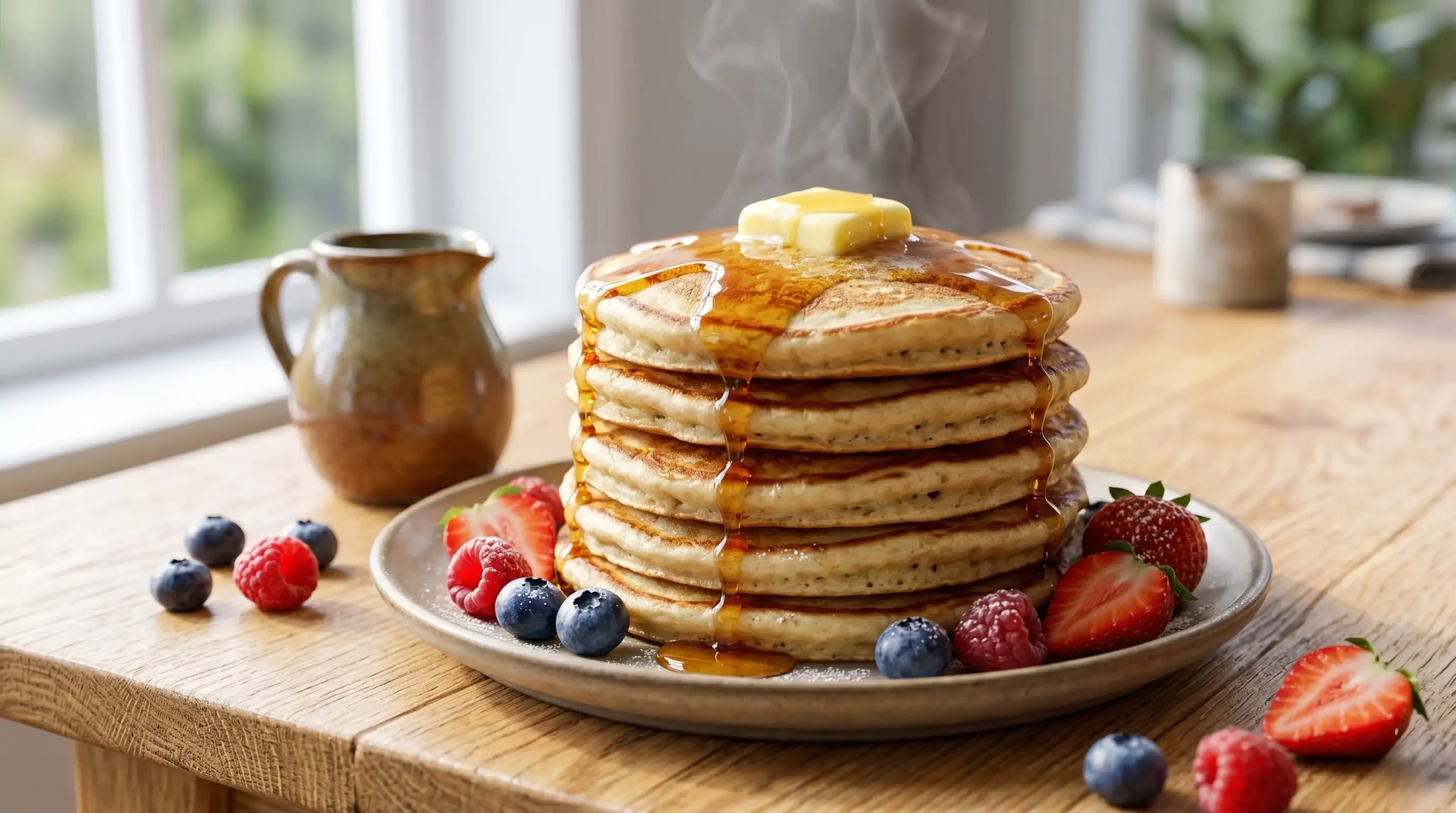
Ingredients
Equipment
Method
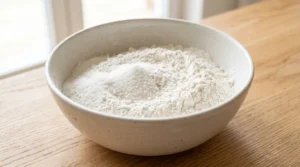
Mix the Dry Ingredients
- Whisk First: In a large bowl, whisk together the flour, sugar, baking powder, baking soda, and salt until evenly combined — about 30 seconds. Whisking the dry ingredients together first ensures the leavening is evenly distributed before any liquid touches it, so every pancake rises equally.
Add the Wet Ingredients
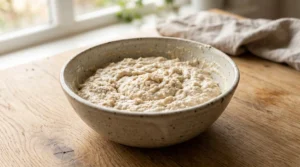
- Mix Gently — Stop Early: In a separate bowl, whisk together the room temperature buttermilk, egg, melted butter, and vanilla extract. Pour the wet ingredients into the center of the dry ingredients all at once. Using a rubber spatula or fork, fold together with just 10 to 12 strokes — stop the moment you no longer see large streaks of dry flour. The batter will look lumpy, rough, and uneven. This is exactly correct. Do not mix further — every extra stir develops more gluten and produces flatter pancakes.
Rest the Batter
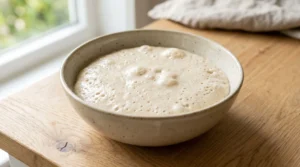
- Wait 5 to 10 Minutes: Cover the bowl and let the batter rest at room temperature for 5 to 10 minutes. During this rest, the gluten relaxes and the baking powder distributes its first CO2 bubbles evenly through the batter. After resting, the batter will look slightly puffed and thicker. Do not stir it again.
Heat the Pan
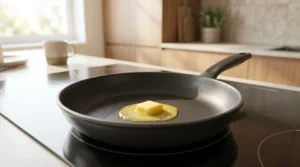
- Preheat and Test: Place a non-stick skillet or griddle over medium heat and let it preheat for 2 full minutes. Test by flicking a few drops of water — if they dance and evaporate within 2 seconds, the pan is ready. Add a small knob of butter and let it melt, swirling to coat the surface. The butter should sizzle gently, not burn.
Cook the Pancakes
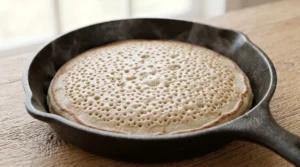
- Pour, Watch, Flip Once: Pour ¼ cup of batter per pancake onto the heated pan. Do not spread it — let the batter find its own shape naturally. Cook until bubbles form across the entire surface of the pancake AND the edges look set and no longer glossy — about 1.5 to 2 minutes. Slide the spatula fully under the pancake and flip in one confident motion. Cook the second side for 1 to 1.5 minutes until golden brown. Remove from pan and keep warm in a 200°F oven while you cook the remaining pancakes. Never flip more than once and never press the pancake down — pressing squeezes out the CO2 bubbles that create the fluffy height.
Serve
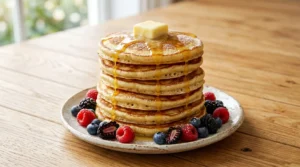
- Stack and Enjoy: Serve immediately with a generous pat of cold butter placed on top of the warm stack, a generous pour of real maple syrup, and fresh berries or sliced banana alongside. Pancakes are always best eaten hot off the pan — the texture is at its peak in the first 5 minutes.
Notes
- Stop mixing when lumpy. Lumps = relaxed gluten = fluffy pancakes. Smooth batter = overdeveloped gluten = flat, rubbery pancakes. Mix only 10 to 12 strokes after combining wet and dry. Stop before it looks "done."
- Rest the batter — non-negotiable. 5 to 10 minutes of rest allows gluten to relax and baking powder to pre-activate. Do not skip and do not stir again after resting.
- Watch the bubbles, not the clock. Flip when bubbles cover the entire surface AND the edges look set. This is the only reliable "done" signal.
- Never press the pancake. Pressing with a spatula squeezes out CO2 bubbles — the pancake immediately deflates. One flip, no pressure.
- No buttermilk? Add 1 tablespoon of white vinegar or lemon juice to 1¼ cups whole milk. Let sit 5 minutes. Plain Greek yogurt thinned with a splash of milk also works well.
- Test your baking powder first. Mix ½ tsp baking powder into ⅓ cup hot water — it should bubble vigorously immediately. If it does not bubble, buy a fresh can. Opened baking powder loses potency after 3 months.
- Aluminum-free baking powder avoids any metallic aftertaste — especially noticeable in plain buttery pancakes. Bob's Red Mill or Rumford brands are widely available.
- Room temperature ingredients matter. Cold buttermilk and eggs slow the baking powder's first CO2 release during the rest period. Take them out of the fridge 30 minutes before starting.
- Brown the butter for deeper flavor: cook melted butter 2 to 3 minutes past the melting point until golden and nutty-smelling. Cool slightly before adding to batter.
- The first pancake is always the test pancake. It calibrates the pan temperature and seasons the surface. Eat it in the kitchen and adjust heat if needed before starting the real batch.
- Keep warm: Cooked pancakes on a baking sheet in a 200°F oven stay warm and fluffy for up to 30 minutes.
- Storage: Refrigerate cooled pancakes up to 3 days. Freeze up to 2 months with parchment between each pancake. Reheat in toaster or 300°F oven.
- Do not store mixed batter overnight. The baking powder depletes and pancakes will be flat. Store dry and wet ingredients separately — combine fresh each morning.
- UK/Australia notes: "All-purpose flour" = plain flour. "Baking soda" = bicarbonate of soda. "Buttermilk" = same term. "Skillet" = frying pan.
- Nutrition values are estimates. Actual values vary based on butter quantity used for cooking and toppings added.