
Ingredients
Equipment
Method
Make the base dough
- Whisk the flour, sugar, yeast and salt in a large bowl. Pour in the warm milk and mix to a rough dough, then knead for 8 to 10 minutes until smooth and elastic. Work the softened butter in a spoonful at a time, kneading until each addition disappears, taake the dough turns glossy and rich instead of greasy.
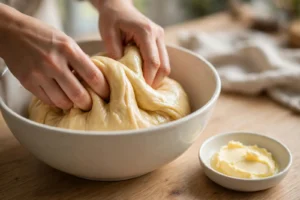
- Cover the dough and chill it for at least 1 hour, or overnight for the best flavour and the easiest folding. Meanwhile pound the cold butter between two sheets of parchment into an even square slab about 1/2 inch (1.25 cm) thick, and chill it until it feels like cold clay.

Laminate
- Roll the chilled dough into a square twice the size of the butter slab. Set the slab in the middle at an angle, fold the dough corners over it like an envelope, and pinch the seams shut so no butter can escape.
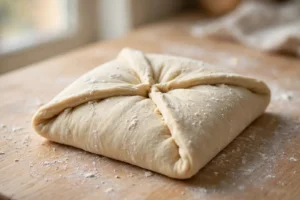
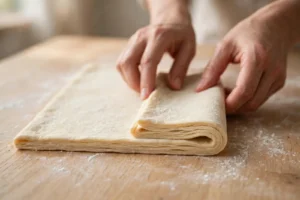
- Roll the package into a long rectangle and fold it in thirds like a letter. That is fold one. Wrap and chill for 30 minutes. Repeat the roll and fold two more times, chilling 30 minutes between folds, for three folds in total.
Shape, proof and bake
- Roll the dough into a long rectangle about 1/4 inch (6 mm) thick and cut it into tall triangles. Roll each triangle up from the wide base to the tip, stretching it gently as you go, and set the croissants seam-side down on a parchment-lined sheet.

- Proof at room temperature for 1 1/2 to 2 hours, until the croissants look puffy and wobble like set jelly when the tray is nudged. Brush gently with egg wash and bake at 400°F (200°C) for 18 to 22 minutes, until deep golden and crisp. Cool at least 15 minutes before eating; the layers are still setting.

Notes
- The butter slab and the dough must feel the same firmness, like cold clay. Hard butter shatters into lumps; soft butter smears into bread. If they feel different, wait or chill until they match.
- Overnight base dough is not a delay, it is an upgrade: colder dough folds cleaner and the flavour deepens.
- A little butter leaking in the oven means the croissants were under-proofed. Proof longer next time; this batch will still taste wonderful.
- Freeze shaped, unproofed croissants for up to 1 month. Thaw on the tray, proof until wobbly, then bake as written.
- UK and Australia terms: all-purpose flour is plain flour; granulated sugar is caster sugar's coarser cousin and either works; parchment is baking paper.