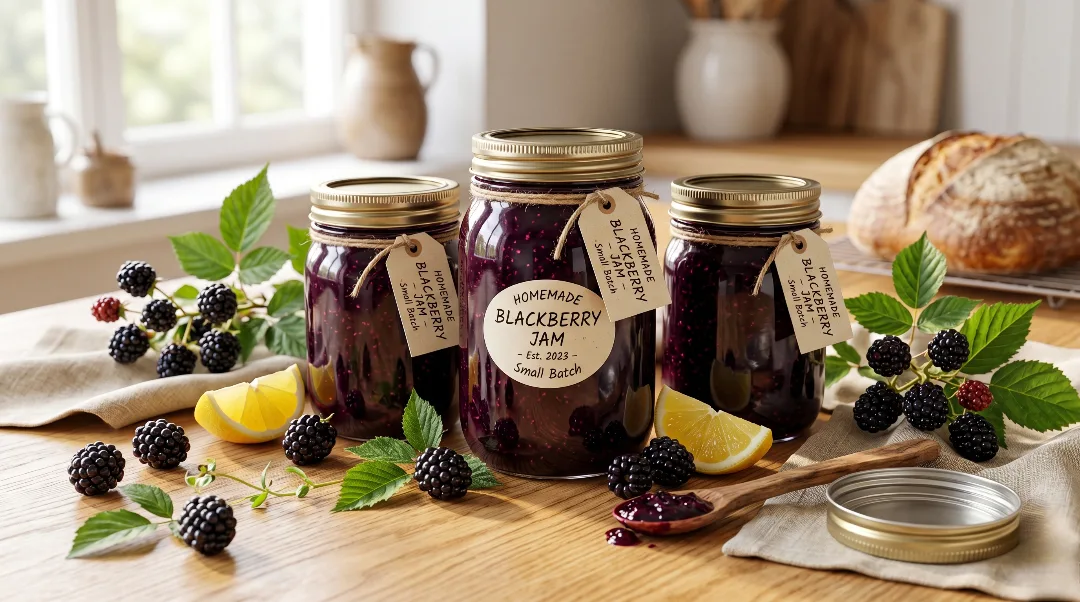
Ingredients
Equipment
Method
Prepare the Berries
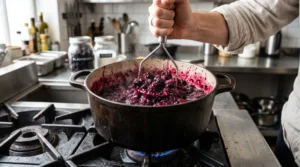
- Mash and Cook Down: Place the rinsed blackberries in a heavy bottomed stockpot. Mash with a potato masher until broken down but not fully pureed. Add the lemon juice now, before any heat, so the acid distributes evenly through the fruit from the start. Place over medium heat and simmer for 8 to 10 minutes, stirring occasionally, until the berries fully soften and release their juice.
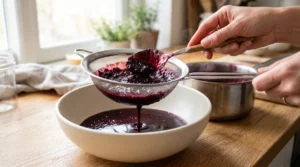
Remove the Seeds
- Strain for a Smooth Texture: Press the cooked mixture through a fine mesh strainer set over a large bowl, using the back of a spoon to push pulp and juice through while leaving the seeds behind. This step is optional if seeds don't bother you, but most people find blackberry seeds noticeably harder and slightly bitter compared to other berries.
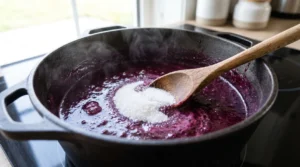
Add Sugar and Begin the Real Cook
- Dissolve the Sugar Gently First: Return the strained puree to the cleaned pot. Add the sugar and salt, stirring over medium-low heat until the sugar fully dissolves before increasing the heat. This prevents scorching once the mixture starts boiling harder.
Boil to the Gel Point
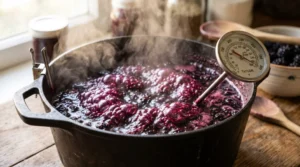
- Watch the Thermometer Closely: Increase the heat to medium-high and bring to a full, rolling boil. Clip a candy thermometer to the pot, or check frequently with an instant-read thermometer. Stir regularly to prevent scorching, especially as the mixture thickens. Cook until the temperature reaches 220°F at sea level, adjusting about 2°F lower for every 1,000 feet of elevation.
Confirm With the Wrinkle Test
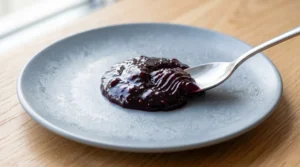
- Check on a Cold Plate: Spoon a small amount of hot jam onto a plate that has been chilled in the freezer for at least 10 minutes. Let it sit for 60 seconds, then push it gently with your fingertip. If the surface wrinkles and holds rather than sliding smoothly, the jam has reached gel point. If it still slides easily, return to the heat for another 2 to 3 minutes and test again.
Jar and Store
- For Fridge Storage: Remove from heat and let cool 5 minutes. Ladle into clean jars, leaving about ¼ inch of space at the top. Cool completely at room temperature before sealing and refrigerating.
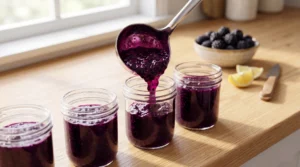
- For Shelf-Stable Canning: Ladle the hot jam into sterilized half-pint jars, leaving ¼ inch headspace. Wipe rims clean, apply lids and rings, and process in a boiling water bath for 10 minutes, adjusting time upward for higher elevation per current USDA guidelines.
Notes
- Why no added pectin is needed: Blackberries are naturally among the highest pectin fruits, and the correct sugar and acid ratio at the right temperature is enough to form a full gel network without any commercial pectin product.
- Calibrate your thermometer first. Test it in plain boiling water, which should read exactly 212°F at sea level. Adjust your target gel point reading accordingly if your thermometer reads even slightly off.
- The wrinkle test matters more than the number. Temperature is a helpful guide, but the physical wrinkle test on a chilled plate is the true confirmation that the pectin network has actually formed.
- Slightly underripe berries set better. Pectin content peaks just before full ripeness and decreases as fruit becomes very soft. Mixing in a few firmer berries with your ripe ones genuinely improves the set.
- Fixing a runny batch: Pour the cooled jam back into the pot, bring back to a full boil, add an extra tablespoon of lemon juice if needed, and continue cooking while retesting with the wrinkle test every few minutes.
- Stir constantly near the end. The mixture thickens significantly just before reaching gel point and scorches easily on the bottom of the pot at that stage.
- Altitude adjustment: Subtract roughly 2°F from the 220°F target for every 1,000 feet above sea level.
- Storage: Refrigerator up to 3 weeks unprocessed. Freezer up to 1 year with headspace for expansion. Properly water bath canned jars up to 1 year in a cool, dark pantry, then refrigerate after opening and use within 3 weeks.
- UK/Australia notes: "Granulated sugar" works the same internationally. "Candy thermometer" may be labeled a sugar thermometer. Half-pint jars are roughly 250ml jars.
- Nutrition values are estimates and vary based on exact berry sweetness and final yield.